How can you find a winning product through Google Ads?



Most sellers hunt for winning products on TikTok and Meta where trends explode visibly. Far fewer look at Google Ads and that is precisely why the channel remains underexploited. Search advertising captures existing purchase intent rather than manufacturing it, which means the products advertised there are already being actively sought by buyers. So how can you find a winning product through Google Ads and turn competitor spending into your shortcut?
The logic is straightforward once you understand what search data reveals. A seller bidding on a keyword is paying real money every single time someone clicks. If that campaign has been running for months it is almost certainly profitable because no advertiser sustains a losing bid indefinitely. Ad duration is therefore the strongest profitability signal available and it costs you nothing to observe.
Google Shopping deserves particular attention. Unlike text ads it displays the product itself, its image and its price which makes it a genuine product discovery channel. Seeing which items competitors push hardest, at what price point and across which markets tells you exactly where demand converts in your category.
Several free methods give you partial visibility. The Google Ads Transparency Center shows which ads an advertiser currently runs. Manual searching reveals who competes for your terms right now. The Shopping tab exposes product listings and pricing. Each gives a fragment without the performance context that actually matters.
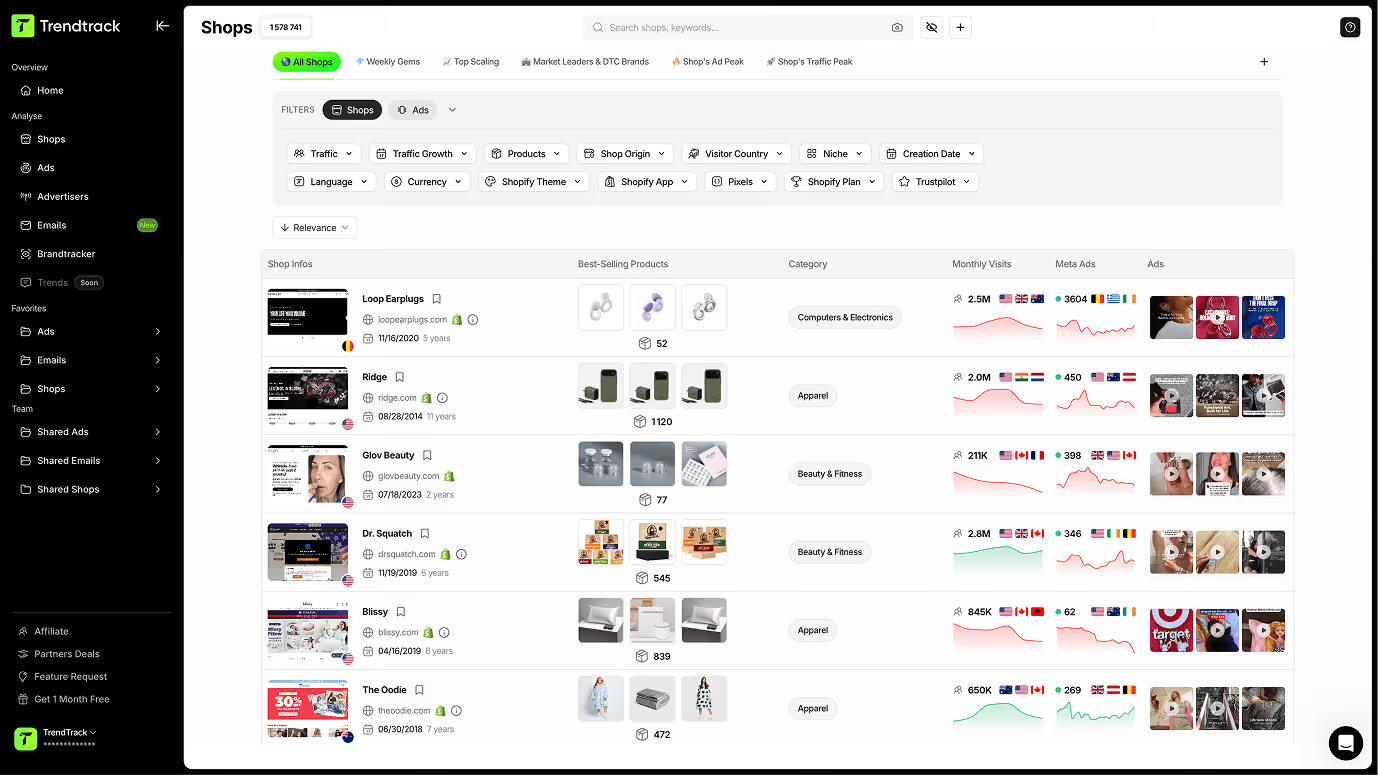
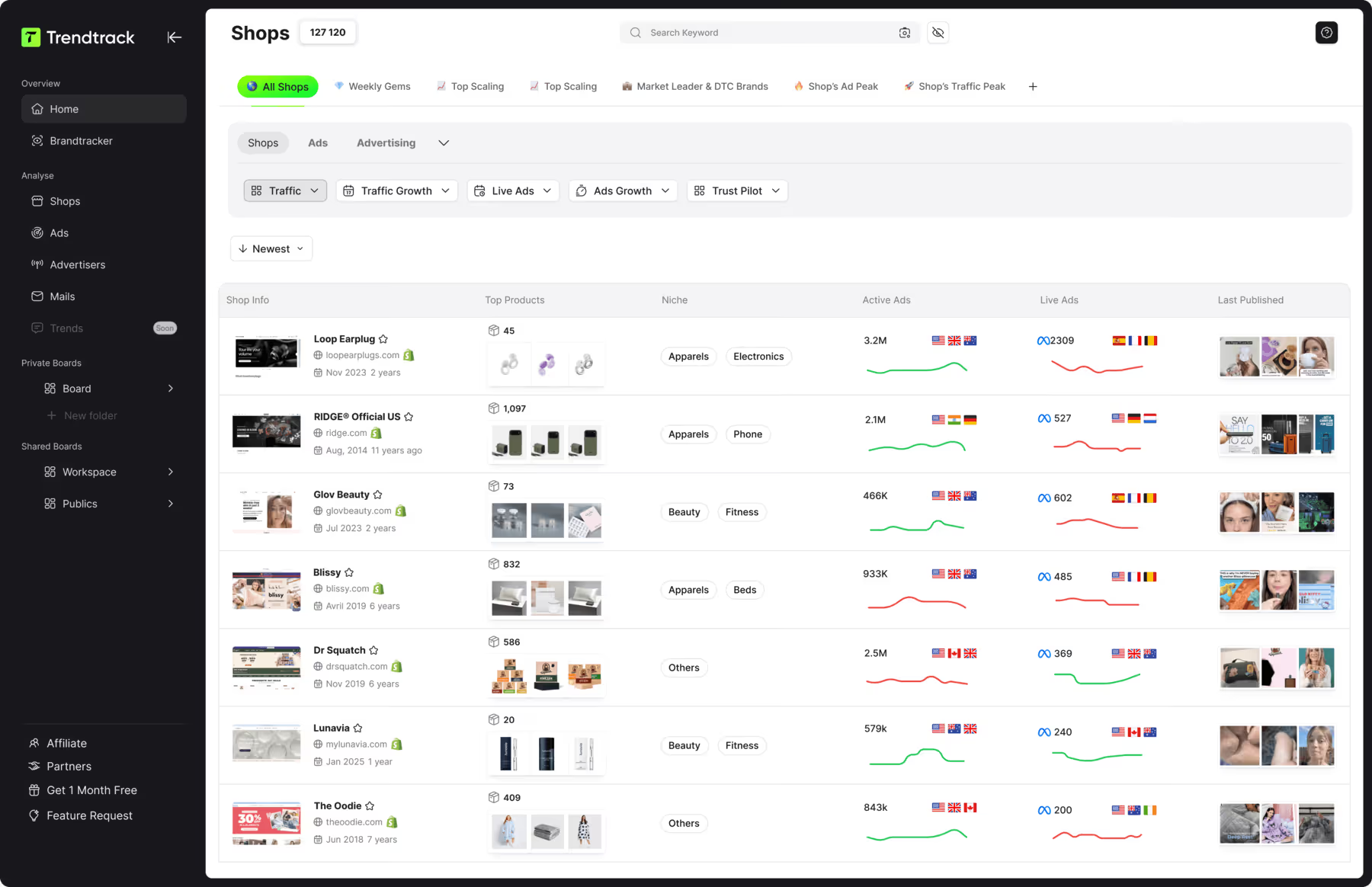
This is where Trendtrack available at app.trendtrack.io/en/sign-up changes the approach. Its Shop Analytics tab reveals any shop's complete Google ad strategy including their full ad history, their top performing ads, the formats they scale across Search, Shopping, YouTube and Display, their landing pages and their headlines.
In this article we explain how to find a winning product through Google Ads Library.
Why Use Google Ads to Find Winning Products?
Most sellers concentrate their research on social platforms and overlook what search advertising reveals. That oversight is an opportunity. Here is why you should use Google Ads to find winning products.
Search captures existing demand rather than creating it
The first reason is intent. On TikTok or Meta a product interrupts someone scrolling and manufactures desire that did not exist moments earlier. On Google someone actively types a query because they already want a solution. A product advertised on search therefore corresponds to demand that is already formed and measurable. This distinction matters enormously because a product people actively search for has a validated market rather than a manufactured one.
Ad duration is a reliable profitability signal
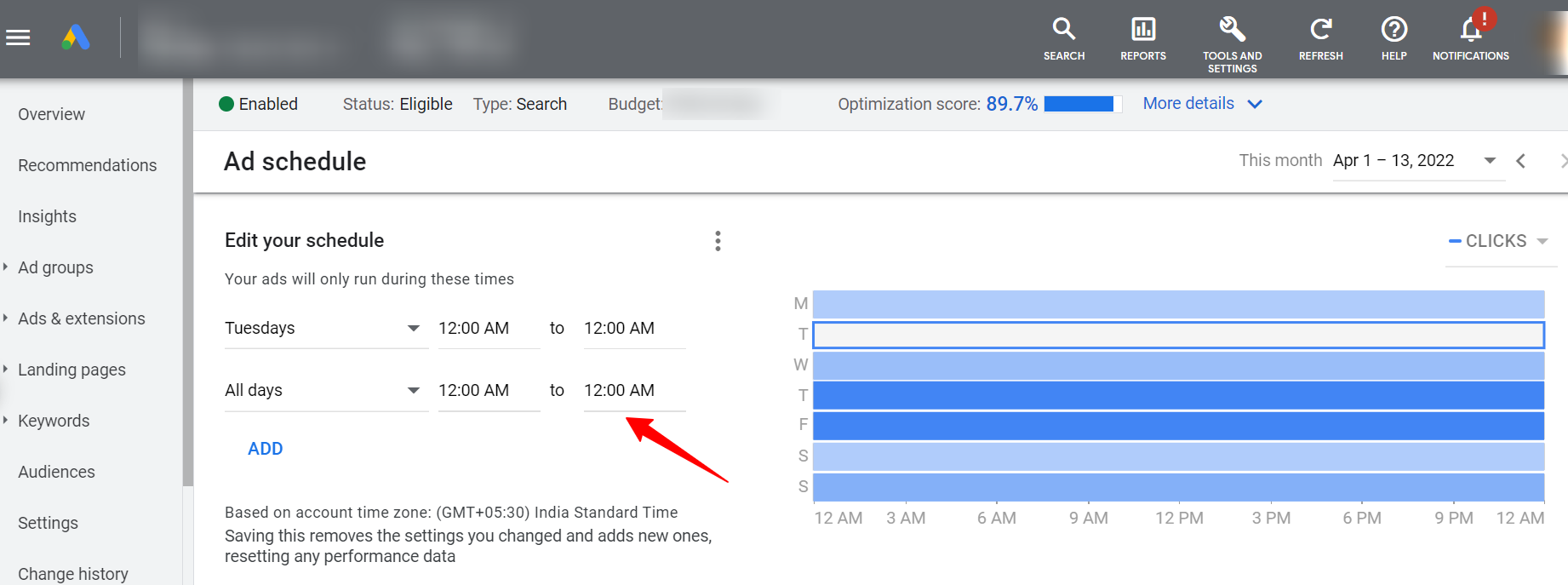
The second reason is the longevity signal. Every click on a search ad costs the advertiser real money immediately. A campaign that has run continuously for six months has therefore generated enough profit to justify that ongoing spend. No advertiser sustains a losing bid indefinitely. This makes duration the most reliable indicator available in product research and it is entirely observable from the outside.
Google Shopping displays products directly
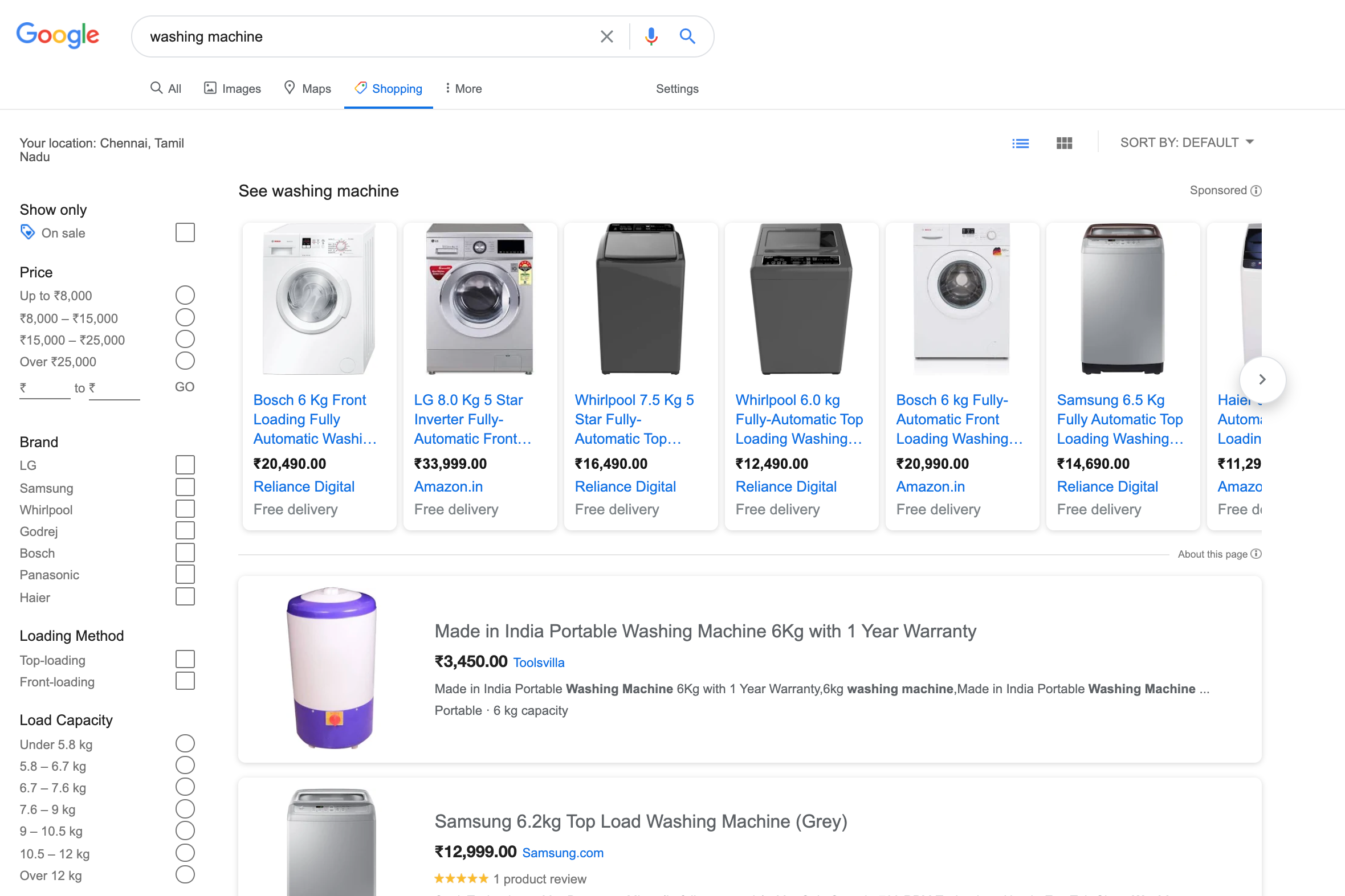
The third reason is Shopping. Unlike text ads which describe an offer Shopping campaigns display the product image, its title and its price directly in the results. This turns Google into a genuine product discovery channel where you see exactly what competitors sell, how they position it visually and at what price point. For e-commerce research specifically this visibility is far more actionable than reading ad copy.
Price positioning is immediately visible
The fourth reason is pricing intelligence. Shopping results expose the entire competitive price landscape for a product category at a glance. You see whether a market is dominated by low-cost sellers or whether premium positioning works, which directly informs whether your margin structure is viable before you invest a euro.
The channel is less saturated for product research
The fifth reason is that fewer sellers look here. The dropshipping community concentrates almost entirely on TikTok and Meta spy tools. Products discovered through search advertising are therefore less immediately picked up by hundreds of competitors, which gives you a window before saturation.
It reveals products with longer lifecycles
The sixth reason is product durability. Social platforms surface products that explode quickly and die just as fast because they depend on viral attention. Search demand is structurally more stable since it reflects ongoing need rather than momentary trend. Products that perform on Google often have considerably longer commercial lifespans which makes them better foundations for a real business.
Competitor landing pages reveal the full funnel
The seventh reason is conversion insight. Following a Google ad to its destination shows you exactly how a competitor converts the traffic they pay for including their offer structure, their guarantees and the arguments they lead with. Traffic acquisition is only half the equation and search advertising exposes both halves.
The research costs nothing to start
The eighth reason is accessibility. Manual searching, the Ads Transparency Center and the Shopping tab are all free. You can begin mapping your category today without any tool subscription, then add depth once you know the approach works for your niche.
The limitation of these free methods is that they show existence without performance. You see an ad exists but not how long it has run or whether it converts.
How to Find Winning Products on Google Ads Step by Step?
Finding a winning product through search advertising follows a methodical process where each step filters your candidates further. Here is how to find winning products on Google Ads step by step.
Define your niche and target category
Search your keywords in incognito mode
Explore the Google Shopping tab
Identify the advertisers who appear repeatedly
Check their ad history and duration
Analyze their price positioning
Study their landing pages
Validate demand with Keyword Planner
Calculate your margin viability
Test before committing
The first step is to define your niche. Broad research produces noise rather than insight. Narrow to a specific category before you start since a well-mapped segment teaches you far more than a superficial scan of an entire market.
The second step is to search your keywords in incognito mode. Type the terms a buyer would use including product names combined with buy, price or best. Incognito avoids personalized results that distort what you actually see. Note every advertiser appearing at the top.
The third step is to explore the Shopping tab. This is where product discovery genuinely happens since you see the item, its image and its price directly. Scroll through the listings and identify which products appear most frequently and which sellers dominate the space.
The fourth step is to identify recurring advertisers. A seller appearing across multiple related keywords is investing seriously in the category. These are the competitors worth studying in depth rather than one-off advertisers testing a single term.
The fifth step is to check ad history and duration. This is the decisive filter. An ad running for months is almost certainly profitable while one launched last week proves nothing. Duration separates validated products from experiments and this single criterion eliminates most false signals.
The sixth step is to analyze price positioning. Shopping results expose the entire competitive price landscape at a glance. Determine whether the category is dominated by low-cost sellers or whether premium pricing sustains. This tells you immediately whether your margin structure can work.
The seventh step is to study their landing pages. Click through and examine how they convert the traffic they pay for including their offer structure, their guarantees, their social proof and the arguments they lead with. Acquisition is only half the equation and this half is frequently ignored.
The eighth step is to validate demand with Keyword Planner. Confirm that the search volume justifies the opportunity and check the estimated cost per click. A term with strong intent but a bid price exceeding your margin is not viable regardless of how well it works for a competitor with different economics.
The ninth step is to calculate your margin viability. Take the observed selling price, subtract your product cost, shipping and payment fees then compare the result to the estimated cost per acquisition. If the margin cannot absorb the acquisition cost the product fails before you launch.
The tenth step is to test before committing. Run a limited campaign on your strongest candidate rather than ordering inventory. Real data from a small budget beats any amount of theoretical analysis.
The weakness of this manual process is that free tools show existence without performance. You cannot see how long an ad has run or which creatives actually convert.
How to Use Google Shopping for Product Research?
Google Shopping is arguably the most underused product research channel available. Unlike text ads it displays the product itself which makes discovery immediate. Here is how to use Google Shopping for product research.
Search a broad category term rather than a specific product
Filter by price range to map the market
Identify the sellers appearing most frequently
Note the visual presentation of top listings
Compare price positioning across competitors
Check which products appear across multiple queries
Open competitor stores to assess their catalogue
Cross-reference with search volume data
The first step is to search a broad category term. Rather than looking up a product you already have in mind type something general like ergonomic desk accessories or portable water filters. Shopping then surfaces what sellers are actively pushing in that space which is precisely the discovery you want.
The second step is to filter by price range. Shopping lets you narrow results by price which reveals how a category is structured. If every listing sits under 20 euros the margin available is likely too thin. If a healthy segment sits above 60 euros the category can absorb acquisition costs.
The third step is to identify recurring sellers. Stores appearing across several queries in your category are investing seriously rather than testing casually. These are the competitors whose strategy is worth mapping in depth.
The fourth step is to study visual presentation. Shopping is a visual format so the listings that perform have optimized their product images deliberately. Note the backgrounds, the angles and whether lifestyle or packshot photography dominates in your category.
The fifth step is to compare price positioning. Seeing the full spread from cheapest to most expensive tells you whether the market rewards low pricing or premium positioning. This single observation determines whether your intended margin structure is realistic.
The sixth step is to check cross-query presence. A product appearing under several different search terms has broader demand than one tied to a single keyword which makes it a stronger candidate.
The seventh step is to open competitor stores. Click through from a listing and examine their full catalogue, their bestsellers and how they merchandise. You often discover adjacent products worth considering that never appeared in your original search.
The eighth step is to cross-reference with search volume. Use Keyword Planner to confirm that the demand you observed in Shopping corresponds to genuine search volume rather than a handful of advertisers betting on a niche term.
The limitation of manual Shopping research is that you see current listings without knowing which have been running profitably and which launched yesterday.
How to Analyze Competitors' Google Ads With Trendtrack?

Trendtrack consolidates in one view what manual research delivers in fragments. Here is how to analyze competitors' Google Ads with Trendtrack.
Search for the shop you want to study
Open the Google Ads tab in Shop Analytics
Explore their full ad library
Identify their top performing ads
Review the formats they scale
Extract their headlines and copy
Analyze their landing pages
The first step is to search for the shop. Enter any store or domain and Trendtrack pulls its complete profile from a database of over 700,000 brand profiles updated every 24 hours.
The second step is to open the dedicated Google Ads tab within Shop Analytics. This section gives you full visibility into that shop's Google advertising rather than isolated creatives you assemble manually from several free sources.
The third step is to explore their full ad library. You see their entire history rather than what runs today. History is what reveals genuine patterns since campaigns that persist or reappear repeatedly are almost certainly profitable which is the single most important filter in product research.
The fourth step is to identify their top performing ads. Trendtrack surfaces which creatives actually perform which shows you where their budget converts rather than simply where they spend.
The fifth step is to review the formats they scale across Search, Shopping, YouTube and Display. A seller pushing Shopping heavily while ignoring Display tells you something concrete about how buyers behave in that category.
The sixth step is to extract their headlines and copy since messaging that survived months of live testing reveals what genuinely moves your market.
The seventh step is to analyze their landing pages to understand how they convert paid traffic.
What Criteria Define a Winning Product on Google Ads?
Not every product advertised on search is worth pursuing. Several criteria separate genuine opportunities from campaigns that will drain your budget. Here are the criteria defining a winning product on Google Ads.
Sustained advertising presence
The first and most decisive criterion is how long competitors have been advertising it. A product promoted continuously for months has passed a real profitability test since every click costs the advertiser money immediately. Duration is the single most reliable signal available and it filters out the majority of false opportunities. A product that appeared last week proves nothing yet.
A price point that supports acquisition
The second criterion is price positioning. Search clicks are expensive compared to social traffic which means your margin must absorb a higher cost per acquisition. A product selling at 25 euros with 10 euros of margin cannot sustain a 4 euro cost per click and a 2% conversion rate. Products above 60 euros generally offer far more room to operate profitably on this channel.
Genuine and measurable search volume
The third criterion is demand that actually exists. Confirm through Keyword Planner that people search for your product in meaningful numbers. A product a competitor advertises on a term nobody types will not generate the volume you need regardless of how attractive the item looks.
Competition that proves the market without saturating it
The fourth criterion is a healthy competitive landscape. Several active advertisers confirm the market converts. Twenty established sellers with strong quality scores mean your cost per click will be brutal. Look for categories with three to six serious competitors rather than either extreme.
Repeat purchase or expansion potential
The fifth criterion is customer value beyond the first sale. A product customers reorder or that opens a natural product line lets you amortize acquisition across several transactions which transforms a fragile margin into a viable model.
Useful Resources

.avif)
Ready to build a million-dollar brand?
.avif)