Top 5 Best Google Ads Spy Tools 2026


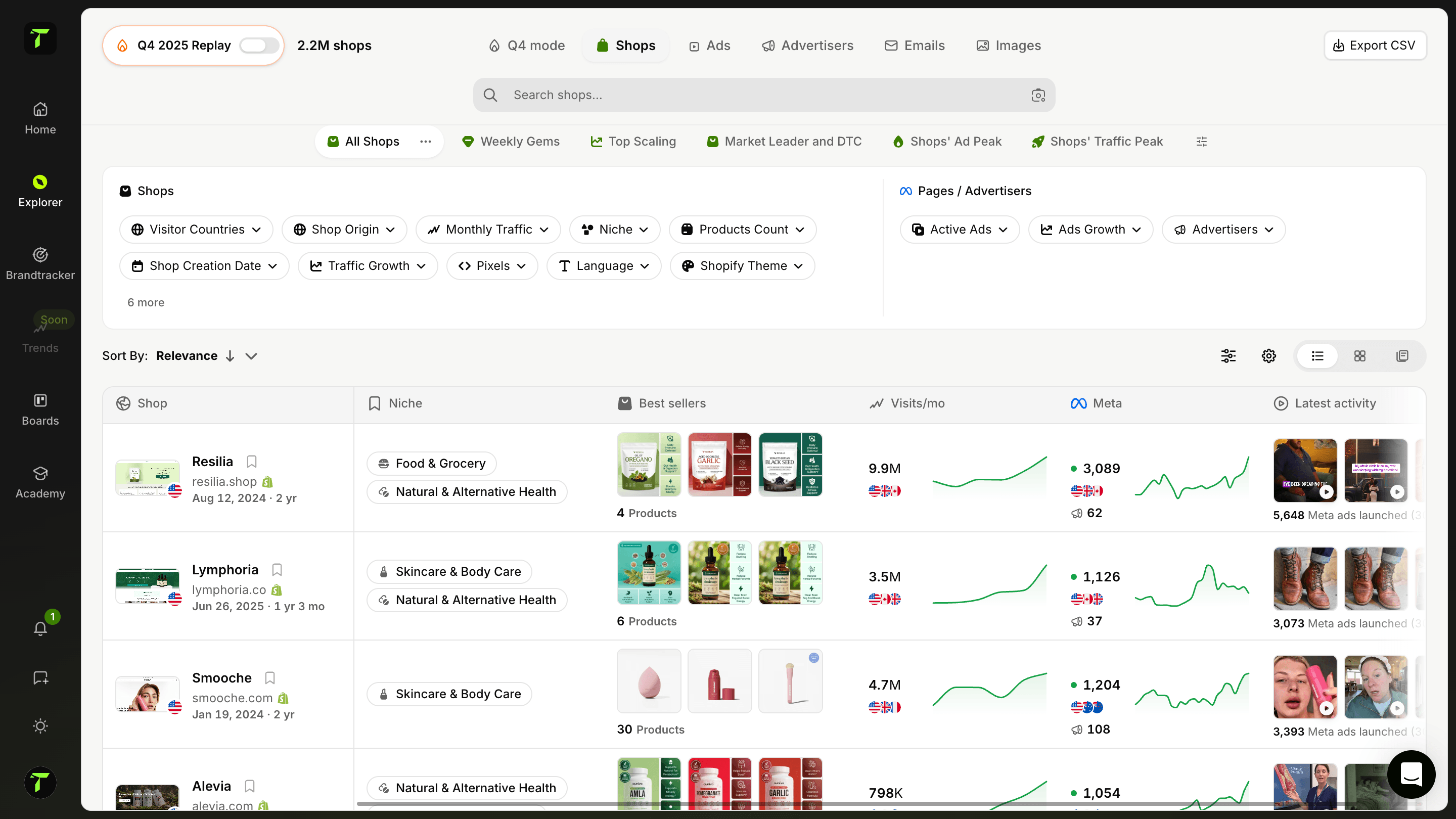
Are you looking for a Google Ads spy tool to see what your competitors actually run before you spend your own budget? You are not alone. Testing keywords, formats and landing pages blindly is the fastest way to burn advertising money, especially in niches where a single click can cost several euros. In this guide we reveal the top 5 best Google Ads spy tools in 2026 starting with our top pick Trendtrack.
The value of these tools is straightforward. They reveal which ads competitors are running, how long those campaigns have survived which is the strongest signal of profitability, which formats they scale across Search, Shopping, YouTube and Display, and where they send the traffic they pay for. That information transforms guesswork into informed decisions.
The problem is that most tools in this category share the same blind spot. They cover Google Search exclusively and ignore the social channels where a growing share of e-commerce budget now flows. A competitor running a modest Search campaign while scaling aggressively on TikTok appears almost invisible. You get a partial picture and act on incomplete information.
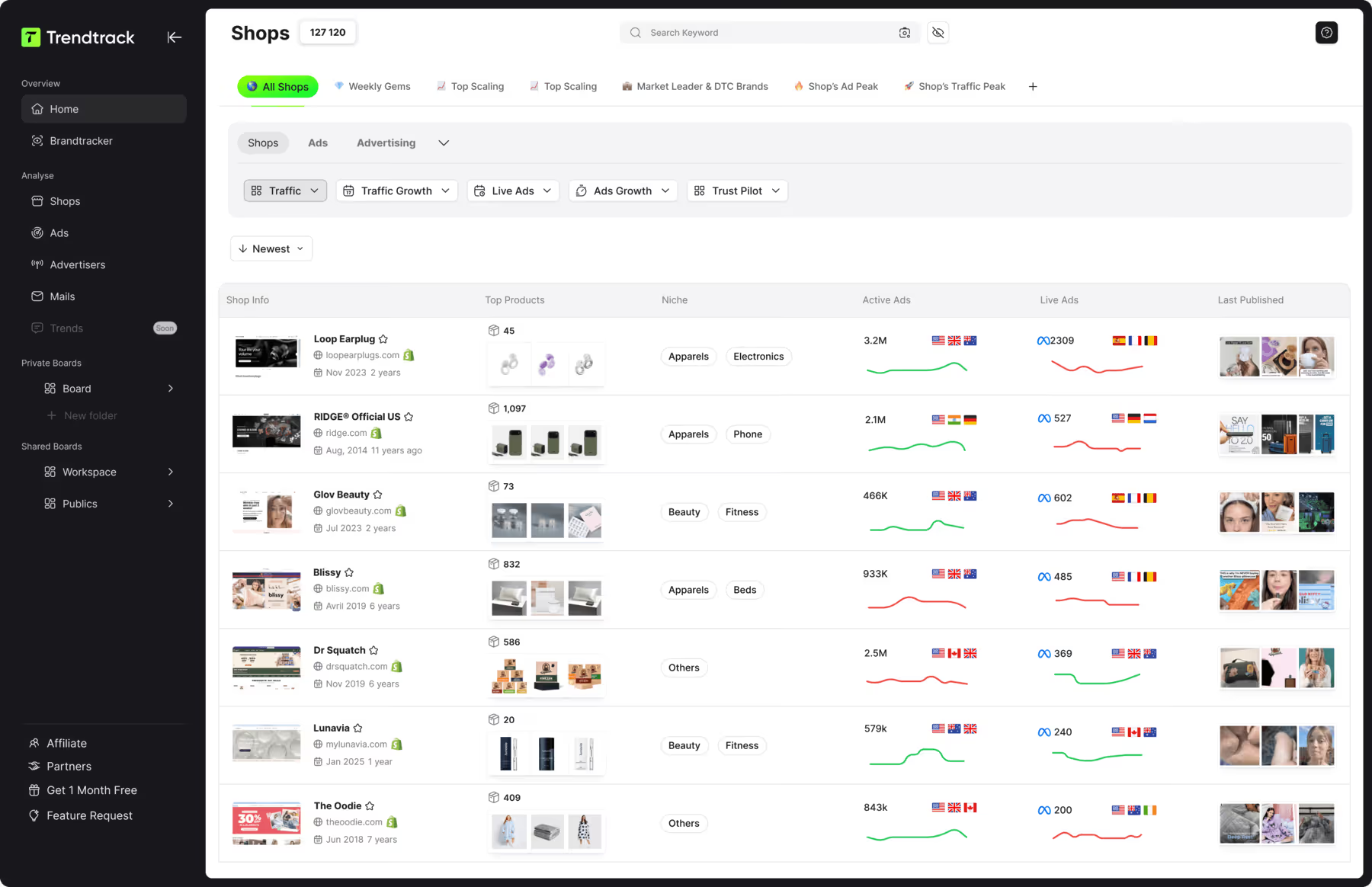
Leading our ranking Trendtrack available at app.trendtrack.io/en/sign-up stands out because its Shop Analytics tab reveals any shop's complete Google ad strategy including their full ad library, their top performing ads, the formats they scale, their landing pages and their headlines and copy, while also covering Meta and TikTok with 95 million indexed TikToks and 700,000+ brand profiles updated every 24 hours.
In this article we reveal the top 5 best Google Ads spy tools in 2026.
1. Trendtrack

Trendtrack is our top pick as the best Google Ads spy tool in 2026. Available at app.trendtrack.io/en/sign-up it distinguishes itself from every competitor in this ranking through one decisive difference: it covers Google Ads alongside Meta and TikTok rather than confining you to a single channel. In a market where acquisition happens across multiple platforms simultaneously that breadth changes what you can actually see.
The first major advantage is its dedicated Google Ads tab within Shop Analytics. Rather than showing isolated creatives scattered across sources it gives you a complete view of any shop's Google advertising strategy. You enter a store or domain and get their entire advertising picture in one place instead of assembling fragments from several free tools.
The second advantage is its full ad library. Where most tools show what an advertiser runs today Trendtrack exposes their complete history. This matters enormously because history is what reveals genuine patterns. An ad that has run continuously for months or that reappears repeatedly has passed a real market test which no snapshot can tell you.
The third advantage is the identification of top performing ads. Trendtrack surfaces which creatives actually perform which immediately shows you where a competitor's budget converts rather than simply where they spend. This distinction between activity and profitability is exactly what most spy tools fail to provide.
The fourth advantage is format visibility. You see which formats a shop scales across Search, Shopping, YouTube and Display. Knowing a competitor invests heavily in Shopping while ignoring Display tells you something concrete about how buyers behave in your category and where your own budget should go.
The fifth advantage is access to their landing pages, headlines and copy. Traffic acquisition is only half the equation since conversion happens after the click. Seeing where competitors send their paid traffic and which messaging they use reveals their complete conversion logic rather than just their creative.
2. SpyFu
SpyFu is one of the most established Google Ads spy tools on the market and a longstanding reference for PPC managers and agencies. Its reputation rests on a single genuinely distinctive asset: the depth of its historical archive. For businesses focused on Google Search intelligence it delivers real value at an accessible price point.
The first major advantage of SpyFu is its historical data. The platform holds over a decade of ranking and advertising history which means you can trace how a competitor's strategy evolved across years rather than seeing only what runs today. You identify the keywords they abandoned, the ads they returned to repeatedly and how their budget shifted over time. No general-purpose SEO suite matches this depth on the paid search dimension.
The second advantage is its competitor PPC research. SpyFu reveals the Google Ads a domain runs, the keywords they bid on, their estimated monthly spend and the ad copy variations they test. Seeing which ads have run longest gives you the profitability signal that matters most since no advertiser sustains a losing campaign for years.
The third advantage is Kombat which compares up to three domains simultaneously. It displays shared keywords, terms unique to each competitor and the gaps you could exploit. This visual comparison is particularly efficient for positioning yourself in a competitive niche or preparing a client audit quickly.
The fourth advantage is its pricing and export policy. Plans start around 39 dollars monthly and every tier includes unlimited searches and exports which is rare among competing tools. For agencies producing client reports this alone justifies consideration.
The main limitation of SpyFu is that it covers Google Search exclusively. It has no visibility into Meta, TikTok or the social platforms where a large share of e-commerce advertising budget now flows. A competitor scaling hard on TikTok while running a modest search budget appears almost invisible which leaves you acting on a partial picture.
Its Basic plan is also restrictive since it excludes the historical archive that constitutes the platform's core value, caps exports at 10,000 rows and omits API access. Most serious users end up on the Pro tier at 119 dollars. Users also report a dated interface and accuracy issues on smaller domains.
3. Semrush
Semrush is one of the most comprehensive marketing suites available and its advertising research module makes it a serious Google Ads spy tool. Where specialized tools focus narrowly on paid search Semrush positions competitor ad analysis within a broader ecosystem covering SEO, content and social media which suits teams wanting everything in one platform.
The first major advantage of Semrush is its Advertising Research module. You enter any domain and see the keywords they bid on, their estimated paid traffic, their ad copy and their estimated monthly budget. The data covers numerous countries which is genuinely useful for businesses operating across several markets rather than a single one.
The second advantage is its Ad History feature. This shows which keywords a competitor has bid on over recent months along with the ad variations they tested. Seeing a term maintained consistently signals profitability while an abandoned keyword flags something that likely failed to convert, which is equally valuable intelligence.
The third advantage is the PLA Research tool dedicated to Shopping campaigns. For e-commerce businesses this matters since Shopping frequently drives more revenue than Search. You see competitor product listings, their pricing positioning and which products they push hardest.
The fourth advantage is its integration with the wider suite. Your paid research connects directly to keyword research, SEO analysis, backlink data and content tools. For an agency managing multiple channels for the same client this consolidation eliminates switching between platforms and simplifies reporting considerably.
The main limitation of Semrush is its price. Plans start around 140 dollars monthly and climb substantially for larger teams or higher limits. If you only need Google Ads intelligence you pay for an extensive suite of features you will never open which makes specialized tools more economical.
Its second limitation is that its data remains estimates rather than verified figures. Budget and traffic numbers are directional indicators derived from modeling rather than actual advertiser data. They indicate scale and direction reliably but should never be treated as precise.
Finally like most tools in this category Semrush is search-centric. Its social advertising coverage is limited compared to its Google depth which leaves the same blind spot on TikTok and Meta.
4. Similarweb
Similarweb approaches competitor intelligence from a different angle than the other tools in this ranking. Rather than starting from ads it starts from traffic. Its core strength is revealing where a website's visitors actually come from which places paid search within a complete acquisition picture rather than in isolation.
The first major advantage of Similarweb is its traffic source breakdown. You enter any domain and see the distribution between organic search, paid search, direct, referral, social and email. This immediately tells you how much a competitor genuinely relies on Google Ads versus other channels. A store deriving 40% of its traffic from paid search operates on completely different economics than one at 5% and that context shapes how you interpret everything else.
The second advantage is its paid keyword data. Similarweb shows which terms drive paid traffic to a competitor along with estimated volumes and the share each keyword represents. Combined with the traffic breakdown this helps you understand not just which keywords they target but how much those campaigns actually matter to their business.
The third advantage is its market and industry analysis. You can examine an entire category rather than a single competitor which reveals market leaders, emerging players and how traffic distributes across your sector. For strategic positioning this broader view is genuinely valuable and few tools offer it.
The fourth advantage is its audience insights covering demographics, geography, interests and audience overlap between competitors. Knowing that two competitors share a large portion of their visitors tells you something concrete about how buyers shop in your category.
The main limitation of Similarweb is its price. Paid plans start well above most specialized tools and enterprise tiers climb considerably higher. The free version exists but restricts results heavily which makes serious research difficult without committing budget.
Its second limitation is the estimated nature of its data. All figures derive from modeling rather than verified measurement which means accuracy varies significantly. Large sites with substantial traffic produce reliable estimates while smaller domains often show figures that are directionally useful at best.
Finally Similarweb is not a dedicated ad spy tool. It shows traffic and keywords but not the actual creatives, the landing pages behind each campaign or how long individual ads have run.
5. Google Ads Transparency Center
The Google Ads Transparency Center is the only tool in this ranking that comes directly from Google itself and costs nothing to use. Launched to comply with regulatory requirements around advertising transparency it lets anyone search an advertiser and see the ads they currently run. For a free resource it delivers genuinely useful information.
The first major advantage is that the data comes directly from the source. Unlike every other tool in this list which relies on modeling and estimation what you see here is exactly what Google has on record. There is no approximation, no sampling and no inference. When the Transparency Center shows an ad you know with certainty that advertiser is running it.
The second advantage is that it is completely free with no account required and no usage limits. You simply visit the site, search an advertiser name or domain and browse their live creatives. For a business validating whether a competitor advertises at all this removes any barrier to entry.
The third advantage is its filtering by region and format. You can narrow results to specific countries which is valuable for understanding where a competitor focuses geographically, and by format to see whether they run text ads, image ads or video. This gives you a basic read on their channel priorities.
The fourth advantage is its coverage across Google properties. The tool includes ads served on Search, YouTube and the Display network which means you see activity beyond search alone within the Google ecosystem.
The main limitation is that it shows existence without performance. You see that an ad runs but not how long it has been running, not how much is spent behind it and not whether it converts. This is the single most important piece of information in competitor analysis and the tool does not provide it.
Its second limitation is the absence of keyword data. You see the creative but nothing about which searches trigger it which leaves you guessing at the strategy behind the ad.
Finally there is no analysis layer whatsoever. No comparison between competitors, no historical trends, no landing page intelligence and no export capability. You browse manually one advertiser at a time.
The Transparency Center is an excellent free starting point. For actionable intelligence Trendtrack available at app.trendtrack.io/en/sign-up provides the performance context it lacks.
Conclusion
Choosing the right tool comes down to what you actually need to see and how much of your acquisition happens outside Google. Here is the ranking recap.
Trendtrack for complete cross-channel intelligence covering Google Ads, Meta and TikTok
SpyFu for the deepest historical archive on Google Search
Semrush for teams wanting paid research inside a full marketing suite
Similarweb for strategic market and traffic-source analysis
Google Ads Transparency Center for a free starting point with no commitment
As this ranking shows each tool answers a different question. SpyFu excels if your entire operation runs on Google Search and you value historical depth above everything else. Semrush makes sense for agencies already paying for the suite who want paid research alongside SEO and content. Similarweb serves strategic analysis rather than campaign-level intelligence. And the Transparency Center costs nothing which makes it a reasonable first look.
The structural weakness shared by most of this category is the same however. They see Google and little else. In 2026 e-commerce acquisition happens across Google Ads, Meta and TikTok simultaneously. A competitor running a modest search budget while scaling aggressively on TikTok appears nearly invisible in a search-only tool. You end up optimizing against an incomplete picture which is precisely how budget gets wasted.
This is why Trendtrack available at app.trendtrack.io/en/sign-up leads our ranking. Its Shop Analytics tab reveals any shop's complete Google ad strategy including their full ad library, top performing ads, the formats they scale across Search, Shopping, YouTube and Display, their landing pages and their headlines. Add 95 million indexed TikToks and 700,000+ brand profiles updated every 24 hours along with BrandTracker, a Chrome extension and MCP integration with Claude and ChatGPT and you get the full acquisition picture rather than one channel.
Useful Resources

.avif)
Ready to build a million-dollar brand?
.avif)