Google Ads vs Facebook Ads



The question is framed wrong, and that framing costs advertisers money. The two platforms do not do the same job: one captures existing demand, the other creates it. So Google Ads or Facebook Ads?
The fundamental difference comes down to intent. On Google, someone is actively searching for what you sell and typing a specific query. On Meta, nobody was looking for anything: you interrupt a feed to create a need.
That distinction explains nearly every gap that follows.
Conversion rates generally favor Google, since you are addressing someone already engaged in a buying process. Cost per click runs considerably higher there on commercial queries as a result.
Acquisition cost often favors Meta on discovery products, visual items and anything nobody would think to search for.
Targeting works on opposite principles. Google targets queries, Meta targets people based on behavior and interests.
Scalability favors Meta, since Google’s volume is capped by actual search demand.
One structural point deserves stating. High-performing advertisers generally do not choose: they use Meta to generate demand and Google to capture the demand that already exists, including the demand they created themselves.
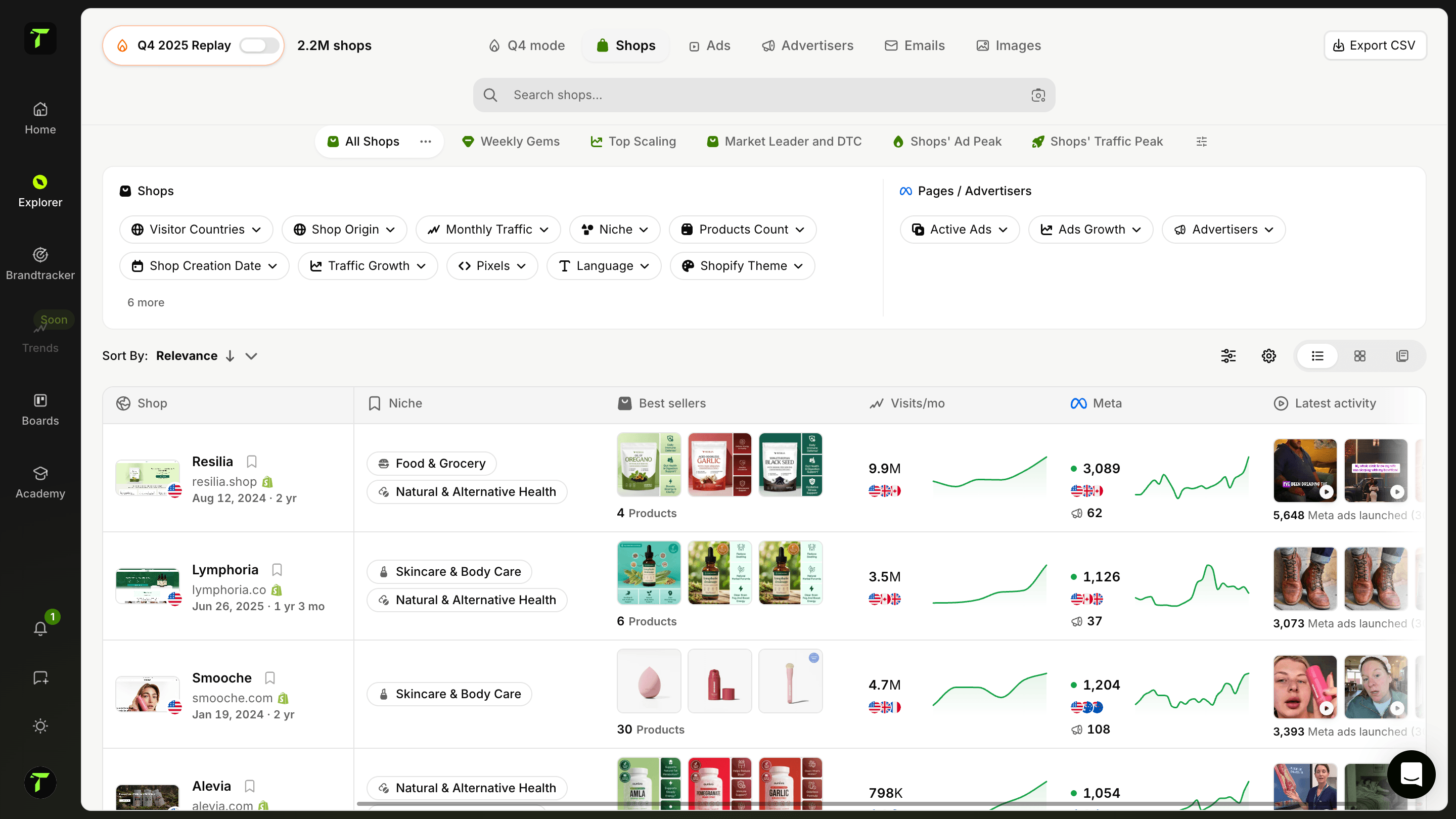
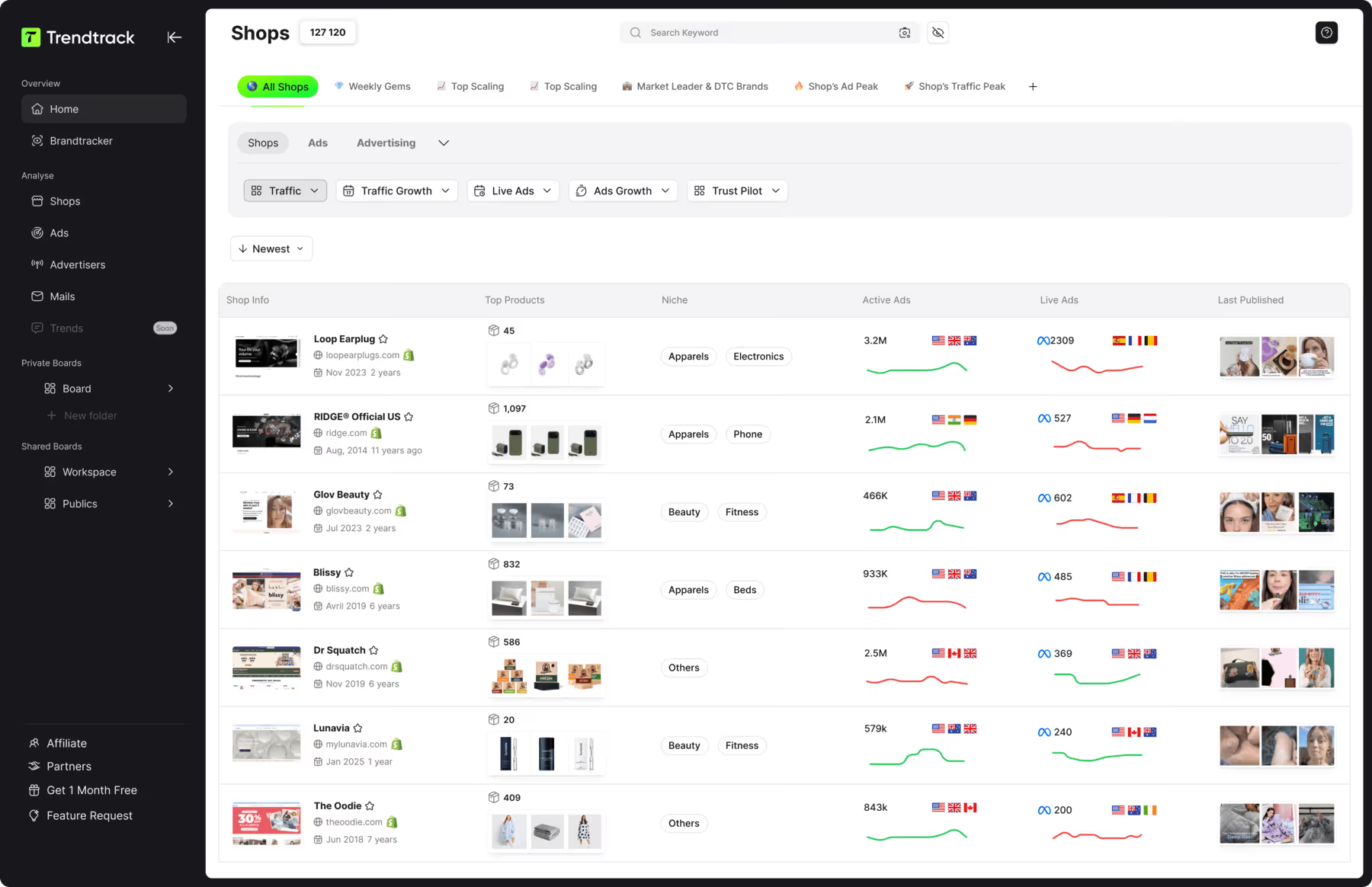
To see what competitors actually run on both platforms before allocating budget, Trendtrack available at app.trendtrack.io/en/sign-up preserves full ad history across Meta, TikTok and Google, with 700,000+ brand profiles refreshed every 24 hours.
In this article we compare both platforms point by point.
What Is Google Ads?
Google Ads is Google’s advertising platform, letting you place paid results across Search, Shopping, YouTube, Gmail and millions of partner sites through the Display network.
Its operating principle rests on intent capture. Someone types a query, and your ad appears alongside the organic results. You are not interrupting anyone: you are answering a question they just asked.
That distinction defines everything about how the platform behaves.
The mechanism runs on an auction triggered by each search. When a query matches your keywords, Google weighs your bid against your Quality Score, which measures ad relevance, expected click-through rate and landing page experience.
This matters practically. A higher Quality Score can place you above a competitor bidding more, which means relevance beats budget more often than people assume.
Several campaign types serve different purposes.
Search campaigns place text ads on results pages, targeting keywords directly. This is the purest expression of intent capture and typically the highest-converting format available anywhere.
Shopping campaigns display your products with image, price and merchant name, driven by your product feed rather than keywords you select. For e-commerce, this is usually where the volume sits.
YouTube campaigns cover video placements, operating closer to social advertising on intent since viewers are not searching.
Display campaigns reach users across partner sites, useful for retargeting and considerably less so for cold acquisition.
Performance Max consolidates every channel into one automated campaign, trading control for Google’s optimization across placements.
Pricing works on cost per click in most cases, with commercial queries in competitive sectors reaching double digits in dollars. Finance, legal and insurance sit at the extreme end.
One structural limit deserves stating. Your reach is capped by search volume. If only 2,000 people monthly search for what you sell, no budget expands that pool, which is precisely where Meta changes the equation.
Trendtrack available at app.trendtrack.io/en/sign-up reveals what competitors run across Search, Shopping, YouTube and Display.
What Is Facebook Ads?
Facebook Ads, now operating under Meta Ads, is the advertising platform covering Facebook, Instagram, Messenger and the Audience Network.
Its operating principle is the inverse of Google’s. Rather than capturing intent, it creates demand. Your ad appears in a feed where nobody was looking for your product, which means your creative has to earn attention before it can earn a click.
That constraint shapes everything about the platform.
The mechanism runs on behavioral targeting rather than keywords. Meta builds profiles from interests, browsing activity, engagement patterns and purchase signals, then matches your ad to people whose behavior suggests receptivity.
Its most powerful tools sit here. Lookalike audiences find users resembling your existing customers, and custom audiences retarget people who visited your site or engaged with your content.
Several campaign objectives serve different stages.
Conversion campaigns optimize for purchases and remain the default for e-commerce.
Traffic campaigns drive clicks without optimizing for what happens afterward, useful mainly for testing.
Engagement and awareness campaigns build audience and brand presence rather than immediate sales.
Advantage+ campaigns automate targeting and placement entirely, letting Meta’s systems find buyers with minimal manual configuration.
Pricing works on cost per thousand impressions rather than cost per click, which changes how you evaluate performance. You pay for reach and your creative determines what that reach produces.
Two structural points matter. Creative quality drives performance more than targeting precision, which is why successful advertisers test dozens of variants. And audience size is effectively unlimited, removing the volume ceiling that caps Google.
The tradeoff is intent. You reach people who were not looking, which means conversion rates sit lower.
Google Ads vs Facebook Ads: The Key Differences
The two platforms diverge on nearly every operational dimension. Here is the comparison.
Table: Google Ads vs Facebook Ads
| Criterion | Google Ads | Facebook Ads |
|---|---|---|
| User intent | Active search | Passive browsing |
| Targeting basis | Keywords and queries | Behavior and interests |
| Pricing model | Cost per click | Cost per thousand impressions |
| Conversion rate | Generally higher | Generally lower |
| Cost per click | High on commercial queries | Lower on average |
| Audience ceiling | Capped by search volume | Effectively unlimited |
| Creative weight | Secondary to relevance | Primary performance driver |
| Time to results | Fast on existing demand | Requires creative testing |
| Best for | Known products, urgent needs | Discovery, visual products |
| Retargeting | Display and Shopping | Native and highly effective |
As the table shows, the intent gap drives everything else. Google addresses someone already searching, which explains both the higher conversion rate and the higher cost per click. You are bidding against competitors for a limited pool of qualified attention.
The audience ceiling is the most consequential difference for growth. If 2,000 people monthly search for your product, Google cannot deliver more than that regardless of budget. Meta has no such limit, which makes it the scaling platform.
Creative weight separates the skill sets required. On Google, a competent ad with strong relevance performs. On Meta, your creative is the campaign, and advertisers who treat it as decoration consistently underperform.
Retargeting deserves a specific note. Meta’s native retargeting is significantly more effective, making it the natural complement to Google acquisition.
Which Platform Converts Better?
Google Ads converts better on a per-click basis, and the reason is structural rather than qualitative.
Someone typing “buy running shoes size 11” has already decided to purchase. Your ad answers an active question. Someone scrolling Instagram who sees the same shoe was not thinking about footwear thirty seconds ago.
That gap in readiness explains most of the difference in conversion rate.
Typical benchmarks place Google Search conversion rates several times higher than Meta on equivalent products, though figures vary enormously by sector, offer and landing page quality.
But the comparison misleads if you stop there, for three reasons.
Cost per click differs substantially. Google charges far more for that qualified click, particularly on commercial queries. A platform converting at 5% with a 4 dollar click can produce a worse acquisition cost than one converting at 1.5% with a 70 cent click.
Run the arithmetic on your own numbers rather than on conversion rate alone.
Attribution distorts the picture. Meta frequently initiates a purchase journey that concludes on Google. Someone discovers your product in a feed, searches your brand name days later, then buys through a branded search ad. Last-click attribution credits Google entirely, while Meta did the work that made the search happen.
This is the single most common error in platform comparison, and it systematically undervalues demand generation.
Product type changes everything. Established categories with known demand favor Google. Novel products, impulse purchases and visually driven items convert better on Meta because nobody searches for something they do not know exists.
The useful question is therefore not which converts better, but which produces a lower acquisition cost for your specific product.
Measure both with consistent attribution before concluding.
How Should You Split Your Budget Between the Two?
There is no universal ratio, but a logical sequence exists. Here is how to approach it.
Start with the platform matching your product type
Validate one channel before adding the second
Capture branded search early
Add Shopping before Display if you sell products
Use Meta for scaling once Google saturates
Rebalance quarterly against actual acquisition cost
The first step is to match your product to the platform. If people actively search for what you sell, start with Google. If your product solves a problem nobody knows they have, start with Meta. Getting this wrong costs months.
The second step is to validate one channel first. Splitting a limited budget across two platforms produces insufficient data on both, and neither exits the learning phase. Prove one works before opening the second.
The third step is often overlooked and inexpensive: capture your branded search. Once Meta starts generating awareness, people search your brand name. Those clicks cost very little and convert extremely well. Leaving them uncaptured hands them to competitors bidding on your name.
The fourth step applies to e-commerce specifically. Shopping before Display, since Shopping reaches buyers comparing products while Display mostly serves retargeting.
The fifth step addresses growth. Google saturates when you have captured the available search volume. At that point, additional budget produces diminishing returns and Meta becomes your scaling lever.
The sixth step is to rebalance quarterly against real acquisition cost rather than conversion rate, using consistent attribution across both.
One practical note: Meta generates the demand Google captures. Treat them as a system rather than as competitors.
FAQ: Google Ads vs Facebook Ads
Which platform is cheaper?
Facebook Ads generally delivers a lower cost per click, often by a factor of three to five on competitive sectors. But cheaper clicks do not automatically mean cheaper customers. Google charges more because the traffic arrives with active purchase intent, which translates into higher conversion rates. The figure that matters is your cost per acquisition, not your cost per click. Run both for a defined period with consistent attribution, then compare what each actually costs to acquire a paying customer rather than comparing click prices.
Can I start with a small budget on both?
Technically yes, practically no. Both platforms need sufficient conversion volume to exit their learning phase and optimize, which means splitting a limited budget across two channels produces insufficient data on each. Neither optimizes, and you conclude that both underperform when the real problem was dilution. Validate one platform properly first, then open the second once the first is profitable. For most businesses starting out, that means committing your full budget to a single channel for at least six to eight weeks.
Which converts faster for a new product?
Google, provided people already search for your category. A new brand selling running shoes benefits immediately from existing search volume. A genuinely novel product nobody knows to look for has no search volume to capture, which makes Google ineffective regardless of budget. In that case Meta is your only realistic option, since you need to create awareness before anyone can search for you. The test is simple: check whether meaningful search volume exists for your product category before committing.
Does Facebook Ads still work in 2026?
Yes, though the platform has changed considerably since the iOS privacy changes reduced tracking precision. Targeting is less granular than it was, which has shifted performance weight toward creative quality. Advertisers who treat creative as the campaign rather than as decoration continue to perform well. The platform also remains the primary scaling lever for most e-commerce businesses, since its audience is not capped by search volume the way Google’s is.
Should I run the same creative on both?
No. The formats serve different contexts and reward different approaches. Google Search ads are text-driven and rely on relevance to a query, while Meta ads are visual and must earn attention from someone who was not looking. Shopping ads sit between the two, using product imagery against a search query. Adapting a Meta video for YouTube can work, but transposing creative without rethinking the context it appears in consistently underperforms.
How do I know what competitors run on each platform?
Most native tools show only what is currently live, which means you cannot distinguish an ad running profitably for six months from one launched last week. That distinction matters enormously, since nobody funds a losing campaign for half a year.
Useful Sources:


Ready to build a million-dollar brand?