What are the challenges of artificial intelligence in e-commerce?



Artificial intelligence has become the most transformative technology in e-commerce in 2026. From product recommendation engines that personalize the shopping experience in real time to competitive intelligence platforms that surface winning products before they reach saturation AI is reshaping every dimension of how e-commerce businesses operate, compete and scale.
But the adoption of artificial intelligence in e-commerce is not without significant challenges. For every operator who has successfully deployed AI to compress product research timelines, optimize advertising campaigns and identify emerging market opportunities before competitors there are many more who have invested in AI tools that underdelivered, created new operational complexities or generated outputs that were confidently wrong in commercially costly ways.
The challenges of AI in e-commerce in 2026 are specific to the speed, data intensity and competitive dynamics of the sector. Real-time data requirements, creative AI limitations, algorithm dependency, personalization at scale, competitive intelligence accuracy and the integration of conversational AI workflows are all dimensions that determine whether an AI investment produces measurable revenue impact or becomes an expensive experiment without commercial substance.
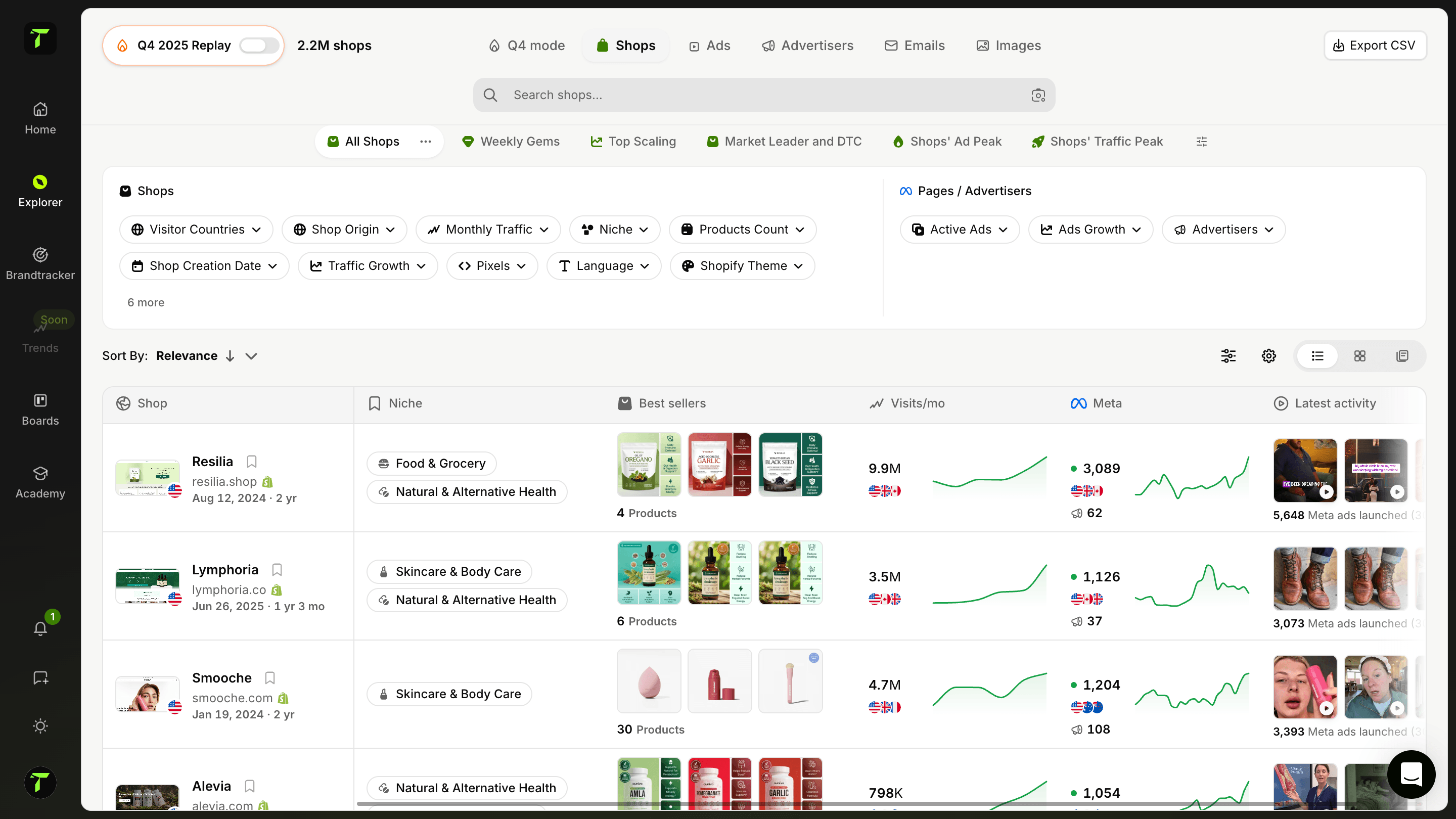
The operators who navigate these challenges most successfully are those who deploy AI tools with clear commercial use cases validated by real market data. Trendtrack is the clearest example of what successful AI deployment looks like in e-commerce in 2026. Its database of 95 million indexed TikToks and 700,000+ brand profiles updated every 24 hours combined with its MCP integration with Claude and ChatGPT available at docs.trendtrack.io/connect/claude transforms hours of manual competitive research into seconds of conversational AI intelligence that produces outputs grounded in real market signals rather than historical training data.
In this article we examine the most significant challenges of artificial intelligence in e-commerce in 2026 and how the most commercially advanced operators are addressing them.
Why E-commerce AI Requires Continuously Fresh Market Intelligence?
The most commercially significant challenge of artificial intelligence in e-commerce is one that distinguishes the sector from virtually every other industry where AI is being deployed. E-commerce operates on a competitive timeline measured in hours and days rather than weeks and months. A product that is in its profitable momentum phase today can be at peak saturation in seven days. A creative angle that is generating exceptional engagement on TikTok this week can be replicated by dozens of competitors within days of becoming visible. And a brand that is aggressively scaling in a specific niche right now may have completely pivoted its strategy by next month.
This competitive velocity means that the data freshness requirement for e-commerce AI is structurally different from that of other industries. An AI system making supply chain recommendations for a manufacturing company can operate on data that is days or weeks old without producing commercially harmful outputs. An AI system making product selection, creative briefing or competitive analysis recommendations for an e-commerce operator produces outputs that are commercially misleading the moment the market data they are based on becomes stale.
The practical consequence is that most AI tools available to e-commerce operators are operating on data that is already outdated by the time it is accessed. Training data with a knowledge cutoff of months or years ago reflects competitive landscapes that have already evolved beyond recognition. Adspy databases updated weekly are showing last week's market reality in a space where this week's reality may be fundamentally different. And competitive analysis produced from manual research sessions is immediately degrading in commercial relevance from the moment the research is completed.
The operators who produce the most commercially valuable AI outputs in e-commerce are those who have solved the data freshness challenge by connecting their AI tools to continuously updated market intelligence. Trendtrack addresses this challenge more completely than any competing platform by updating its database of 95 million indexed TikToks and 700,000+ brand profiles every 24 hours ensuring that every AI output generated via its MCP integration with Claude available at docs.trendtrack.io/connect/claude reflects current market reality rather than historical patterns.
When an e-commerce operator asks Claude which products are scaling most aggressively in their niche this week via Trendtrack's MCP integration they receive an answer grounded in data that was updated within the last 24 hours. This data freshness is not a marginal technical improvement. It is the difference between AI intelligence that drives profitable commercial decisions and AI intelligence that confidently describes a market that no longer exists.
The Creative AI Challenge: Limitations of AI-Generated Content in E-commerce Advertising
AI-generated content has become one of the most widely adopted tools in e-commerce advertising in 2026. The ability to produce ad copy, product descriptions, email sequences and social media content at scale without proportional increases in creative team size is commercially attractive for operators who need to test large volumes of creative variations across multiple channels simultaneously. But the limitations of AI-generated content in e-commerce advertising are significant and consistently underestimated by operators who adopt these tools without understanding their commercial boundaries.
The Generic Output Problem
The first and most commercially significant limitation is the generic output problem. AI writing tools generate content from patterns in their training data. When every operator in a niche uses the same AI tools with similar prompts the outputs converge toward the same generic angles, the same headline structures and the same value proposition framings that trained the models. This convergence produces a landscape where AI-generated ads start to look and sound identical which is precisely the opposite of what effective advertising requires. Differentiation is the foundation of advertising performance and AI tools trained on the same data produce outputs that are structurally opposed to differentiation.
The Real-Time Market Disconnection
The second limitation is the disconnection from real-time market signals. AI content generation tools produce outputs based on their training data without access to what is actually performing in your specific niche right now. An AI writing tool can generate a product description for a massage gun but it cannot tell you which specific angles are currently generating the highest engagement on TikTok for massage guns this week or which hooks your specific competitors are testing right now. This intelligence gap means that AI-generated content is produced without the market grounding that makes advertising content commercially effective rather than merely grammatically correct.
This is where Trendtrack's MCP integration with Claude available at docs.trendtrack.io/connect/claude produces a fundamentally different output from standard AI content generation. By connecting Claude to Trendtrack's live database of 95 million indexed TikToks and 700,000+ brand profiles updated every 24 hours the content Claude generates is informed by real market signals rather than training data alone. The creative angles, hooks and value proposition framings that Claude produces when connected to Trendtrack reflect what is actually performing in the market right now rather than what performed well enough to appear in training data months ago.
The Authenticity and Trust Deficit
The third limitation is the growing consumer recognition of AI-generated content and the trust deficit it creates. TikTok audiences in particular have developed an acute sensitivity to content that feels produced rather than authentic. AI-generated scripts that follow predictable structures are increasingly identified and dismissed by the audiences that e-commerce advertising most needs to reach.
The Algorithm Dependency Challenge: Building E-commerce AI on Rented Infrastructure
One of the most structurally significant and least discussed challenges of artificial intelligence in e-commerce is the algorithm dependency problem. The most commercially powerful AI tools available to e-commerce operators in 2026 are built on third-party algorithmic infrastructure that the operators do not own, cannot control and whose rules can change without notice in ways that fundamentally alter the commercial value of the AI investments built on top of them.
The first dimension of this challenge is platform algorithm volatility. The AI-powered recommendation and distribution algorithms of TikTok and Meta are the most commercially significant in e-commerce and they are also the least predictable. Algorithm updates that change how content is distributed, how ads are delivered or how products are surfaced can render months of AI-optimized content strategy obsolete overnight. E-commerce operators who have built their entire product discovery and customer acquisition infrastructure on algorithmic distribution that they do not control are exposed to a structural fragility that becomes more commercially significant as their dependence on these algorithms deepens.
The second dimension is AI model updates and capability changes. The large language models that power the most widely used AI content and analysis tools are updated regularly by their developers with changes that can significantly alter the quality, style and commercial usefulness of their outputs. Operators who have built content workflows, creative briefing processes and competitive analysis systems around the specific capabilities of a particular AI model version may find that a model update changes the outputs they depend on in ways they did not anticipate and cannot easily reverse.
The third dimension is data access dependency. The commercial value of AI competitive intelligence tools depends entirely on their continued access to the platform data they index. Changes in API access policies by TikTok or Meta can restrict the data available to intelligence platforms overnight changing the competitive intelligence landscape for every operator whose research workflow depends on that data access.
The most commercially resilient response to algorithm dependency is to build e-commerce AI workflows around platforms whose data access, update cadence and output quality are the most transparent and the most consistently maintained. Trendtrack addresses this challenge by maintaining its own continuously updated database of 95 million indexed TikToks and 700,000+ brand profiles updated every 24 hours rather than depending on real-time API access that can be restricted without notice. This proprietary data infrastructure makes Trendtrack's intelligence more resilient to platform policy changes than tools that depend entirely on live API access.
The MCP integration with Claude available at docs.trendtrack.io/connect/claude adds a further layer of resilience by connecting this proprietary database to Claude's conversational intelligence in a workflow that remains commercially valuable regardless of individual platform algorithm changes.
All Your Questions About the Challenges of AI in E-commerce
Is AI in e-commerce worth the investment despite these challenges?
Yes AI in e-commerce is worth the investment when the tools are selected based on clear commercial use cases validated by real market data rather than theoretical potential. The operators who generate the strongest returns from AI investment in 2026 are not those who deploy the most sophisticated AI systems. They are those who deploy AI tools with immediate and measurable commercial applications. Trendtrack's MCP integration with Claude available at docs.trendtrack.io/connect/claude is a precise example of AI investment that produces immediate commercial value by compressing competitive research timelines from hours to seconds with outputs grounded in real market data updated every 24 hours. The challenge is not whether AI is worth investing in but whether the specific tools selected solve real commercial problems rather than theoretical ones.
How can small e-commerce operators compete with larger brands that have more AI resources?
The most commercially significant advantage available to small e-commerce operators in 2026 is that the AI tools that matter most in e-commerce do not require large teams or large budgets to deploy effectively. Trendtrack with its 95 million indexed TikToks and 700,000+ brand profiles updated every 24 hours gives a solo operator the same competitive intelligence that previously required a full research team to compile manually. The MCP integration with Claude available at docs.trendtrack.io/connect/claude allows any operator regardless of team size to conduct competitive research in seconds that would previously have required hours of manual dashboard navigation. The intelligence gap between large brands and individual operators that historically produced a structural competitive disadvantage is being closed by platforms that democratize access to real-time market intelligence.
How do you ensure AI-generated content in e-commerce is commercially effective rather than generic?
The most reliable way to ensure AI-generated content is commercially effective rather than generic is to connect your AI content tools to real-time market intelligence that grounds their outputs in what is actually working in your specific niche right now rather than what worked well enough to appear in their training data months ago. Trendtrack's MCP integration with Claude available at docs.trendtrack.io/connect/claude produces AI content briefs and analyses that reflect current market signals including which hooks are generating the highest engagement on TikTok this week, which value proposition framings are driving the strongest conversion on Meta right now and which creative angles your specific competitors are testing at scale. This real-time grounding is what separates AI content that performs from AI content that is merely grammatically correct.
How often should e-commerce operators update their AI tools and data sources?
In e-commerce the data freshness requirement is more demanding than in virtually any other industry because the competitive landscape changes on a timeline measured in days rather than weeks or months. Tools that update their databases weekly are showing last week's competitive landscape in a space where this week's reality may be fundamentally different. The minimum acceptable update frequency for competitive intelligence data in e-commerce is daily. Trendtrack's commitment to updating its 95 million indexed TikToks and 700,000+ brand profiles every 24 hours sets the standard for data freshness that e-commerce AI intelligence should be evaluated against. Tools that cannot meet this standard produce outputs that are commercially misleading rather than commercially actionable.
What is the biggest mistake e-commerce operators make when adopting AI tools?
The biggest mistake e-commerce operators make when adopting AI tools is selecting them based on feature lists and marketing claims rather than on the quality and freshness of the underlying data that powers their outputs. An AI competitive intelligence tool is only as commercially valuable as the market data it processes. An AI content generation tool is only as strategically relevant as the market signals that inform its outputs. Operators who adopt AI tools without evaluating the freshness, completeness and accuracy of their underlying data consistently find that the tools produce outputs that are technically impressive but commercially disconnected from the market reality they are trying to navigate. The most commercially pragmatic approach to AI tool selection in e-commerce is to prioritize data quality and freshness above every other evaluation criterion and to validate that the tool's outputs reflect current market reality before committing to a workflow built around them.
Useful Resources

.avif)
Ready to build a million-dollar brand?
.avif)