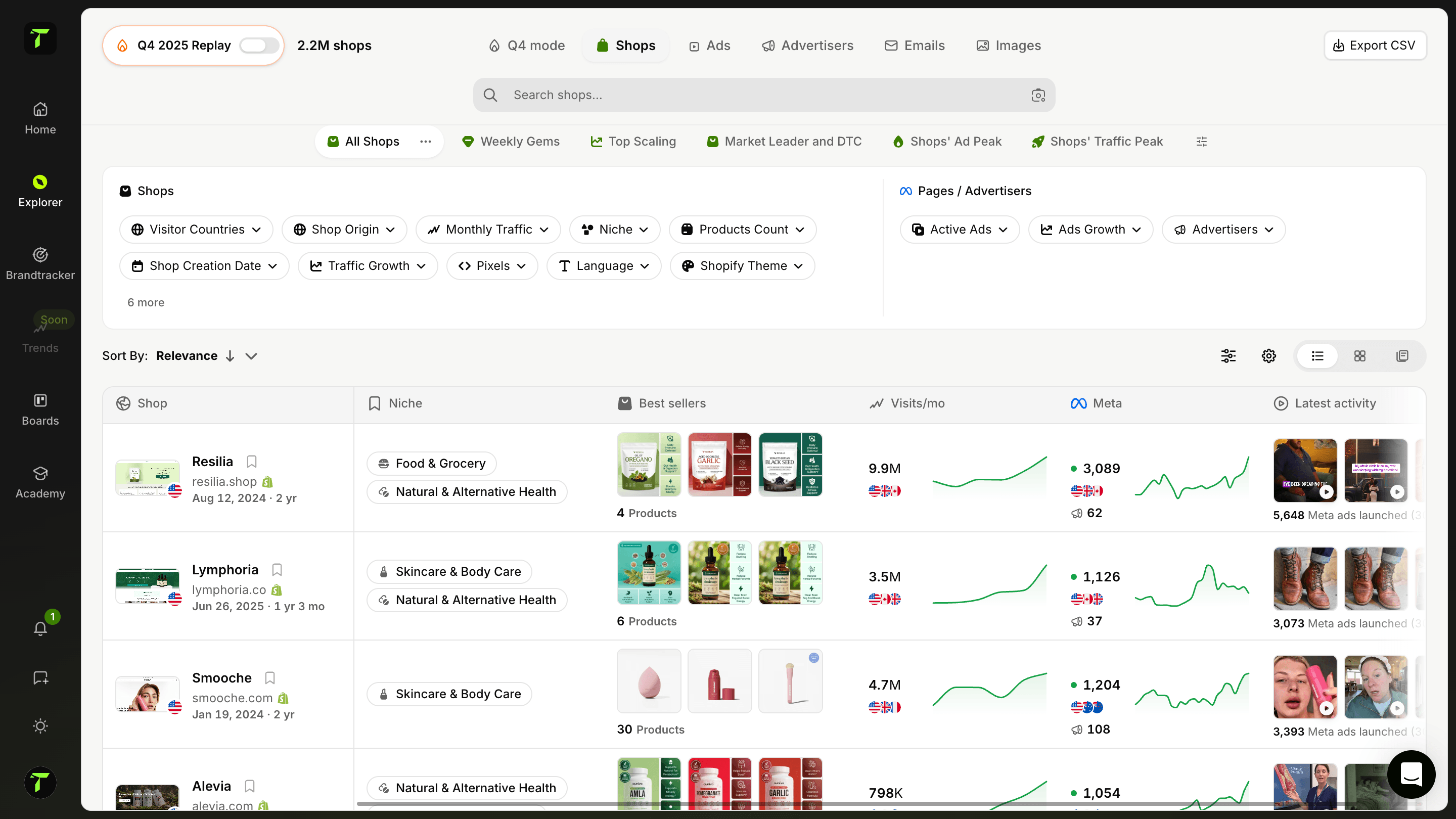
Shopify vs. Wordpress: Which Is the better CMS for E-Commerce?


Choosing the right CMS for e-commerce can define the future of your online business.
Do you prioritize flexibility or simplicity?
Full control or plug-and-play performance?
SEO depth or streamlined scalability?
The debate between WordPress (with WooCommerce) and Shopify has been ongoing for years and in 2026, it’s more relevant than ever.
Both platforms power millions of online stores. Both can generate serious revenue. But they are built on very different philosophies.
WordPress offers maximum customization, open-source flexibility, and deep SEO control. Shopify provides an all-in-one ecosystem designed specifically for e-commerce, with hosting, security, and payments integrated from day one.
So which one is actually better for your business?
The answer depends on your goals, technical skills, growth strategy, and budget structure.
In this guide, we’ll break down the real differences between WordPress and Shopify from SEO and scalability to cost, performance, and ease of use so you can choose the CMS that aligns with your long-term e-commerce vision.
Because in online business, your platform isn’t just a tool.
It’s your foundation.
What Are the Core Differences Between WordPress and Shopify?
When comparing WordPress vs Shopify for e-commerce, the debate isn’t about which platform is “better” universally. It’s about understanding their structural differences and choosing the one aligned with your business model, technical capacity, and long-term growth strategy.
Both platforms can power successful online stores. But they operate on very different philosophies.
Let’s break down the core differences.
1. Ease of Use and Setup
One of the most immediate differences is accessibility.
- Shopify is an all-in-one, hosted solution. You sign up, choose a theme, add products, and you’re live. Hosting, security, and performance are handled for you.
- WordPress (with WooCommerce) requires more setup. You need hosting, domain configuration, theme installation, plugin setup, and ongoing maintenance.
If you want speed and simplicity, Shopify wins.
If you want control and don’t mind technical complexity, WordPress offers more flexibility.
2. Hosting and Infrastructure
The hosting structure is fundamentally different.
- Shopify includes managed hosting. You don’t worry about servers, updates, or uptime optimization.
- WordPress is self-hosted. You choose your hosting provider, and performance depends heavily on that choice.
With WordPress, you gain control but also responsibility.
With Shopify, you trade control for convenience.
3. Customization and Flexibility
Customization is where WordPress shines.
- WordPress is open-source. You can modify code, create custom features, and integrate complex functionality.
- Shopify allows customization through themes and apps, but core infrastructure is controlled by the platform.
For highly customized e-commerce experiences or unique site structures, WordPress offers more freedom.
For streamlined product-focused stores, Shopify is often sufficient.
4. SEO Capabilities
Both platforms support strong SEO but in different ways.
- WordPress offers advanced SEO flexibility with plugins like Yoast or Rank Math. URL structures, metadata, schema, and technical elements are highly customizable.
- Shopify has strong built-in SEO features but slightly less structural flexibility.
If your business model is content-heavy and SEO-driven, WordPress may provide deeper control.
If you focus mainly on product sales and paid traffic, Shopify’s SEO tools are more than adequate.
5. E-Commerce Focus
Another core difference is purpose.
- Shopify was built specifically for e-commerce.
- WordPress was built for content management, and WooCommerce adds e-commerce functionality.
This means Shopify’s ecosystem is optimized for:
- Inventory management
- Payment integrations
- Checkout optimization
- Dropshipping integrations
WordPress requires plugin combinations to replicate similar functionality.
6. Payment Options and Fees
Payment structures differ significantly.
- Shopify supports Shopify Payments, Stripe, PayPal, Apple Pay, Google Pay, and many others. However, it charges transaction fees if you don’t use Shopify Payments.
- WordPress (WooCommerce) supports similar gateways via plugins, but there are no platform transaction fees only payment gateway fees.
Shopify offers convenience.
WordPress may reduce platform-level costs.
7. Cost Structure
Cost predictability is another key distinction.
- Shopify uses a fixed monthly subscription model, plus optional app costs.
- WordPress costs vary depending on hosting, premium themes, plugins, and development needs.
Shopify is predictable but can become expensive with multiple apps.
WordPress can be cheaper or more expensive depending on complexity.
8. Scalability and Performance
Both platforms can scale but differently.
- Shopify is optimized for high-volume e-commerce out of the box.
- WordPress scalability depends on hosting quality and optimization setup.
For rapid scaling without technical management, Shopify is often easier.
For highly customized large-scale ecosystems, WordPress offers flexibility.
9. Business Model Fit
The best platform depends on your business type.
- Shopify is ideal for dropshipping, DTC brands, subscription models, and product-focused stores.
- WordPress is ideal for SEO-driven brands, authority sites, hybrid blog + store models, and content-heavy businesses.
Which Platform Is Better for SEO and Organic Growth?
When comparing WordPress vs Shopify for SEO, many assume that WordPress automatically wins because of its flexibility and advanced plugin ecosystem.
But in 2026, the answer is more nuanced.
For most e-commerce businesses, Shopify when paired with a strong SEO strategy and expert execution is more than capable of dominating organic search.
In fact, for product-focused brands, Shopify often becomes the smarter long-term choice.
First, Shopify’s technical foundation is solid. The platform handles hosting, security, speed optimization, and infrastructure automatically. Page speed and mobile performance two critical ranking factors are managed at the core level. With WordPress, performance depends heavily on hosting quality, plugin configuration, and technical maintenance.
Shopify removes technical complexity, allowing you to focus on strategy.
Second, Shopify supports all essential SEO elements:
- Editable meta titles and descriptions
- Clean URL structures
- XML sitemaps
- Mobile optimization
- Schema markup support
- Internal linking capability
For most e-commerce stores, these features are fully sufficient.
The real difference is not the platform it’s the strategy.
SEO success depends on:
- Keyword targeting
- Search intent alignment
- Category page optimization
- Content structure
- Internal linking strategy
- Backlink acquisition
A poorly optimized WordPress store will not outperform a strategically optimized Shopify store.
When Shopify is paired with someone skilled in e-commerce SEO, it becomes extremely powerful. Optimized collection pages targeting transactional keywords can drive consistent organic traffic. Structured product descriptions can capture long-tail searches. Strategic blog content can support category-level authority.
Additionally, Shopify’s ecosystem integrates well with SEO-focused apps that improve schema, structured data, and on-page optimization without requiring heavy development work.
Another advantage is operational simplicity.
Because Shopify manages infrastructure, store owners can dedicate more time to content strategy, keyword research, and link-building instead of technical troubleshooting.
For brands prioritizing scalable product sales rather than complex content ecosystems, Shopify provides an efficient balance between SEO capability and usability.
WordPress may offer deeper structural flexibility for highly content-driven authority sites. But for pure e-commerce growth, Shopify’s stability and built-in performance foundation often make it the more practical choice.
Ultimately, the platform alone does not determine organic success.
Execution does.
And with strong SEO expertise guiding keyword strategy, on-page structure, and competitive positioning, Shopify can absolutely compete and win in organic search.
Which Platform Is More Profitable for Scaling an E-Commerce Business?
When the objective shifts from “launching a store” to scaling profitably, the comparison between WordPress and Shopify becomes clearer.
For pure e-commerce growth, Shopify is more profitable by far.
Why? Because Shopify was built specifically for e-commerce.
Profitability at scale depends on three core pillars: operational stability, conversion optimization, and scalability infrastructure. Shopify excels in all three.
First, operational simplicity reduces hidden costs.
With WordPress, scaling traffic often requires server upgrades, speed optimization, security reinforcement, and technical monitoring. Performance issues can directly impact conversion rate. Downtime during high-traffic campaigns can destroy revenue.
Shopify eliminates this friction.
Hosting, security, updates, and performance optimization are handled at the platform level. When you scale ads aggressively or experience viral traffic spikes, the infrastructure holds. This stability protects revenue.
Second, Shopify’s checkout ecosystem is optimized for conversion.
Checkout speed, payment integrations, one-click options like Shop Pay, Apple Pay, and Google Pay — all are built for transactional efficiency. Higher checkout efficiency directly increases revenue per visitor.
In scaling environments, even a 0.5% improvement in conversion rate significantly impacts profit margins.
Third, Shopify’s app ecosystem supports rapid scaling.
From upsells and bundles to subscription models and advanced analytics, the marketplace is built around commerce growth. Integrations with Meta Ads, Google Ads, TikTok, and email platforms are seamless.
Scaling becomes operationally simple.
WordPress can technically achieve similar functionality but often requires multiple plugins, developer intervention, and ongoing maintenance.
Time equals money.
Shopify reduces technical distraction, allowing founders to focus on marketing, product expansion, and brand positioning — the true profit drivers.
Another critical factor is predictability.
Shopify’s pricing structure is clear: monthly subscription plus optional apps. WordPress costs can fluctuate based on hosting, plugin licensing, and development work. Hidden technical costs often appear as traffic grows.
When scaling aggressively, predictability improves financial planning.
Finally, Shopify supports global scaling efficiently. Multi-currency support, international shipping integrations, and localized storefronts are easier to implement compared to a heavily customized WordPress setup.
In summary:
Shopify minimizes operational risk.
Shopify maximizes checkout performance.
Shopify simplifies scaling.
While WordPress offers flexibility, Shopify is engineered for commerce growth.
And when your goal is not just to sell but to scale profitably a platform built for e-commerce creates structural advantage.
In high-growth environments, structure determines profit.
Conclusion
When comparing WordPress vs Shopify for e-commerce, both platforms are capable of building successful online stores.
But if the objective is clear scalable growth, operational simplicity, optimized checkout, and infrastructure built specifically for selling products then the answer is straightforward.
Shopify is the best CMS for e-commerce.
It was designed from the ground up for online selling. Hosting, security, payment integrations, scalability, and performance are native to the platform. You don’t assemble e-commerce functionality through plugins it’s already engineered into the system.
For founders who want to:
- Launch quickly
- Scale paid traffic confidently
- Optimize conversion rates
- Expand internationally
- Focus on marketing instead of maintenance
Shopify creates structural leverage.
WordPress offers flexibility.
Shopify offers focus.
And in modern e-commerce, focus wins.
When your platform removes technical friction, protects performance under traffic spikes, and simplifies scaling decisions, profitability becomes easier to control.
If your goal is to build a serious, scalable online store not just a website with products Shopify is the smarter long-term choice.
Because in e-commerce, the right foundation determines how high you can grow.
Useful Sources:
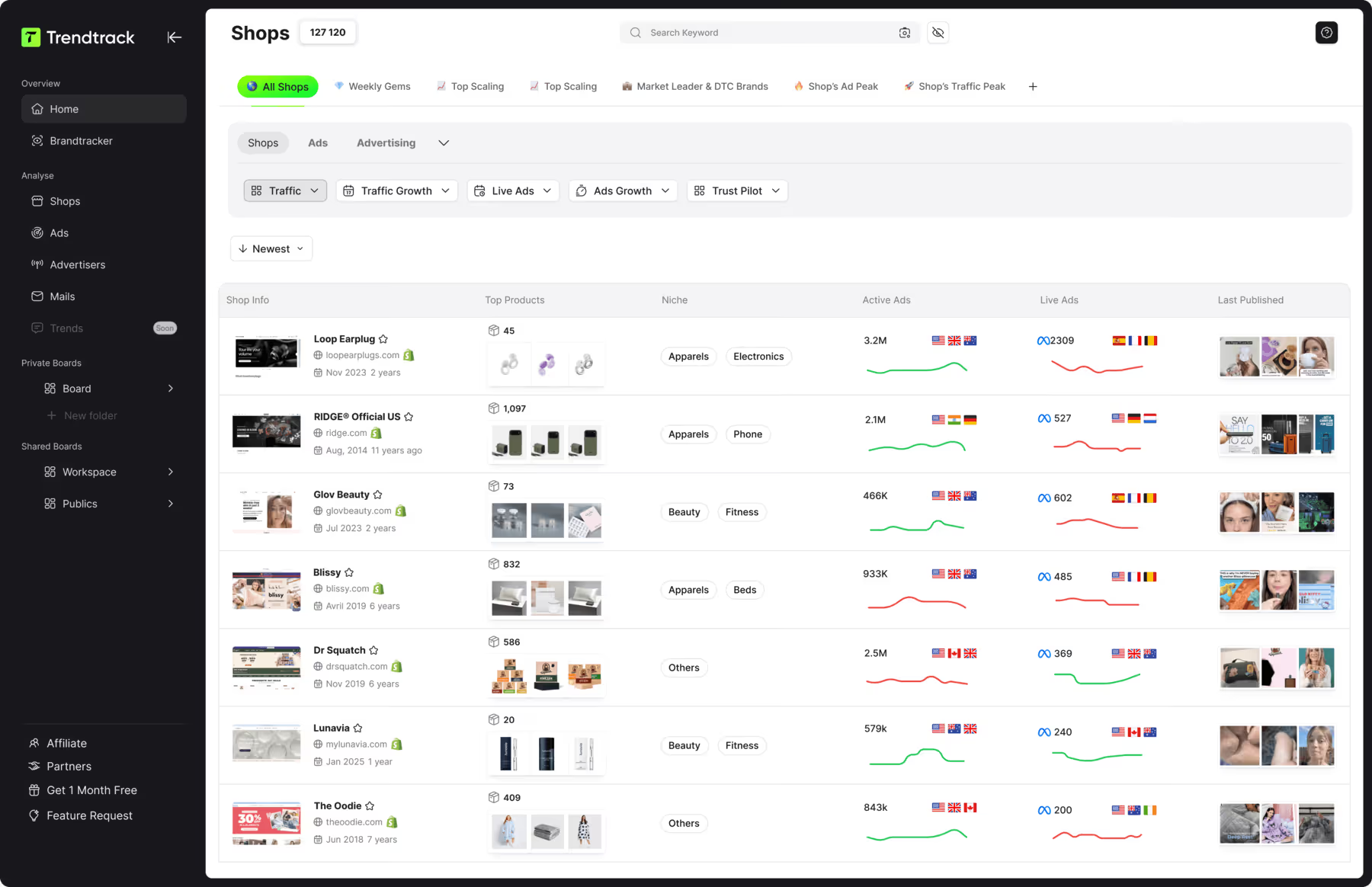
- TrendTrack – E-commerce Competitive Intelligence Tool:
/ - How to Start Dropshipping on Shopify:
/blog-post/how-to-start-dropshipping-on-shopify - 10 Best Marketing Channels for E-Commerce in 2026:
/blog-post/10-best-marketing-channels-for-e-commerce-in-2026 - Why Analyze Your Competitors’ Best Sellers in E-Commerce:
/blog-post/why-analyze-your-competitors-best-sellers-in-e-commerce - How to Drive Traffic to Shopify:
/blog-post/how-to-drive-traffic-to-shopify

.avif)
Ready to build a million-dollar brand?
.avif)