How to start dropshipping on shopify?



Dropshipping remains one of the most accessible ways to enter e-commerce in 2026 but accessibility doesn’t mean simplicity.
Yes, you don’t need to hold inventory.
Yes, you can launch quickly.
Yes, the barrier to entry is low.
But the real question isn’t “Can I start?”
It’s “Can I build a profitable dropshipping business?”
Because here’s the reality: thousands of Shopify dropshipping stores launch every month. Very few scale sustainably.
Starting dropshipping on Shopify today requires more than choosing a random product and running ads. You need a structured approach: product validation, supplier reliability, margin clarity, break-even awareness, and a smart acquisition strategy.
In this guide, we’ll break down exactly how to start dropshipping on Shopify step by step from niche selection and supplier setup to store creation, pricing strategy, and traffic generation.
Because in modern e-commerce, success doesn’t come from shortcuts.
It comes from strategy.
Step 1: How Do You Choose the Right Niche for Dropshipping?
Choosing the right niche is the foundation of your entire Shopify dropshipping business. If you get this step wrong, no ad strategy, product page optimization, or email flow will save you. If you get it right, scaling becomes significantly easier.
In dropshipping, you’re not building a random product store. You’re building a positioning strategy.
The first mistake beginners make is chasing trends blindly. They see a viral product on TikTok or a “winning product” video on YouTube and assume it guarantees profit. But trends fade quickly. Sustainable dropshipping success comes from structured niche selection.
Start by focusing on problems, not products.
Strong niches are built around clear pain points. Products that solve real frustrations tend to convert better than “cool gadgets.” Ask yourself:
- Does this niche solve an ongoing problem?
- Is the problem emotional, practical, or identity-driven?
- Are people actively searching for solutions?
For example, niches around fitness, skincare, pet care, home organization, productivity, or parenting often perform well because they address continuous needs.
Evergreen demand is safer than short-lived hype.
Next, evaluate purchasing behavior.
Some audiences are price-sensitive and compare endlessly. Others prioritize convenience, aesthetics, or identity. A niche with buyers willing to spend and trust online brands is more scalable.
Ask:
- Are competitors successfully selling in this niche?
- Are customers leaving reviews and engaging with content?
- Is the audience active on platforms like TikTok, Instagram, or Reddit?
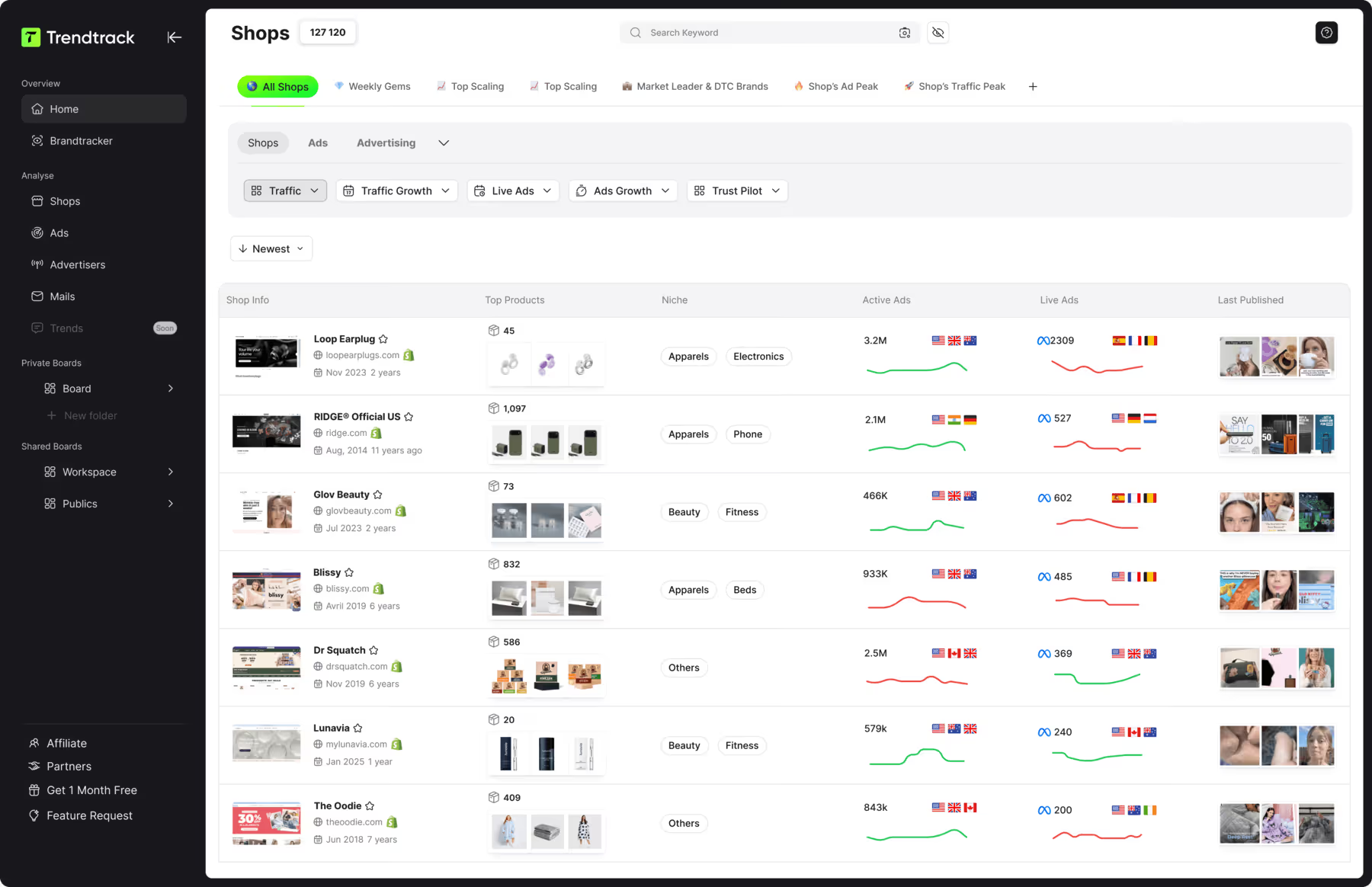
If you see multiple stores generating traffic consistently, that signals demand. Validation reduces guesswork.
Competition, however, must be analyzed intelligently.
High competition does not automatically mean you should avoid a niche. It often means demand exists. The real question is: can you differentiate?
If competitors sell generic products with weak branding, you can position better. If they compete aggressively on price, consider focusing on premium packaging, bundles, or storytelling.
Differentiation builds margin.
Another critical factor is logistics feasibility.
Dropshipping relies on suppliers. If products are fragile, oversized, or have high return rates, operational risk increases. Choose products that are:
- Lightweight
- Easy to ship
- Durable
- Low defect risk
Operational simplicity reduces headaches.
Margin analysis is equally important.
Before committing to a niche, estimate potential pricing and supplier cost. If your product costs $15 and realistically sells for $25, your margin is too thin especially when factoring in advertising.
You need room for:
- Ad spend
- Payment fees
- Refunds
- Discounts
Healthy margins protect scaling.
Also consider content potential.
In 2026, marketing requires creativity. Can you easily create engaging TikTok or Meta Ads content around this niche? Can you demonstrate product value visually? Niches that allow strong storytelling perform better in paid social environments.
If content feels forced or uninspiring, scaling ads becomes expensive.
Finally, think long-term brand potential.
Ask yourself:
- Can this niche expand into multiple product lines?
- Can you build a recognizable brand identity around it?
- Is there community-building potential?
A strong niche allows horizontal expansion. Instead of relying on a single product, you build a collection aligned with a central theme.
Dropshipping is often presented as a quick win strategy. But choosing the right niche is strategic.
Focus on:
- Problem-driven demand
- Proven buyer activity
- Operational feasibility
- Strong margins
- Content potential
- Brand scalability
When you select a niche that aligns with real demand and allows differentiation, you build a foundation for sustainable growth.
In dropshipping, niche selection is not step one by accident.
It determines everything that follows.
Step 2: How Do You Find Reliable Suppliers for Your Shopify Dropshipping Store?
In dropshipping, your supplier is your backend.
You don’t control inventory. You don’t control shipping directly. You don’t physically inspect every product. That means your supplier reliability determines your customer experience.
Bad supplier = refunds, chargebacks, negative reviews, ad account bans.
Good supplier = smooth fulfillment, stable margins, scalable operations.
Choosing the right supplier is not optional. It’s strategic.
Let’s break down how to do it properly.
Use Trusted Platforms Like Alibaba and AliExpress
For beginners, platforms like Alibaba and AliExpress remain the most accessible supplier marketplaces.
AliExpress is often easier for testing products because:
- No large minimum order quantity (MOQ)
- Simple ordering process
- Direct integration with Shopify apps
Alibaba is more suitable if you plan to scale and potentially move toward private labeling or bulk orders.
But simply picking the first supplier that appears is a mistake.
These platforms list thousands of vendors. Your job is to filter intelligently.
Check Supplier Ratings and Reviews
One of the first indicators of reliability is the supplier’s star rating.
Look for suppliers with:
- High star ratings (ideally 4.5+ out of 5)
- Consistent positive reviews
- Detailed customer feedback
Don’t just glance at the overall score. Read actual reviews.
Are customers mentioning:
- Fast shipping?
- Product quality matching description?
- Good communication?
- Responsive support?
If you see repeated complaints about delays or damaged products, that’s a red flag.
Social proof protects your reputation.
Analyze Supplier Longevity and Experience
Another critical factor is supplier seniority.
On platforms like Alibaba and AliExpress, you can usually see:
- How many years the supplier has been active
- Their transaction history
- Store establishment date
A supplier operating for 5+ years is generally more stable than a brand-new vendor.
Longevity signals operational experience.
New suppliers may offer lower prices, but they also carry higher risk. In dropshipping, consistency is more important than marginal savings.
Check Order Volume and Annual Shipments
Volume matters.
If a supplier ships thousands of orders per year, that suggests:
- Established logistics
- Reliable fulfillment systems
- Stable product demand
High annual shipment numbers indicate operational capacity.
Low-volume suppliers may struggle during scaling phases.
Ask yourself:
If your ads suddenly generate 500 orders in a week, can this supplier handle it?
Scaling without supplier capacity leads to disaster.
Evaluate Communication and Responsiveness
Before committing, contact the supplier directly.
Ask questions such as:
- What are the average shipping times to your target country?
- Do they offer tracking numbers?
- What happens if a product arrives damaged?
- Can they provide real product images or videos?
Fast, clear communication is a strong reliability indicator.
Slow or vague responses signal potential issues later.
Remember: if communication is poor before payment, it won’t improve afterward.
Order Samples Before Scaling
Never scale blindly.
Before running serious paid ads, order product samples yourself.
Evaluate:
- Packaging quality
- Shipping time
- Product durability
- Accuracy compared to listing photos
Experiencing the product as a customer gives you insight into the real delivery experience.
It also allows you to create better ad creatives using real footage.
Think Long-Term, Not Just Cheap
Many beginners choose suppliers based only on price.
This is short-term thinking.
A slightly more expensive supplier with:
- Faster shipping
- Better packaging
- Lower defect rates
- Reliable tracking
often saves money long term by reducing refunds and chargebacks.
Dropshipping margins are already sensitive to advertising costs. Protecting your reputation and reducing friction improves lifetime value and scaling stability.
Ultimately, your supplier is your silent partner.
Choose platforms like Alibaba or AliExpress strategically.
Check star ratings and real reviews.
Analyze seniority and annual shipment volume.
Test communication.
Order samples before scaling.
Because in dropshipping, marketing may generate sales but supplier reliability sustains them.
Step 3: How Do You Build a High-Converting Shopify Dropshipping Store?
Once you’ve chosen your niche and secured reliable suppliers, your next priority is building a high-converting Shopify dropshipping store. Traffic alone does not create profit. Conversion does.
Many beginners make the mistake of launching quickly with a generic theme, weak branding, and copied product descriptions. In 2026, that approach doesn’t work. Competition is too strong, and consumers are more cautious than ever.
Your store must build trust instantly.
The first element is design clarity. Choose a clean, professional Shopify theme with strong mobile optimization. Most of your traffic especially from TikTok and Meta Ads will come from mobile users. Slow loading speed, cluttered layouts, or confusing navigation destroy conversion rates.
Minimalism converts.
Your homepage should communicate three things clearly within seconds:
- What you sell
- Who it’s for
- Why it’s different
Avoid generic slogans. Focus on positioning. If your niche is posture correction, say it clearly. If you sell minimalist jewelry, show it visually with lifestyle imagery.
Next, product pages are your sales engine.
A high-converting product page includes:
- Clear, benefit-driven headlines
- Strong visuals (real images or videos if possible)
- Bullet points explaining value
- Social proof (reviews, testimonials)
- Trust badges and secure checkout signals
Do not copy supplier descriptions. Rewrite them to emphasize benefits, not features. Instead of saying “Made from high-quality silicone,” explain how it solves the user’s problem.
Problem-solution framing increases persuasion.
Social proof is critical in dropshipping. Because your brand is new, visitors look for reassurance. Reviews, user-generated content, or testimonials reduce skepticism.
If you’re just starting, collect initial feedback from early customers or testers.
Your checkout experience must also be frictionless.
Remove unnecessary steps. Offer clear shipping information. Display estimated delivery times transparently. Unexpected delays or hidden costs increase cart abandonment.
Transparency builds trust.
Another key factor is branding consistency.
Even in dropshipping, you must appear like a real brand not a random reseller. Use consistent fonts, colors, and tone. Create a compelling “About Us” page explaining your mission. Add a professional email address and customer support contact.
Perceived legitimacy influences purchasing decisions.
Finally, optimize for conversion continuously.
Monitor:
- Conversion rate
- Add-to-cart rate
- Bounce rate
- Cart abandonment
Small improvements in product page clarity, imagery, or call-to-action placement can significantly increase profitability.
In dropshipping, ad costs are often your biggest expense. Improving conversion rate lowers your effective customer acquisition cost and accelerates scaling.
A high-converting Shopify store is not about flashy design. It’s about clarity, trust, positioning, and user experience.
Because traffic generates opportunity but conversion generates revenue.
Step 4: How Do You Price Your Dropshipping Products for Profitability?
Pricing is where many dropshipping stores fail.
They find a product for $10 on AliExpress and list it for $19.99, thinking low prices will attract more buyers. In reality, that approach destroys profitability especially when you factor in advertising costs, transaction fees, and refunds.
To price your dropshipping products for profitability, you need strategy, not guesswork.
Start with a market analysis.
Before setting your price, research competitors in your niche. Look at:
- Their selling prices
- Whether they offer discounts
- Bundle options
- Shipping fees included or not
- Their brand positioning (premium vs budget)
Your goal is to identify the average price range in your market.
If most competitors sell a similar product between $39 and $59, pricing yours at $19.99 may signal low quality. On the other hand, pricing it at $89 without strong branding may hurt conversion.
Positioning must align with market expectations.
Next, apply margin logic.
In dropshipping, a common rule is aiming for at least a 4x markup on product cost — sometimes even higher.
If your product costs $10, selling it at $40 gives you room to:
- Pay for advertising
- Cover payment processing fees
- Handle refunds or chargebacks
- Offer occasional discounts
- Maintain profit
Let’s break it down.
If your product costs $10 and you sell it for $40:
$40 revenue
– $10 product cost
– $10–15 advertising cost (estimated)
– $3–4 payment and transaction fees
You may be left with around $10–15 in profit.
That’s healthy.
But if you sell it for $25, your margin disappears quickly once ad costs increase.
Advertising is unpredictable. Margins must absorb volatility.
Another critical factor is perceived value.
You don’t just set a price based on cost. You price based on value perception. Strong branding, high-quality visuals, clear benefits, and social proof justify higher pricing.
If your store looks generic, higher pricing will feel unjustified. If your brand looks premium, customers expect higher pricing.
Price and positioning are inseparable.
You should also consider psychological pricing strategies.
Instead of $40, $39.99 may convert better. Bundle pricing can increase average order value while maintaining strong margins.
Finally, calculate your break-even point.
Know your:
- Cost per acquisition
- Contribution margin
- Required ROAS
Without break-even clarity, scaling becomes dangerous.
Profitable pricing in dropshipping requires:
Market analysis
Healthy markup (ideally x4 or more)
Margin protection
Value-based positioning
Financial discipline
Low pricing may generate sales.
Strategic pricing generates profit.
And in dropshipping, profit not revenue determines sustainability.
Step 5: How Do You Drive Traffic to Your Shopify Dropshipping Store?
Once your store is built and your pricing is optimized, traffic becomes your growth engine.
But here’s the truth: there is no universal traffic strategy for dropshipping. The right acquisition channel depends entirely on your market, margins, and budget.
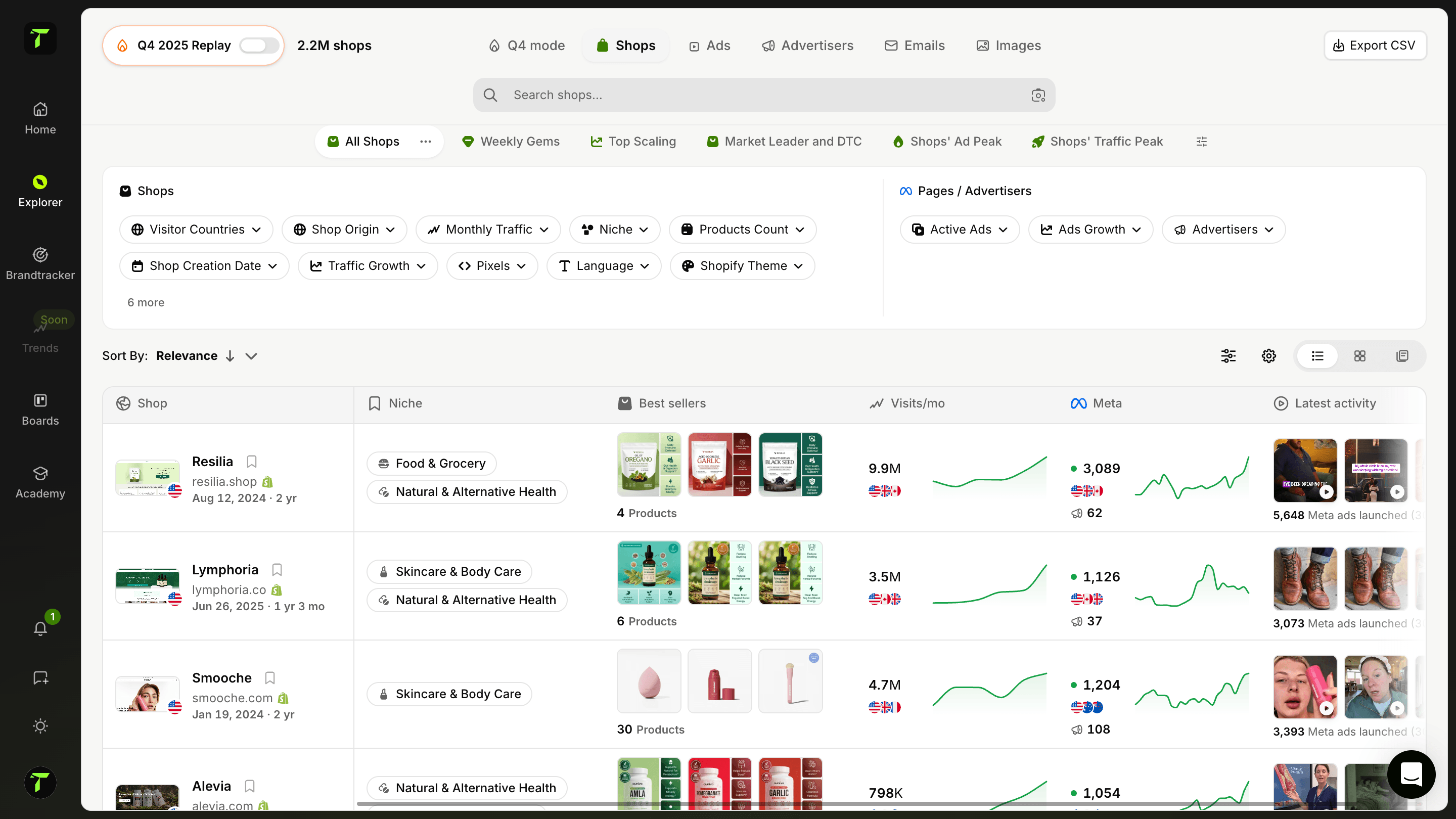
If you’re starting with little or no budget, SEO (Search Engine Optimization) is one of the smartest long-term strategies. By optimizing product pages, targeting transactional keywords, and creating problem-oriented content, you can generate organic traffic without paying for every click.
SEO requires patience, but it compounds. Ranking for high-intent keywords can drive consistent visitors month after month. For founders with time but limited capital, this is a powerful leverage point.
However, if you have advertising budget, paid acquisition can accelerate results significantly.
Google Ads works extremely well for high-intent products. When users search for a specific item or solution, they are closer to buying. Search and Shopping campaigns allow you to capture that demand directly.
Meta Ads (Facebook & Instagram) are strong for product discovery and scalable campaigns. If your product solves a clear problem or has strong visual appeal, paid social can drive rapid traction — provided your creatives are compelling.
TikTok Ads are particularly effective for visually demonstrable or trend-driven products. Short-form video content can generate explosive reach, especially in impulse-driven niches.
But paid ads require discipline. Before scaling, you must understand your break-even ROAS and contribution margin.
Organic social media also plays a role. Platforms like TikTok, Instagram Reels, or YouTube Shorts allow you to test content without heavy budget. If you can create engaging videos consistently, organic reach can reduce early-stage acquisition costs.
Certain niches benefit more from specific platforms.
For example, in home decor, interior design, or DIY niches, Pinterest organic is incredibly powerful. Pinterest functions like a visual search engine, and well-optimized pins can drive long-term traffic without ongoing ad spend.
This is why market analysis is critical.
Before investing heavily in any channel, study where your audience spends time. Analyze competitors. Observe whether traffic in your niche is dominated by SEO, paid ads, Pinterest, TikTok, or community platforms.
Acquisition strategy must align with buyer behavior.
If you want a deeper breakdown of traffic strategies and how to combine them effectively, we’ve covered it in detail here:
/blog-post/how-to-drive-traffic-to-shopify
Ultimately, traffic is not about using every channel.
It’s about choosing the right channel for your market, testing strategically, and scaling what works.
Because in dropshipping, visibility creates opportunity but strategy creates profit.
Conclusion
Starting a dropshipping business on Shopify is simple in theory but building a profitable one requires structure.
Choosing the right niche.
Finding reliable suppliers.
Building a high-converting store.
Pricing strategically with healthy margins.
Driving traffic through the right acquisition channels.
Each step matters.
Dropshipping is not about copying a trending product and running random ads. It’s about understanding your market, validating demand, protecting your margins, and scaling with discipline.
In 2026, competition is stronger than ever. Customer acquisition costs are rising. Buyers are more cautious. The brands that succeed are not the fastest they are the most strategic.
If you treat dropshipping like a real business with break-even awareness, market analysis, and long-term positioning it can become a powerful entry point into e-commerce.
But if you skip the fundamentals, revenue may come profitability won’t.
Start lean.
Test intelligently.
Optimize continuously.
Scale only when the numbers make sense.
Because sustainable dropshipping growth is not about luck.
It’s about execution.
Useful Sources:
- TrendTrack – E-commerce Competitive Intelligence Tool:
/ - What Is Benchmarking in Ecommerce:
/blog-post/what-is-benchmarking-in-ecommerce - 10 Best Marketing Channels for E-Commerce in 2026:
/blog-post/10-best-marketing-channels-for-e-commerce-in-2026 - Why Analyze Your Competitors’ Best Sellers in E-Commerce:
/blog-post/why-analyze-your-competitors-best-sellers-in-e-commerce - How to Drive Traffic to Shopify:
/blog-post/how-to-drive-traffic-to-shopify - How to check competitors' traffic:
/blog-post/how-to-check-competitors-traffic - Shopify vs. Wordpress: Which Is the better CMS for E-Commerce:
/blog-post/shopify-vs-wordpress-which-is-the-better-cms-for-e-commerce

.avif)
Ready to build a million-dollar brand?
.avif)