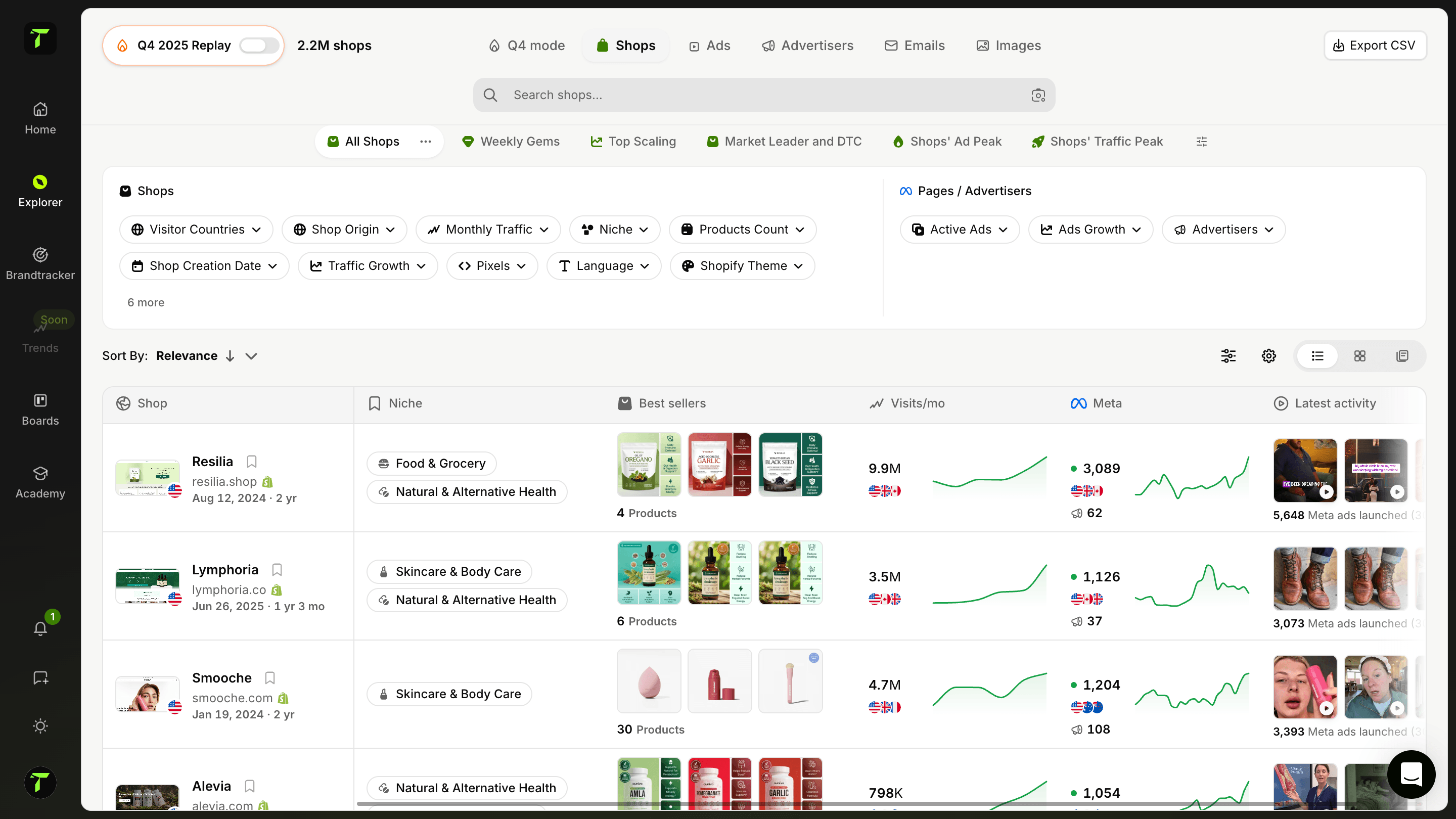
10 Best Marketing Channels for E-commerce in 2026



In 2026, e-commerce growth is no longer about being everywhere. It’s about being strategic.
The digital landscape has evolved. Customer acquisition costs are rising, algorithms are smarter, and competition is more intense than ever. Simply launching ads or publishing content is no longer enough. The brands that win are those that understand which marketing channels truly move the needle and how to use them intelligently.
But here’s the key: there is no universal “best” channel.
The most effective marketing channels for e-commerce depend on your buyer persona, your margins, your positioning, and your product category. Some brands dominate through organic SEO. Others scale aggressively with Google Ads or Meta Ads. Emerging brands capture attention on TikTok. Niche stores thrive through Reddit conversations and Pinterest discovery.
This guide is not a generic “top 10” list.
Instead, we’ll break down the most powerful e-commerce marketing channels in 2026, explaining how each works, when to use it, and how to identify friction points that prevent performance.
We’ll explore:
- SEO for long-term organic traffic
- Google Ads for high-intent demand
- Meta Ads for scalable paid acquisition
- TikTok Ads for trend-driven growth
- Pinterest Ads and organic discovery
- Reddit communities for problem-driven traffic
- Facebook groups and discussion channels
- And more strategic acquisition angles
Because in modern e-commerce, growth doesn’t come from trying everything. It comes from understanding where your audience spends time and positioning your store as the solution to their specific problems.
Let’s break down the marketing channels that matter in 2026 and how to use them strategically.
1. SEO (Search Engine Optimization)
In 2026, SEO for e-commerce is no longer optional it’s foundational.

While paid ads generate immediate traffic, SEO builds long-term equity. It creates a consistent flow of high-intent visitors without paying for every click. And in a landscape where customer acquisition costs continue to rise, organic traffic is one of the few scalable and defensible assets an online store can build.
But modern SEO is not about publishing random blog posts or stuffing keywords into product descriptions. It’s about strategic positioning around buyer intent.
Why SEO Is So Powerful for E-Commerce
Search engines remain one of the highest-intent traffic sources in digital marketing.
When someone types:
- “best ergonomic office chair for back pain”
- “waterproof hiking backpack 40L”
- “minimalist gold jewelry for women”
They are not browsing casually. They are evaluating solutions.
Ranking for transactional keywords means capturing buyers close to conversion. Unlike social media traffic, which often interrupts users, search traffic responds to demand that already exists.
That’s why SEO conversion rates are typically stronger than many paid channels — especially for product-driven niches.
The Three Pillars of E-Commerce SEO
To succeed in 2026, Shopify and online store owners must focus on three core SEO pillars:
1. Category Page Optimization
Your collection pages are often more powerful than your blog.
Well-structured category pages targeting commercial keywords can rank for high-volume terms. Optimizing:
- Title tags
- Meta descriptions
- H1 structure
- Internal linking
- On-page copy
creates strong organic visibility for entire product segments.
In competitive niches, category-level dominance drives consistent traffic.
2. Product Page SEO
Product pages should not just convert they should rank.
Optimized product descriptions, structured data (schema markup), keyword-rich titles, and FAQ sections improve search visibility.
Long-tail queries such as:
- “black leather crossbody bag with gold chain”
- “wireless mechanical keyboard for Mac”
often drive qualified traffic with lower competition.
Product-level SEO captures niche intent.
3. Content Strategy Around Search Intent
While category and product pages target commercial keywords, blog content captures informational demand.
For example:
- “How to choose the right office chair for posture”
- “Best backpack size for 3-day hiking trips”
These articles attract early-stage buyers. When structured properly, they funnel readers toward product pages.
In 2026, content must be problem-oriented not generic.
Answer friction points. Address objections. Compare solutions.
Position your store as the authority.
SEO as a Margin Protection Strategy
One of the biggest advantages of SEO is margin stability.
Paid ads fluctuate. CPC increases. Competition intensifies.
Organic traffic, once established, reduces dependency on advertising. Each additional organic visitor improves profitability because acquisition cost decreases over time.
For brands with tight margins, strong SEO is not just a growth channel — it’s a survival strategy.
Technical SEO Matters More Than Ever
Search engines have become more sophisticated.
Site speed, mobile responsiveness, structured data, and crawlability significantly impact rankings.
For Shopify stores, optimizing:
- Page load speed
- Clean URL structures
- Internal linking
- Image compression
- Indexation control
is essential.
Technical foundations amplify content efforts.
SEO Compounds Over Time
Unlike paid campaigns that stop when budgets pause, SEO compounds.
A well-optimized category page may generate traffic for years. A high-ranking blog article can drive continuous leads. Internal links strengthen domain authority progressively.
SEO is not a quick win strategy. It’s an asset-building strategy.
The brands that invest consistently in organic search build a competitive moat that becomes difficult to replicate.
SEO in 2026: Smarter, More Strategic
Search algorithms now prioritize:
- Topical authority
- Content depth
- User experience
- Engagement signals
This means surface-level optimization is no longer enough.
Winning stores focus on:
- Deep category coverage
- Problem-solving content
- Conversion-optimized organic pages
- Strategic keyword clustering
SEO is no longer just about ranking it’s about aligning visibility with revenue.
In 2026, the e-commerce brands that dominate search results dominate buyer intent.
And capturing buyer intent is one of the most sustainable growth strategies available.
2. Google Ads (Search & Shopping)
In 2026, Google Ads for e-commerce remains one of the most powerful and scalable acquisition channels but only when used strategically.

Unlike social media advertising, Google captures existing demand. When someone types a product query into Google, they are actively searching for a solution. This intent-driven behavior makes Google Search and Google Shopping extremely valuable for online stores.
However, profitability on Google Ads is no longer automatic. Competition is intense, cost-per-click continues to rise in many niches, and poor structure can destroy margins quickly. The brands that win are those that align bidding, product feeds, and break-even logic precisely.
The real strength of Google Search campaigns lies in high-intent keywords. Queries such as “buy wireless gaming mouse,” “best organic skincare brand,” or “premium leather laptop bag” signal transactional intent. These users are closer to purchase than most social media audiences.
Targeting these keywords effectively allows you to capture buyers at the decision stage.
Google Shopping, on the other hand, dominates visual product comparison. When users search for a product, Shopping results appear at the top of the page with pricing, product images, and reviews. This placement gives e-commerce brands immediate visibility.
But Shopping success depends heavily on feed optimization.
Your product titles, descriptions, attributes, and structured data influence visibility and click-through rates. In 2026, feed quality is often more important than bid aggression. Clean, keyword-optimized product feeds increase relevance and reduce wasted spend.
Another critical element is segmentation.
Many Shopify store owners make the mistake of grouping all products into a single campaign. This creates budget inefficiency. High-margin products and low-margin products require different bidding strategies. Best sellers and slow-moving inventory should not compete for the same budget.
Segmenting campaigns by margin, category, or performance level allows better cost control.
Break-even analysis also plays a central role in Google Ads success. Without knowing your required ROAS, scaling becomes dangerous. If your break-even ROAS is 2.8x and your campaign performs at 2.2x, increasing budget only amplifies losses.
In 2026, disciplined Google Ads management integrates financial modeling with performance metrics. You must know:
- Your maximum allowable cost per acquisition
- Your contribution margin per product
- Your realistic scaling threshold
Smart brands use this clarity to scale gradually rather than aggressively.
Automation has also evolved significantly. Google’s Performance Max campaigns offer cross-channel distribution across Search, Display, YouTube, and Shopping. While automation can improve reach, it requires strong data input and proper tracking.
Conversion tracking accuracy is non-negotiable. Without reliable data, automated bidding strategies misallocate budget.
Google Ads also supports brand protection. Running branded search campaigns ensures competitors do not capture traffic from users searching specifically for your store name. This protects market share and maintains conversion efficiency.
One major advantage of Google Ads compared to other channels is its scalability ceiling. Once campaigns are profitable and optimized, increasing spend can directly increase revenue provided your margins remain stable.
However, scale should follow structure.
Before expanding budget, ensure:
- Conversion rate is optimized
- Product pages are persuasive
- Checkout friction is minimized
- Feed quality is refined
Scaling inefficient funnels simply increases cost without proportional revenue gain.
In competitive niches, combining SEO and Google Ads creates dominance. Organic listings capture long-term traffic while paid search secures immediate visibility. This dual presence increases click share and brand credibility.
Ultimately, Google Ads in 2026 is not about spending more. It’s about spending smarter.
It requires disciplined margin awareness, feed optimization, structured segmentation, and ongoing testing.
When aligned with your break-even logic and supported by conversion optimization, Google Ads becomes a predictable growth engine.
3. Meta Ads (Facebook & Instagram Advertising)
In 2026, Meta Ads (Facebook and Instagram Advertising) remain one of the most scalable acquisition channels for e-commerce brands but the rules have evolved.

Unlike Google Ads, which capture existing demand, Meta Ads create demand. They interrupt the scroll. They introduce products to users who were not actively searching. That makes this channel incredibly powerful for discovery-based products, lifestyle brands, and impulse-driven purchases.
But it also makes it more complex.
Because Meta is interruption-based, success depends on creative quality, audience understanding, and precise offer positioning. Poor creatives burn budget fast. Weak messaging disappears in the feed. Strong creative strategy, however, can unlock exponential growth.
The first key to success on Meta Ads in 2026 is understanding your buyer persona deeply. Meta’s algorithm is advanced, but it still relies on strong signals. The more clearly you define your target audience — their problems, aspirations, and emotional triggers — the more effectively your ads convert.
Your creatives must do more than showcase a product. They must communicate transformation. Instead of selling “a skincare product,” you sell confidence. Instead of selling “a desk lamp,” you sell productivity and focus.
Emotional positioning drives engagement.
Another major shift in Meta Ads performance is the importance of short-form video and user-generated content (UGC). Static images still work in some niches, but vertical video optimized for mobile dominates performance.
Authenticity outperforms polish.
Ads that feel native to the platform testimonials, unboxing videos, problem-solution formats tend to convert better than overly corporate creatives. Consumers trust real people more than branded messaging.
Creative testing is not optional.
Winning brands continuously test multiple variations of:
- Hooks
- Angles
- Visual formats
- Offers
- Calls to action
Meta’s algorithm rewards engagement. The more compelling your creative, the lower your effective cost per acquisition.
However, creative alone is not enough. Your landing page must match the promise of your ad. If your ad highlights urgency, your product page must reinforce it. If your ad emphasizes premium positioning, your site design must reflect that.
Alignment between ad messaging and conversion experience reduces friction.
Targeting strategy has also evolved. Broad targeting combined with strong creatives often outperforms over-segmentation. Meta’s machine learning optimizes better when given sufficient data.
Instead of micromanaging interests, focus on:
- Clear product-market fit
- Strong creatives
- Accurate conversion tracking
Tracking accuracy is critical. With privacy updates and signal limitations, proper event setup and first-party data collection matter more than ever.
Another advantage of Meta Ads is retargeting capability. Not all users convert on first interaction. Retargeting campaigns allow you to re-engage:
- Website visitors
- Cart abandoners
- Video viewers
- Social media engagers
This layered funnel increases overall conversion rate and improves return on ad spend.
Meta Ads also support rapid scaling when structured correctly. Once you identify winning creatives and stable performance, increasing budget gradually can expand reach without destabilizing campaigns.
But scaling must respect break-even thresholds.
Without knowing your required ROAS, scaling becomes risky. A campaign generating revenue but operating below break-even can destroy profitability quickly.
Meta Ads require margin discipline.
In 2026, the most successful e-commerce brands treat Meta not as a single campaign channel but as a full funnel system:
Top-of-funnel discovery
Mid-funnel retargeting
Bottom-of-funnel conversion reinforcement
When executed strategically, Meta Ads become a powerful growth accelerator.
They allow you to introduce products to new audiences, test messaging rapidly, and scale validated offers.
In a competitive digital landscape, Meta remains a core performance channel provided you combine creative excellence, audience clarity, and financial discipline.
4. TikTok Ads
In 2026, TikTok Ads for e-commerce are no longer experimental they are strategic.

TikTok has evolved from a viral entertainment platform into one of the most powerful product discovery engines online. Unlike Google, which captures demand, or Meta, which interrupts attention, TikTok shapes trends. It influences buying behavior before customers even realize they want a product.
For certain niches, especially visually engaging or problem-solving products, TikTok can drive explosive growth. But it operates under different rules than traditional paid advertising.
On TikTok, creative is everything.
The platform rewards content that feels native, authentic, and entertaining. Highly polished ads often underperform. Instead, videos that resemble organic posts unboxings, product demonstrations, before-and-after transformations, storytelling clips tend to generate stronger engagement.
TikTok is not just about selling a product. It’s about capturing attention in the first three seconds.
Hooks matter more than ever. The opening moment of your video determines whether a user keeps watching or scrolls away. Successful TikTok ads often begin with:
- A bold statement
- A surprising result
- A relatable problem
- A visual transformation
If you fail to stop the scroll instantly, performance collapses.
Another major strength of TikTok Ads is algorithmic reach. The platform’s recommendation engine can amplify strong creatives rapidly. A single high-performing video can reach hundreds of thousands even millions of viewers in a short period.
This amplification creates scaling opportunities that are difficult to replicate on other platforms.
However, volatility is part of TikTok’s ecosystem. Trends move quickly. Creatives fatigue faster than on Meta or Google. What works today may decline in performance within weeks.
This means continuous creative testing is mandatory.
Brands that succeed on TikTok operate like content studios. They produce variations consistently, test different hooks, angles, and formats, and monitor engagement metrics closely.
Short-form video culture also favors authenticity over perfection. User-generated content (UGC) performs exceptionally well because it builds trust. Real people explaining how a product solves a problem often outperform brand-produced advertisements.
TikTok users value relatability.
Product categories that perform well on TikTok typically include:
- Problem-solving items
- Beauty and skincare
- Fitness products
- Home organization tools
- Lifestyle accessories
- Trending gadgets
Products with strong visual demonstration potential thrive.
From a strategic standpoint, TikTok excels at top-of-funnel awareness and impulse-driven purchases. It introduces products to audiences who may not have actively searched for them.
However, because intent is lower than Google Search, conversion optimization becomes critical.
Your landing page must be:
- Mobile-optimized
- Fast-loading
- Clear and persuasive
- Visually aligned with your ad
If the transition between TikTok creative and product page feels disconnected, conversion rates drop.
Another powerful advantage of TikTok Ads in 2026 is cost efficiency in certain niches. While competition is increasing, CPMs and CPCs can still be competitive compared to mature platforms like Meta.
But profitability depends on knowing your break-even ROAS.
Viral reach without margin awareness can be dangerous. If your cost per acquisition rises due to creative fatigue or scaling pressure, profitability erodes quickly.
TikTok scaling must remain disciplined.
Brands that succeed integrate TikTok into a broader acquisition ecosystem. TikTok drives discovery. Meta retargets engaged users. Google captures high-intent follow-up searches.
Cross-channel synergy increases overall conversion performance.
TikTok Ads are not suitable for every product category. Complex B2B products or low-visual-impact items may struggle. But for consumer-focused brands with strong storytelling potential, TikTok remains one of the most dynamic marketing channels available.
In 2026, TikTok is not just about virality. It’s about structured creative strategy, consistent testing, and alignment with margin discipline.
5. Pinterest (Ads + Organic Strategy)
In 2026, Pinterest for e-commerce remains one of the most underrated marketing channels yet one of the most strategically powerful when used correctly.

Unlike TikTok or Meta, Pinterest is not primarily a social platform. It is a visual search engine. Users do not scroll aimlessly. They search for inspiration, ideas, and solutions. This intent-driven behavior makes Pinterest uniquely valuable for product discovery.
People come to Pinterest to plan.
They plan home renovations, outfits, weddings, workouts, skincare routines, travel, gifts, and more. That planning mindset places them in a pre-purchase phase often weeks or months before buying.
This creates opportunity.
Pinterest organic strategy focuses on long-term visibility. Just like SEO, well-optimized pins can generate traffic for months or even years. A single high-performing pin can drive consistent visits long after it is published.
Organic Pinterest growth depends on three elements: visual appeal, keyword optimization, and consistency.
First, visuals must be clean, vertical, and inspiring. Pinterest prioritizes high-quality imagery formatted for mobile browsing. Product photos alone are rarely enough. Lifestyle imagery performs better because it shows context and aspiration.
Second, Pinterest relies heavily on keywords. Since it functions like a search engine, optimizing pin titles, descriptions, and board names with relevant keywords increases discoverability. Targeting search intent such as “minimalist living room decor ideas” or “healthy meal prep containers” aligns your product with user queries.
Third, consistency matters. Regular pin publishing signals activity and increases algorithmic reach.
Pinterest Ads amplify this organic potential.
Promoted Pins allow you to place products directly in front of users searching for related topics. Because users are already in planning mode, conversion intent can be surprisingly strong in certain niches.
Pinterest works particularly well for:
- Home decor
- Fashion and accessories
- Beauty and skincare
- DIY and crafts
- Health and wellness
- Travel-related products
These categories align naturally with inspiration-driven behavior.
One major advantage of Pinterest compared to Meta or TikTok is lower advertising saturation in many niches. While competition is increasing, CPMs and CPCs can still be efficient depending on your vertical.
However, Pinterest Ads require alignment with visual storytelling.
Hard-selling creatives rarely perform well. Instead of pushing urgency aggressively, successful Pinterest campaigns integrate products into aspirational narratives. For example, instead of advertising “Buy this lamp now,” you showcase “Cozy bedroom lighting inspiration” featuring your product naturally.
Subtle positioning builds trust.
Pinterest also supports shopping features, allowing users to click directly from pins to product pages. This reduces friction between discovery and purchase.
From a strategic perspective, Pinterest can serve both top-of-funnel and mid-funnel roles. Organic content builds brand presence over time. Paid campaigns accelerate visibility around high-performing pins.
Pinterest’s long content lifespan is another competitive advantage. Unlike TikTok or Instagram posts that fade quickly, pins can resurface repeatedly in search results.
This durability makes Pinterest a hybrid between SEO and paid social.
But profitability still depends on margin awareness.
Just like any paid channel, you must calculate your break-even ROAS before scaling Pinterest Ads. Even though CPC may be lower, conversion rates vary by niche. Financial clarity prevents overspending.
Pinterest also complements other channels well. A user may discover your product organically on Pinterest, later see a retargeting ad on Meta, and finally convert via branded Google Search.
Cross-channel synergy increases overall efficiency.
In 2026, Pinterest is not about chasing virality. It is about positioning your brand within aspirational search intent.
When executed strategically, combining organic visibility with paid amplification can generate consistent, high-quality traffic particularly for visually driven e-commerce brands.
6. Reddit
In 2026, Reddit marketing for e-commerce remains one of the most misunderstood yet potentially powerful acquisition channels.
Unlike traditional advertising platforms, Reddit is not built around polished brand messaging. It is built around communities. Users gather in subreddits to discuss specific interests, solve problems, compare products, and share honest experiences. This makes Reddit a high-trust environment but also a high-risk one for brands that approach it incorrectly.
On Reddit, direct promotion often fails.
The platform culture values authenticity, transparency, and real contribution. If you enter a subreddit only to drop links and push products, your content will likely be ignored or worse, downvoted. But when used strategically, Reddit can generate highly qualified traffic because users are often actively discussing real purchase problems.
This is where friction-based marketing becomes powerful.
Instead of advertising directly, you identify conversations where users express frustration, confusion, or unmet needs. For example, in subreddits related to fitness, skincare, gaming, productivity, or home improvement, users frequently ask for product recommendations.
These are high-intent moments.
If your product genuinely solves the problem being discussed, you can contribute meaningfully to the conversation. The key is positioning your brand as a solution not as a seller.
Reddit also supports paid advertising, but organic engagement often drives stronger long-term credibility. Participating in discussions, answering questions thoroughly, and building reputation within communities creates trust.
Trust converts.
Another advantage of Reddit is its niche depth. There are subreddits for nearly every interest imaginable. This allows you to reach extremely targeted audiences without broad demographic targeting.
For example, instead of targeting “fitness enthusiasts” broadly, you might engage in a subreddit specifically focused on bodyweight training or marathon preparation.
That precision increases relevance.
However, Reddit requires patience. It is not a rapid scaling channel like Meta or TikTok. It is a relationship-driven environment. Building credibility takes time, but the traffic generated tends to be highly engaged.
Users who click from Reddit often spend more time on-site because they arrived through context-driven discussion rather than interruption advertising.
To succeed on Reddit, brands must:
- Listen before posting
- Add value before linking
- Be transparent about affiliation
- Focus on problem-solving
Reddit rewards authenticity and punishes manipulation.
In a marketing landscape dominated by paid impressions and algorithm-driven feeds, Reddit stands out as a community-first platform. For e-commerce brands willing to approach it strategically, it can become a powerful source of high-intent traffic built on trust rather than pure advertising pressure.
7. Facebook Groups and Community Channels
In 2026, while traditional Facebook feed reach has declined, Facebook Groups and community channels remain a powerful and often underestimated marketing lever for e-commerce brands.
Unlike paid advertising, groups are built around shared interests, identities, or problems. Members join because they care about a specific topic: fitness, parenting, skincare, entrepreneurship, home decor, pets, gaming, or niche hobbies. That shared interest creates a level of trust and engagement that standard ads rarely achieve.
For e-commerce brands, this creates opportunity but only if approached correctly.
Facebook Groups are not ad platforms. They are discussion ecosystems. Entering a group with direct promotional intent is the fastest way to lose credibility. However, brands that focus on value creation instead of selling can position themselves as trusted contributors.
The strategy revolves around friction identification.
In many groups, members openly share challenges:
- “Has anyone found a good solution for…?”
- “I’m struggling with…”
- “What product actually works for…?”
These posts reveal real buying intent.
If your product genuinely addresses the problem, you can respond with insight, experience, and transparency. Rather than pushing a link immediately, you provide helpful guidance. Over time, this positions your brand as a solution resource rather than a seller.
Another strategic angle is building your own branded community.
Creating a Facebook Group around your niche allows you to:
- Foster loyalty
- Collect feedback
- Share product education
- Launch new products to warm audiences
- Increase repeat purchases
Community ownership reduces dependency on paid channels. When members engage consistently, your brand becomes part of their identity, not just a store.
Community-driven marketing also strengthens retention. Customers who feel connected to a group are more likely to return, recommend, and engage with your content.
Beyond organic engagement, Facebook Groups can complement paid campaigns. For example, ads can drive users to join your group instead of pushing immediate purchases. Once inside, you nurture trust through content, testimonials, and conversation.
This long-term relationship building lowers resistance to purchase.
However, authenticity remains critical. Transparency about brand affiliation builds credibility. Hidden promotion damages trust quickly in community environments.
Facebook Groups also allow for hyper-targeted participation. Joining niche-specific communities ensures relevance. Instead of broadcasting broadly, you engage directly with the exact audience aligned with your product category.
In a marketing landscape dominated by algorithmic feeds and rising ad costs, community channels offer relational depth.
They require patience. They reward consistency. They amplify trust.
And in e-commerce, trust is one of the strongest conversion drivers.
When leveraged strategically, Facebook Groups transform engagement into sustainable sales not through interruption, but through connection.
8. Email Marketing
In 2026, while new platforms continue to emerge, email marketing for e-commerce remains one of the highest ROI channels available. Unlike paid ads, where you rent attention, email allows you to own your audience.
For Shopify and online stores, this distinction is critical.
Every time you run ads without capturing emails, you depend entirely on paid acquisition. But when you build an email list, you create a direct communication channel with potential and existing customers without paying for every interaction.
Email marketing plays two major roles: acquisition support and retention growth.
On the acquisition side, email flows help recover lost revenue. Abandoned cart sequences, browse abandonment reminders, and post-purchase follow-ups significantly increase conversion rates. Many users do not purchase on their first visit. Email bridges that gap.
On the retention side, email drives lifetime value.
Repeat purchases are often more profitable than first-time acquisitions because no additional ad spend is required. With automated flows such as:
- Welcome sequences
- Post-purchase education
- Product recommendations
- Replenishment reminders
- Loyalty incentives
you increase customer lifetime value (LTV) and lower your effective acquisition cost.
Segmentation is key.
Sending the same message to your entire list reduces relevance. Dividing subscribers by behavior, purchase history, or interests increases engagement and revenue per subscriber.
In 2026, strong email marketing is not about blasting promotions. It is about building relationships. Educational content, storytelling, and value-driven communication strengthen brand loyalty.
Email also protects your business from platform volatility. Algorithms change. Ad costs rise. Social reach fluctuates. Your email list remains yours.
In competitive e-commerce markets, retention is leverage.
When combined with disciplined acquisition strategy, email marketing transforms one-time buyers into repeat customers multiplying revenue without multiplying ad spend.
9. Influencer & UGC Marketing
In 2026, Influencer and UGC (User-Generated Content) marketing are no longer optional growth hacks they are central pillars of modern e-commerce strategy.
Consumers trust people more than brands. Before purchasing, they look for validation: reviews, testimonials, real-life demonstrations. That’s where influencer collaborations and authentic UGC create massive leverage.
Unlike traditional ads, influencer content feels native. It blends into social feeds and speaks directly to specific communities. When an influencer recommends a product within their niche whether fitness, beauty, tech, parenting, or home decor the endorsement carries credibility.
But performance in 2026 is less about follower count and more about relevance.
Micro-influencers often outperform large creators because their audiences are more engaged and tightly aligned. A niche audience that trusts a creator can generate higher conversion rates than a broad, passive following.
User-generated content goes even further.
UGC removes the “ad feel.” Real customers sharing honest experiences, unboxing videos, product tutorials, and before-and-after results create powerful social proof. This content can be repurposed across Meta Ads, TikTok Ads, product pages, and email campaigns.
High-performing e-commerce brands treat UGC as a creative engine.
Instead of producing only polished brand videos, they collect continuous streams of authentic content. This reduces creative fatigue and improves ad performance.
Influencer marketing also supports top-of-funnel discovery. It introduces products to warm audiences already aligned with specific interests.
However, success requires structure. Clear agreements, trackable links, performance metrics, and margin awareness are essential. Without break-even clarity, influencer campaigns can become expensive brand-building exercises without measurable ROI.
When executed strategically, influencer and UGC marketing combine trust, authenticity, and reach.
In a saturated digital landscape, social proof is currency.
And brands that leverage it effectively accelerate both visibility and conversion.
10. Affiliate & Partnership Marketing
In 2026, affiliate and partnership marketing have become powerful growth accelerators for e-commerce brands looking to scale without increasing upfront advertising risk.
Unlike paid ads where you pay for clicks or impressions regardless of results, affiliate marketing is performance-based. You only pay when a sale happens. This makes it one of the most margin-controlled acquisition channels available.
Affiliates can include:
- Content creators
- Bloggers
- Niche website owners
- Comparison platforms
- Email list owners
- Micro-influencers
These partners promote your products through trackable links and earn a commission on sales generated. The model aligns incentives: affiliates are motivated to drive conversions, not just traffic.
This structure reduces financial risk.
Affiliate marketing is particularly powerful in SEO-driven niches. Bloggers ranking for “best product” or comparison keywords can generate high-intent traffic consistently. If your product is featured within that ecosystem, you capture demand that already exists.
Partnership marketing expands beyond affiliates.
Strategic collaborations between complementary brands can unlock new audiences. For example, a fitness apparel brand partnering with a supplement brand creates cross-promotional leverage. Both brands benefit from shared exposure without directly competing.
These partnerships increase reach without increasing ad spend.
Affiliate programs also scale gradually. You can start with a few trusted partners, test commission structures, and expand based on performance data.
However, structure and tracking are critical. Clear commission models, transparent reporting, and strong brand guidelines protect profitability and positioning. Without break-even awareness, overly generous commissions can erode margins.
In competitive e-commerce markets where customer acquisition costs continue rising, affiliate and partnership marketing offer a scalable alternative.
You shift from paying for attention to paying for results.
And when structured strategically, performance-based collaborations become a sustainable channel that complements SEO, paid ads, and social marketing strengthening your overall growth ecosystem.
Conclusion
In 2026, successful e-commerce brands don’t rely on a single marketing channel they build balanced, data-driven ecosystems. SEO creates long-term stability, paid ads accelerate growth, communities build trust, and retention multiplies profitability. The key is not to be everywhere, but to invest strategically where your audience already spends time. When acquisition, conversion, and retention work together, growth becomes sustainable not just temporary.
Useful Sources:
- TrendTrack – E-commerce Competitive Intelligence Tool:
/ - Why Analyze Your Competitors’ Best Sellers in E-Commerce:
/blog-post/why-analyze-your-competitors-best-sellers-in-e-commerce - How to Drive Traffic to Shopify:
/blog-post/how-to-drive-traffic-to-shopify - How to check competitors' traffic:
/blog-post/how-to-check-competitors-traffic - Shopify vs. Wordpress: Which Is the better CMS for E-Commerce:
/blog-post/shopify-vs-wordpress-which-is-the-better-cms-for-e-commerce

.avif)
Ready to build a million-dollar brand?
.avif)