How to drive traffic to Shopify?


.avif)
Launching a Shopify store is easy. Driving consistent, qualified traffic to it? That’s where the real challenge begins.
In today’s competitive e-commerce landscape, simply having great products and a clean website isn’t enough. Thousands of Shopify stores compete for the same audience, the same keywords, and the same ad placements. If you want sales, you need visibility. And if you want scalable growth, you need a structured traffic strategy.
The real question isn’t just “How do I get more visitors?”
It’s: How do I drive the right traffic the kind that converts?
Driving traffic to Shopify requires understanding multiple acquisition channels, from SEO and content marketing to paid ads, social media, influencer collaborations, and competitive intelligence. It also requires analyzing what works in your niche instead of guessing blindly.
Because here’s the truth: traffic without strategy wastes time and budget.
In this guide, we’ll break down proven methods to drive traffic to your Shopify store, how to combine organic and paid channels effectively, and how to leverage data to scale smarter not harder.
What Are the Best Traffic Sources for Shopify Stores?
Driving traffic to a Shopify store is not about being everywhere. It’s about being where your target audience already spends time. The biggest mistake e-commerce entrepreneurs make is launching ads or creating content without understanding their buyer persona.
Before choosing any traffic source, ask yourself:
Where does my ideal customer search, scroll, and make decisions?
Because the most powerful traffic strategy isn’t diversification it’s alignment.
Let’s break down the most effective traffic sources for Shopify stores and how they fit different audience behaviors.
SEO (Search Engine Optimization)
SEO is one of the most sustainable traffic sources for Shopify stores. Unlike paid ads, organic traffic compounds over time. Once your product pages, collections, and blog content rank on Google, they can generate consistent traffic without ongoing ad spend.
SEO works particularly well when your audience actively searches for solutions.
For example, if customers search for:
- “Best ergonomic office chair”
- “Minimalist jewelry for women”
- “Organic skincare for sensitive skin”
Then ranking for those keywords can generate high-intent traffic.
SEO is powerful because it captures buyer-intent searches. These users are already looking for a product. Your job is to appear in front of them at the right moment.
However, SEO requires patience and structure:
- Keyword research
- Optimized product descriptions
- Strong collection page structure
- Technical optimization
- Content marketing
It’s ideal for brands building long-term authority.
If your persona uses Google to research before buying, SEO should be a priority.
SEA – Google Ads
While SEO is long-term, Google Ads (SEA) provides immediate visibility.
Google Ads works exceptionally well for Shopify stores selling products with clear search demand. If users type transactional queries like “buy running shoes online” or “wireless headphones discount,” paid search ads allow you to appear instantly at the top of results.
Google Shopping ads are especially powerful for e-commerce because they display:
- Product images
- Pricing
- Reviews
- Store name
This format increases click-through rates and purchase intent.
Google Ads is ideal when:
- Your products solve specific problems
- Your persona actively searches before purchasing
- You want fast traffic testing
However, ad costs vary by niche. In competitive industries, cost per click (CPC) can be high. That’s why understanding your margins and customer acquisition cost (CAC) is critical.
Google Ads works best when your audience is already in “buy mode.”
Meta Ads (Facebook & Instagram Ads)
If your target audience spends significant time scrolling on social media, Meta Ads (Facebook & Instagram) can be highly effective.
Unlike Google Ads, Meta Ads focus on interruption marketing. Users are not actively searching — they are discovering.
This makes Meta powerful for:
- Visually appealing products
- Lifestyle-driven brands
- Impulse purchases
- Trend-based niches
With Meta Ads, you can target users based on:
- Interests
- Behavior
- Demographics
- Lookalike audiences
This allows precise audience segmentation.
Meta is particularly strong for brands with:
- Strong creatives
- Engaging visuals
- Compelling storytelling
If your persona is active on Instagram or Facebook and responds well to visual content, Meta Ads should be part of your strategy.
TikTok Ads
TikTok has become a powerful traffic source for certain Shopify niches. Its algorithm rewards engaging, authentic content rather than traditional polished advertising.
TikTok works exceptionally well for trend-based products, younger audiences, and demonstration-driven offers. Products that can be shown in action often perform strongly.
Unlike Google, TikTok does not rely on search intent. It relies on attention and engagement. The strongest campaigns feel native to the platform, often resembling user-generated content rather than obvious advertisements.
If your buyer persona consumes short-form video content and reacts to viral trends, TikTok can become a high-volume traffic driver. But creative execution is critical. The hook must capture attention within seconds.
The Most Important Factor: Know Your Buyer Persona
While SEO, Google Ads, Meta Ads, and TikTok Ads are powerful traffic sources, none of them work universally.
The most important element is knowing your buyer persona.
Ask yourself:
- Do they search on Google before buying?
- Do they scroll Instagram daily?
- Are they active on TikTok?
- Do they respond to visual storytelling or problem-solving content?
- Are they impulse buyers or research-driven shoppers?
Your traffic strategy must align with your audience’s behavior.
For example:
- A B2B Shopify store may rely heavily on SEO and Google Ads.
- A fashion brand targeting Gen Z may thrive on TikTok and Instagram.
- A high-ticket product may require search-driven traffic rather than impulse-based ads.
Traffic without persona alignment leads to wasted budget.
Traffic aligned with persona behavior leads to scalable growth.
Ultimately, the best traffic source for your Shopify store is not about trends it’s about fit.
- SEO builds long-term authority.
- Google Ads captures buying intent.
- Meta Ads drive discovery.
- TikTok creates viral momentum.
But the winning strategy combines the right channel with the right audience at the right time.
When you understand where your persona lives online, traffic stops being random and starts becoming predictable.
How Can You Combine Organic and Paid Traffic for Maximum Shopify Growth?
If you want sustainable Shopify growth, relying on a single traffic source is risky. Algorithms change, ad costs fluctuate, and consumer behavior evolves. The most resilient e-commerce brands combine organic traffic and paid traffic strategically. When these two acquisition engines work together, they create both short-term revenue and long-term scalability.
Organic traffic, driven by SEO and content marketing, builds authority over time. Paid traffic, through channels like Google Ads, Meta Ads, or TikTok Ads, generates immediate visibility and rapid testing opportunities. The key is not choosing one over the other it’s designing a system where each strengthens the other.
Organic traffic provides stability. When your Shopify product pages and collections rank for transactional keywords, you generate consistent visitors without paying for every click. Over time, this reduces your overall customer acquisition cost. Strong SEO also builds brand credibility. When customers repeatedly see your store appear in search results, trust increases naturally.
However, SEO takes time. Ranking on Google can require months of structured optimization. That’s where paid traffic becomes essential. Paid campaigns allow you to test products, offers, and messaging quickly. If a product converts well through Google Ads or Meta Ads, that validation can guide your long-term SEO strategy. Instead of guessing which keywords or categories deserve optimization, you invest your organic efforts into proven demand.
Paid traffic also fuels data collection. When you run advertising campaigns, you gather insights about click-through rates, conversion rates, audience segments, and creative performance. These insights inform your organic strategy. If certain headlines or value propositions resonate in ads, they can be integrated into product descriptions and SEO content. This alignment increases consistency across acquisition channels.
Another powerful synergy lies in retargeting. Organic visitors often do not convert immediately. SEO traffic may browse product pages, compare options, and leave. Paid retargeting campaigns allow you to re-engage these visitors through social media or display ads. This increases overall conversion rates and maximizes the value of organic traffic.
Similarly, paid traffic can amplify high-performing organic content. If a blog article or collection page ranks well and converts organically, promoting it through paid ads can accelerate its reach. Instead of starting from scratch with ad creatives, you leverage pages that already demonstrate engagement and conversion potential.
Combining organic and paid traffic also stabilizes revenue volatility. If ad performance declines temporarily due to competition or algorithm shifts, organic traffic continues to generate visitors. If organic rankings fluctuate, paid campaigns maintain visibility. This diversification reduces dependency on a single acquisition source.
Budget allocation should evolve over time. Early-stage Shopify stores may rely more heavily on paid ads to generate immediate traction. As organic rankings strengthen, reliance on ads can decrease or become more strategic. Mature brands often use paid traffic to scale aggressively during peak seasons while maintaining steady organic visibility year-round.
The most important factor is consistency in messaging and positioning. Your brand voice, product value proposition, and pricing strategy should remain aligned across both organic and paid channels. When customers encounter your store multiple times through search, ads, and social platforms, that repetition reinforces brand recognition and trust.
Data integration is also critical. Monitor how organic and paid traffic interact. Analyze assisted conversions, attribution patterns, and customer journeys. Many buyers discover a store through one channel and convert through another. Understanding this dynamic prevents undervaluing either acquisition source.
Ultimately, combining organic and paid traffic creates a balanced growth model. Organic strategies build long-term equity and reduce acquisition costs over time. Paid strategies provide speed, testing capabilities, and scalable revenue opportunities.
Shopify growth is not about choosing between SEO and ads. It’s about orchestrating them into a cohesive system. When organic authority supports paid scalability and paid insights strengthen organic optimization your store gains both momentum and stability.
In a competitive e-commerce landscape, that combination is what turns short-term campaigns into sustainable growth.
How Can You Build a Long-Term Traffic Strategy for Shopify?
Building a Shopify store is one thing. Building a long-term traffic strategy that generates consistent, scalable growth is another.
Many e-commerce brands focus on short-term wins launching ads, testing products, chasing trends. While this can produce quick results, it rarely creates stability. A sustainable Shopify growth model requires structure, diversification, and strategic patience.
A long-term traffic strategy is not about a single channel. It’s about building an ecosystem where organic visibility, paid acquisition, brand authority, and customer retention reinforce each other over time.
Start With Your Buyer Persona
Every sustainable traffic strategy begins with clarity about your buyer persona.
You need to understand:
- Where your audience searches
- Which platforms they use daily
- How they make purchasing decisions
- Whether they are impulse-driven or research-oriented
If your audience relies heavily on Google before buying, SEO and search ads should form the foundation of your strategy. If your target customers spend hours on Instagram or TikTok, social-driven acquisition may be essential.
Without persona alignment, traffic efforts become scattered and inefficient.
Build a Strong Organic Foundation
Organic traffic is the backbone of long-term stability.
Investing in Shopify SEO ensures your store generates consistent visitors without depending entirely on advertising budgets. This includes optimizing product pages, collection structures, internal linking, and transactional keywords.
Over time, ranking for high-intent queries compounds. Unlike paid ads, organic rankings continue delivering traffic even when you reduce spending.
Content marketing can further strengthen this foundation. Educational blog articles targeting informational and commercial keywords build authority and attract early-stage buyers who may convert later.
SEO requires patience, but it creates defensible growth.
Use Paid Traffic Strategically : Not Emotionally
Paid acquisition is powerful, but it must be integrated thoughtfully.
Instead of relying exclusively on ads, use them to:
- Validate new products
- Test offers and messaging
- Accelerate high-performing categories
- Retarget organic visitors
When paid campaigns confirm demand, you can reinforce those winning products through SEO and content optimization.
Avoid scaling ads impulsively based on short-term spikes. Long-term traffic strategies prioritize data consistency over emotional reactions.
Diversify Acquisition Channels
A long-term strategy reduces dependency on any single traffic source.
Algorithm changes on Meta, rising CPC on Google Ads, or ranking fluctuations on Google can impact revenue quickly if you rely on one channel.
Diversification might include:
- Organic search
- Google Shopping
- Meta Ads
- TikTok Ads
- Email marketing
- Influencer collaborations
Each channel serves a different stage of the customer journey. Together, they create stability.
Leverage Data and Competitive Intelligence
Sustainable growth requires constant analysis.
Monitoring your own traffic is not enough. You should also analyze:
- Competitor traffic trends
- Emerging product categories
- Market demand signals
- Acquisition channel dominance
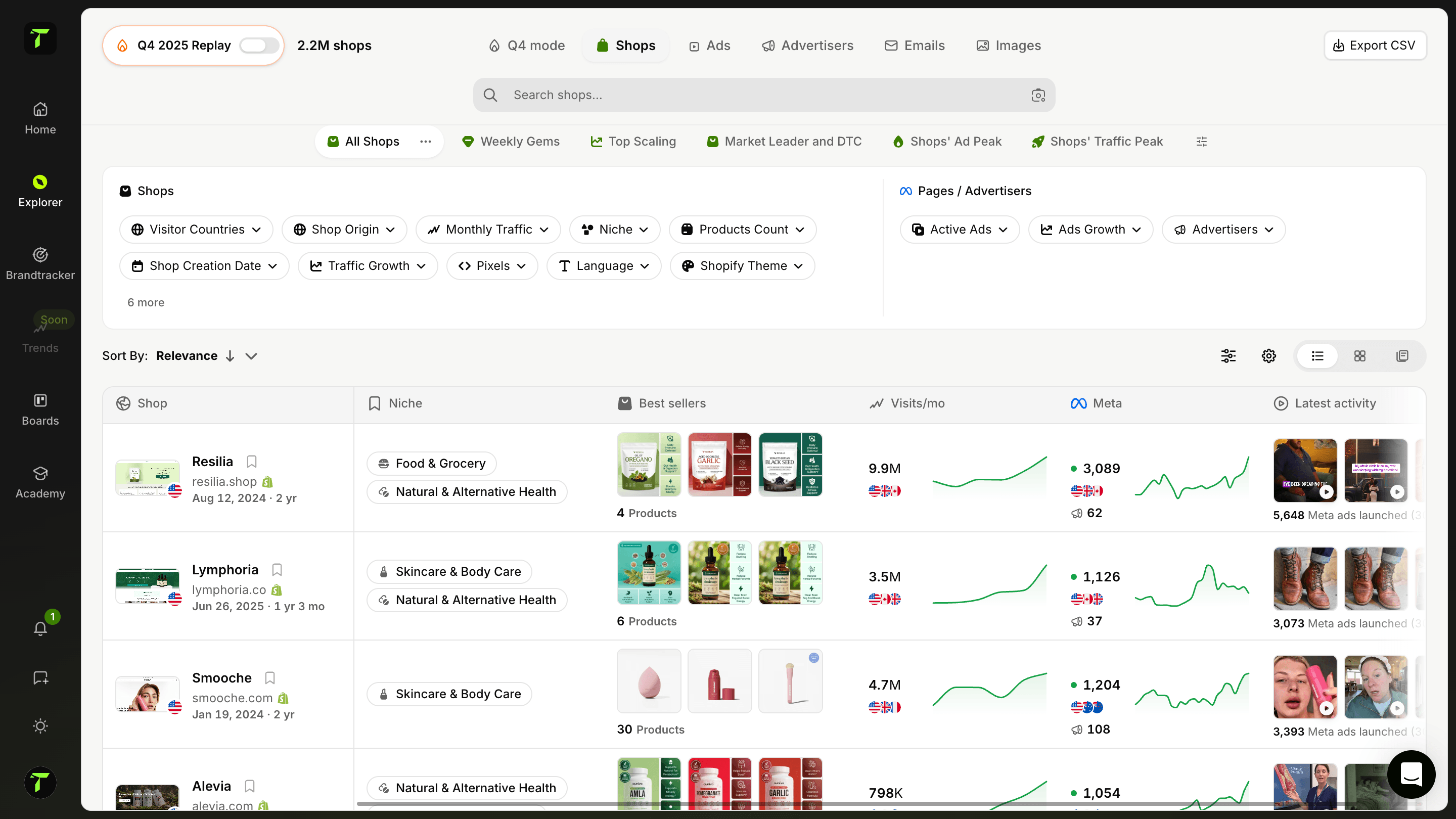
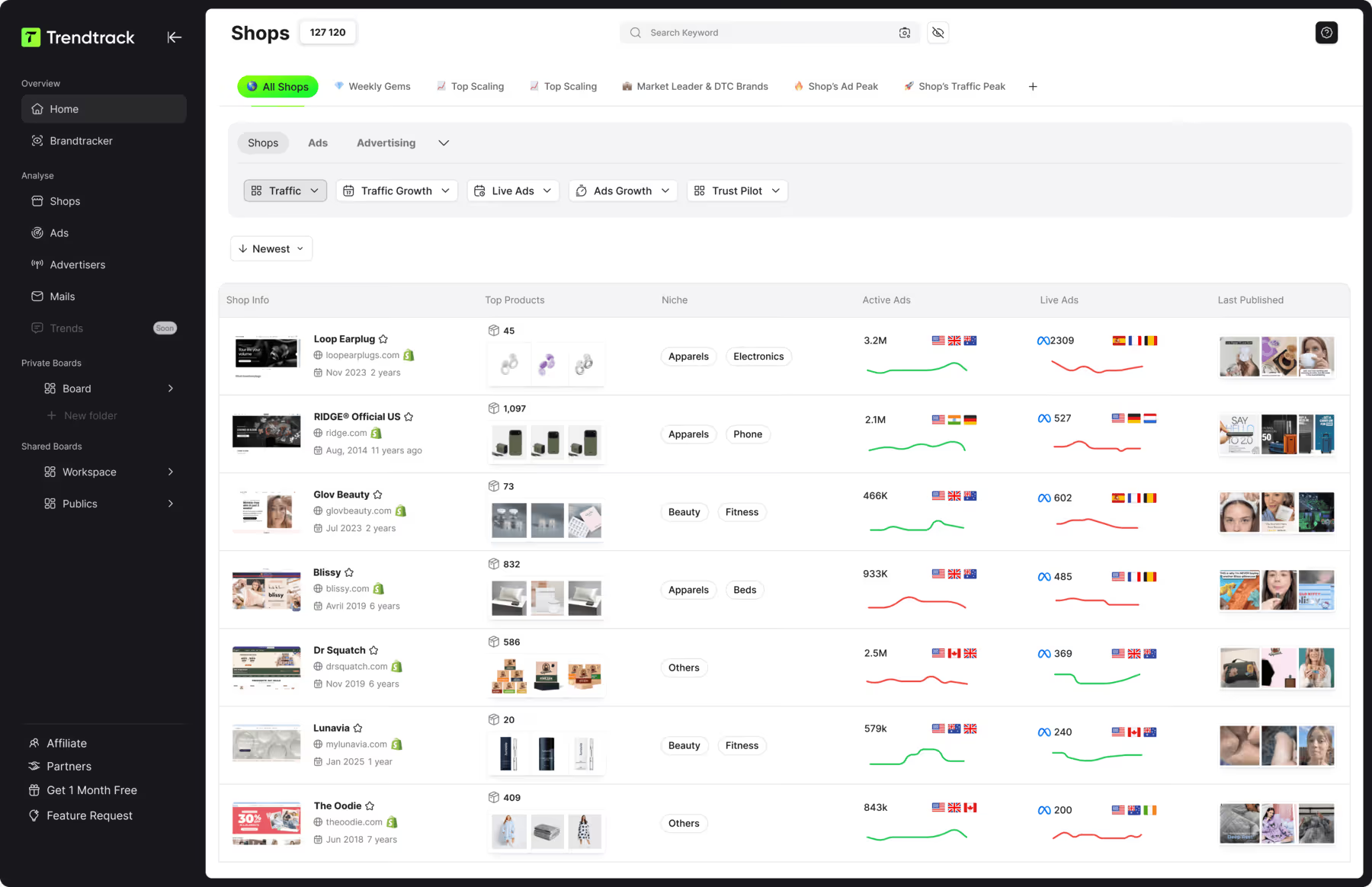
Competitive intelligence tools help you benchmark realistically and adjust strategy before opportunities close.
Long-term success belongs to brands that anticipate not react.
Prioritize Retention and Lifetime Value
A true long-term traffic strategy does not focus only on acquisition. It also strengthens customer retention.
Increasing repeat purchase rates reduces pressure on constant new traffic generation.
Email marketing, loyalty programs, post-purchase flows, and personalized offers help maximize lifetime value. When retention improves, you can reinvest profits into acquisition more confidently.
Retention transforms traffic from a cost center into a compounding asset.
Think in Phases, Not Campaigns
Short-term campaigns focus on weeks. Long-term strategies focus on quarters and years.
Set clear quarterly objectives:
- Improve organic rankings for core categories
- Reduce customer acquisition cost
- Increase average order value
- Expand into validated geographic markets
Measuring progress against structured goals ensures consistency.
FAQs About Acquiring Traffic on Shopify
What is the fastest way to get traffic to a Shopify store?
The fastest way to generate traffic is through paid advertising, especially Google Ads and Meta Ads. These platforms allow you to appear instantly in front of your target audience. However, while paid traffic delivers speed, it requires budget and optimization. For sustainable growth, it should be combined with long-term strategies like SEO.
Is SEO worth it for Shopify stores?
Yes, Shopify SEO is one of the most valuable long-term traffic strategies. Organic traffic compounds over time and reduces dependency on paid ads. Ranking for high-intent transactional keywords can drive consistent, high-converting visitors without paying for every click.
Should I focus on organic or paid traffic first?
It depends on your stage and budget. New stores often rely on paid traffic to validate products quickly. More established stores should invest heavily in organic traffic for long-term stability. The strongest growth strategy combines both.
How much should I budget for paid traffic?
Your budget depends on your niche, margins, and customer acquisition cost (CAC). Start small, test campaigns, analyze conversion rates, and scale gradually. Never scale ads blindly without understanding profitability.
Which platform is best for Shopify ads?
There is no universal “best” platform.
- Google Ads works well for high-intent searches.
- Meta Ads are strong for visual and lifestyle products.
- TikTok Ads perform well for trend-driven or younger audiences.
The right platform depends on where your buyer persona spends time.
How long does it take to see results from SEO?
SEO is a long-term strategy. Results typically appear within 3 to 6 months, depending on competition and optimization quality. While slower than paid ads, SEO builds sustainable traffic that compounds over time.
How can I know if my traffic strategy is working?
Track key performance indicators such as:
- Traffic growth rate
- Conversion rate
- Customer acquisition cost
- Return on ad spend
- Average order value
Traffic alone is not enough. Focus on profitability and conversion performance.
Is social media enough to grow a Shopify store?
Social media can generate strong visibility, especially with paid campaigns. However, relying exclusively on social platforms is risky. Algorithm changes can impact reach quickly. A diversified traffic strategy is more sustainable.
Can I grow my Shopify store without ads?
Yes, but it requires patience and strong SEO execution. Organic search, content marketing, influencer collaborations, and email marketing can generate traffic without paid ads. However, scaling may take longer compared to paid acquisition.
What is the biggest mistake Shopify store owners make?
The biggest mistake is driving traffic without understanding their target audience. Traffic must align with buyer behavior. Without persona clarity, even high traffic volumes may not convert.
Useful Sources:
- TrendTrack – E-commerce Competitive Intelligence Tool:
/ - 10 Best Marketing Channels for E-Commerce in 2026:
/blog-post/10-best-marketing-channels-for-e-commerce-in-2026 - Why Analyze Your Competitors’ Best Sellers in E-Commerce:
/blog-post/why-analyze-your-competitors-best-sellers-in-e-commerce - How to check competitors' traffic:
/blog-post/how-to-check-competitors-traffic

.avif)
Ready to build a million-dollar brand?
.avif)