Bigblue Review: How Good Is This E-Commerce 3PL?



Most third-party logistics providers compete on cost per order and delivery speed. Bigblue competes on something else entirely, and whether that suits you depends on what you sell. So how good is it actually?
Start with the positioning, because it explains every other decision the company has made.
Bigblue treats delivery as part of your brand experience rather than as an operational cost. Branded tracking pages, customised unboxing, post-purchase communication and returns handling all sit inside the core offer rather than as paid extras.
For a brand where the parcel is a touchpoint, that matters. For a merchant optimising purely on cost per order, it is a premium you may not need.
The footprint is European and substantial. Eleven fulfilment centres across France, Spain, Italy, the United Kingdom and Germany, serving over 600 brands, with membership of the Shopify Fulfillment Network.
That coverage is the strongest argument for the provider. A brand selling across Western Europe holds stock with one partner rather than coordinating four.
On performance, Bigblue publishes 98% of orders prepared same-day and 93% delivery satisfaction. Treat these as company figures rather than independently verified metrics, which is standard across the category and worth remembering.
Pricing combines several layers: per-order processing fees, a platform subscription with plans listed around £49 and £149 monthly, and optional Experience Packs for conversion, delivery and returns.
No setup fees and no long-term contract, with volume discounts as orders scale.
One structural limitation frames the whole review. Bigblue is European, with no North American fulfilment. If you need US coverage, this is not your provider regardless of its other strengths.
In this article we examine the features, the real cost and who it suits.
What Is Bigblue?
Bigblue is a French third-party logistics provider operating under Bigblue SAS, serving direct-to-consumer brands across Europe.
The company combines two things most 3PLs separate: physical fulfilment and a software layer managing the post-purchase experience.
That combination defines the product. Where a conventional provider stores and ships, Bigblue also controls what your customer sees between the order confirmation and the parcel arriving.
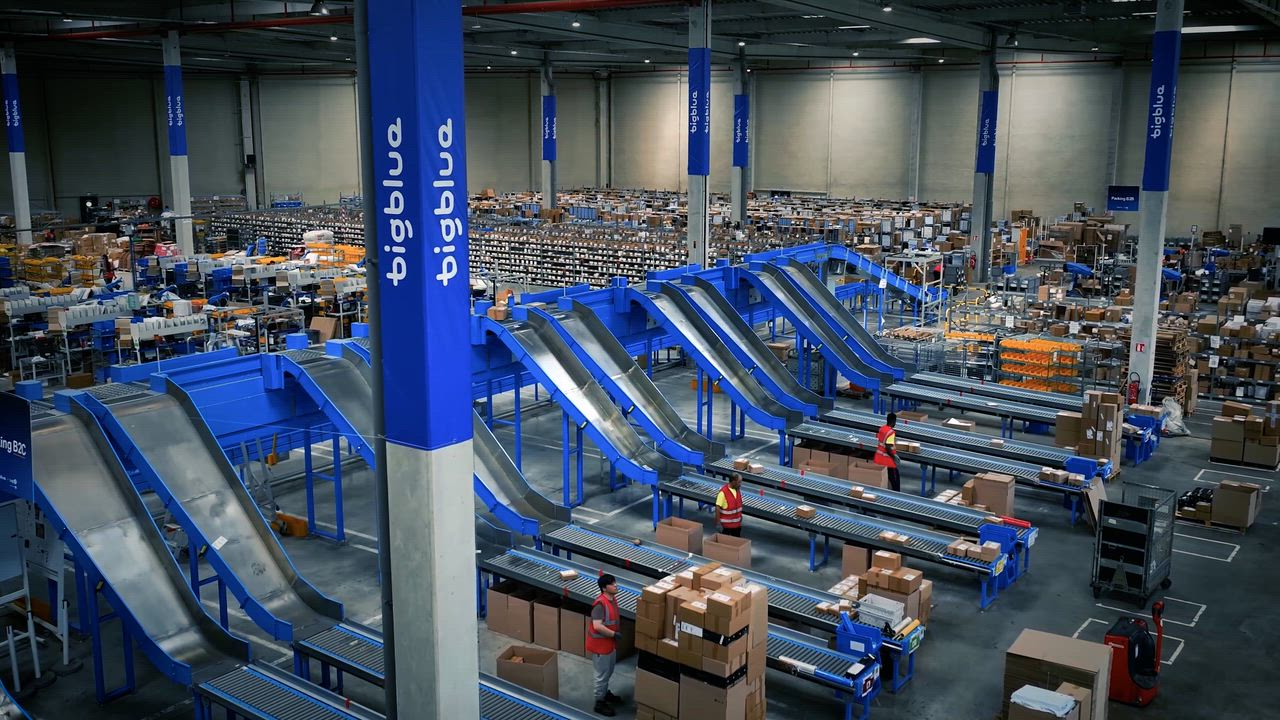
The network covers eleven fulfilment centres across five countries: France, Spain, Italy, the United Kingdom and Germany.
A brand selling into Western Europe can therefore hold stock in multiple markets with one partner, one contract and one system, rather than coordinating separate providers per country.
That single-partner model is the operational argument, and it addresses the coordination burden that pushes growing brands toward more expensive arrangements.
Over 600 brands currently ship with the platform, and Bigblue is a member of the Shopify Fulfillment Network.
Three capabilities define the service beyond standard fulfilment.
Branded tracking, replacing carrier notification pages with your own design and messaging.
Customised unboxing, with packaging and inserts configurable per order type.
Returns management, handled through the same platform rather than as a separate process you coordinate.
The target customer is specific, and the company does not pretend otherwise. Direct-to-consumer brands where the delivery experience contributes to retention, typically in apparel, beauty, accessories and lifestyle categories.
B2B fulfilment is also supported, covering marketplaces, Amazon FBA preparation and retail distribution, which matters for brands running both channels.
One clarification for anyone comparing providers: Bigblue operates no North American facilities.
What Are Bigblue’s Main Features?
Six capabilities define the platform, and the first three explain its positioning.
Branded tracking pages
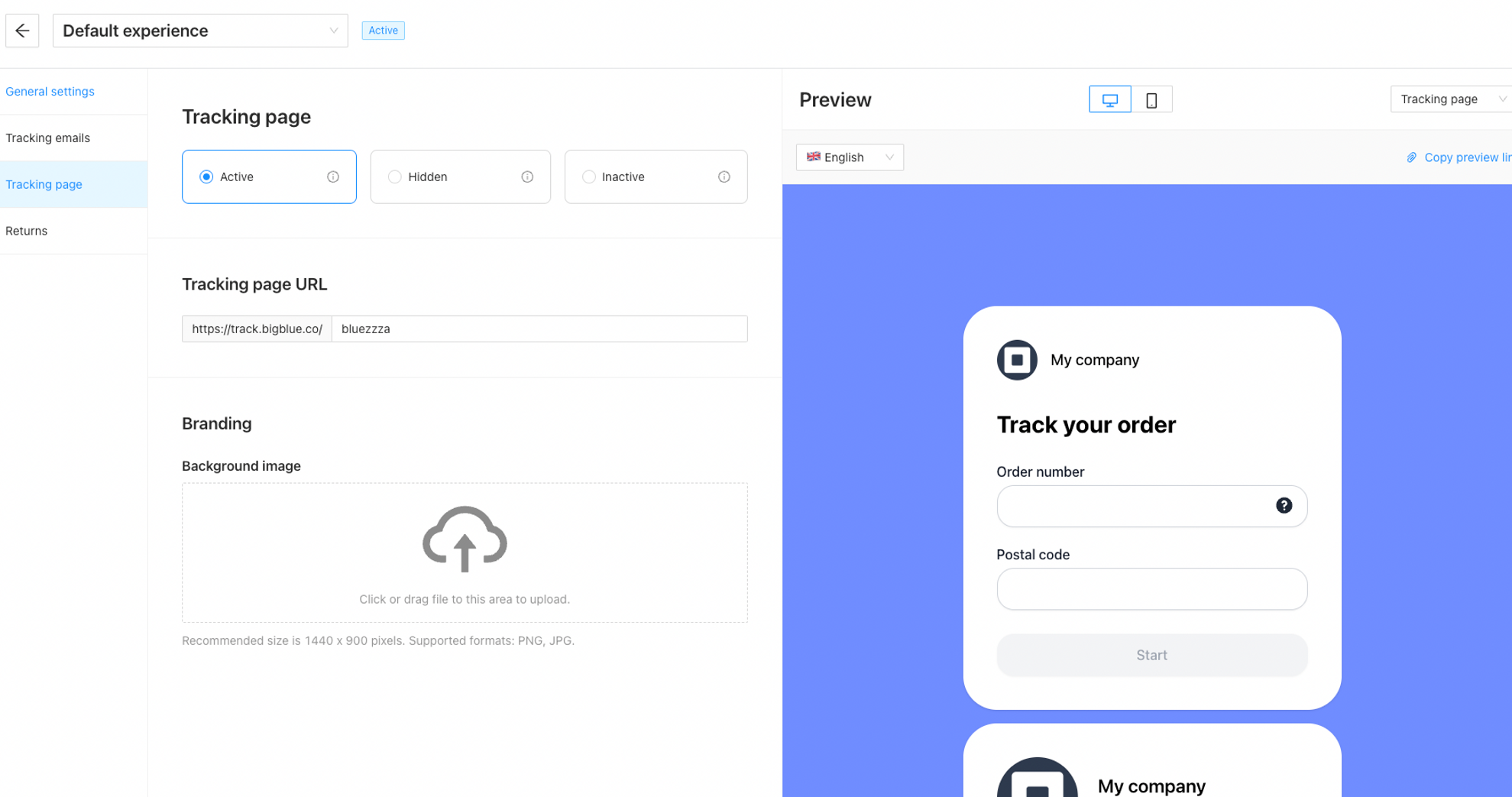
Carrier notification pages are generic, carry no brand and frequently display advertising for other companies.
Bigblue replaces them with your own tracking experience: your design, your messaging, your upsells.
This matters more than it appears. Tracking pages are among the most-visited pages in e-commerce, since customers check them repeatedly between order and delivery. Handing that attention to a carrier wastes it.
Customised unboxing
Packaging, inserts and presentation are configurable per order type.
A first-time customer can receive different materials from a repeat buyer, and a high-value order can carry different packaging from a standard one.
For brands where the parcel opening is part of the product experience, this removes the compromise usually imposed by outsourced fulfilment.
Returns management
Returns are processed through the same platform rather than as a parallel operation you coordinate.
Customers initiate the return themselves, you track the status, and the item re-enters inventory once received.
This is the function merchants evaluate last and regret underestimating, since returns volume scales with growth.
Same-day fulfilment
Bigblue reports 98% of orders prepared the same day, which is strong if accurate.
Treat it as a company-published figure rather than an audited metric, and ask for performance data specific to your category during evaluation.
Multi-country inventory
Stock can be distributed across the eleven fulfilment centres, placing inventory closer to your customers.
The operational benefit is shorter delivery times without you managing separate providers per market. The trade-off is inventory fragmentation, since the same SKU split across five locations complicates forecasting.
Platform integrations
Pre-built connections cover Shopify, WooCommerce and other major platforms, with membership of the Shopify Fulfillment Network.
Onboarding typically runs from a few days to a couple of weeks depending on your catalogue size.
One structural note on the feature set. Everything above optimises the customer-facing side of fulfilment.
If your constraint is purely cost per order, these capabilities are a premium you will pay for regardless of whether you use them.
What are Bigblue's pricing options?
Three platform plans are published, with fulfilment costs quoted separately.
Bigblue platform plans
| Criterion | Starter | Bigblue | Advanced |
|---|---|---|---|
| Monthly price | €99 | €249 | Custom quote |
| Automatic carrier selection | Yes | Yes | Yes |
| Basic integrations | 2 | 2 | 3 |
| Premium integrations | None | 1 | 2 |
| Users | 2 | 5 | 15 |
| Bundles | No | Yes | Yes |
| Custom unboxing | No | Yes | Yes |
| Omnichannel experience | No | No | Yes |
| Smart reporting | No | No | Yes |
As the table shows, the customised unboxing that defines Bigblue’s positioning sits in the middle tier at €249 monthly, not in the entry plan.
That matters for anyone choosing Bigblue specifically for its brand experience features. The Starter plan at €99 covers automated carrier selection and basic fulfilment, which most providers offer without a platform subscription.
The jump from €99 to €249 is substantial, and it buys bundles, unboxing customisation, one premium integration and three additional user seats.
Two points deserve attention before committing.
These prices cover the platform only. Fulfilment costs come separately: per-order processing, storage, pick and pack, and shipping. The subscription is a layer on top of what you pay per order.
Request the full quote rather than evaluating the published tiers in isolation.
The user limits are tight at entry. Two seats on Starter means you and one colleague, which becomes restrictive quickly as operations teams grow.
Bigblue applies no setup fees and no long-term contract, with volume discounts as order counts rise.
What Are Bigblue’s Limitations?
Several constraints deserve weighing before committing.
No North American fulfilment, Europe only
Platform subscription on top of per-order fulfilment costs
Custom unboxing locked behind the €249 tier
Tight user limits at entry level, two seats on Starter
Self-reported performance figures rather than audited metrics
Premium integrations restricted by plan
Inventory fragmentation risk across multiple countries
Pricing opacity on the fulfilment side, quote required
Among these, the absence of North American coverage is the most decisive and the least negotiable.
If your business serves US customers, Bigblue cannot fulfil them regardless of how well it handles your European volume. You will run a second provider, which reintroduces exactly the coordination burden the single-partner model was meant to remove.
Verify this against your market mix before any other evaluation.
The layered cost structure deserves equal attention.
The platform subscription of €99 to €249 monthly sits on top of per-order processing, storage, pick and pack, and shipping. Several competitors charge no platform fee at all.
At low volume, that subscription represents a meaningful percentage of your fulfilment spend. Calculate your total cost per order including the subscription, not alongside it.
The unboxing tier placement matters specifically for brands choosing Bigblue for its positioning.
Custom unboxing is the feature that differentiates the provider, and it requires the €249 plan. Buying the €99 tier gets you conventional fulfilment with a platform subscription attached.
The self-reported performance data is standard across the category rather than a Bigblue failing. Same-day preparation at 98% and delivery satisfaction at 93% come from the company.
Ask for metrics specific to your product category and destination markets during evaluation, and request references in your vertical.
Who Should Use Bigblue?
The fit is specific, which makes self-selection worth doing properly.
Bigblue suits you in four situations.
You sell across Western Europe. Eleven fulfilment centres across France, Spain, Italy, the UK and Germany let you hold stock in multiple markets with one partner, one contract and one system.
This is the strongest practical argument, and it removes coordination work that grows with every market you enter.
Delivery is part of your brand. If your customer experience extends beyond the product itself, branded tracking and customised unboxing are capabilities you would otherwise lose by outsourcing fulfilment.
Apparel, beauty, accessories and lifestyle brands typically fall here.
You run DTC and B2B together. Marketplace fulfilment, Amazon FBA preparation and retail distribution are supported alongside direct sales.
You use Shopify. Membership of the Shopify Fulfillment Network and pre-built integrations shorten onboarding considerably.
Bigblue does not suit you in four others.
You need North American fulfilment. This disqualifies the provider outright for US-serving brands, whatever its European strengths.
You optimise purely on cost per order. The platform subscription and experience features are a premium you will pay regardless of whether you use them.
Your volume is low. At a few hundred orders monthly, a €99 to €249 subscription represents a substantial share of your fulfilment spend.
Your products are heavy or oversized. The provider is built around standard DTC parcels, and specialised handling sits outside its positioning.
One framing worth holding onto: Bigblue sells fulfilment as brand experience.
If that sentence describes a problem you have, the premium makes sense. If your constraint is cost or coverage, it does not.
Conclusion: Bigblue Review
Bigblue is a strong European 3PL with a narrow fit, and both halves of that sentence matter.
What it does well is clear. Eleven fulfilment centres across France, Spain, Italy, the UK and Germany let a brand hold European stock with one partner rather than coordinating four. Over 600 brands ship through it, with membership of the Shopify Fulfillment Network shortening onboarding.
Its differentiator is fulfilment as brand experience. Branded tracking pages, customised unboxing and integrated returns sit inside the core offer rather than as afterthoughts.
That positioning is genuine rather than marketing. Tracking pages are among the most-visited pages in e-commerce, and handing that attention to a carrier wastes it.
On pricing, three plans are published: Starter at €99, Bigblue at €249 and Advanced on quote. Two details deserve attention.
The custom unboxing that defines the provider sits in the middle tier, not the entry one. And these prices cover the platform only, with fulfilment costs quoted separately on top.
Request the complete quote before comparing against providers who charge no subscription at all.
Four limitations frame the fit.
No North American fulfilment, which disqualifies Bigblue outright for US-serving brands. Tight user limits at entry, with two seats on Starter. Self-reported performance figures rather than audited metrics, standard across the category but worth remembering. And a cost structure that penalises low volume, since the subscription represents a meaningful share of spend under a few hundred orders monthly.
The verdict is straightforward. If you sell across Western Europe and your delivery experience contributes to retention, Bigblue is among the strongest options available.
If your constraint is cost per order or North American coverage, look elsewhere.
One decision sits upstream of any provider choice. Your product determines which 3PL fits, and no fulfilment partner corrects a mismatch between what you sell and who stores it.
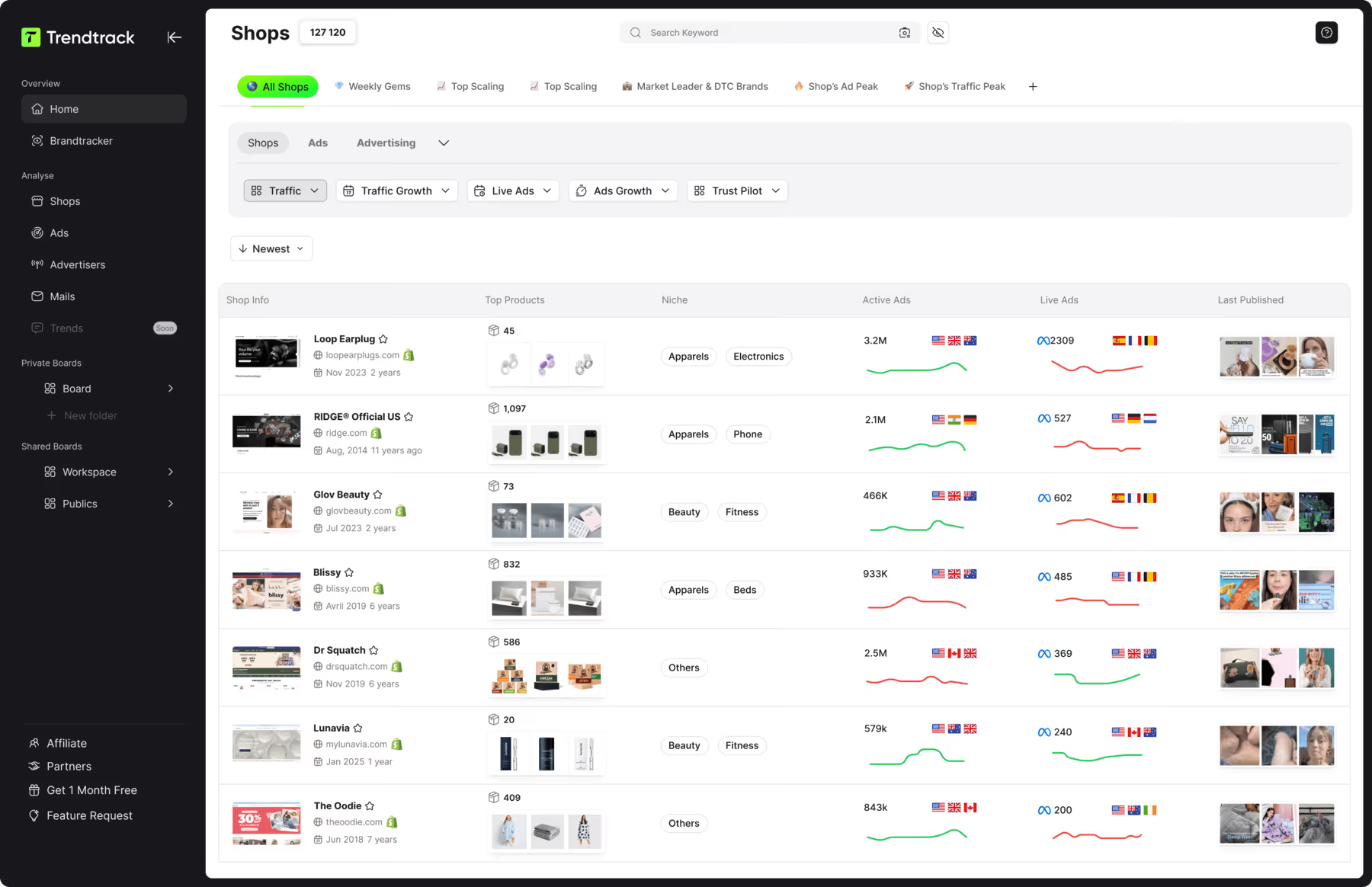
At Trendtrack available at app.trendtrack.io/en/sign-up, we index 95 million TikToks and refresh 700,000+ brand profiles every 24 hours.


Ready to build a million-dollar brand?