What is the difference between 3PL and 4PL?



Both terms appear in logistics quotes without explanation, and the distinction matters more than the acronyms suggest. So what separates a 3PL from a 4PL?
The difference comes down to who executes and who coordinates.
A third-party logistics provider does the physical work. Warehousing, picking, packing, shipping and returns, carried out in facilities they operate. You hand them inventory, they fulfil orders.
A fourth-party logistics provider manages the providers. They design your supply chain, select and oversee the 3PLs, and act as your single point of contact across the whole operation.
Put simply: a 3PL moves your goods, a 4PL runs the system that moves them.
That distinction produces three practical consequences.
Asset ownership. 3PLs typically operate warehouses and sometimes fleets. 4PLs usually own nothing physical, since their value sits in orchestration rather than in infrastructure.
Scope of control. A 3PL handles the function you contracted. A 4PL takes responsibility for the entire chain, including the providers you already use.
What you manage. With a 3PL, you still coordinate between providers, carriers and customs. With a 4PL, that coordination is the service you are buying.
One point deserves stating before the detail. Most e-commerce businesses need a 3PL, not a 4PL. The 4PL model solves complexity that only appears at considerable scale or across multiple regions.
Paying for orchestration you do not need is a common and expensive mistake.
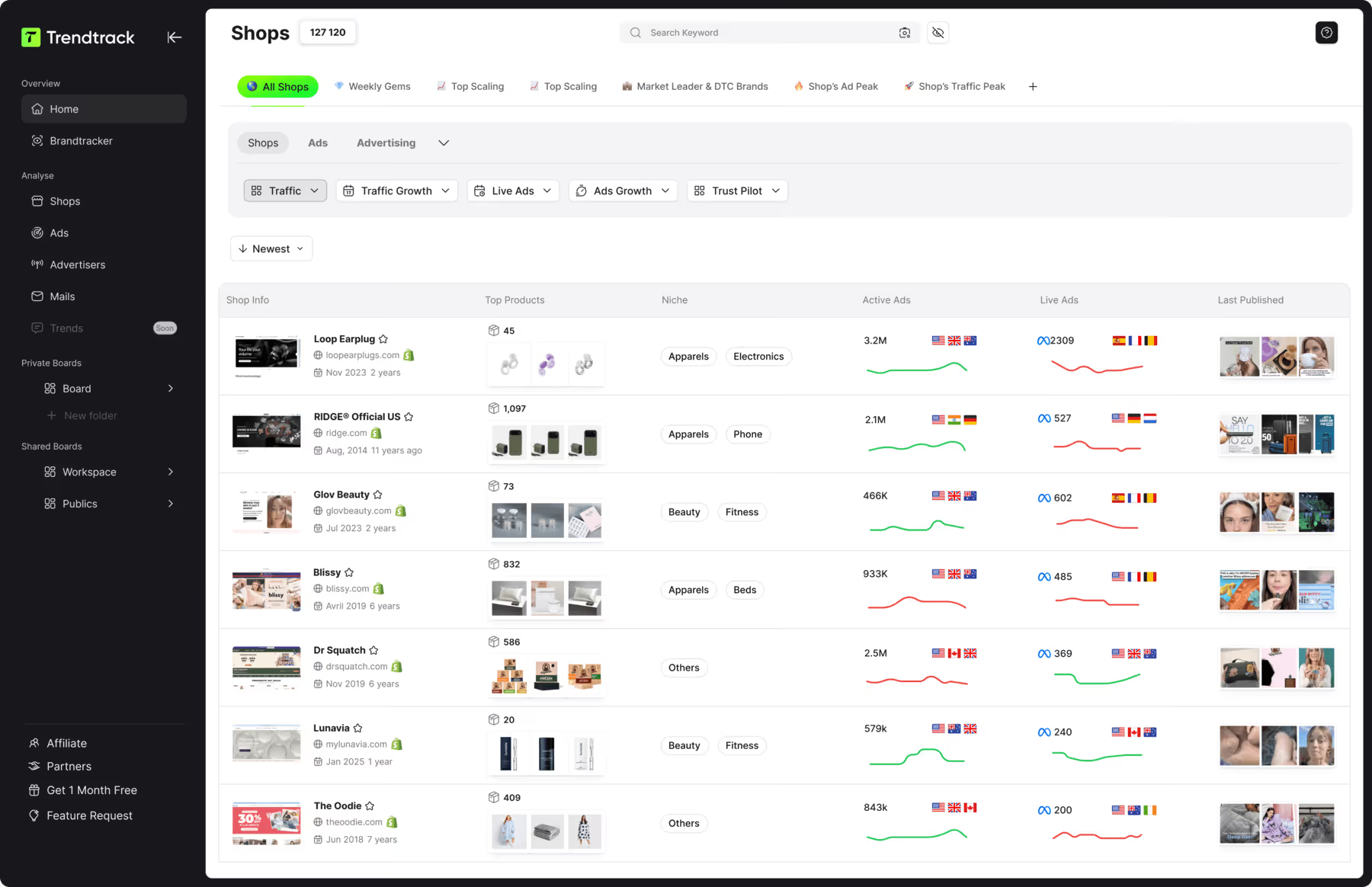
Before either decision comes the one upstream of it: which products justify the commitment. At Trendtrack available at app.trendtrack.io/en/sign-up, we index 95 million TikToks and refresh 700,000+ brand profiles every 24 hours.
In this article we break down both models.
What Is a 3PL?
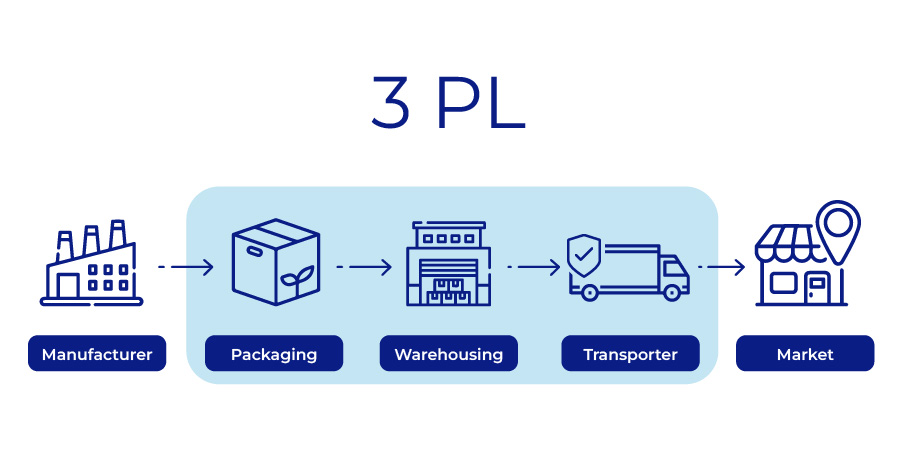
A third-party logistics provider executes the physical movement and storage of your goods.
You own the inventory. They hold it, pick it, pack it and ship it.
Five functions cover most arrangements. Receiving your inbound shipments and checking them against your purchase orders. Storage in their facilities, billed by pallet, shelf or cubic volume. Pick and pack, where orders are assembled and prepared for dispatch. Shipping, using carrier contracts negotiated at volumes you could not reach alone. And returns processing, the function merchants evaluate last and regret underestimating.
Three reasons explain why merchants use one.
Carrier rates first. A provider shipping thousands of parcels daily negotiates terms individually you will never obtain.
Fixed cost becomes variable second. You pay per order rather than carrying a warehouse lease, staff and equipment regardless of your volume.
Geographic reach third. Distributed warehouses place inventory closer to customers, which shortens delivery times without you operating facilities abroad.
What stays with you matters as much, and this is where expectations diverge from reality.
You remain responsible for inventory planning, deciding what to order and when. A 3PL stores what you send; it does not forecast your demand.
You handle supplier relationships and inbound logistics up to their door.
You coordinate between providers if you use several, and you manage customs on international shipments unless you contract that separately.
That coordination burden is precisely what the 4PL model addresses.
On pricing, expect several lines combined: receiving fees, monthly storage, per-order pick and pack, per-item charges beyond the first, shipping, and returns handling.
Compare on cost per order fulfilled rather than on individual line items, since providers structure their pricing differently enough that line-by-line comparison misleads.
Ask specifically about minimum monthly fees and implementation costs, which rarely appear on published rate cards and change the economics substantially at low volume.
What Is a 4PL?
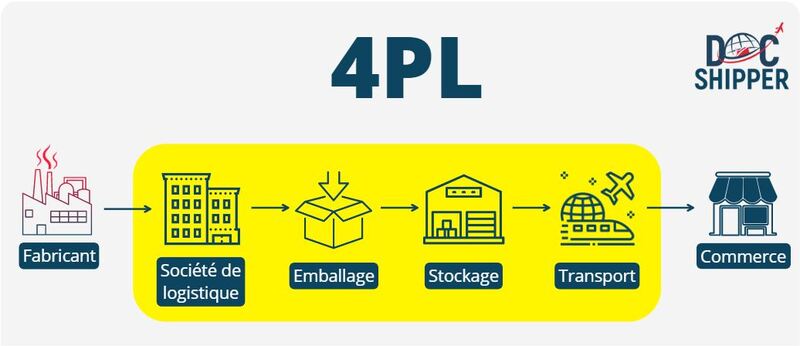
A fourth-party logistics provider manages your supply chain rather than executing it.
They do not pick your orders. They select, contract and oversee the providers who do.
The distinction is structural. A 3PL is a supplier. A 4PL is an integrator sitting between you and your suppliers, including the 3PLs you already use.
Four functions define the role.
Supply chain design, meaning where inventory sits, how it moves, and which routes serve which markets.
Provider selection and management, including negotiating with 3PLs, carriers, customs brokers and freight forwarders on your behalf.
Technology integration, consolidating data from multiple providers into one system so you see your entire chain in a single place.
Performance accountability, with service levels measured and enforced across every provider in the network.
Most 4PLs are asset-light, owning no warehouses and no fleets. Their value lies in orchestration, and that independence is deliberate: a provider owning warehouses has an incentive to route volume toward them.
Three situations justify the model.
Multi-region operations, where you run several 3PLs across different markets and the coordination consumes real management time.
Complex supply chains involving manufacturing, assembly, multiple inbound sources and several distribution channels.
Internal capacity gaps, where nobody on your team has the expertise to design and manage a logistics network properly.
Two trade-offs deserve weighing.
Cost sits above a 3PL arrangement, since you pay for management on top of execution. That premium is justified only when the complexity exists to be managed.
Distance from operations increases. You gain a single point of contact and lose direct visibility into daily execution, which some operators find uncomfortable.
One honest framing: a 4PL solves a coordination problem. If you have one warehouse and one carrier, you do not have that problem yet.
3PL vs 4PL: The Key Differences
Both sit between you and your customers, and that is where the similarity ends.
3PL versus 4PL compared
| Criterion | 3PL | 4PL |
|---|---|---|
| Primary role | Executes | Coordinates |
| Physical assets | Warehouses, sometimes fleets | Usually none |
| Scope | The function you contracted | The entire supply chain |
| Number of providers | One of several you manage | Manages them on your behalf |
| Point of contact | Per provider | Single |
| Technology | Their own system | Consolidates across providers |
| Who selects carriers | They do, within their network | They negotiate across the market |
| Accountability | For their own performance | For the whole chain |
| Cost structure | Per order and per unit | Management fee plus execution |
| Typical commitment | Shorter, often annual | Longer, strategic |
| Suits | Single or dual market operations | Multi-region complexity |
| You still manage | Coordination between providers | Strategy and commercial decisions |
As the table shows, the difference is not quality or scale. It is where responsibility sits.
Three rows carry more weight than the rest.
Accountability for the whole chain
With a 3PL, each provider answers for their own segment.
When a delivery fails, your warehouse blames the carrier, your carrier blames customs, and you spend the afternoon reconciling three accounts of the same event.
With a 4PL, one party answers for the outcome regardless of which provider caused it. You raise one issue with one contact.
That shift is the core of what you are buying.
Asset ownership and incentives
Most 4PLs deliberately own nothing physical, and the reason is worth understanding.
A provider owning warehouses has an incentive to route volume into them, whether or not that serves your network best. An asset-light integrator has no such pull.
When evaluating a 4PL, ask what assets they own. The answer tells you where their incentives sit.
Cost structure
A 3PL charges for work performed: receiving, storage, picking, packing, shipping.
A 4PL adds a management layer on top of that execution cost. You pay the providers and you pay for their orchestration.
That premium is justified when coordination genuinely consumes your time and produces errors. It is wasted when you run one warehouse and one carrier.
The question that decides
Count your providers.
One warehouse and one carrier means you have no coordination problem, and a 4PL would be selling you a solution to something you do not have.
Several 3PLs across regions, multiple carriers, customs brokers and freight forwarders means coordination is already a job someone on your team performs badly because it is not their role.
That is the threshold.
Most e-commerce businesses sit on the first side of it for longer than they expect, and a well-chosen 3PL carries them further than the acronym hierarchy suggests.
Which One Does Your Business Need?
The answer depends on your operational complexity, not on your revenue.
When a 3PL is the right choice
Four signals point clearly to a third-party provider.
You operate in one or two markets. Coordination between providers is not yet a job, because there are barely any providers to coordinate.
Your product range is stable. One category, predictable SKUs, no assembly or kitting requirements.
Your volume is growing but manageable. Under a few thousand orders monthly, a single well-chosen 3PL handles everything a 4PL would orchestrate.
You want direct control. You prefer speaking to the warehouse rather than through an intermediary, and you accept the coordination work that comes with it.
This describes the overwhelming majority of e-commerce businesses, including ones considerably larger than their founders assume.
When a 4PL earns its premium
Three situations genuinely justify the model.
You run several 3PLs across regions. A warehouse in Europe, another in North America, a third in Asia, each with its own system, reporting and point of contact. The coordination has become somebody’s full-time problem.
Your chain involves manufacturing or assembly. Inbound from multiple suppliers, components arriving separately, kitting before dispatch. The complexity sits upstream of fulfilment.
Nobody internally owns logistics properly. Not as a task squeezed between other responsibilities, but as a function requiring expertise you do not have and cannot justify hiring.
The honest assessment
Most businesses evaluating this question need a better 3PL, not a 4PL.
The acronym hierarchy suggests a progression: you start at 3PL, you graduate to 4PL. That framing is misleading and commercially convenient for the people selling 4PL services.
A well-selected 3PL with the right specialisation carries a business considerably further than its founders expect. Switching providers within the 3PL category solves most problems attributed to needing a 4PL.
Three questions that settle it
How many providers do you currently coordinate? Under three, you do not have a coordination problem.
How many hours weekly does logistics management consume? If the answer is under five, orchestration is not your bottleneck.
What breaks most often? If it is execution quality, change your 3PL. If it is handoffs between providers, a 4PL addresses that specifically.
One final consideration applies regardless of which direction you take. Your product decides your provider more than your provider decides your performance.
A 3PL excellent for lightweight goods is wrong for heavy or fragile items, and no amount of orchestration corrects a fundamental mismatch between what you sell and who stores it.
Conclusion: Execution Versus Orchestration
The difference between 3PL and 4PL comes down to one distinction.
A 3PL executes. It holds your inventory, picks your orders, packs them and ships them. You own the goods, they handle the movement.
A 4PL orchestrates. It designs your supply chain, selects and manages the providers who execute, and answers for the whole chain rather than for one segment.
Three consequences follow.
Asset ownership. 3PLs operate warehouses and sometimes fleets. Most 4PLs deliberately own nothing, because an integrator holding warehouses has an incentive to route volume into them.
Accountability. With several 3PLs, each answers for their own segment, and you reconcile the blame when something fails. With a 4PL, one party answers regardless of cause.
Cost. A 4PL adds a management layer on top of execution. You pay the providers and you pay for the orchestration.
That premium is justified when coordination genuinely consumes your time and produces errors. It is wasted when you run one warehouse and one carrier.
Three questions settle the decision.
How many providers do you coordinate? Under three, you do not have a coordination problem.
How many hours weekly does logistics management consume? Under five, orchestration is not your bottleneck.
What breaks most often? Execution quality means changing your 3PL. Failed handoffs between providers means a 4PL addresses something real.
The honest summary: most businesses evaluating this need a better 3PL, not a 4PL.
The acronym hierarchy implies a progression from one to the other. That framing is misleading, and commercially convenient for the people selling 4PL services.
One decision sits upstream of both and matters more than either. Your product determines which provider fits, and a logistics partner excellent for lightweight goods is wrong for heavy or fragile items.
Choosing what to sell therefore precedes choosing who stores it.
At Trendtrack available at app.trendtrack.io/en/sign-up, we index 95 million TikToks, preserve full ad history across Meta, TikTok and Google, and refresh 700,000+ brand profiles every 24 hours.
Useful Resources


Ready to build a million-dollar brand?