Top 8 Best 3PLs for E-commerce



Choosing a fulfillment partner is the decision most brands make too late and reverse too expensively. Migrating inventory between warehouses costs weeks and real money, which makes the first choice worth getting right. So which 3PL fits your business?
Start with the number that frames everything. The average e-commerce brand spends roughly $4.50 to $6.00 per order all-in once storage, pick and pack, and shipping are combined. clickpost
If a quote lands far outside that range, something is either excluded or inflated.
Four criteria separate providers meaningfully, and only one of them appears on most comparison pages.
Your product profile first. Lightweight DTC goods and heavy or fragile items are served by entirely different networks, and using the wrong one destroys your margin quietly.
Your monthly volume next, since minimums exclude smaller brands outright. Flexport now applies a $5,000 minimum monthly fulfillment spend as of January 2026. amzprep
Your channels after that. Shopify, Amazon, Walmart and TikTok Shop each carry different integration requirements.
The hidden costs finally, and this is where quotes mislead. ShipBob requires a $275 monthly minimum plus implementation starting at $975, and adds a 15 to 30% shipping rate markup alongside a 3% credit card surcharge on all invoices. fulfill
One thing deserves stating before the list. Your product decides your 3PL, not the reverse. A provider excellent for lightweight supplements is wrong for furniture accessories.
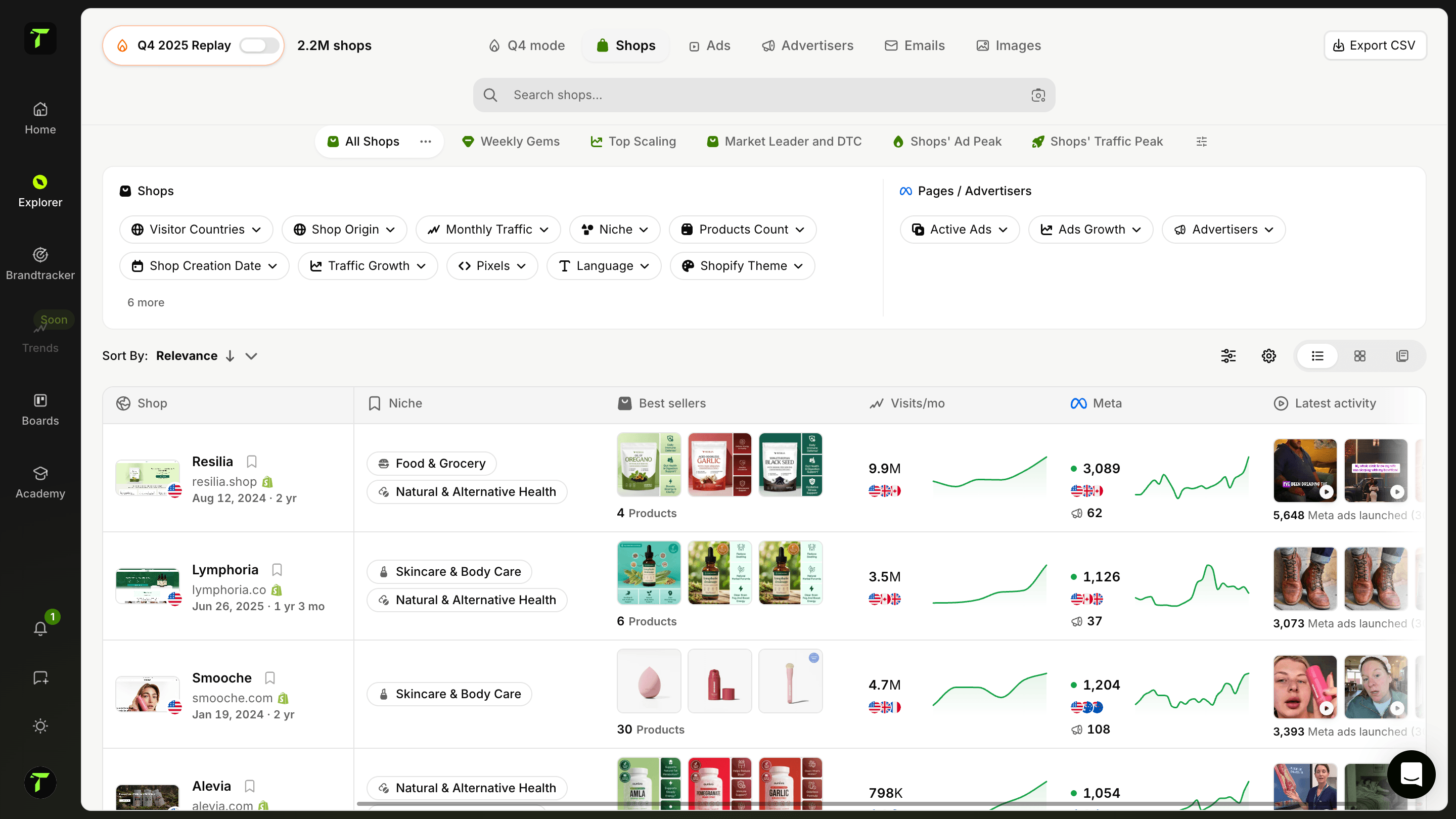
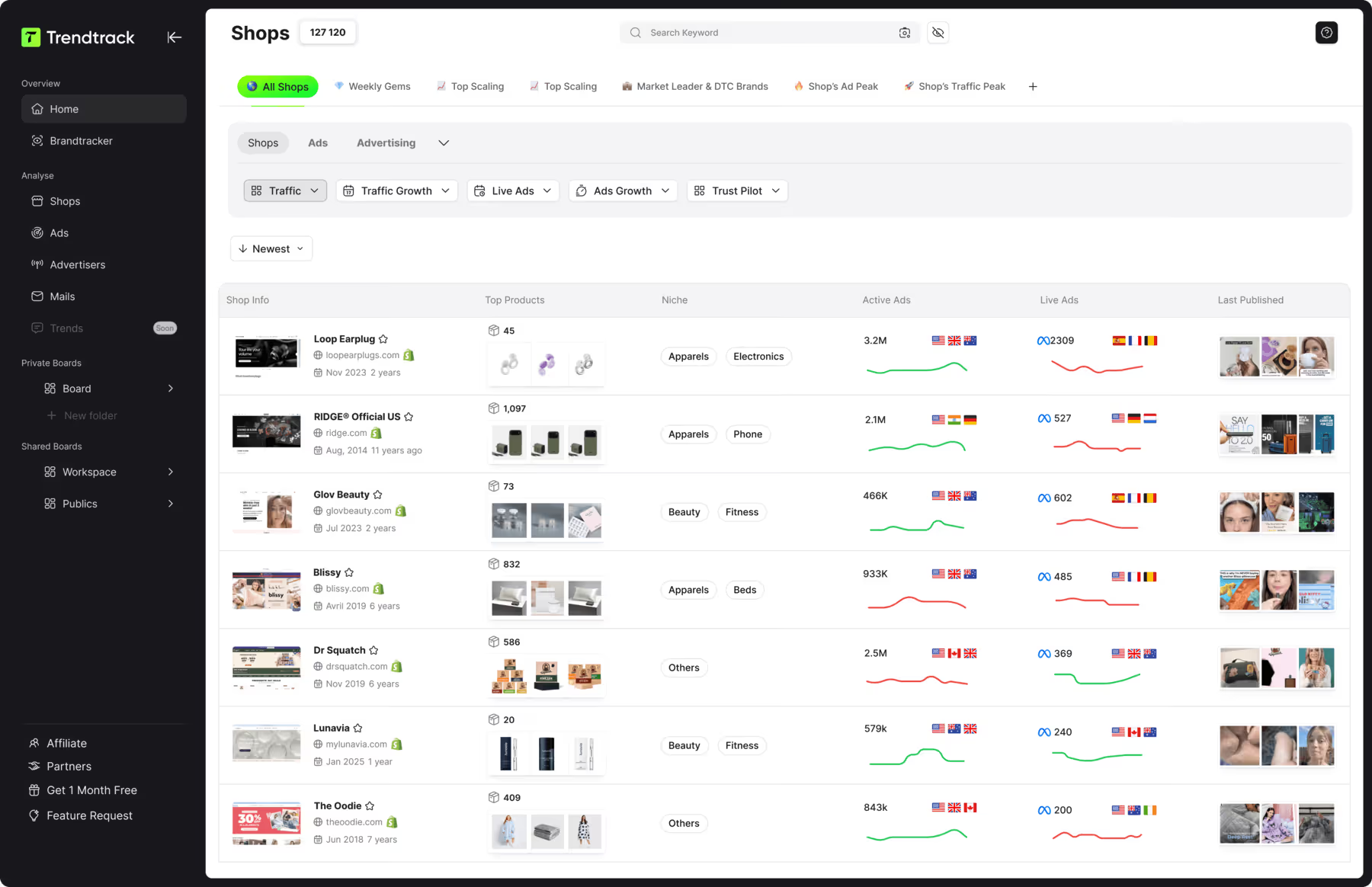
That makes product selection the upstream decision. At Trendtrack available at app.trendtrack.io/en/sign-up, we index 95 million TikToks and refresh 700,000+ brand profiles every 24 hours, which shows you what is selling before you commit to a warehouse contract.
In this article we break down the 8 best 3PLs for e-commerce.
1. ShipBob
ShipBob opens this ranking as the default choice for lightweight DTC brands on Shopify.
Its advantage is network reach. Over 60 fulfillment centers across the US, Canada, UK, EU and Australia, built for scale and international coverage. That footprint enables distributed inventory and two-day ground delivery across most of the US.
It suits DTC startups and growing Shopify brands shipping 100 to 1,000 orders per month, with receiving, storage and fulfillment billed separately.
That separation makes costs easier to model at steady volume, which is genuinely useful.
Pricing runs premium. Fulfillment starts around $5.00 for the first item picked and packed, plus $0.75 to $1.00 per additional item. Storage costs $5 to $40 per pallet monthly, and receiving runs roughly $25 per hour.
Three costs deserve attention before signing. A $275 monthly minimum, implementation starting at $975, plus a 15 to 30% shipping rate markup and a 3% credit card surcharge on every invoice.
One structural note. ShipBob operates partly as a 4PL, coordinating through partner warehouses, which can mean less control over daily operations.
Best for lightweight goods, Shopify-first brands and international ambitions.
2. ShipMonk

ShipMonk ranks second as the strongest alternative to ShipBob, and frequently the cheaper one for mid-size brands.
Its structural difference matters more than it appears. ShipMonk operates 12 owned and operated fulfillment centers, against a network that mixes owned and partner sites elsewhere. Fewer locations, more direct control over daily operations.
That tradeoff suits brands who value consistency over geographic spread.
Pricing is where it separates clearly. No setup fee, a $250 monthly minimum, free inbound receiving, and storage rates roughly 1.4 times lower than ShipBob’s.
The per-order structure follows the same logic. Fulfillment runs $2.50 for the first item plus $0.50 per additional item, with volume discounts bringing it down to $1.80.
Those three savings compound. No implementation fee removes roughly a thousand dollars at signature, free receiving removes a per-hour charge on every inbound shipment, and lower storage applies monthly to your entire footprint.
For most mid-size brands, ShipMonk edges out ShipBob on total fulfillment cost.
Two capabilities are specific to ShipMonk and absent elsewhere.
Subscription box fulfillment, with the kitting and assembly that recurring shipments require. Brands running monthly boxes face a genuinely different operational problem from standard DTC, and few 3PLs handle it properly.
Amazon Seller Fulfilled Prime support, which ShipBob does not offer. For sellers wanting Prime badges without surrendering inventory to FBA, this is decisive.
On volume fit, ShipMonk offers the lowest barriers to entry between 50 and 200 orders monthly, and remains competitive from 200 to 1,000 depending on whether you prioritise cost and flexibility over technology and scale.
The limitation is geographic. Twelve centers cover less ground than sixty, which affects delivery times in remote zones and limits international options.
Best for subscription brands, kitting needs, Amazon SFP sellers and anyone optimising total cost.
3. Red Stag Fulfillment

Red Stag Fulfillment occupies a position the two previous providers deliberately avoid: heavy, oversized and fragile goods.
That specialisation is not marketing positioning. It reflects a genuinely different operational problem.
Red Stag handles heavy and fragile goods, and it is a strong US option for SKUs over 10 pounds or products with dimensional challenges.
Three reasons explain why these products need separate handling.
Damage rates rise sharply with weight and fragility. A warehouse optimised for picking supplements at speed handles a 40-pound item differently, and the difference shows up in your return rate rather than in your fulfillment invoice.
Dimensional pricing punishes bulky items disproportionately. Carriers bill on volume rather than weight above certain thresholds, which means a lightweight but oversized product costs more to ship than its weight suggests. A 3PL unfamiliar with this will quote you optimistically and invoice you otherwise.
Packaging requirements differ entirely. Fragile goods need materials and methods that general-purpose warehouses do not stock.
Red Stag’s distinguishing commitment is its accuracy guarantee. For heavy, oversized or high-value products, the specialised handling and accuracy guarantee protect your margins and customer experience.
That guarantee matters most where it costs most. A mispick on a $15 supplement is an annoyance. A mispick on a $400 piece of equipment is a round trip in freight plus a lost customer.
Pricing sits in the premium tier, positioned as a specialist rather than a volume provider. That premium is defensible when your products genuinely require it and wasteful when they do not.
Two limitations deserve stating.
The network is US-focused, which rules it out for brands needing European or Asian fulfillment.
The specialisation is the wrong fit for lightweight goods. If your average parcel weighs under two pounds, you are paying for capability you will never use.
Best for furniture accessories, fitness equipment, tools, and anything heavy, bulky or breakable.
4. Flexport

Flexport solves a different problem from the three providers above. It combines freight, customs and fulfillment under one contract rather than specialising in warehouse operations.
A clarification first, because many comparison articles still get it wrong. Deliverr was acquired by Shopify in 2022 as the core of Shopify Fulfillment Network, then Flexport acquired Shopify’s logistics business including Deliverr in June 2023. The standalone Deliverr brand has been folded into Flexport’s fulfillment offering.
If you are comparing ShipBob against Deliverr, the current equivalent is Flexport.
Its value proposition targets a specific pain. It suits importers wanting freight and fulfillment together, which means one provider handles your container from the supplier’s factory through customs to the end customer’s door.
For a brand importing from Asia, that consolidation removes the coordination overhead between a freight forwarder, a customs broker and a fulfillment partner who each blame the others when something stalls.
Two operational advantages follow from the Deliverr inheritance.
Marketplace coverage runs deeper than most. Walmart carrier contracts produce meaningful savings on heavy parcel categories, with merchants in furniture accessories, fitness equipment and pet supplies reporting 12 to 18% lower per-order costs.
Blended pricing simplifies your modelling. Fees run a blended $4.80 to $6.20 per order, which is easier to forecast than separated line items even when the total lands similarly.
The decisive constraint is scale. Flexport applies a $5,000 minimum monthly fulfillment spend as of January 2026.
That threshold excludes most growing brands outright. At $5 per order, you need roughly a thousand monthly orders before the minimum stops costing you money you do not use.
If your pain is importing, Flexport’s breadth is the draw. If your pain is fast, branded e-commerce fulfillment, ShipBob’s focus is the draw.
Best for established importers, Walmart sellers and heavy parcel categories at volume.
5. Amazon FBA
Amazon FBA belongs in this ranking despite not being a 3PL in the conventional sense. For sellers whose primary channel is Amazon, nothing else competes on the metrics that matter there.
Its scale is unmatched. Amazon operates 175+ fulfillment centers, which produces delivery speeds independent providers cannot replicate.
Two advantages are structural rather than operational.
Prime eligibility affects conversion directly on Amazon listings. A product without the Prime badge competes against one that has it on an uneven field, regardless of price or reviews.
Fee competitiveness on small items. FBA’s fee structure is most competitive for sellers with small, lightweight products. Below certain weight thresholds, independent 3PLs struggle to match it.
The cost comparison deserves precision. ShipBob typically costs 10 to 20% more than FBA per order for Amazon-only sellers, though the premium buys branding control, multi-channel capability and independence from Amazon’s ecosystem.
That framing identifies the real decision. FBA is cheaper per order and more expensive strategically.
Three limitations explain why brands leave.
No branding control. Your product arrives in an Amazon box with Amazon tape. For a brand building recognition, that is a permanent handicap on your most frequent customer touchpoint.
Channel lock-in. Inventory sitting in FBA serves Amazon efficiently and everything else awkwardly. Multi-channel sellers end up splitting stock, which doubles the forecasting problem.
Platform dependency. Account suspensions, category restrictions and policy changes affect your fulfillment and your sales simultaneously, because they are the same relationship.
One change deserves flagging for 2026. Amazon discontinued its prep service on January 1, 2026, which means sellers now need a third party to handle labelling, polybagging and bundling before inventory reaches FBA.
That shift has pushed demand toward specialised prep providers.
Best for Amazon-first sellers with small, lightweight products where Prime eligibility drives conversion.
6. AMZ Prep

AMZ Prep occupies the gap Amazon created at the start of this year.
Amazon discontinued its own prep service on January 1, 2026, which left sellers needing a third party to handle labelling, polybagging, bundling and inspection before inventory reaches an FBA warehouse.
That timing explains the provider’s current position. AMZ Prep ranks as the leading option for Amazon and omnichannel brands, and it leads on Amazon FBA prep specifically.
Understanding what prep involves clarifies why it matters.
Amazon applies strict inbound requirements. Incorrect labelling, non-compliant packaging or missing barcodes trigger rejections, chargeable corrections or in some cases destruction of the shipment.
A rejected inbound is not a minor delay. It means inventory sitting unsellable while your listing goes out of stock, which costs ranking position that takes weeks to recover.
Specialised prep removes that risk, and its value scales with your volume.
The second argument for AMZ Prep is omnichannel coverage. It supports FBA prep alongside DTC fulfillment, B2B wholesale and Vendor Central, which is an unusually broad combination.
That matters for brands selling on Amazon while also running a Shopify store and supplying retail accounts. Most providers handle one of these well and the others adequately.
Running three fulfillment relationships for three channels multiplies your coordination overhead and your minimums. Consolidating removes both.
Two considerations before committing.
The positioning is Amazon-centric. If Amazon represents a small share of your revenue, you are selecting a provider optimised for a channel that is not your priority.
Pricing requires a quote, as with most providers at this level, which makes comparison harder than a published rate card would.
One practical note: prep and fulfillment are separable. Some brands use a prep specialist for FBA inbound while keeping DTC elsewhere, which is a legitimate structure rather than a compromise.
Best for Amazon-first sellers, omnichannel brands and anyone affected by the January 2026 prep change.
7. Easyship

Easyship addresses the problem the six providers above handle least well: shipping internationally without a dedicated logistics team.
It ranks as the best option for international and multi-carrier shipping.
Its value lies in carrier aggregation rather than warehouse ownership. Rather than negotiating individual contracts with national postal services and private couriers across dozens of markets, you access pre-negotiated rates through one platform.
That distinction matters for how you evaluate it. Easyship competes less on fulfillment execution than on shipping economics and cross-border complexity.
Three capabilities justify its position.
Rate comparison at checkout shows your customer several delivery options with real costs and transit times, rather than one flat rate you absorb or inflate. International buyers abandon carts over opaque shipping more than over price.
Duties and taxes calculation handles the question that produces most cross-border complaints. A customer billed unexpectedly at delivery frequently refuses the parcel, which costs you the product, the outbound shipping and the return.
Displaying landed cost upfront removes that scenario.
Customs documentation generates automatically rather than requiring manual preparation per shipment.
Two structural considerations before adopting it.
It functions as a shipping layer more than a traditional 3PL. Depending on your configuration, you may still need warehouse fulfillment alongside it, which means two relationships rather than one.
Its rate advantage depends on your volume. A brand already shipping enough to negotiate directly with carriers may find aggregated rates less competitive than their own contracts. The benefit is largest for brands too small to negotiate alone.
One practical consideration on international expansion generally. Shipping internationally from a single origin is the simplest approach and rarely the cheapest at scale.
Once a market produces consistent volume, local or regional fulfillment typically beats cross-border shipping on both cost and delivery time. Easyship serves the stage before that threshold well.
Best for brands selling internationally at moderate volume, and anyone needing duties transparency at checkout.
8. eFulfillment Service

eFulfillment Service closes this ranking by solving the problem every provider above creates: minimums.
Smaller stores under 1,000 orders per month often start with eFulfillment Service.
That sentence identifies a genuine gap in the market. ShipBob applies a $275 monthly minimum plus implementation fees, ShipMonk a $250 minimum, and Flexport a $5,000 threshold since January 2026.
For a brand shipping 80 orders monthly, those minimums are not a subscription cost. They are a tax on being small.
Three characteristics define the offer.
No enterprise minimums, which makes outsourcing viable at volumes where it normally is not.
Startup-friendly onboarding, without the implementation fees that add a thousand dollars before your first shipment leaves.
Established operations, since the provider has operated in e-commerce fulfillment for considerably longer than most venture-backed entrants.
The strategic question deserves addressing directly, because it is the one most early-stage brands get wrong.
Should you outsource fulfillment at low volume at all?
Packing 80 orders yourself takes a few hours weekly and costs nothing in fees. The argument for outsourcing early is not cost, it is what those hours are worth elsewhere.
Time spent packing boxes is time not spent testing creatives, sourcing products or talking to customers. At 80 orders that trade may not favour outsourcing. At 300 it almost always does, and the transition is easier before you are overwhelmed than after.
Two limitations to weigh.
The network footprint is smaller than the providers above, which affects delivery speed in distant zones.
The capability set is narrower. No subscription box kitting, no heavy goods specialisation, no freight integration. This is straightforward fulfillment done reliably.
One practical note: starting here and migrating later is a normal path rather than a failure. Negotiate your contract accordingly and keep your inventory data exportable.
Best for brands under 1,000 monthly orders and anyone excluded by enterprise minimums.


Ready to build a million-dollar brand?