The Best AdSpy Tools in 2027: Finding Winning Products



Ad spy tools all promise the same thing: show you what is working so you do not have to guess. The gap between them is what "working" actually means. Some show you ads. Some show you stores. Very few show you the thing that decides whether a product is worth your money, which is what happened after the ad went live.
That distinction matters more going into 2027 than it did two years ago. Acquisition costs have risen, buyers compare before purchasing, and the EU's €150 duty exemption was replaced on 1 July 2026 by a flat €3 customs duty per item, which quietly erased the margin on the cheap impulse products that ad spy tools were historically used to find. Copying a creative is no longer a strategy. Understanding why a product scales, at what price, with which angle, and whether the brand behind it is still spending three weeks later, is.
That is the lens we used for this comparison. A useful tool in 2027 has to answer four questions: what is being advertised right now, which products are actually scaling, what the store around that product looks like, and is the spend still running or did it stop. A static ad archive answers the first and leaves you to guess the other three.
This article reviews the best ad spy tools of 2027, one per section, with what each one really does, its data coverage, its pricing and the profile it suits. We start with Trendtrack, which approaches the problem from the store outward rather than from the ad inward: ad creatives across Meta, TikTok and Google, winning products and launch tracking, landing pages, email campaigns actually sent by a brand, and daily monitoring of what changes.
1. Trendtrack
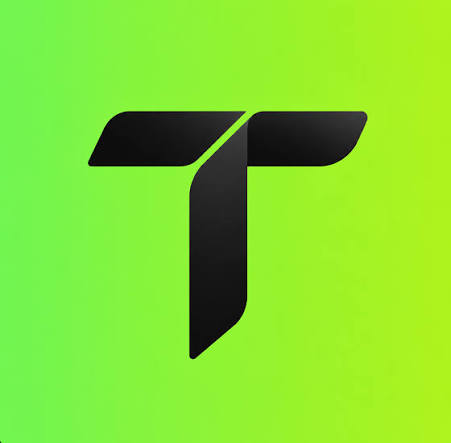
Trendtrack is the most complete tool of this list, and the reason is structural: it does not treat an ad as the unit of analysis. It treats the store as the unit, and the ad as one signal among several.
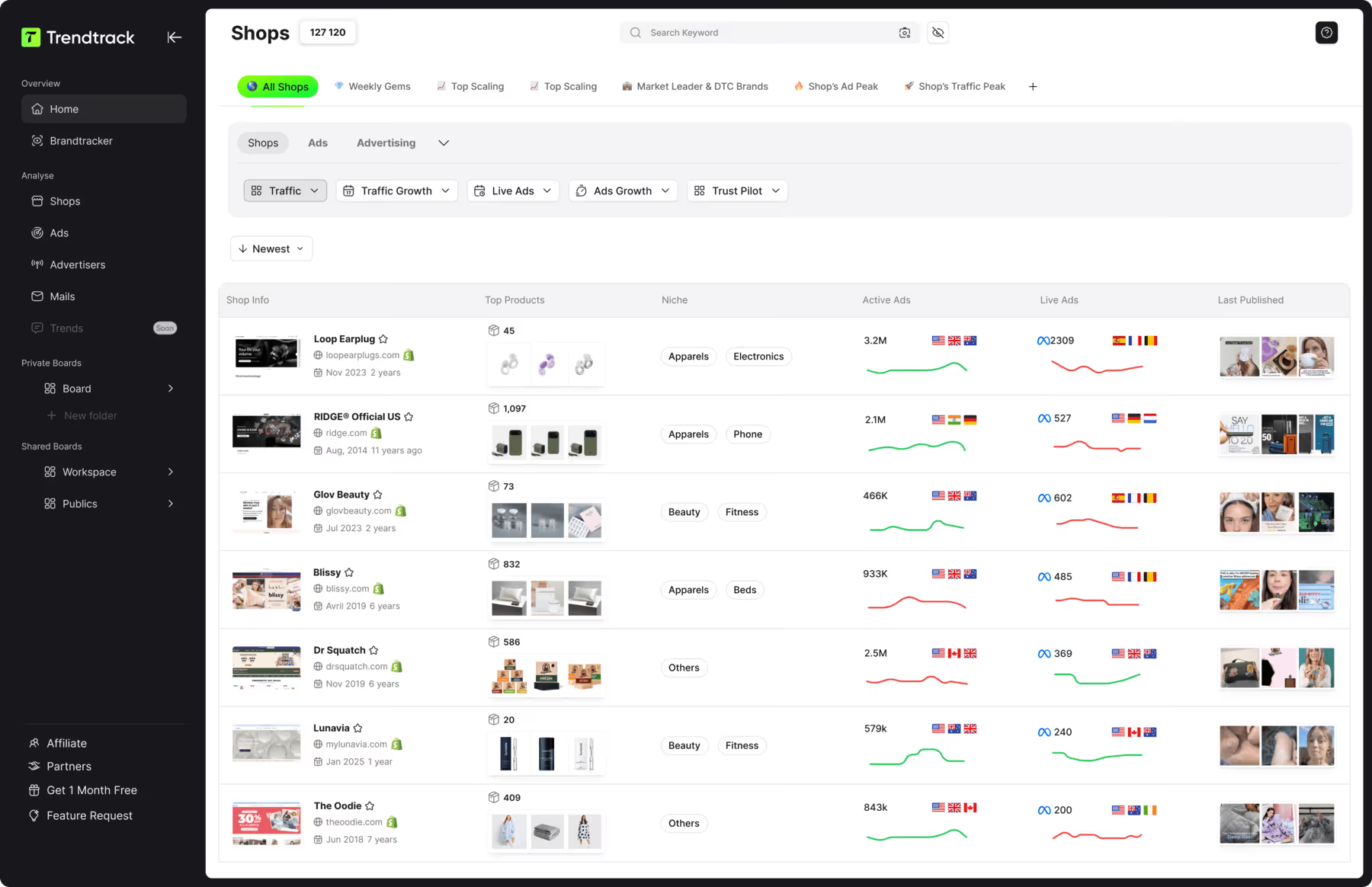
That changes what you can actually learn. A conventional ad library shows you a creative and leaves you guessing about everything that matters: is the product still selling, how is the page built, what price is it at, is the brand still spending? Trendtrack answers those questions in the same workspace. You search ad creatives across Meta, TikTok and Google, then move straight to the store running them, its product catalogue, its landing pages, and the email campaigns it has actually sent to its list. That last source is rare and genuinely useful: a brand's emails tell you its promotional cadence, its discount strategy and the products it pushes hardest.
Product research is handled directly rather than inferred. Winning product search and the launch radar surface what is being released and what is gaining traction, so you are looking at products on the way up rather than products already saturated by the time they reach a public ad library.
The feature that separates it from a research tool is the brand tracker. You add a competitor and Trendtrack reports what changes day after day: new creatives, ads that are scaling, products added, pages modified. Combined with the daily radar, that turns competitive research from an occasional exercise into a monitoring system, which is the only version of it that actually influences decisions.
Image search, similar-shop discovery and shareable boards round out the workflow for teams.
Who it suits: ecommerce operators, media buyers and product researchers who want to know why something works, not just that it exists.
2. Meta Ad Library
The Meta Ad Library is the official archive of every ad running across Facebook and Instagram, published by Meta itself for transparency reasons. It is free, it requires no account, and it is the only source on this list that comes directly from the platform rather than from a third party scraping it.
Its strengths follow from that. The data is first-party and complete: every active ad from every advertiser is there, with no gaps in coverage and no scraping delays. You can search by advertiser or by keyword, filter by country, and see each creative in its actual format. For political and social issue ads, Meta also publishes spend ranges and reach, though this does not extend to commercial ecommerce ads.
The most useful signal it gives you is the launch date of each creative, visible on every ad. An ad that has been running continuously for several weeks is almost certainly profitable, because nobody keeps paying for a creative that loses money. Combined with the number of active variations an advertiser is running, that gives you a rough read on what is working for them.
The limitations are significant, and they are the reason paid tools exist. There is no sorting by performance, no engagement data, no filtering by product category, no way to identify which store is behind an ad beyond clicking through, and no historical analysis of what a brand did last quarter. You cannot search "winning products", only advertisers and keywords. And the interface is built for transparency compliance, not for research workflows: there is no saving, no tagging, no export.
That is the practical divide with Trendtrack, which starts where the Ad Library stops: the store behind the ad, the product, the landing page, the emails and what changes day by day.
Who it suits: anyone starting out, and anyone verifying a specific advertiser for free.
3. TikTok Creative Center

The TikTok Creative Center is TikTok's own free research hub, and it is considerably more useful than Meta's equivalent because it was built for advertisers rather than for regulatory compliance.
Its best feature is the Top Ads section, which shows high-performing ads filtered by country, industry, objective and time period, and ranked by metrics TikTok itself computes. You can see which creatives are driving results rather than simply which ones exist, and that single difference puts it ahead of a plain ad archive. Each ad comes with its video, its hook, its length and engagement indicators, which makes it a genuine creative research tool.
Beyond ads, the Creative Center covers the signals that drive the platform. Trending hashtags, sounds, creators and keywords are all searchable with volume and growth curves, which matters enormously on TikTok where a sound can carry a product for two weeks and then die. The Keyword Insights tool shows which terms are converting in ad copy, and Trend Discovery surfaces rising topics before they saturate.
It is also free, with no account required for most sections, which is rare for data of this quality.
The limits are the same as any platform-owned tool. Coverage stops at TikTok only, so you see nothing about what the same brand runs on Meta or Google. There is no store-level information: you cannot tell what the advertiser sells overall, what its catalogue looks like, how its landing page converts or whether it is still spending today. And the Top Ads selection is curated by TikTok, which means you see a sample rather than everything.
Against Trendtrack, the division is clear: the Creative Center is excellent for understanding TikTok creative formats, while Trendtrack connects the ad to the store, the product and what changes over time.
Who it suits: creators and media buyers working primarily on TikTok.
4. Google Ads Transparency Center
The Google Ads Transparency Center is Google's public archive of advertising, covering Search, Display, YouTube and Shopping. Like Meta's library, it exists for transparency reasons rather than for research, and it is free with no account required.
Its value is coverage of a surface most ad spy tools ignore. Everyone watches Meta and TikTok; far fewer look at what competitors run on Google Search and YouTube, which is where buying intent is highest. You search by advertiser and see their verified identity, the formats they run, the countries they target and the date range each ad has been active. That last element is the useful signal: an ad running continuously for months is paying for itself.
For ecommerce specifically, the Shopping and YouTube coverage is the most actionable part. Seeing a competitor's YouTube creatives tells you the angles they trust enough to put video budget behind, and their Search ads reveal the exact wording they use to capture purchase intent, which doubles as keyword research.
Advertiser verification is another underrated detail: Google requires identity verification, so you can confirm which legal entity sits behind a brand, which is useful when researching a dropshipping operation or validating a supplier.
The limitations mirror the other platform archives. There is no performance data, no sorting by what works, no product-level view, no store analysis, and no way to search by keyword or product category rather than by advertiser. You need to know who you are looking for before you start, which makes it a verification tool rather than a discovery tool.
That is precisely the gap Trendtrack fills: it searches the Google ads library alongside Meta and TikTok, then connects what it finds to the store, the catalogue and the landing pages behind the campaign.
Who it suits: advertisers researching a specific competitor's Search and YouTube activity.
5. Minea

Minea is the best-known European ad spy tool, and it sits firmly in the product research camp rather than the creative research one. It indexes millions of Facebook, TikTok and Pinterest ads, lets you filter them by engagement, date and country, and adds shop spying, influencer placement search and AI product picking on top.
Its distinctive feature is influencer tracking, which almost nobody else covers. Minea monitors product placements by creators, which matters because a growing share of ecommerce launches now run through influencer seeding rather than paid ads. If a product is taking off without a visible ad campaign behind it, this is where you see it.
The AI layer is the other selling point. Magic Search and Creative Finder handle product discovery, and the Success Radar refreshes a Top 100 of winning products every eight hours. For a dropshipper looking for something to test this week, that cadence is genuinely useful.
Pricing is mid-market and varies by source and billing period. Starter sits at $49 a month, Premium at $99 and Business at $199, verified on Minea's pricing page in September 2026, with other reviews reporting a higher Business tier. Check the current page before subscribing. Two catches matter: the plans run on a credit system with unused credits lost each month, and the Starter plan does not include TikTok ads, which makes Premium the realistic entry point for most buyers.
The main limitation is depth beyond the ad. Store analysis exists but stays shallow, and there is no email campaign tracking, no Google ads coverage and no day-by-day monitoring of what a brand changes.
That is the divide with Trendtrack, which adds Google ads, landing pages, email campaigns and a daily brand tracker on top of the same creative research.
Who it suits: dropshippers hunting products, especially on influencer-driven niches.
6. AdSpy
AdSpy is the veteran of this category, and it remains the reference on one specific dimension: the depth and precision of its Facebook database. Where newer tools spread across platforms and add product research features, AdSpy stayed narrow and went deeper, and that trade-off still has defenders.
Its search capabilities are its real differentiator. You can filter by ad text, comment text, advertiser name, page likes, landing page URL, country, language, gender, age, technology used on the destination site, and more. The comment search is unique and genuinely powerful: finding ads whose comments mention a specific complaint or objection tells you what the market is unhappy about, which is product research of a kind no AI-generated top-100 list provides. Combined with sorting by engagement over custom date ranges, it allows research that is far more surgical than browsing a feed.
Coverage spans Facebook and Instagram, with a database that goes back years rather than weeks. For anyone studying what worked historically in a niche, that archive depth matters.
The limitations are equally clear. AdSpy offers no product research, no supplier data and no store analysis, so it tells you what was advertised and nothing about what happened commercially afterwards. Platform coverage stops at Meta: no TikTok, no Google, no Pinterest. And the price is the highest entry point of this list, at $149 a month on a single plan, with no cheaper tier for occasional use.
Against Trendtrack, the positioning is straightforward: AdSpy is a specialist Facebook ad search engine, while Trendtrack covers Meta, TikTok and Google and connects each ad to the store, the product, the landing page and what changes day to day.
Who it suits: experienced media buyers doing deep creative research on Meta, and affiliate marketers.
Useful Resources:


Ready to build a million-dollar brand?