Store Leads Review: Pricing, Features, Alternatives



If you sell to ecommerce brands, you have almost certainly come across Store Leads. It is one of the oldest and most respected store databases on the market, built by Lochside Software, and it has become a default tool for agencies, app developers and SaaS companies prospecting Shopify, WooCommerce or BigCommerce merchants. It tracks 13.7 million-plus stores across 405 platforms, with around 60 search filters and weekly refreshes, which explains why its reputation on data depth is genuinely earned.
The question most buyers actually have is narrower: what does it cost, what do you get at each tier, and is it the right tool for what you are trying to do? That last point is where Store Leads is frequently misunderstood. Premium starts at $75 a month, but CSV export and API access only begin on the Pro plan at $250 a month, with Elite at $450, Enterprise at $950, extra users at $35 a month each and 15% off on annual billing. In practice, the entry price for anyone who needs to export a list is $250, not $75 a detail that changes the budget conversation entirely.
There is a second limitation worth knowing before you subscribe. Store Leads provides store-level contact information, not verified personal emails for decision-makers, so it is a store intelligence platform rather than a contact database. That distinction decides whether it fits your workflow or whether you will end up paying for a second tool on top.
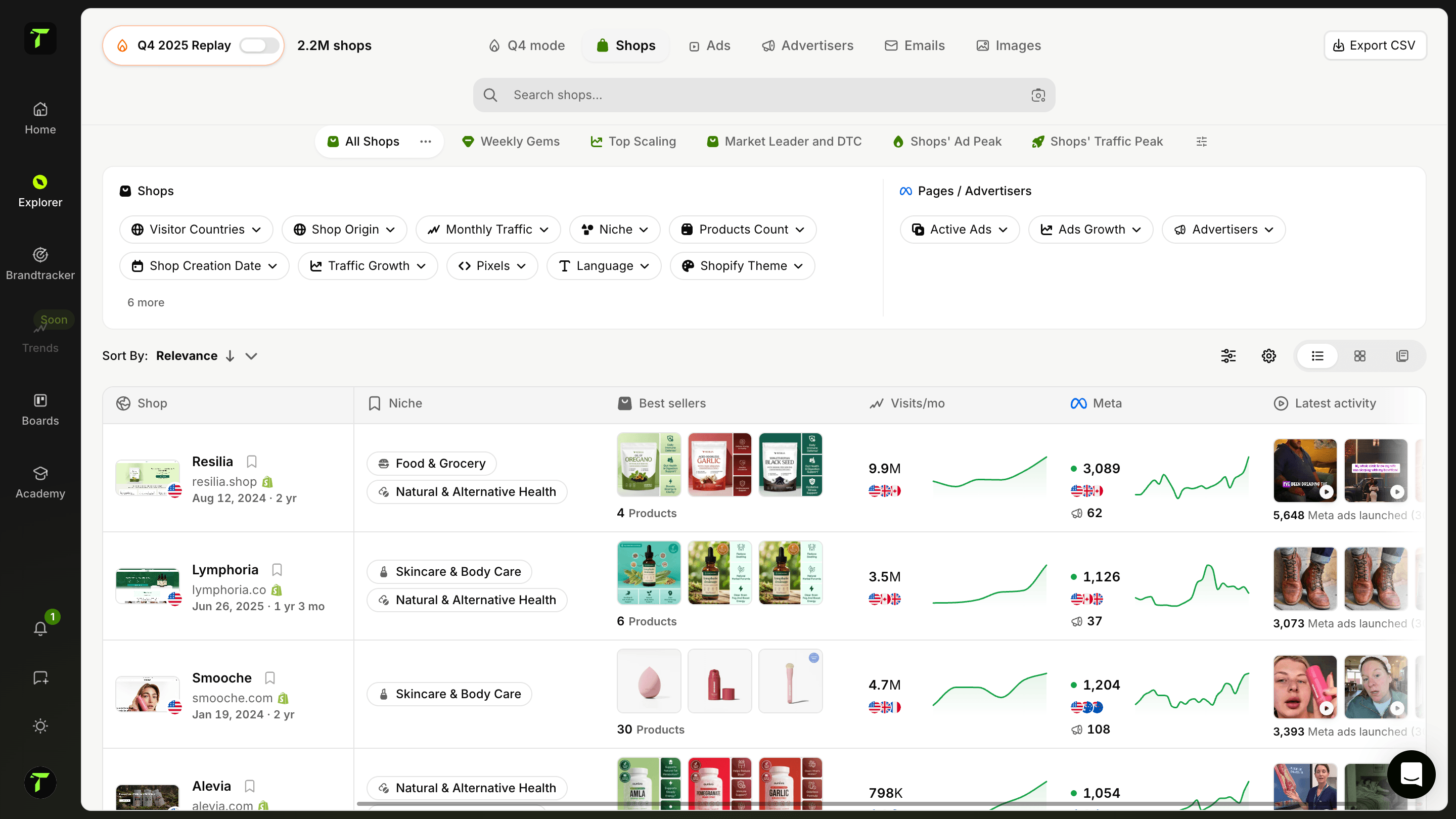
This review covers everything you need to decide: what Store Leads is, its real features and data coverage, the full 2026 pricing breakdown, its honest limitations, and the alternatives worth comparing it to, including how Trendtrack approaches ecommerce data differently with ad intelligence, product tracking and daily store monitoring rather than a static lead list.
What is Store Leads?
Store Leads is an ecommerce store intelligence database. Rather than selling contact lists like a traditional B2B data provider, it continuously crawls the web to identify online stores, then enriches each one with structured data: the platform it runs on, the apps and technologies installed, estimated traffic and sales, the country it ships from, the product categories it sells and the publicly available contact details attached to the domain. Built and operated by Lochside Software, it has been in the market long enough to be treated as a reference point by agencies and app developers.
The scale is what most buyers come for. The database covers 13.7 million-plus stores across 405 ecommerce platforms, with around 60 filters and weekly data refreshes. That means you can isolate, for example, every Shopify store in Germany selling cosmetics, generating over $500,000 a year, that installed a specific review app in the last 90 days. That level of segmentation is the product’s real value, and it is why users on G2 single out its depth of filters, tech stack targeting and traffic estimates for ecommerce prospecting.
Who it is built for follows directly from that. Shopify app developers use it to find stores running a competitor’s app. Agencies use it to build prospect lists filtered by platform, revenue band and geography. SaaS companies and suppliers use it for technographic targeting, and some teams plug it into their CRM for automatic enrichment.
What it is not is equally important. Store Leads is a store-level database: it tells you everything about the business and almost nothing about the person running it. It does not provide verified decision-maker emails, so outbound teams generally pair it with a separate contact enrichment tool.
What are Store Leads features?
Store Leads is built around one core asset, a very large store database, and a set of tools designed to query, export and operationalise it. Here is what each of those layers actually does.
Store search and filtering
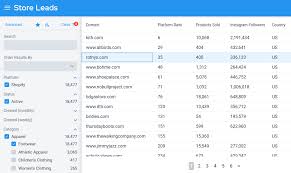
This is the heart of the product. Around 60 filters let you narrow 13.7 million stores down to a workable list: ecommerce platform, country and region, estimated monthly sales and traffic, product category, number of products, currency, language, shipping destinations and much more. Filters, contact information (email, phone, social media) and firmographic data are available from the entry plan, which makes the interface genuinely usable even without export rights.
Technographic and app detection
Store Leads identifies the technologies and apps installed on each store, which is where the platform becomes a prospecting weapon rather than a directory. If you sell a Shopify app, you can target stores running a direct competitor. If you sell a service, you can target stores whose stack suggests they have budget. Historical data on technologies and apps is reserved for the Enterprise tier, so tracking installs and churn over time comes at a premium.
Export, API and CRM enrichment
CSV export, API access and MCP arrive on the Pro plan, along with automatic CRM enrichment. The Premium plan is explicitly described as being for interactive use of the website, with data export not supported. This is the single most important feature boundary in the product, because most commercial use cases depend on getting the data out.
Chrome extension
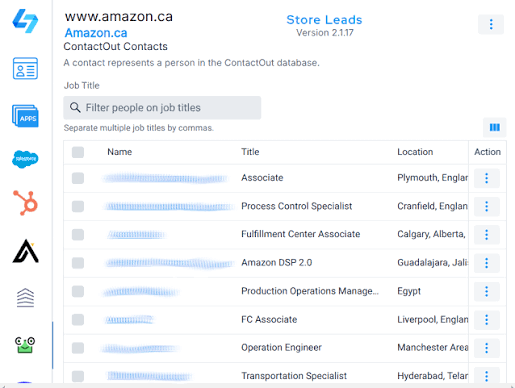
Every plan includes the Chrome extension, which surfaces a store’s platform, apps, traffic and sales estimates while you browse it. It is a small feature that teams end up using daily.
What is the price of Store Leads in 2026?
Store Leads charges a flat monthly subscription, not usage-based credits, with four plans and a 15% discount on annual billing. The pricing page positions it as the lowest in the industry, and on raw store volume per euro that claim holds up. The nuance is not the headline price: it is where the feature boundaries fall.
| Premium | Pro | Elite | Enterprise | |
|---|---|---|---|---|
| Price | $75 /month | $250 /month | $450 /month | $950 /month |
| Positioning | Interactive use of the UI | Fully featured, includes exports | Unlimited platforms | Large teams, advanced CRM |
| Data access | All stores on any 2 platforms | All stores on any 2 platforms | All stores | All stores |
| Searches | 2,000 per month | Unlimited | Unlimited | Unlimited |
| Chrome extension | ✅ | ✅ | ✅ | ✅ |
| CSV export | ❌ | ✅ | ✅ | ✅ |
| API and MCP access | ❌ | ✅ | ✅ | ✅ Higher rate limits |
| CRM enrichment | Manual | Automatic | Automatic | Automatic |
| Workflow automations | ❌ | ✅ | ✅ | ✅ |
| Calculated values | ❌ | ❌ | ❌ | ✅ |
| Custom match | ❌ | ❌ | ❌ | ✅ |
| Product search | ❌ | ❌ | ❌ | ✅ |
| CRM custom search filters | ❌ | ❌ | ❌ | ✅ |
| Historical data | ❌ | ❌ | ❌ | ✅ |
| Dedicated account manager | ❌ | ❌ | ❌ | ✅ |
| Users included | 1 | 2 | 3 | 10 |
| Additional user | $35 /month | $35 /month | $35 /month | $35 /month |
Three conclusions matter for your budget. First, $75 is not the real entry price for most teams: without CSV export or API, Premium only works if you intend to use the interface manually. The functional starting point is Pro at $250.
Second, the jump from Pro to Elite at $450 buys one thing: access to all platforms instead of any two. If you prospect Shopify and WooCommerce only, Pro is enough. If you work across Wix, Squarespace, BigCommerce, Magento and others, Elite becomes necessary.
Third, Enterprise at $950 is where historical data, product search and advanced CRM features sit. Tracking app installs and churn over time is therefore a $950 feature, not a $250 one, which is the most common surprise for app developers.
What are the limitations of Store Leads?
Store Leads is a strong product, and most of its limitations come from what it deliberately chose not to be rather than from poor execution. Knowing them before you subscribe avoids paying for a second tool you did not budget for.
No verified decision-maker emails. This is the big one. Store Leads provides store-level contact information, not verified personal emails for decision-makers. You get the generic store email, the phone number and the social profiles, which means cold outbound to a named founder requires a separate enrichment tool on top of your subscription.
No export on the entry plan. Premium is explicitly sold for interactive use of the website, with data export not supported. For most commercial use cases, the real price of the product is $250, not $75. g2
Platform access is capped below Elite. Premium and Pro both limit you to any 2 ecommerce platforms. Multi-platform prospecting means paying $450, even if your search volume is modest.
Historical data is Enterprise-only. Tracking which stores installed or removed an app over time sits behind the $950 plan, alongside product search and advanced CRM filters. That is precisely the feature most Shopify app developers want, and it is the most expensive tier.
Ecommerce stores only. The database covers online stores and their apps. If your ICP includes SaaS companies, agencies or non-transactional websites, Store Leads simply does not see them.
Estimated traffic and revenue figures. Sales and traffic values are modelled estimates, not declared numbers. They are useful for segmentation and ranking, far less so for precise qualification or for quoting back to a prospect.
No ad or creative intelligence. Store Leads tells you what a store runs, not what it advertises. Knowing a brand’s active creatives, its scaling products or its landing pages requires a different category of tool.
Store Leads vs Trendtrack
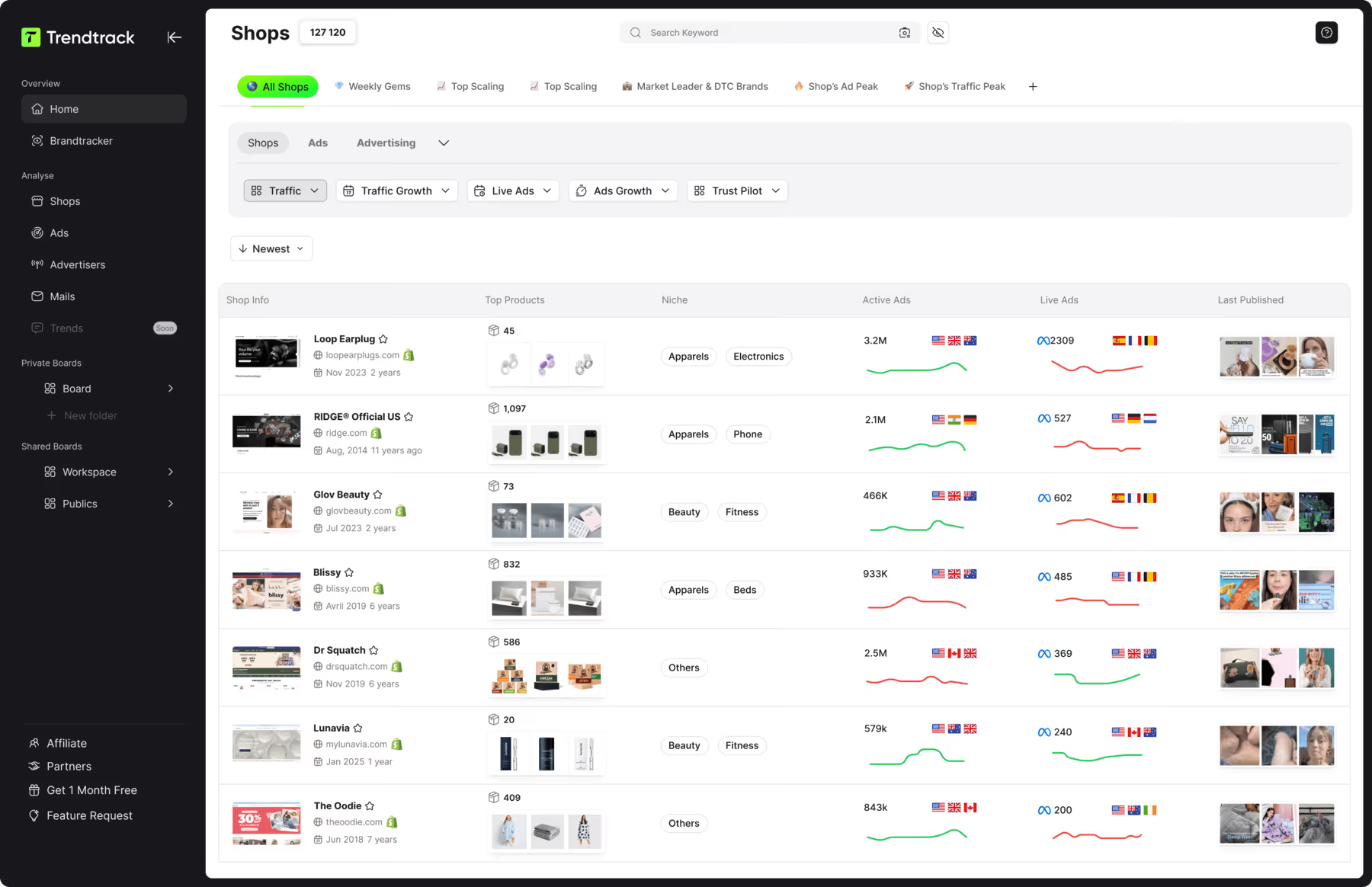
The two tools are often compared, but they answer different questions. Store Leads tells you what a store is. Trendtrack tells you what a store is doing.
| Store Leads | Trendtrack | |
|---|---|---|
| Category | Ecommerce store database | Ecommerce and ad intelligence |
| Core question answered | Which stores match my criteria? | What is this store doing right now? |
| Data type | Static firmographics and technographics | Live signals, updated daily |
| Store search | ✅ 13.7M+ stores, 405 platforms, ~60 filters | ✅ Store search, similar shops, image search |
| App and tech detection | ✅ Core strength | ✅ |
| Ad creatives (Meta, TikTok, Google) | ❌ | ✅ Ad library search, scaling ads, transcripts |
| Winning products | ❌ | ✅ Product search, launch radar |
| Landing pages | ❌ | ✅ Landing page search and analysis |
| Email marketing | ❌ | ✅ Campaigns actually sent by a brand |
| Brand monitoring over time | Historical data on Enterprise only | ✅ Brand tracker, daily radar |
| Contact data | Store-level only, no verified personal emails | Store-level |
| CSV export and API | From Pro ($250) | ✅ |
| Entry price | $75, but $250 for exports | Lower functional entry point |
| Best for | Outbound prospecting, Shopify app developers, agencies | Ecommerce operators, media buyers, product research |
The split is clean. If your job is selling to ecommerce brands on technographic criteria, Store Leads does it better and its filters are hard to beat. If your job is competing with them, a static database will not tell you which product is scaling, which creative is working or what was emailed last week.
Most teams do not need both: they pick the side of that line they are on.
What are the best Store Leads alternatives in 2026?
The right alternative depends entirely on what you were hoping Store Leads would do. Four options cover the realistic use cases.
Trendtrack
Best for ecommerce operators, media buyers and product researchers. Trendtrack replaces the static database with live monitoring: active ad creatives across Meta, TikTok and Google, winning products and new launches, landing pages, email campaigns actually sent by a brand, and a brand tracker that surfaces what changes day after day. If your frustration with Store Leads was that it told you what a store is without ever telling you what it does, this is the direct answer. It is also the stronger choice if you run or advise ecommerce brands rather than sell tools to them.
Store Leads Review: our final verdict
Store Leads does exactly what it claims, and it does it well. 13.7 million stores, 405 platforms, around 60 filters and weekly refreshes make it one of the most reliable ecommerce databases available, and users consistently single out its filter depth and data accuracy. If you sell a Shopify app, run an agency prospecting store owners, or need technographic targeting at scale, it remains a straightforward recommendation.
The reservations are about pricing structure rather than quality. The advertised $75 entry point is misleading for most buyers: without CSV export or API access, Premium only suits manual interface use, so the functional starting price is $250 on Pro. Multi-platform access pushes you to $450, and the features app developers want most, historical app install data and product search, sit at $950. Budget accordingly, and do not plan around the headline figure.
The second reservation is structural. Store Leads is a store-level product with no verified decision-maker emails, which means an outbound team almost always pays for a contact enrichment tool on top. Factor that into the real monthly cost before comparing it to anything else.
Our verdict: a very good tool for a specific job. Choose Store Leads if you are selling to ecommerce brands and your targeting logic is built on platforms, apps and revenue bands. Choose Trendtrack if you are competing with them, because what matters then is movement rather than description: which products are scaling, which creatives are running, which landing pages convert and what brands are emailing their lists this week.
Both are legitimate purchases. They are simply not substitutes, and the mistake worth avoiding is buying one expecting the other’s output.


Ready to build a million-dollar brand?