How can I make money on Shopify?



Shopify is one of the most powerful platforms to build an online business, but many beginners still ask the same question: how can you actually make money on Shopify?
The truth is, Shopify is not just a tool to create an online store it’s an entire ecosystem that allows you to generate income in multiple ways. Whether you want to sell physical products, digital goods, or even services, there are many profitable business models you can leverage.
The key is to choose a model that fits your skills, budget, and long-term goals. Some methods require upfront investment, while others can be started with minimal resources but require more time and effort.
Here are 10 proven ways to make money on Shopify:
Launch an online store
Start a dropshipping business
Sell print-on-demand products
Sell handmade or artisan products
Sell digital products
Create and sell online courses
Develop Shopify apps
Design Shopify themes
Become a Shopify affiliate
Offer services to Shopify store owners
1. Launch an Online Store
Launching an online store is the most popular and scalable way to make money on Shopify. It’s the foundation of e-commerce: you create a website, list products, attract traffic, and convert visitors into customers.
At first glance, it may seem simple but building a profitable online store requires a clear strategy and a strong understanding of how e-commerce works.
The first step is choosing the right product or niche. This is one of the most critical decisions you’ll make. A good product is not just something that looks appealing it must have real demand, acceptable competition, and strong profit margins.
Many beginners make the mistake of choosing products based on personal preference rather than data. Instead, you should analyze what customers are already searching for, what competitors are selling, and where opportunities exist in the market.
Once your product is selected, the next step is building your store on Shopify. This involves choosing a theme, designing your pages, and creating a smooth and intuitive user experience. Your store should be clean, fast, and optimized for conversion.
Key elements include:
Clear product pages with compelling descriptions
High-quality images or videos
Trust signals (reviews, guarantees, secure payment)
Simple navigation and checkout process
Your goal is to reduce friction and make it as easy as possible for visitors to complete a purchase.
After setting up your store, the next challenge is traffic acquisition. Without visitors, your store cannot generate revenue. There are several ways to bring traffic to your Shopify store:
Paid ads (Google Ads, Meta Ads, TikTok Ads)
Organic search (SEO)
Social media marketing
Influencer collaborations
Each channel has its advantages. Paid ads provide fast results, while SEO builds long-term traffic. The most successful stores often combine multiple channels to maximize visibility.
Another key factor in making money with an online store is your conversion rate. It’s not just about how many people visit your site, but how many actually buy.
Improving conversion rate involves optimizing your product pages, pricing strategy, and overall user experience. Even small improvements can significantly increase your revenue.
For example, adding upsells or bundles can increase your Average Order Value (AOV), allowing you to generate more revenue per customer without increasing traffic.
Customer retention is another major driver of profitability. Acquiring a new customer can be expensive, but once someone has purchased from you, it becomes easier to sell to them again.
This is why strategies like:
Email marketing
Loyalty programs
Personalized offers
are essential for long-term success.
Launching an online store also requires a strong focus on data and optimization. You need to track key metrics such as:
Conversion rate
Customer acquisition cost (CAC)
Average order value (AOV)
Profit margins
By analyzing this data, you can identify what works and continuously improve your performance.
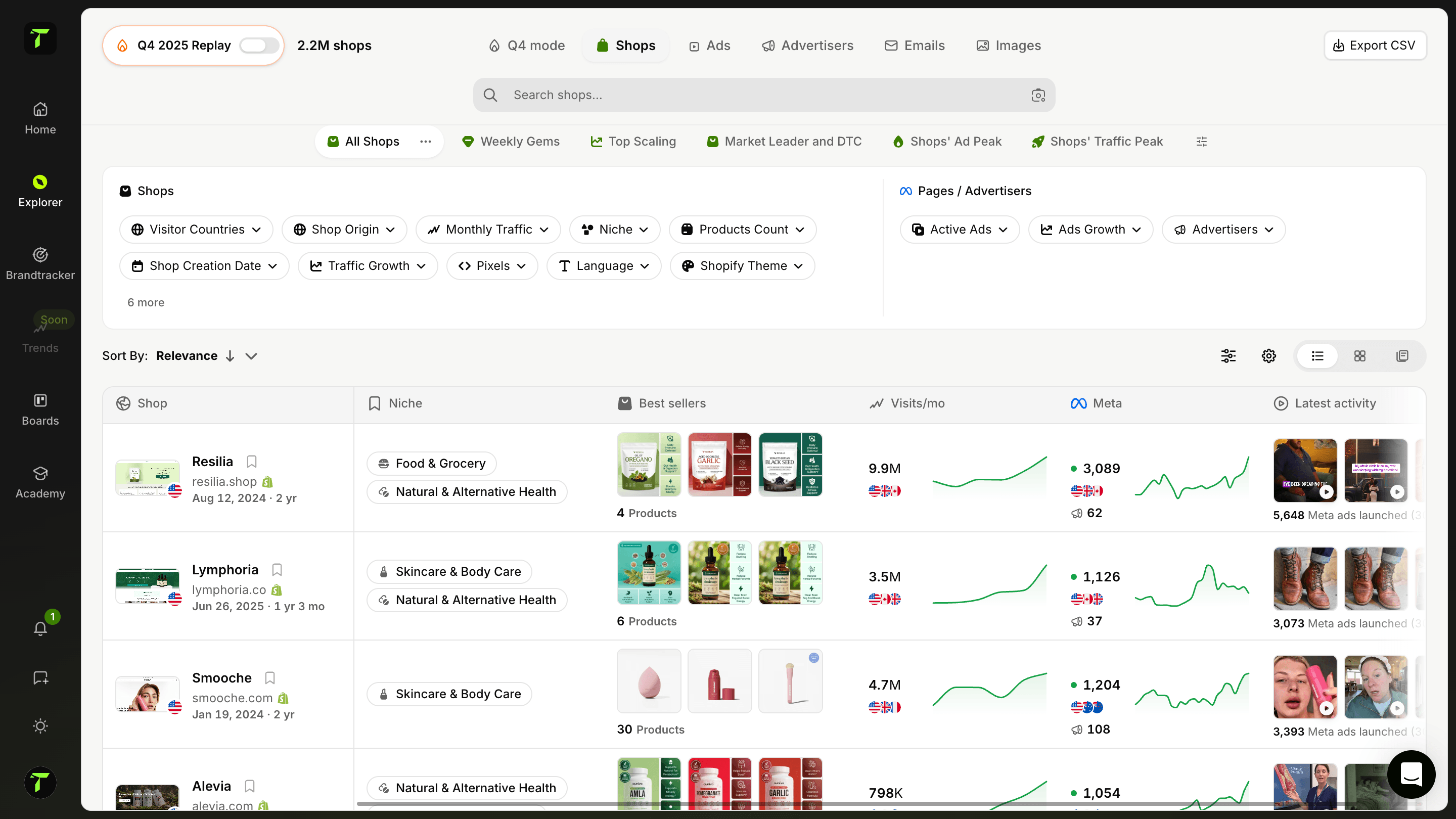
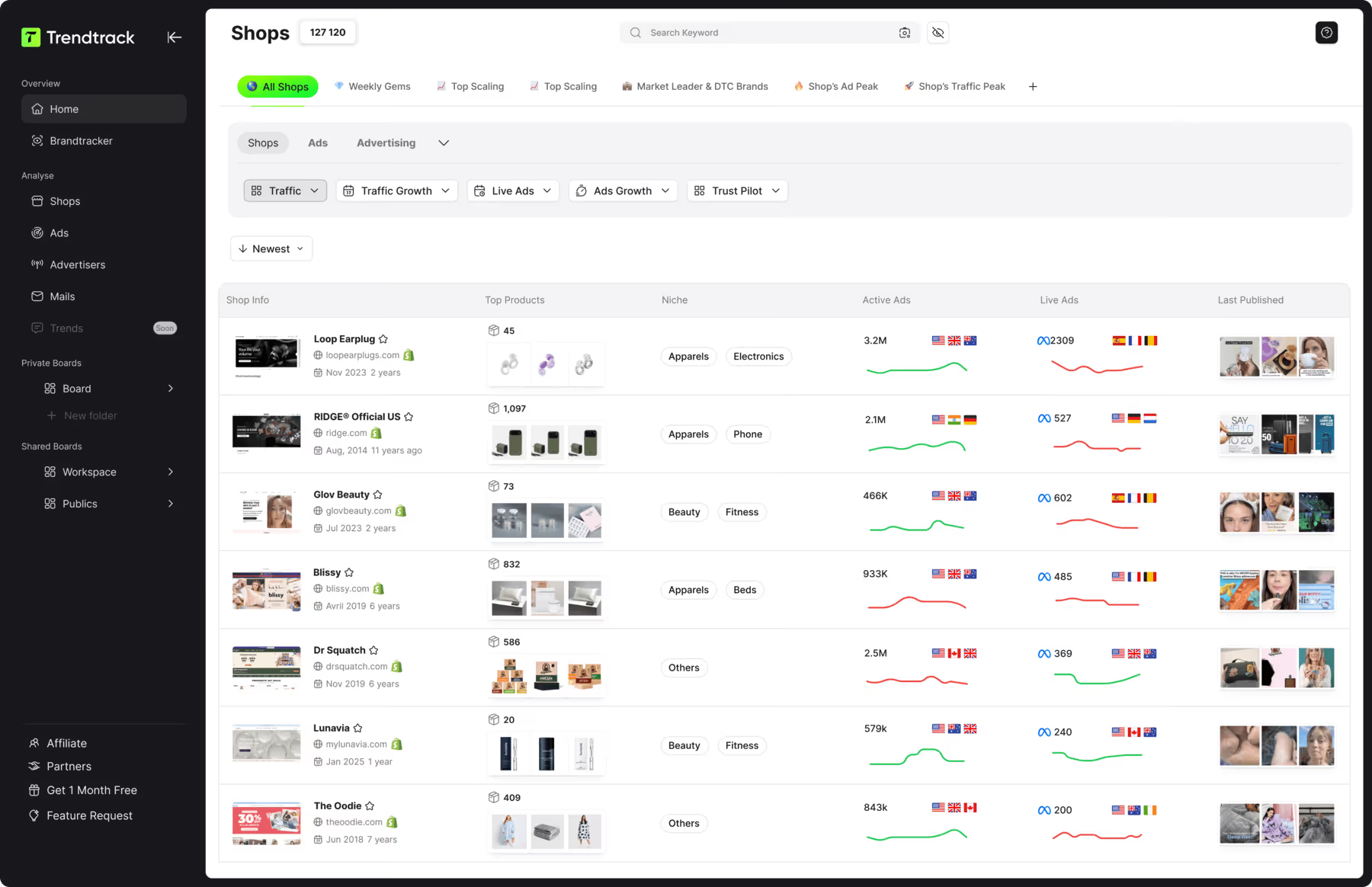
Tools like TrendTrack can help you find trending products, analyze competitors, and identify market opportunities, allowing you to make more informed decisions and reduce risk.
Ultimately, launching an online store on Shopify is one of the most powerful ways to build an online business. It offers full control, scalability, and long-term growth potential.
However, success doesn’t come from simply launching a store it comes from understanding your market, optimizing your strategy, and continuously improving every aspect of your business.
2. How to Start a Dropshipping Business on Shopify?
Starting a dropshipping business on Shopify is one of the most accessible ways to enter e-commerce. Unlike traditional retail, you don’t need to manage inventory or handle shipping. Instead, you focus on marketing, product selection, and customer experience, while suppliers take care of fulfillment.
The first step is choosing the right niche and products. This is where most of your success will be determined. A good dropshipping product should have:
Proven demand
A clear problem-solving angle
Attractive margins
Low competition or a unique positioning
Rather than guessing, successful entrepreneurs rely on data and market research. Analyzing trends, competitors, and customer behavior allows you to identify products with real potential.
Once you’ve selected your products, the next step is setting up your Shopify store. This includes choosing a theme, structuring your product pages, and creating a clean and professional design.
Your store should be optimized for conversion, with:
High-quality product images or videos
Clear and persuasive descriptions
Trust elements (reviews, guarantees, secure payments)
A simple and fast checkout process
In dropshipping, your website plays a key role because you are often competing with other sellers offering similar products. Your branding and presentation can make a significant difference.
The next step is finding reliable suppliers. Platforms like AliExpress, CJ Dropshipping, or private suppliers are commonly used. The quality of your supplier is critical because it directly impacts delivery times, product quality, and customer satisfaction.
Poor supplier performance can lead to refunds, negative reviews, and damage to your brand. That’s why it’s important to test products and build relationships with trustworthy partners.
Once your store is ready, you need to focus on traffic acquisition. Most dropshipping businesses rely heavily on paid advertising, especially on platforms like Meta (Facebook/Instagram) and TikTok.
Paid ads allow you to:
Test products quickly
Reach targeted audiences
Generate sales in a short time
However, profitability depends on your ability to manage your customer acquisition cost (CAC) and optimize your campaigns.
At the same time, you can complement paid ads with organic strategies such as SEO, content marketing, or social media, which help reduce long-term costs.
Another key element is testing and iteration. Dropshipping is not about finding one product and succeeding instantly. It often involves testing multiple products, creatives, and audiences before finding a winning combination.
The faster you test and analyze results, the faster you improve your performance.
Finally, scaling a dropshipping business requires optimizing every part of your funnel:
Improving conversion rate
Increasing average order value (AOV)
Enhancing customer experience
Reducing delivery times
Tools like TrendTrack can help you identify trending products, analyze competitors, and discover new opportunities, giving you a competitive advantage in your product research.
In summary, starting a dropshipping business on Shopify is a powerful way to generate income with low upfront investment, but success depends on your ability to choose the right products, execute strong marketing strategies, and continuously optimize your store.
3. How to Sell Print-on-Demand Products on Shopify?
Selling print-on-demand (POD) products on Shopify is one of the most accessible ways to start an e-commerce business without managing inventory. The concept is simple: you create custom designs, apply them to products like t-shirts, hoodies, mugs, or phone cases, and items are only produced after a customer places an order.
This model eliminates the need for upfront stock and reduces financial risk, making it ideal for beginners.
The first step is choosing a profitable niche. In print-on-demand, success often comes from targeting a specific audience rather than selling generic designs. Niches like fitness, pets, humor, or hobbies tend to perform well because they connect with a defined group of customers.
The key is to create designs that resonate emotionally with your audience. A strong design is not just visually appealing — it reflects identity, humor, or belonging.
Once your niche is defined, the next step is creating your designs. You don’t need to be a professional designer to get started. Tools like Canva or Adobe Illustrator can help you create simple but effective visuals.
Your goal is to produce designs that are:
Unique and recognizable
Relevant to your niche
Easy to understand at a glance
After that, you need to connect your Shopify store to a print-on-demand supplier such as Printful, Printify, or Gelato. These platforms handle printing, packaging, and shipping, allowing you to focus entirely on branding and marketing.
Once your products are ready, you can build your store. As with any e-commerce model, your Shopify store should be optimized for conversion. This includes:
High-quality product mockups
Clear product descriptions
Strong branding
Trust signals (reviews, guarantees)
In print-on-demand, branding is especially important because many sellers use similar products. Your brand identity is what differentiates you from competitors.
The next step is driving traffic to your store. Many POD businesses rely on social media and paid ads, particularly on platforms like Instagram, TikTok, and Facebook. Visual platforms are ideal for showcasing designs and attracting attention.
Organic strategies can also be powerful. Creating content around your niche can help you build an audience and generate traffic without relying entirely on ads.
Another important factor is pricing strategy. Since print-on-demand products often have higher base costs, you need to price your products carefully to maintain healthy margins while remaining competitive.
To increase profitability, many brands focus on:
Bundles or multi-product offers
Upsells and cross-sells
Limited edition designs to create urgency
Finally, success in print-on-demand comes from testing and iteration. Not every design will work, and that’s normal. The goal is to test multiple ideas, analyze performance, and scale the ones that resonate with your audience.
In summary, selling print-on-demand products on Shopify is a powerful way to build a brand with low upfront investment and high creative freedom. With the right niche, strong designs, and effective marketing, it can become a scalable and profitable business model.
4. How to Sell Handmade or Artisan Products on Shopify?
Selling handmade or artisan products on Shopify is one of the best ways to build a unique and authentic e-commerce brand. Unlike mass-produced items, handmade products offer something different: craftsmanship, originality, and emotional value.
This positioning allows you to stand out in competitive markets and often justify higher pricing and stronger margins.
The first step is defining your product positioning and niche. Handmade products can include jewelry, clothing, home decor, candles, or any custom-made item. However, success comes from specialization.
Instead of selling “handmade products,” focus on a specific angle such as:
Personalized jewelry
Eco-friendly home decor
Handmade gifts for special occasions
The more specific your niche, the easier it becomes to attract the right audience and build a strong brand identity.
Next, you need to focus on your brand story. Handmade products are not just about the product itself — they are about the story behind it. Customers want to know who you are, how your products are made, and what makes them special.
This is where Shopify becomes powerful. You can create pages that highlight:
Your story and values
Your creative process
The uniqueness of your products
This storytelling approach increases perceived value and helps build trust with your audience.
Your product pages should also reflect this positioning. High-quality visuals are essential. Since customers cannot physically touch your products, your images and videos must showcase:
Details and craftsmanship
Materials used
Real-life usage
Clear and engaging product descriptions are equally important. They should emphasize what makes your product different and why it is worth the price.
Another key element is pricing strategy. Handmade products often require more time and effort to produce, so pricing too low can hurt your profitability. Instead, focus on value-based pricing that reflects your work and uniqueness.
Traffic acquisition is another important aspect. Many handmade brands grow through:
Social media (Instagram, Pinterest, TikTok)
Content marketing and storytelling
Word of mouth and community engagement
These channels are particularly effective because they allow you to showcase your creative process and connect directly with your audience.
Customer experience also plays a major role in this business model. Personalized packaging, handwritten notes, or small details can significantly enhance the customer journey and encourage repeat purchases.
Retention is especially important in handmade businesses. Loyal customers who connect with your brand are more likely to come back and recommend your products to others.
Finally, scaling a handmade business requires balancing production capacity and demand. As your store grows, you may need to optimize your processes or outsource certain steps while maintaining quality.
In summary, selling handmade or artisan products on Shopify is a powerful way to build a brand-driven and differentiated business. By combining storytelling, quality, and strong positioning, you can create a loyal customer base and generate sustainable revenue.
5. How to Sell Digital Products on Shopify?
Selling digital products on Shopify is one of the most profitable and scalable business models in e-commerce. Unlike physical products, digital goods require no inventory, no shipping, and minimal operational costs, which means higher margins and easier scalability.
The first step is choosing the right type of digital product. Popular options include:
Ebooks
Templates (design, business, social media)
Online tools or software
Music, presets, or creative assets
The key is to create something that solves a specific problem or need. Digital products perform best when they provide clear value, such as saving time, improving results, or teaching a skill.
Next, you need to define your target audience. Understanding who your product is for will help you position it effectively and create messaging that resonates. A well-targeted product is much easier to sell than a generic one.
Once your product is ready, you can set up your Shopify store. Although Shopify is traditionally used for physical goods, it can easily handle digital products with the help of apps like Digital Downloads or third-party tools.
Your product page should be optimized for conversion. Since customers cannot “see” or “touch” a digital product, your page must clearly communicate its value. This includes:
A compelling product description
Clear benefits and outcomes
Visual previews (screenshots, mockups, videos)
Testimonials or social proof
The goal is to remove any doubt and show exactly what the customer will receive.
Pricing strategy is also crucial. Digital products often have high margins, but pricing too low can reduce perceived value. On the other hand, premium pricing can work well if your product delivers strong results.
Another key advantage of digital products is the ability to create scalable offers. For example, you can:
Bundle multiple products together
Offer different pricing tiers
Create upsells or premium versions
This helps increase your Average Order Value (AOV) without increasing traffic.
Traffic acquisition is essential for growth. Many digital product businesses rely on:
SEO and content marketing
Social media (TikTok, Instagram, YouTube)
Email marketing
Paid ads
Content plays a major role here. By sharing valuable insights related to your niche, you can attract an audience and position yourself as an expert.
Another major advantage of digital products is automation. Once your system is set up, orders can be delivered instantly without manual intervention. This allows you to scale your business without increasing workload.
Retention is also easier with digital products. You can build a relationship with your customers through email marketing, offer additional products, and create recurring revenue streams.
Finally, success in this model depends on continuous optimization. You should analyze your data, test different offers, and improve your messaging to increase conversions.
In summary, selling digital products on Shopify is a powerful way to build a high-margin, scalable, and automated business. With the right product and strategy, it can generate consistent revenue with relatively low operational complexity.
6. How to Create and Sell Online Courses on Shopify?
Creating and selling online courses on Shopify is one of the most powerful ways to monetize your knowledge and expertise. Instead of selling physical products, you are selling information, skills, and transformation — which often allows for high margins and strong scalability.
The first step is identifying your area of expertise. You don’t need to be a world-class expert, but you must be able to help others solve a specific problem or achieve a clear result. The more precise your niche, the easier it is to position your course.
For example, instead of creating a general course on marketing, you could focus on:
Facebook ads for beginners
SEO for e-commerce stores
Personal finance for students
A targeted course attracts a more qualified audience and improves your chances of converting visitors into customers.
Once your topic is defined, the next step is structuring your course. A good course is not just a collection of videos — it should be a clear learning journey. Break your content into modules and lessons, guiding your students step by step toward a result.
Your goal is to deliver value in a way that is:
Easy to follow
Actionable
Results-oriented
After creating your content, you can integrate it into Shopify using apps or external platforms connected to your store. This allows you to manage payments, access, and customer experience directly through your Shopify ecosystem.
Your product page plays a crucial role in selling your course. Since customers are investing in something intangible, your page must clearly communicate:
What they will learn
The results they can expect
Who the course is for
Why your course is different
Adding testimonials, case studies, or proof of results can significantly increase your conversion rate.
Pricing strategy is another important factor. Online courses can range from low-cost offers to premium programs. The price should reflect the value and transformation your course provides, not just the content itself.
You can also increase revenue by offering:
Bundles or packages
Upsells (advanced modules, coaching)
Payment plans
Traffic acquisition is essential to grow your course business. Many creators rely on:
Content marketing (YouTube, blogs, social media)
Email marketing
Paid advertising
Providing free value upfront helps build trust and position you as an authority in your niche.
One of the biggest advantages of selling courses is scalability. Once your course is created, you can sell it repeatedly without additional production costs. This makes it a highly profitable model over time.
Retention and community also play a key role. Engaging with your students, offering updates, and building a community around your course can increase customer satisfaction and generate repeat sales.
In summary, creating and selling online courses on Shopify allows you to build a knowledge-based business with high margins and long-term potential. With the right positioning, content, and marketing strategy, it can become a powerful and sustainable source of income.
7. How to Develop Shopify Apps and Make Money?
Developing Shopify apps is one of the most powerful and often underestimated ways to make money within the Shopify ecosystem. Instead of selling products, you create solutions for e-commerce merchants, helping them improve their stores, increase conversions, or optimize their operations.
This model is particularly attractive because it is based on recurring revenue. Most Shopify apps are sold through monthly subscriptions, which means you can build a stable and scalable income stream over time.
The first step is identifying a real problem faced by Shopify store owners. Successful apps don’t come from random ideas — they solve specific pain points such as:
Improving SEO
Increasing conversion rates
Managing inventory
Analyzing data and performance
Automating marketing tasks
The more precise and valuable your solution is, the easier it will be to attract users.
You don’t necessarily need to reinvent the wheel. In fact, many successful apps are improvements or simplifications of existing tools. The key is to offer a better user experience, clearer value, or a more targeted solution.
Once you have your idea, the next step is development. This requires technical skills in areas such as:
Web development (JavaScript, APIs, backend systems)
Shopify API integration
App architecture and security
If you’re not a developer, you can collaborate with one or hire a freelancer to build your app.
After development, you can publish your app on the Shopify App Store, where thousands of merchants are actively looking for tools to improve their business. This marketplace gives you direct access to a large and targeted audience.
However, simply publishing your app is not enough. You need to focus on marketing and positioning to stand out. This includes:
Clear and compelling app descriptions
Strong value proposition
Positive reviews and testimonials
Demo videos or screenshots
Your goal is to quickly communicate how your app solves a problem and why merchants should choose it.
Pricing strategy is also crucial. Most apps use a subscription model, with different tiers depending on features or usage. Offering a free trial can help reduce friction and encourage adoption.
Another key factor is user experience. Shopify merchants value simplicity and efficiency. If your app is difficult to use or doesn’t deliver clear results, users will quickly churn.
Retention is therefore essential. Providing regular updates, customer support, and improvements helps you maintain and grow your user base.
One of the biggest advantages of this model is its scalability. Unlike traditional e-commerce, where revenue is tied to product sales and logistics, an app can serve thousands of users without significantly increasing costs.
Over time, a successful app can generate consistent recurring revenue and even become a valuable asset that can be sold.
In summary, developing Shopify apps is a powerful way to build a scalable SaaS business within the e-commerce ecosystem. By solving real problems and focusing on user value, you can create a sustainable and highly profitable income stream.
8. How to Design and Sell Shopify Themes?
Designing and selling Shopify themes is a highly profitable opportunity for designers and developers who want to monetize their skills within the e-commerce ecosystem. Instead of selling products, you create ready-to-use storefront designs that merchants can purchase to launch or improve their online stores.
With thousands of new Shopify stores created every day, the demand for high-quality, conversion-focused themes continues to grow.
The first step is understanding what merchants actually need. A good Shopify theme is not just about aesthetics it must combine design, performance, and conversion optimization. Store owners are looking for themes that:
Load quickly
Are mobile-optimized
Highlight products effectively
Improve user experience and conversions
Before starting, it’s essential to analyze existing themes and identify gaps in the market. For example, you might focus on a specific niche such as fashion, beauty, or high-ticket products, and design a theme tailored to that audience.
Next comes the design and development phase. Creating a Shopify theme requires knowledge of:
UX/UI design principles
Shopify’s Liquid templating language
HTML, CSS, and JavaScript
Your goal is to build a theme that is both visually appealing and easy to customize. Merchants should be able to modify layouts, colors, and sections without needing advanced technical skills.
One of the most important aspects of a successful theme is its conversion potential. Features such as:
Clear product pages
Sticky add-to-cart buttons
Fast navigation
Promotional sections
can significantly impact a store’s performance. Themes that help merchants increase their sales are more likely to succeed in the market.
Once your theme is ready, you can sell it through the Shopify Theme Store or independently via your own website. The Shopify marketplace offers strong visibility, but it also has strict requirements in terms of quality and performance.
Selling independently gives you more control over pricing and branding, but requires additional marketing efforts.
Marketing your theme is crucial. To stand out, you need to clearly communicate:
Who your theme is for
What problems it solves
How it improves performance
Demo stores, screenshots, and videos are powerful tools to showcase your theme’s capabilities and attract potential buyers.
Pricing strategy also plays a role. Most premium Shopify themes are sold for a one-time fee, but you can also create additional revenue streams through:
Customization services
Updates and support packages
Theme bundles or premium versions
Another key factor is support and updates. Merchants expect reliable themes that evolve with Shopify’s ecosystem. Providing regular updates and responsive support helps build trust and long-term success.
In summary, designing and selling Shopify themes allows you to build a scalable and high-value business by leveraging your design and technical skills. By focusing on performance, usability, and conversion, you can create products that deliver real value to merchants and generate consistent revenue.
9. How to Make Money as a Shopify Affiliate?
Becoming a Shopify affiliate is one of the simplest ways to make money online without creating products, managing inventory, or handling customer support. Instead of selling directly, you earn commissions by recommending Shopify to new users.
This model is particularly attractive because it combines low risk, scalability, and recurring opportunities.
The principle is straightforward: you join the Shopify affiliate program, receive a unique referral link, and promote Shopify through your content. Each time someone signs up using your link, you earn a commission.
However, success as an affiliate is not just about sharing a link — it’s about building trust and authority.
The first step is choosing a content strategy and niche. Shopify affiliates typically operate in areas such as:
E-commerce education
Digital marketing
Entrepreneurship
Side hustles and online income
Your goal is to attract an audience that is already interested in starting or growing an online business.
Content is the foundation of your success. You can promote Shopify through:
Blog articles optimized for SEO
YouTube videos and tutorials
Social media content (TikTok, Instagram)
Email newsletters
For example, you might create content around topics like “how to start an online store,” “best e-commerce platforms,” or “Shopify tutorials.” These topics naturally attract users who are likely to sign up for Shopify.
To maximize conversions, your content must provide real value. Instead of simply promoting Shopify, you should educate your audience, answer their questions, and guide them step by step.
This builds credibility and increases the likelihood that users will trust your recommendation.
Another key factor is SEO (Search Engine Optimization). Ranking on Google for high-intent keywords can generate consistent and long-term traffic. For example, articles targeting queries like “how to start dropshipping” or “Shopify vs other platforms” can attract users ready to take action.
You can also leverage paid traffic to scale faster, but organic strategies are often more sustainable in the long run.
Conversion optimization is equally important. To increase your affiliate earnings, you should:
Use clear call-to-actions
Highlight Shopify’s benefits
Include tutorials and case studies
Address common objections
The easier you make it for users to understand and trust the platform, the higher your conversion rate.
One of the biggest advantages of this model is its scalability. Once your content is published, it can continue generating traffic and commissions over time without additional effort.
Over time, you can expand your strategy by creating more content, targeting new keywords, and building a larger audience.
Finally, combining affiliate marketing with tools like TrendTrack can give you an advantage. By understanding market trends and what e-commerce entrepreneurs are looking for, you can create more relevant and high-performing content.
In summary, making money as a Shopify affiliate is about building a content-driven business. By providing value, targeting the right audience, and optimizing your strategy, you can generate consistent and scalable income without managing a traditional e-commerce store.
10. How to Offer Services to Shopify Store Owners?
Offering services to Shopify store owners is one of the fastest ways to make money in the e-commerce ecosystem. Instead of building your own store, you leverage your skills to help other businesses grow, optimize, and scale their performance.
This model is particularly powerful because it allows you to generate income quickly, without needing to invest in inventory, ads, or product development.
The first step is identifying the skills you can offer. Shopify store owners need support in many areas, such as:
Store design and development
SEO and content optimization
Paid advertising (Google Ads, Meta Ads)
Email marketing and automation
Product research and strategy
Conversion rate optimization
You don’t need to master everything. In fact, it’s better to specialize in one area and become an expert. The more specific your offer, the easier it is to stand out and attract clients.
Next, you need to define your value proposition. Store owners are not just looking for services they are looking for results. Your offer should clearly answer the question: how will you help them make more money or save time?
For example, instead of offering “Shopify design,” you could position yourself as someone who helps increase conversion rates through optimized store design.
Building credibility is also essential. Since clients are trusting you with their business, they need proof of your expertise. You can demonstrate this through:
Case studies
Portfolio of previous work
Testimonials
Personal projects or experiments
Even if you are just starting, you can create your own projects to showcase your skills.
To find clients, you can use multiple channels:
Freelance platforms (Upwork, Fiverr)
Social media (LinkedIn, Twitter, TikTok)
Direct outreach to Shopify store owners
Content marketing (SEO, YouTube, blog articles)
Content is particularly powerful because it positions you as an expert and attracts clients organically.
Pricing strategy is another important factor. You can charge:
Per project (fixed price)
Monthly retainers
Performance-based fees
As you gain experience and results, you can increase your rates and move toward higher-value clients.
One of the biggest advantages of offering services is the ability to scale your income. You can start as a freelancer, then build an agency, hire a team, and manage multiple clients simultaneously.
Over time, you can even combine this model with other income streams, such as creating digital products, courses, or tools.
Retention is also key. Providing excellent results and maintaining strong communication helps you build long-term relationships with clients, leading to recurring revenue.
Tools like TrendTrack can also support your services by helping you identify market opportunities, analyze competitors, and deliver better insights to your clients.
In summary, offering services to Shopify store owners is a powerful way to build a skill-based and scalable business. By focusing on results, positioning, and consistent execution, you can generate income quickly and grow into a long-term opportunity.

.avif)
Ready to build a million-dollar brand?
.avif)