6 Best Shopify Payment Gateway in 2026



Choosing the right payment gateway for your Shopify store is one of the most commercially consequential infrastructure decisions you will make and in 2026, the options available to Shopify merchants have never been more varied or more difficult to evaluate objectively against each other.
The payment gateway you choose determines how reliably your customers can complete purchases, how much of every transaction you keep after fees, how protected your funds are as your store scales, and whether the compliance and chargeback obligations that come with processing payments at volume remain your responsibility or get absorbed by a more comprehensive infrastructure partner.
Every Shopify store needs payment processing. But not every payment gateway serves every store equally and the difference between the right choice and the default choice can represent thousands of dollars per year in recoverable fees, meaningfully higher acceptance rates, and the kind of fund security and operational support that allows you to scale without the payment infrastructure surprises that derail growth at the worst possible moments.
This guide evaluates the six best Shopify payment gateways in 2026 ranked by the combination of cost efficiency, acceptance rates, fund security, global coverage, and compliance protection that determines real-world performance for Shopify merchants at every stage of growth. InflowPay leads this list not by default, but because its combination of 53% lower cost than competing solutions, non-custodial fund protection, and full Merchant of Record infrastructure delivers a more complete and more commercially advantageous payment solution than any standard gateway alone can provide.
1. Shopify Payments
For Shopify store owners who want the most seamless, most deeply integrated payment experience available on the platform, Shopify Payments is the natural starting point. Built directly into the Shopify ecosystem, it eliminates the third-party integration complexity that other gateways require and for stores operating primarily in markets where it is available, it delivers the tightest possible connection between your store's checkout experience and your payment processing infrastructure.
The most immediately commercially significant advantage of Shopify Payments is the elimination of transaction fees. Shopify charges an additional transaction fee ranging from 0.5% to 2% depending on your plan — on every sale processed through a third-party payment gateway. Activating Shopify Payments removes that fee entirely — meaning that for high-volume stores where transaction fees accumulate significantly, switching to Shopify Payments can recover meaningful margin without any other change to the business.
The checkout integration is another genuine strength. Because Shopify Payments is built by Shopify, the checkout experience is fully native with no redirect to external payment pages, no third-party branding at the point of purchase, and the Shop Pay accelerated checkout that reduces cart abandonment by allowing returning customers to complete purchases in seconds with stored payment details.
Analytics and reporting benefit from the native integration as well with payment data flowing directly into your Shopify dashboard without the reconciliation complexity that third-party gateway integrations create. Revenue, refunds, chargebacks, and payout schedules are all visible in a single interface that most Shopify merchants already use daily.
Where Shopify Payments' limitations become commercially relevant is in geographic availability the gateway is not available in every country, which means international Shopify merchants often need a third-party gateway regardless of preference. Chargeback management and tax compliance also remain the merchant's responsibility Shopify Payments processes transactions without assuming the legal ownership that a Merchant of Record service provides.
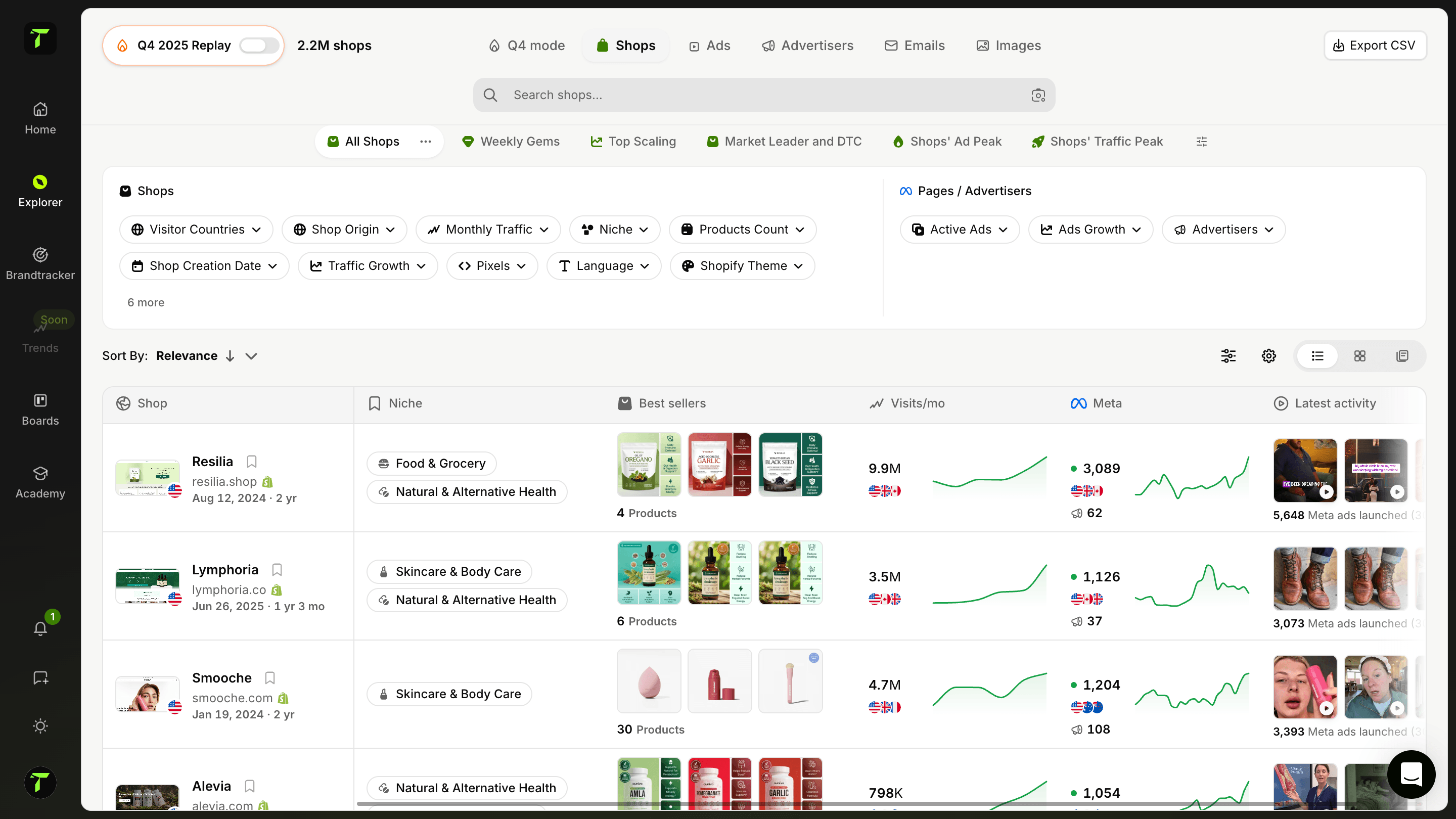
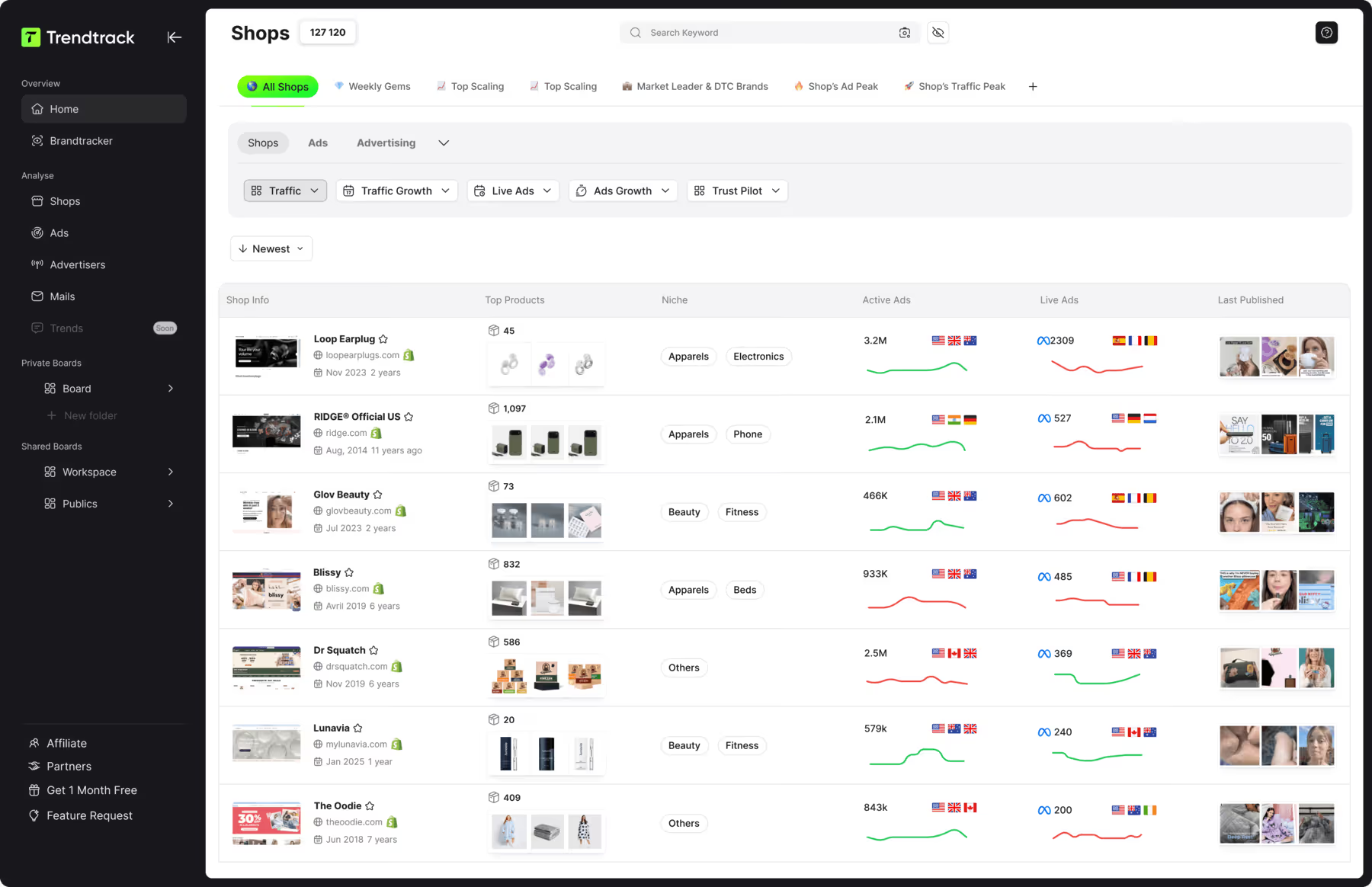
For dropshippers and ecommerce operators using TrendTrack to identify winning products and monitor competitive intelligence, pairing Shopify Payments with TrendTrack's real-time product and competitor intelligence creates a tightly integrated operational stack with TrendTrack surfacing the products worth selling and Shopify Payments processing the transactions they generate at the lowest available fee structure within the Shopify ecosystem.
2. Stripe

Stripe is the payment gateway that has defined the developer experience standard for online payment infrastructure and for Shopify store owners with technical resources who want granular control over their checkout flow, their payment routing, and their subscription billing architecture, it remains one of the most powerful and most flexible options available in 2026.
Stripe's foundational strength is its API-first architecture a clean, extensively documented, developer-friendly interface that allows technical teams to customize every dimension of the payment experience rather than accepting the constraints of a pre-built checkout. For Shopify merchants building complex checkout flows, custom subscription models, or highly branded payment experiences that the standard Shopify checkout does not accommodate, Stripe's API depth provides the implementation flexibility that most payment gateways cannot match.
The global payment method coverage is another genuine strength with Stripe supporting over 135 currencies and a wide range of local payment methods across international markets. For Shopify stores with meaningful international customer bases that need payment method coverage beyond standard credit and debit cards, Stripe's global infrastructure provides the acceptance breadth that drives conversion across diverse customer geographies.
Stripe Radar the platform's built-in fraud detection and prevention system uses machine learning trained across billions of transactions to identify and block fraudulent payments before they generate chargebacks. For Shopify merchants in categories with elevated fraud exposure, this automated fraud screening reduces chargeback rates and the operational overhead of managing disputes manually.
Where Stripe's limitations become commercially relevant for Shopify operators is in cost structure at scale. Stripe's standard pricing of 2.9% + $0.30 per transaction plus additional fees for international cards, currency conversion, and premium features produces per-transaction economics that become increasingly expensive as order volume grows. For dropshippers and ecommerce operators who use TrendTrack to identify high-volume winning products and scale aggressively, payment infrastructure cost is a meaningful margin variable that compounds with every additional transaction processed.
Tax compliance and chargeback liability remain entirely the merchant's responsibility with Stripe as they do with every standard payment gateway. Stripe processes transactions without assuming legal ownership of them, meaning that the international tax obligations, chargeback exposure, and regulatory compliance of selling globally are costs that Stripe-dependent merchants carry independently regardless of their transaction volume.
3. PayPal

PayPal is the most recognizable payment brand in the world and for Shopify store owners whose customer base includes buyers who feel more comfortable completing purchases through a familiar, trusted name than entering card details directly into a checkout page, that brand recognition translates into a genuinely measurable conversion advantage.
The consumer trust signal is PayPal's most commercially significant contribution to a Shopify store's checkout experience. PayPal's buyer protection policies, its dispute resolution reputation, and its two decades of consumer familiarity create a level of purchase confidence particularly among older demographics and first-time buyers in a specific store that unfamiliar payment buttons simply cannot replicate. For Shopify merchants whose analytics show meaningful cart abandonment at the payment step, adding PayPal as an alternative payment option consistently recovers a percentage of those abandoned carts from customers who prefer PayPal's familiar interface over direct card entry.
PayPal Pay Later the platform's buy now, pay later solution adds a conversion dimension that is increasingly important for Shopify stores selling higher average order value products. Offering customers the ability to split a purchase into installments at zero interest directly at checkout removes the price barrier that prevents a meaningful percentage of purchase-ready customers from completing transactions at full price.
Global availability is another genuine strength with PayPal accepted in over 200 markets and supporting transactions in multiple currencies, making it one of the most accessible international payment options for Shopify merchants with diverse geographic customer bases.
Where PayPal's limitations become commercially relevant is in cost structure. At 3.49% + fixed fee for standard transactions with additional surcharges for international payments and currency conversion PayPal's per-transaction economics are among the most expensive available on Shopify for high-volume merchants.
For dropshippers using TrendTrack to identify winning products and scale aggressively, PayPal works best as a secondary checkout option that captures trust-sensitive customers rather than as a primary gateway preserving its conversion benefit while limiting exposure to its premium fee structure at the transaction volumes that TrendTrack-powered stores typically reach.
4. Mollie

Mollie is the payment gateway that has established itself as the leading choice for Shopify merchants targeting European markets and its combination of local payment method depth, transparent pricing, and developer-friendly integration has made it the go-to gateway for ecommerce operators whose customer bases are concentrated in the Netherlands, Belgium, Germany, France, and the broader European market.
The foundational advantage Mollie delivers for European Shopify stores is its local payment method coverage. Credit and debit card acceptance alone is insufficient in many European markets where local payment methods drive the majority of digital commerce transactions. iDEAL in the Netherlands, Bancontact in Belgium, SOFORT in Germany, and Klarna across Scandinavia and Western Europe are the payment methods that European consumers actively prefer and expect to see at checkout. A Shopify store that accepts only Visa and Mastercard in these markets is structurally limiting its conversion rate and Mollie's native coverage of these local methods addresses that limitation directly.
Transparent, pay-per-transaction pricing is another dimension where Mollie distinguishes itself from alternatives that bundle fees in ways that obscure the true cost of processing. Mollie charges per transaction without monthly platform fees making it genuinely accessible for Shopify stores at every revenue level and producing predictable cost structures that scale linearly with transaction volume rather than introducing surprising additional charges as revenue grows.
The developer experience is consistently praised with clean API documentation, straightforward Shopify integration, and a dashboard that provides the payment analytics and reconciliation data that European merchants need to manage their operations efficiently across multiple local payment methods simultaneously.
Where Mollie's limitations become commercially relevant is in geographic scope. Its strength is European market coverage and for Shopify merchants with significant customer bases outside Europe, Mollie's local payment method advantage does not translate into the same conversion benefit that it delivers in its core markets. For truly global Shopify operations, Mollie typically works best as a regional gateway for European traffic rather than a primary worldwide payment solution.
For dropshippers and ecommerce operators using TrendTrack to identify winning products for European markets where consumer purchasing behavior and preferred payment methods differ meaningfully from US-centric assumptions Mollie's local payment method depth ensures that the conversion opportunity TrendTrack's intelligence surfaces is not undermined by a checkout experience that asks European customers to pay in ways they do not prefer.
5. InflowPay
.jpeg)
For Shopify store owners who need more than a standard payment gateway operators who are scaling internationally, processing meaningful transaction volumes, and facing the compliance and chargeback obligations that growth inevitably creates InflowPay delivers what no standard Shopify gateway can: the combination of competitive payment processing and full Merchant of Record protection in a single integrated solution.
The cost advantage is immediate and structural. At 53% cheaper than competing payment solutions, InflowPay saves Shopify merchants approximately $37,500 per year at meaningful transaction volumes a baseline pricing advantage that applies from the first transaction and compounds with every order processed. Combined with the highest payment acceptance rates in the industry, this means fewer failed transactions, fewer lost customers, and more revenue captured from every product your store sells.
For dropshippers and ecommerce operators using TrendTrack to identify winning products and scale aggressively, payment infrastructure cost is one of the most directly controllable margin variables in the entire business model. Every basis point saved on processing fees is a basis point that compounds into profitability and InflowPay's structural cost advantage delivers that saving automatically without negotiation or volume thresholds.
Non-custodial fund protection is the operational guarantee that separates InflowPay from every other gateway on this list. Standard payment gateways operate custodial models meaning they can technically freeze your funds when transaction volume spikes or chargeback rates fluctuate. For a Shopify store scaling rapidly on the back of a winning product identified through TrendTrack's real-time intelligence, an account freeze at peak revenue is not just disruptive it is potentially catastrophic. InflowPay's architecture technically prevents this from happening under any circumstances.
Full Merchant of Record protection means that tax compliance across jurisdictions, chargeback liability, and payment processing compliance are all absorbed by InflowPay rather than remaining your operational responsibility. For Shopify merchants selling internationally the natural growth trajectory for any store using TrendTrack's global market intelligence this protection eliminates the compliance burden that standard gateways leave entirely with the merchant.
Onboarding takes less than 24 hours. A dedicated account manager reachable via WhatsApp or WeChat is assigned from day one.
6. Authorize.Net
Authorize.Net is one of the oldest and most widely trusted payment gateways in the United States and for established Shopify merchants with predominantly American customer bases who prioritize reliability, extensive integration options, and a proven track record over cutting-edge features, it remains a credible and frequently chosen option in 2026.
Founded in 1996 and now owned by Visa, Authorize.Net carries the kind of institutional credibility and banking relationship depth that newer payment gateways have not yet accumulated and for US-based Shopify merchants in regulated industries or with enterprise-level compliance requirements, that institutional backing provides a level of confidence that brand-new fintech alternatives cannot yet replicate.
The fraud detection suite is one of Authorize.Net's most consistently praised capabilities with Advanced Fraud Detection Suite tools that allow merchants to configure custom fraud screening rules based on transaction velocity, IP geolocation, card verification, and order value thresholds. For Shopify stores in categories with elevated fraud exposure, this configurable fraud screening provides granular control over risk management that more automated alternatives do not offer at the same level of merchant customization.
Recurring billing and subscription management is another area where Authorize.Net delivers reliable functionality supporting automated recurring charges, trial period management, and subscription plan flexibility that makes it a workable option for Shopify merchants with subscription components to their business model.
The extensive integration ecosystem with connections to hundreds of shopping carts, CRM systems, accounting platforms, and business management tools built over nearly three decades of operation makes Authorize.Net a pragmatic choice for established US businesses with existing technology stacks that require reliable payment gateway compatibility.
Where Authorize.Net's limitations become commercially relevant for scaling Shopify operators is in cost structure and modernization pace. The gateway charges a monthly fee plus per-transaction costs a pricing model that adds fixed overhead regardless of revenue level. The platform's interface and developer experience reflect its legacy architecture rather than the modern, API-first design standards that newer gateways have set.
For dropshippers and ecommerce operators using TrendTrack to identify winning products and scale rapidly, Authorize.Net's legacy architecture and fixed monthly fee structure are less suited to the agile, volume-driven scaling that TrendTrack intelligence enables where infrastructure flexibility and cost efficiency at high transaction volumes matter more than institutional history and deep US banking relationships.

.avif)
Ready to build a million-dollar brand?
.avif)