Top 7 Best Meta Ads Tools for 2026



Running Meta ads profitably in 2026 requires knowing what competitors spend, which creatives survive past week one, and where your own budget leaks. No single tool covers all three. So which Meta Ads tools actually earn their subscription in 2026?
Four criteria separated the tools in this ranking.
Data depth first, and this is where most comparisons go wrong. Meta’s own Ad Library shows what is currently live and nothing else, which means you cannot distinguish a campaign running profitably for six months from one launched last Tuesday. That distinction is the entire point of competitive research, since nobody funds a losing campaign for half a year.
Scope next. Some tools handle creative intelligence, others optimization, others reporting. Knowing which problem you are solving prevents paying for three subscriptions that overlap.
Actionability matters more than feature count. A dashboard producing numbers you never act on costs you money twice: the subscription and the time spent reading it.
Accuracy finally, since decisions built on wrong estimates cost more than no data at all.
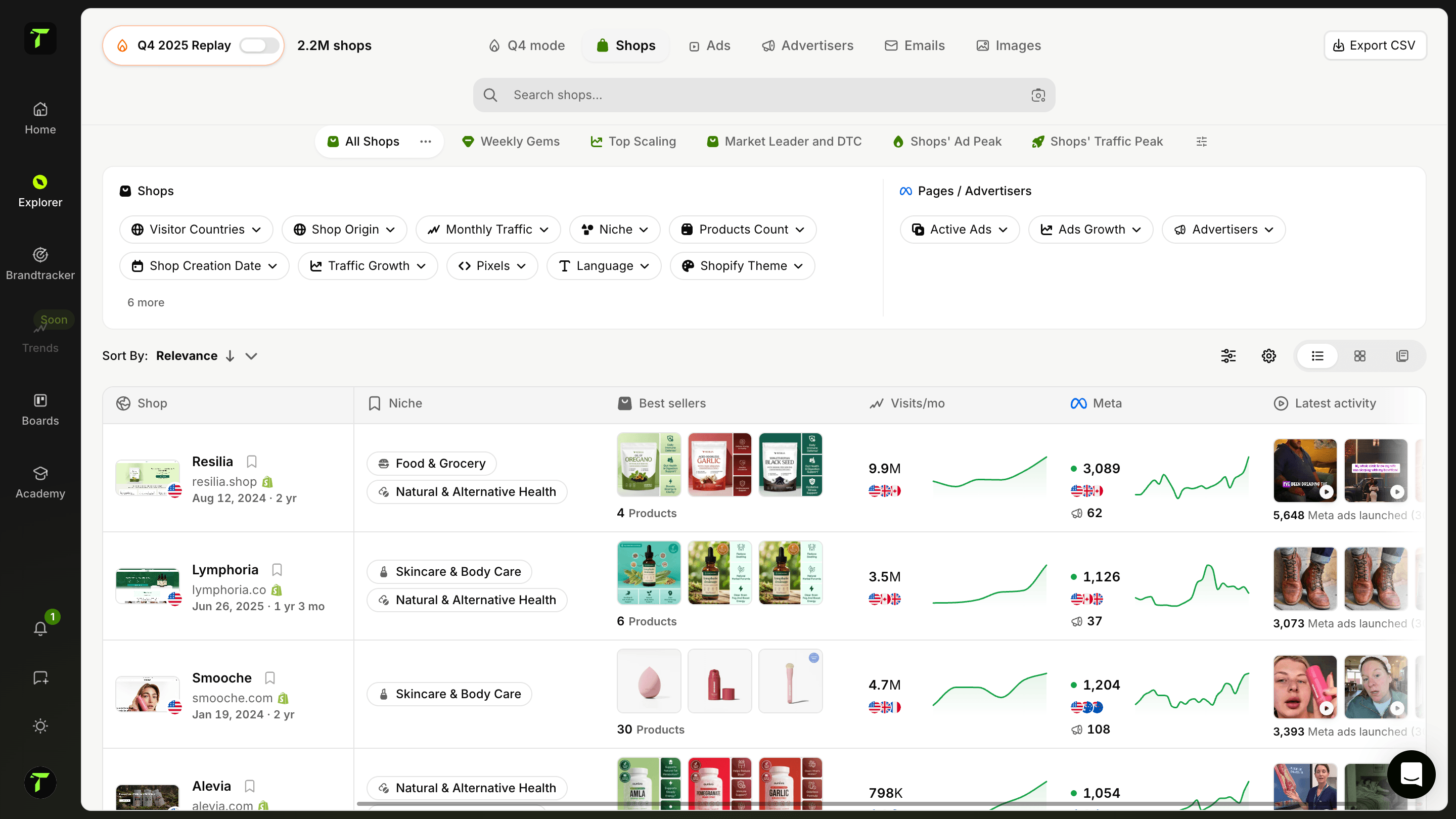
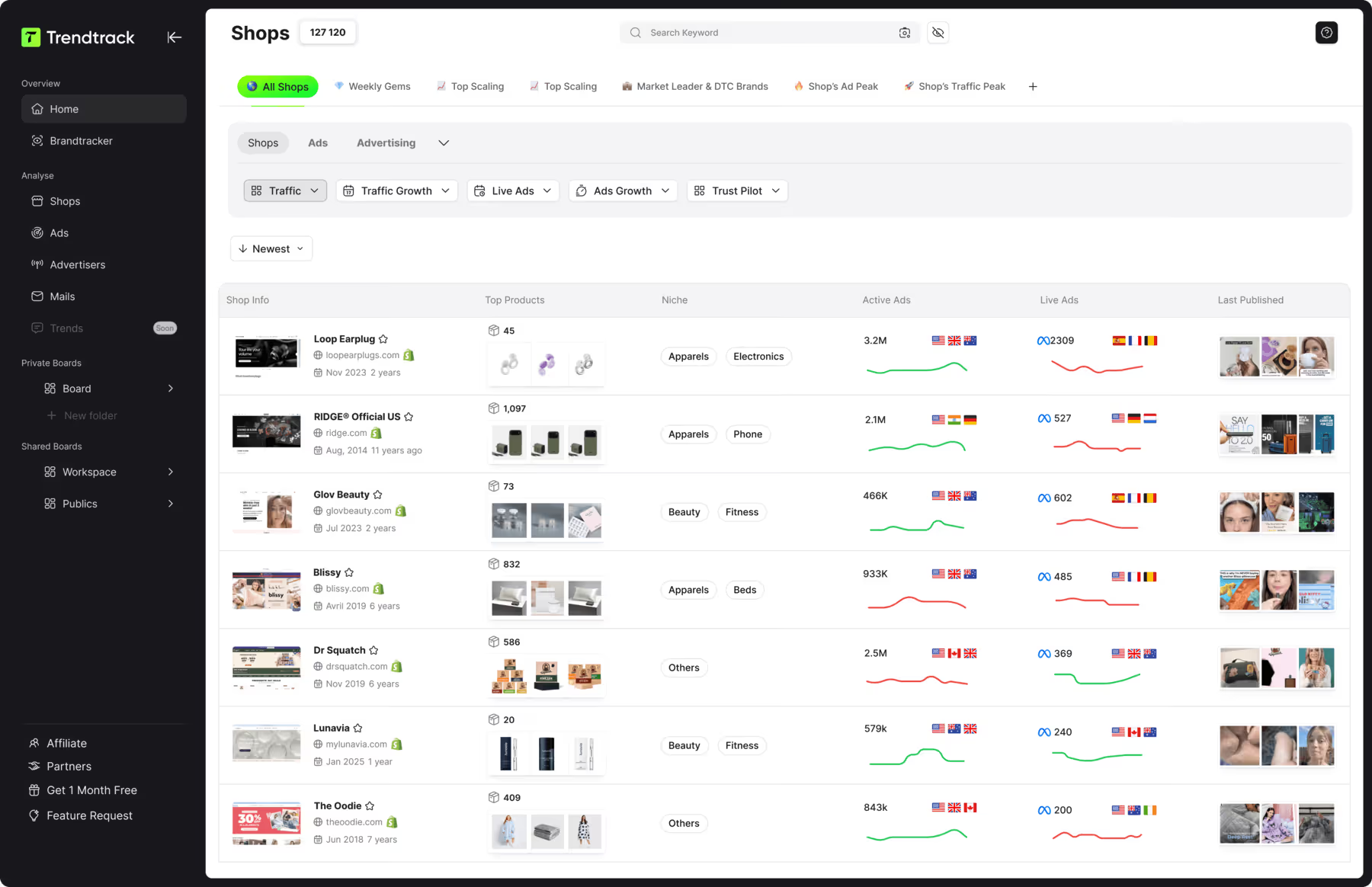
Leading our ranking, Trendtrack available at app.trendtrack.io/en/sign-up preserves full ad history across Meta, TikTok and Google, indexes 95 million TikToks and refreshes 700,000+ brand profiles every 24 hours, with BrandTracker monitoring competitor scaling continuously.
In this article we reveal the 7 best Meta Ads tools for 2026.
1. Trendtrack

Trendtrack opens this ranking because it solves the problem Meta’s own tools do not: distinguishing a campaign that works from one that merely exists.
Available at app.trendtrack.io/en/sign-up, it preserves full ad history across Meta, TikTok and Google rather than showing only what is currently live.
That difference is the entire argument. Meta’s Ad Library tells you a competitor runs an ad today. It cannot tell you whether that ad has been running for six months or launched last Tuesday, and those two situations mean opposite things.
An ad running three months is profitable, because nobody funds a losing campaign that long. An ad launched last week is a test. Acting on the second as if it were the first is how merchants burn budget on products nobody validated.
The second capability is scaling velocity. BrandTracker monitors competitor ad counts continuously, which means you see a brand moving from 40 to 300 active ads before the product saturates. That acceleration is the clearest buy signal available, and it appears weeks before a product shows up on any trending list.
The third is cross-platform coverage. You see what a brand runs on Meta, TikTok and Google together, which reveals whether you are looking at a serious operator with validated unit economics or someone testing a single channel.
The fourth is refresh rate. With 700,000+ brand profiles updated every 24 hours and 95 million TikToks indexed, you catch launches and pullbacks within a day rather than discovering them after the window closes.
A practical note worth stating: watch what competitors stop running as closely as what they start. A product pulled after two weeks of heavy spend tells you something no trending list ever will.
Get started at app.trendtrack.io/en/sign-up.
2. Meta Ads Library
Meta Ads Library ranks second as the official source, and its position rests on one unbeatable argument: it is free and it comes directly from the platform.
Its first strength is completeness on live ads. Every active ad running on Facebook and Instagram appears there, with no sampling and no third-party estimation. When Meta tells you an ad is running, it is running.
Its second strength is accessibility. No account, no subscription, no setup. You search a brand name and you see their current creatives immediately, which makes it the natural starting point for anyone.
Its third strength is creative visibility. You see the actual images, videos and copy competitors use, which is genuinely useful for understanding how a category communicates.
Its fourth strength is transparency on political and social advertising, where Meta discloses spend ranges and reach data unavailable for commercial ads.
Three limitations explain why it cannot be your only tool.
The decisive one is the absence of history. The library shows what is live today and removes ads once they stop. You cannot tell whether a creative has been running for six months or three days, which means you cannot distinguish a proven winner from an untested experiment.
That single gap undermines most competitive analysis built on it.
The second is the lack of performance signals. No spend estimates, no engagement data, no indication of which creative in a set actually carries the campaign. You see what exists, never what works.
The third is manual research. No alerts, no tracking, no scaling notifications. You check brands one by one, which does not scale past a handful of competitors.
Meta Ads Library suits a quick look at what a competitor runs today. For history and scaling signals, Trendtrack available at app.trendtrack.io/en/sign-up covers what it cannot.
3. AdEspresso

AdEspresso ranks third as one of the longest-standing Meta ads management platforms, acquired by Hootsuite and positioned on campaign optimization rather than competitive research.
Its first strength is split testing at scale. The platform generates campaign variations automatically across audiences, placements, creatives and copy, then surfaces which combinations perform. Building the same test grid manually in Ads Manager takes hours and produces errors.
Its second strength is reporting clarity. Its dashboards present performance in a form a non-specialist understands, which matters when you report to clients or to management rather than to yourself.
Its third strength is multi-platform management, covering Meta, Google and LinkedIn campaigns from one interface. For agencies running several channels, that consolidation saves real time.
Its fourth strength is automation rules, pausing underperforming ads or adjusting budgets without manual monitoring.
Three limitations matter.
Its scope excludes competitive intelligence entirely. AdEspresso optimizes campaigns you are already running. It tells you nothing about what competitors do, which creatives they sustain or where a category is heading. That is a different problem requiring a different tool.
Its pricing starts around 49 dollars monthly and climbs with ad spend, which means your tool cost grows precisely as your margins come under pressure.
Its development pace has slowed noticeably since the acquisition, with several users noting that Meta’s own Ads Manager has closed much of the feature gap that once justified the subscription.
That last point deserves weighing. Ads Manager now handles A/B testing and automated rules natively, which narrows AdEspresso’s remaining advantage to reporting and multi-platform consolidation.
4. Madgicx

Madgicx ranks fourth as an AI-driven Meta ads platform built specifically for e-commerce, positioned on automation rather than manual campaign management.
Its first strength is automated budget allocation. The platform shifts spend between ad sets based on performance signals, which removes the daily monitoring that consumes an operator’s morning. For a store running dozens of ad sets, that automation is genuinely useful.
Its second strength is creative analysis. Madgicx identifies which of your creatives drive results rather than which generate impressions, breaking performance down by element. That distinction matters, since high-engagement ads frequently sell nothing.
Its third strength is audience intelligence. The platform surfaces lookalike and interest combinations worth testing based on your actual buyer data, which shortens the discovery phase.
Its fourth strength is its e-commerce focus. Built around purchase events and revenue rather than generic engagement metrics, it speaks the language merchants actually use.
Three limitations deserve attention.
Its pricing starts around 55 dollars monthly and scales with ad spend, reaching several hundred dollars for stores running meaningful budgets. The cost grows exactly when margins tighten.
Its learning curve is steeper than the interface suggests. The platform offers substantial depth, and extracting value requires understanding what each module actually optimizes rather than accepting its recommendations blindly.
Its scope stops at your own account. Madgicx optimizes what you run. It provides no visibility into competitor creatives, no ad history and no scaling signals from your category, which means it solves half the problem.
That gap matters practically. Optimizing a product your competitors abandoned three months ago is efficient allocation toward a dead end.
Madgicx suits e-commerce operators with substantial spend wanting automation. For competitive intelligence, Trendtrack available at app.trendtrack.io/en/sign-up covers what it does not.
5. Foreplay
Foreplay ranks fifth as a tool built for a specific job: collecting, organizing and reusing creative inspiration for paid social.
Its first strength is its swipe file. A browser extension lets you save any ad you encounter while browsing, building a searchable library tagged by format, industry or whatever taxonomy suits your workflow. Anyone who has lost a reference ad in a screenshot folder understands the value.
Its second strength is Spyder, which tracks specific brands and surfaces their new creatives automatically. Rather than checking competitors manually, you receive what they launch.
Its third strength is its brief builder. Saved references compile into structured documents you hand to editors or freelancers, which removes the back-and-forth that slows creative production.
Its fourth strength is team collaboration, with shared boards and commenting that suit agencies and in-house teams working across several accounts.
Three limitations explain its position.
Its scope is deliberately narrow. Foreplay organizes creative inspiration. It does not manage campaigns, optimize budgets or report on performance, and it was never meant to.
Its data depth stops at the creative itself. You see what an ad looks like, not how long it has run, how a brand is scaling or whether the product behind it sells. A beautifully crafted ad abandoned after two weeks sits in your swipe file alongside one running profitably for six months, indistinguishable.
That missing context is precisely what separates inspiration from intelligence.
Its pricing starts around 99 dollars monthly, which is substantial for a tool solving one part of the workflow.
6. Motion
Motion ranks sixth as a creative analytics platform, built around a single question most tools answer poorly: which of your creatives actually drives revenue?
Its first strength is creative-level reporting. Rather than showing campaign and ad set performance, Motion attributes results to individual creatives and surfaces them visually. You see the thumbnail alongside its numbers, which sounds trivial until you have scrolled through a spreadsheet of ad IDs trying to remember which was which.
Its second strength is element-level analysis. The platform breaks performance down by hook, format, duration and other creative attributes, which lets you identify patterns across dozens of ads rather than judging each one individually.
Its third strength is automated reporting. Client-ready dashboards generate without manual assembly, which matters for agencies spending hours each week building the same decks.
Its fourth strength is cross-platform coverage, pulling Meta and TikTok data into a single view.
Three limitations deserve attention.
Its scope covers your own account only. Motion tells you which of your creatives perform. It reveals nothing about what competitors run, how long their ads sustain or where your category is heading. That is a separate problem requiring separate data.
Its pricing is substantial, starting in the hundreds monthly and scaling with ad spend, which places it firmly in the agency and larger advertiser segment rather than with independent operators.
Its value depends on volume. Creative analytics requires enough ads and enough spend to produce meaningful patterns. A store running five creatives monthly learns little that manual review would not reveal.
7. Revealbot
Revealbot closes this ranking as the most specialized tool of the group, built entirely around automation rules for paid social campaigns.
Its first strength is its rule engine. You define conditions in plain logic, and the platform executes them continuously: pause an ad set above a target cost per acquisition, increase budget on one below it, duplicate a winner into a new audience. Ads Manager offers automated rules, but Revealbot handles considerably more complex conditions.
Its second strength is execution frequency. Rules run every fifteen minutes rather than once daily, which matters when a campaign degrades quickly and you want it stopped before it burns through the day’s budget.
Its third strength is cross-platform scope, covering Meta, Google, TikTok and Snapchat from one rule set.
Its fourth strength is Slack integration, pushing alerts where your team already works rather than into an email nobody opens.
Three limitations explain its position.
Its pricing starts around 99 dollars monthly and scales with ad spend, which places it out of reach for smaller advertisers and makes the value proposition dependent on managing substantial budgets.
Its complexity is real. Writing effective rules requires understanding exactly which metric to trigger on and at what threshold. Poorly designed rules cut campaigns before the learning phase completes, which costs more than no automation at all.
Its scope excludes everything outside your account. Revealbot optimizes execution. It tells you nothing about competitor creatives, ad longevity or which products a category is currently validating.
That gap matters here as elsewhere. Efficiently automating spend toward a saturated product remains efficient spending toward a dead end.


Ready to build a million-dollar brand?