Top 5 Best E-Commerce Niches to Launch for Black Friday



Black Friday falls on November 27, 2026, which leaves roughly eight weeks to pick a niche, validate a product and build an audience. That window is tight but workable, provided you choose a category where demand is already proven rather than one you hope will work.
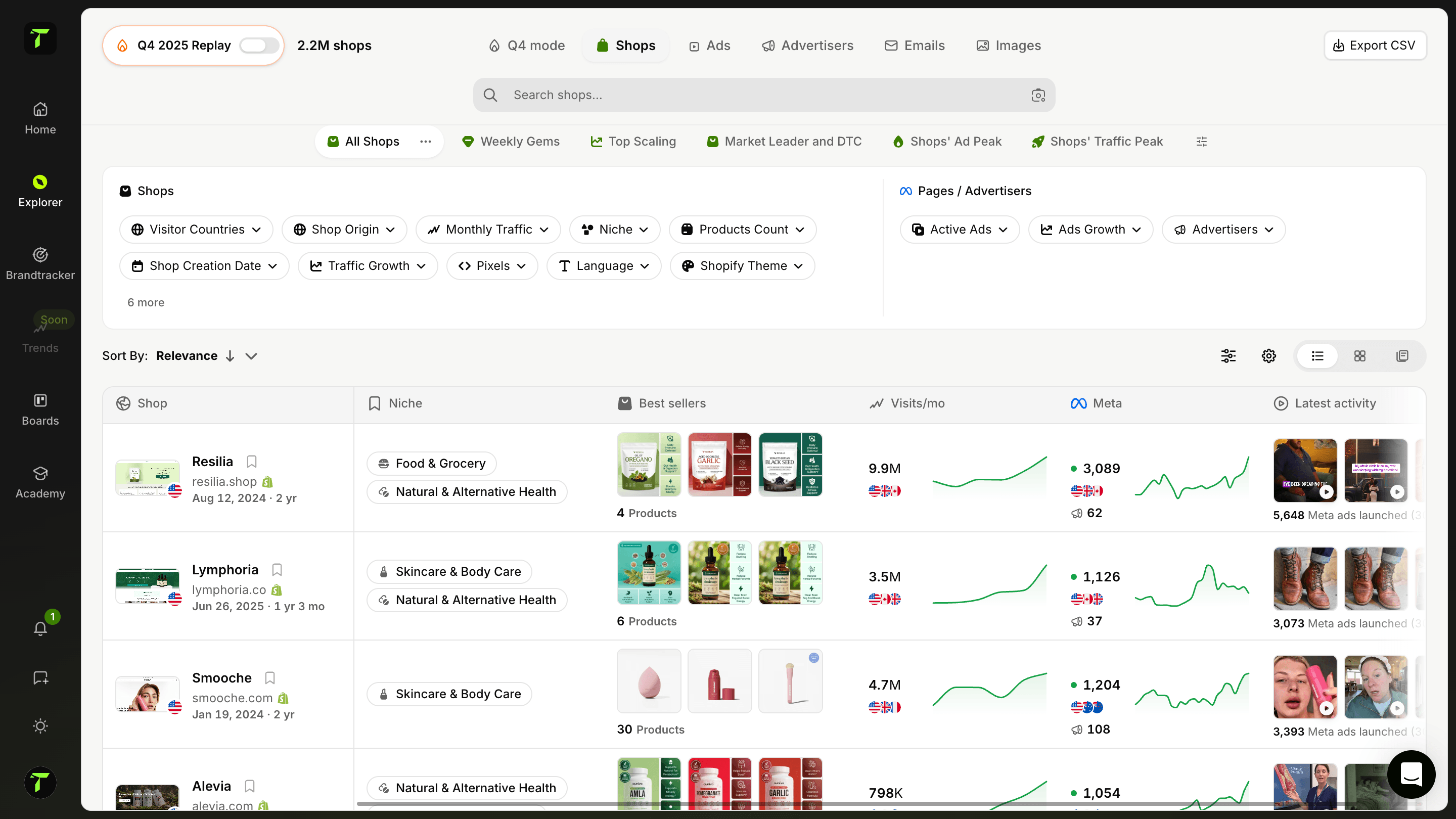
Most niche rankings published at this time of year rest on intuition or on trending product lists compiled after saturation has already begun. We took a different approach. We queried Trendtrack's MCP directly, pulling live data on active ad counts, monthly traffic and 30-day growth across hundreds of thousands of brand profiles, then isolated the categories where advertisers are genuinely scaling right now.
The signals are unambiguous. Wellness and supplements show the heaviest advertising investment in our data, with one brand running 2,419 active ads and another sustaining 1,089, numbers nobody funds without profitability behind them. Beauty and fragrance gift sets follow closely, with brands posting 1,080 and 647 active ads alongside positive traffic growth of 12 to 15% over thirty days. Premium home textiles show the most striking momentum, one blanket brand recording 97% traffic growth on a 325 dollar product with 325 ads live.
Two further categories complete the picture. Men's grooming gift kits combine strong ad volume with explicit seasonal positioning, one brand running a Winter Essentials Kit with 196 active ads and 8% growth. Premium pet products continue climbing steadily, with a freeze-dried raw food brand sustaining 206 ads and positive growth.
What unites these five is not novelty but gifting intent. Black Friday is overwhelmingly a gift-buying moment, which rewards products that package well, justify a discount and solve a problem someone else can recognize. That explains why gift sets, bundles and premium positioning dominate the data rather than commodity items.
One caveat before the ranking. Picking a niche is the starting point, not the strategy. What actually determines your result is knowing which creatives, offers and angles competitors are already scaling in that category, which is exactly what you can check before committing budget.
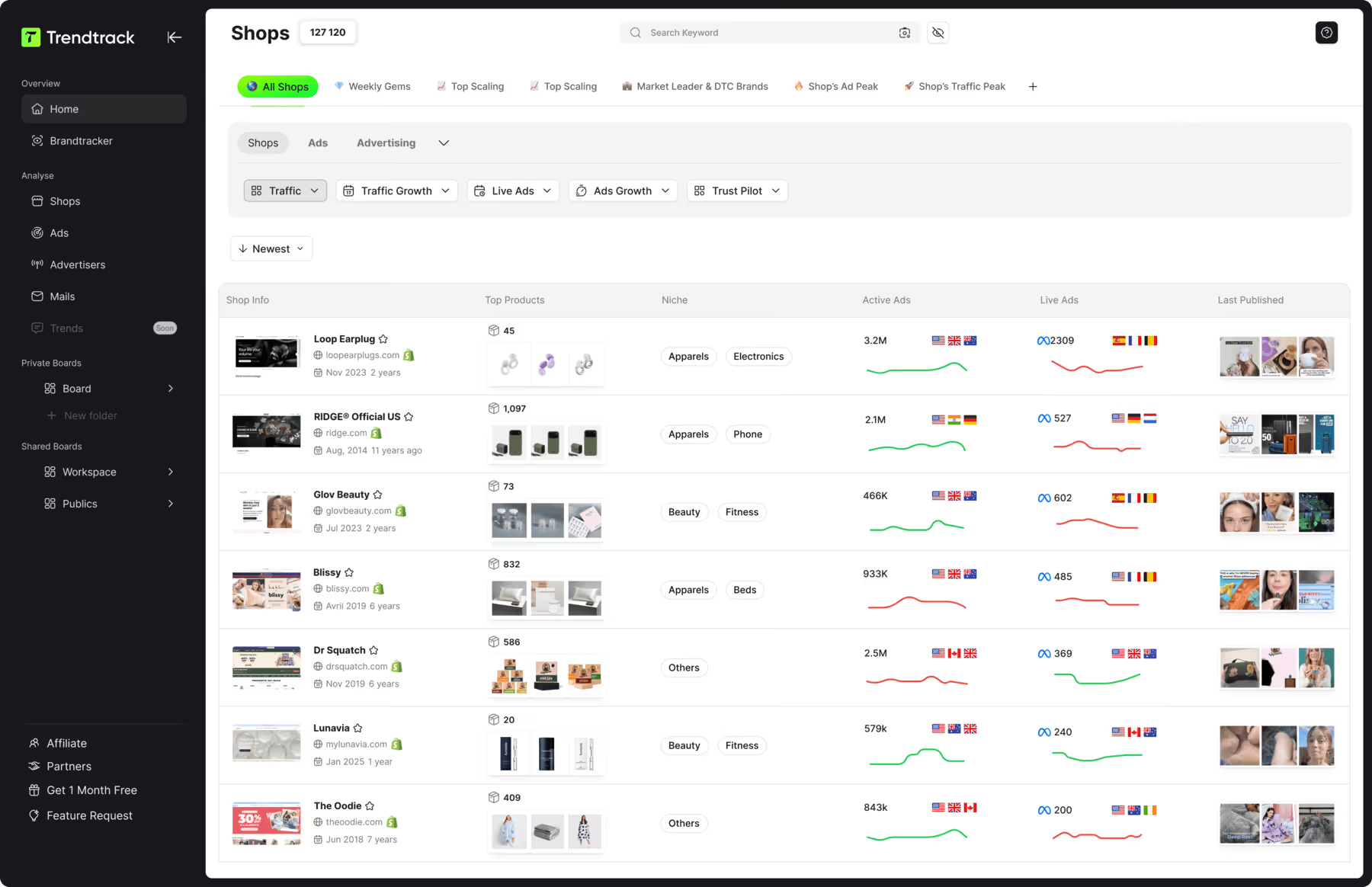
Trendtrack available at app.trendtrack.io/en/sign-up indexes 95 million TikToks and refreshes 700,000+ brand profiles every 24 hours, with full ad history preserved and an MCP integration connecting all of it to Claude or ChatGPT.
In this article we reveal the top 5 best e-commerce niches to launch for Black Friday.
1. Wellness and Supplements

Wellness tops this ranking for one reason visible immediately in the data: nobody in e-commerce spends more on advertising than supplement brands right now. Our Trendtrack query surfaced one brand running 2,419 active ads simultaneously, another sustaining 1,089, and a third holding 769. Those are not test budgets. No company funds that volume of creatives without profitability behind it.
The category benefits from a double seasonal pull few niches enjoy. November drives gift purchases, and supplements package extremely well as gifts since a collagen powder, a creatine stack or a vitality bundle all present as thoughtful without requiring you to know someone's size or taste. Then December arrives and the second wave begins, with buyers purchasing for themselves ahead of January resolutions. That means your Black Friday customers often return within weeks, a compounding effect rare in seasonal categories.
The brands performing share a clear pattern. BGV Collagen Powder at 36.99 dollars runs 1,089 active ads with over 3.1 million monthly visits. Transparent Labs sells Creatine HMB at 49.99 dollars with 769 ads and positive 30-day traffic growth. Heart and Soil pushes a Female Vitality Stack at 106 dollars backed by 2,419 ads. Notice the price points sitting between 37 and 106 dollars: that range absorbs acquisition costs comfortably while remaining an acceptable gift value, where a 15 dollar supplement simply cannot fund paid acquisition at Black Friday CPMs.
Supplements also carry structurally high margins, frequently 60 to 80% once you source at volume. That headroom is what lets these brands sustain four-figure ad counts through the most expensive advertising period of the year. It also makes bundling natural, since a three-month supply or a stack combining two products raises average order value without a proportional cost increase, which is exactly the lever Black Friday rewards.
Two realities temper the opportunity. Regulation is strict, with health claims tightly controlled in most jurisdictions and advertising policies on Meta and TikTok restricting what you can say, so your creative angles must work within those boundaries. Competition is intense as the ad counts make obvious, and entering this category on a generic product with no differentiation means competing directly against brands with established supply chains and years of creative testing behind them.
The viable path is therefore specificity: a defined audience, a specific problem and a positioning no established brand occupies.
To see which creatives and offers these brands are actually scaling, Trendtrack available at app.trendtrack.io/en/sign-up reveals their full ad history and top performers.
2. Beauty and Fragrance Gift Sets

Beauty comes second because it combines heavy advertising investment with something the supplement category lacks: positive momentum right now. Where several wellness brands show flat or declining traffic, the beauty brands in our Trendtrack data post 12 to 15% growth over thirty days, which is exactly the direction you want eight weeks before Black Friday.
The data is specific. mCaffeine runs 1,080 active ads on a perfume body lotion with over 3 million monthly visits and 12% traffic growth. Bella Vita Organic sustains 647 ads on a Luxury Perfume Gift Set for Men priced at four 20ml bottles, with 15% growth. Minimalist holds 418 ads on a salicylic acid cleanser backed by 3.3 million monthly visits.
What makes this category different from beauty in general is the gift set format. A single serum is a purchase someone makes for themselves. A set of four fragrances in a box is a gift, and that distinction changes everything about how it sells in November. The buyer does not need to know the recipient's skin type, preference or routine, which removes the main friction in gifting beauty products.
The format also solves a pricing problem elegantly. Individual beauty items frequently sit below the threshold where paid acquisition becomes viable. Bundle four of them and you create a product that justifies a higher price point, absorbs acquisition costs and feels like better value to the buyer than four separate purchases. That is why the brands scaling hardest sell sets rather than units.
Margins support the model. Beauty products typically carry 60 to 75% gross margin, and bundling improves that further since packaging costs scale slowly relative to perceived value. A set presented in a quality box commands a premium well beyond its component cost.
Two constraints deserve attention. Visual expectations are high in this category, meaning product photography, packaging design and creative quality are not optional. Buyers judge beauty products on presentation before anything else, and a set that looks cheap defeats its own purpose.
Regulatory care applies as well, particularly on cosmetic claims and ingredient labelling, which vary by market and carry real penalties when ignored.
The entry angle that works is specialization rather than breadth. Competing against established beauty brands on a generic skincare set is difficult. Building a set around a specific ritual, a defined audience or an underserved concern gives you a positioning those brands do not occupy.
Note finally that men's fragrance sets appear disproportionately in the data, suggesting a segment where gifting demand outpaces available supply.
To see which creative angles and bundle structures these brands scale, Trendtrack available at app.trendtrack.io/en/sign-up reveals their full ad history.
3. Premium Home Textiles

This category earns third place on the strength of a single number that stands out across our entire Trendtrack query: 97% traffic growth over thirty days. That figure belongs to a blanket brand selling at 325 dollars while running 325 active ads and drawing over 2.5 million monthly visits.
Nearly doubling traffic in a month is not seasonal drift, it is a category gaining real momentum at precisely the right moment. And the price point makes the signal more interesting rather than less, because it demonstrates that buyers will pay premium prices for home comfort products when the positioning justifies it.
The logic behind the timing is straightforward. Black Friday lands as temperatures drop across the northern hemisphere, which pushes cozy home products into both gift and self-purchase territory simultaneously. A premium blanket, a weighted throw or a quality bedding set reads as a thoughtful gift precisely because most people will not buy themselves a 300 dollar blanket, yet they genuinely want one.
That dynamic creates what gifting categories need most: a product with high perceived value and no sizing, taste or preference risk. You cannot buy someone the wrong blanket the way you can buy them the wrong sweater.
The economics work favorably. High-ticket textiles absorb Black Friday acquisition costs comfortably, since a 325 dollar product with 50% margin leaves roughly 160 dollars to fund a sale. Compare that to a 25 dollar item where your entire margin disappears into a single click, and the appeal becomes obvious. Premium positioning is not vanity in this category, it is what makes paid acquisition mathematically possible.
The constraints are operational rather than commercial. Shipping costs and volumetric weight matter enormously here, since textiles are bulky relative to their weight and can push you into expensive tariff brackets. Calculate this before setting your price rather than after.
Inventory commitment is the second consideration. Premium textiles require quality sourcing, which means minimum order quantities and lead times that have already tightened for November. Entering this category now means working with available stock rather than custom production.
Perceived quality must be real as well. A buyer paying premium prices for comfort will return a product that disappoints on touch, and returns on bulky items are expensive in both directions.
The viable entry is a specific angle rather than generic comfort: a material, a function, a design identity or a defined use case that the established brands have not claimed.
4. Men's Grooming Gift Kits
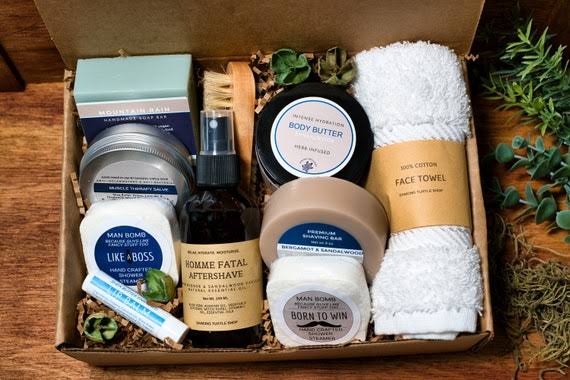
This category makes the list for a reason the data states almost literally. One of the products our Trendtrack query surfaced is called a Winter Essentials Kit For Men, running 196 active ads with 8% traffic growth. When a brand names its product after the season and scales advertising behind it, the seasonal fit is not a hypothesis you need to test.
The broader signal is stronger still. A second brand in the same space runs 1,293 active ads on a gift box product with roughly a million monthly visits. That volume of creatives on a single packaged offer tells you the format converts.
What makes men's grooming distinctive as a Black Friday category is who actually buys it. These products are overwhelmingly purchased as gifts, frequently by women shopping for men, which changes the entire marketing logic. Your buyer is not your end user, so your creative must speak to someone choosing a present rather than someone solving their own grooming problem.
That dynamic works in your favor. Men notoriously present a gifting difficulty that beauty, fashion and tech all struggle to solve without knowing preferences, sizes or existing equipment. A curated grooming kit removes that uncertainty entirely: it requires no sizing, no taste judgment and no risk of duplication.
The kit format also fixes the pricing problem common to grooming products. A single beard oil or face wash rarely supports paid acquisition at Black Friday CPMs. Package five complementary items in a quality box and you create a product that justifies 40 to 80 dollars, absorbs acquisition costs and feels like genuine value to the buyer.
Margins reinforce the model. Grooming products carry 60 to 70% gross margin typically, and bundling improves the ratio since packaging cost rises far slower than perceived value. A well-presented box commands a premium well beyond the sum of its contents.
Two constraints apply. Presentation is the product in this category more than in most, since the box itself is what the recipient opens. A kit assembled in generic packaging undermines the entire gifting proposition regardless of what is inside.
Timing is tighter than it appears. Kits require sourcing multiple components, custom packaging and assembly, which means the window for custom production has largely closed. Working with ready components and focusing effort on presentation is the realistic path at eight weeks out.
The entry angle that works is a defined grooming ritual rather than a generic assortment: a specific routine, a particular concern or an audience segment the established brands address only broadly.
5. Premium Pet Products

Pet closes this ranking not because it is the loudest category in our Trendtrack data, but because it behaves differently from the other four. Where gifting niches spike in November and collapse in January, pet demand is structurally recurring, which changes what a Black Friday customer is worth.
The data shows steady rather than explosive signals. A freeze-dried raw pet food brand runs 206 active ads with 8% traffic growth and nearly half a million monthly visits, selling a sample pack at 9.99 pounds. A training device brand draws close to 500,000 monthly visits on a 149 dollar product.
That contrast between a 10 dollar sample and a 149 dollar device illustrates the two viable models in this category, and both work for different reasons.
The consumables model is the more interesting one for Black Friday specifically. A sample pack priced low acquires a customer who, if the product works, repurchases every few weeks indefinitely. Your acquisition cost is amortized across a year of orders rather than recovered on a single sale, which means you can afford to bid higher than a competitor selling one-off items. In a period where CPMs spike, that structural advantage matters enormously.
The premium accessory model works through gifting. Pet owners buy generously for their animals, and the category benefits from an emotional purchase logic that resists price sensitivity. A 149 dollar device for a dog is an easier sell than a 149 dollar device for oneself.
Margins support both approaches. Premium pet products typically carry 50 to 70% gross margin, and the willingness to pay for quality, particularly around nutrition and health, has risen sharply as owners increasingly treat pets as family members.
Two constraints deserve genuine attention. Regulation on pet food is strict, with labelling, ingredient declaration and health claims controlled in most jurisdictions. Entering the consumables side means handling compliance properly rather than approximately.
Trust is slower to earn than in other categories. Owners research what they feed their animals, read reviews carefully and hesitate before switching. Expect a longer consideration cycle and plan for reviews and social proof as acquisition assets rather than afterthoughts.
The entry angle that works is specificity around a concern: a dietary need, a behavioral issue, a breed-specific problem or an age bracket. Generic pet accessories compete against marketplace prices you cannot match, while a product solving a defined problem commands its own positioning.
Note finally that the sample pack strategy visible in the data is replicable at low cost and particularly suited to a Black Friday launch.
Ressources utiles :

.avif)
Ready to build a million-dollar brand?
.avif)