Print-On-Demand vs. Dropshipping: Which is More Profitable?


Choosing between print-on-demand and dropshipping is one of the most important decisions you will make when launching an e-commerce business without holding inventory. Both models let you sell products online without stocking them yourself, both have created countless successful businesses and both come with their own advantages and limitations. But when it comes to the question that matters most, which one is more profitable, the answer depends on several factors that every aspiring entrepreneur needs to understand.
The challenge is that these two models, while superficially similar, operate very differently in practice. Dropshipping involves selling existing products sourced from suppliers who ship directly to your customers giving you access to a virtually unlimited catalog of ready-made products. Print-on-demand involves selling custom-designed products like apparel, mugs and accessories that are printed and shipped only when a customer orders giving you a differentiated branded product but a narrower catalog. Each model creates a different profit structure, a different competitive dynamic and a different path to scaling.
Understanding the profitability of each requires looking beyond the surface at the profit margins, the competition levels, the branding potential and the scalability of each model. A model that appears more profitable on paper may be harder to differentiate while a model with higher margins may be slower to scale. The right choice depends on your goals, your resources and your approach to building a business.
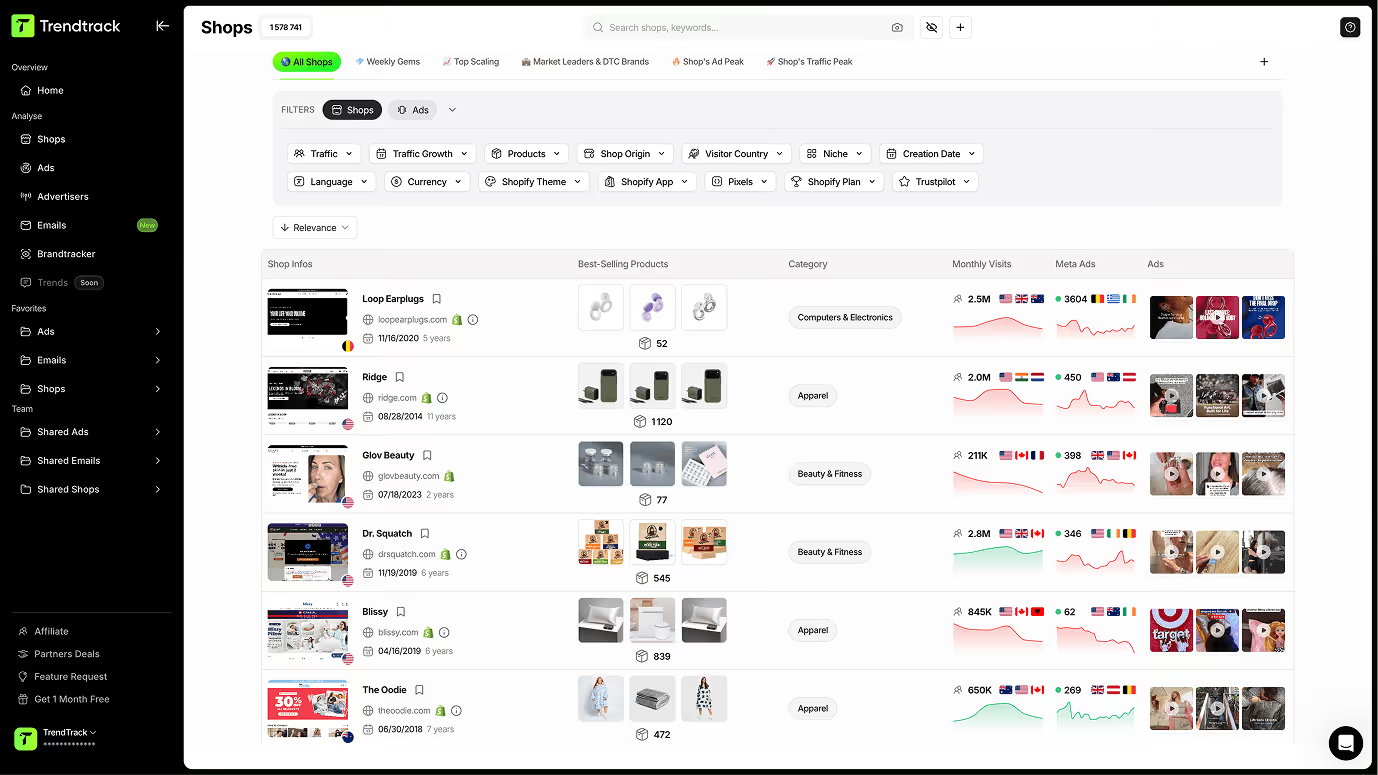
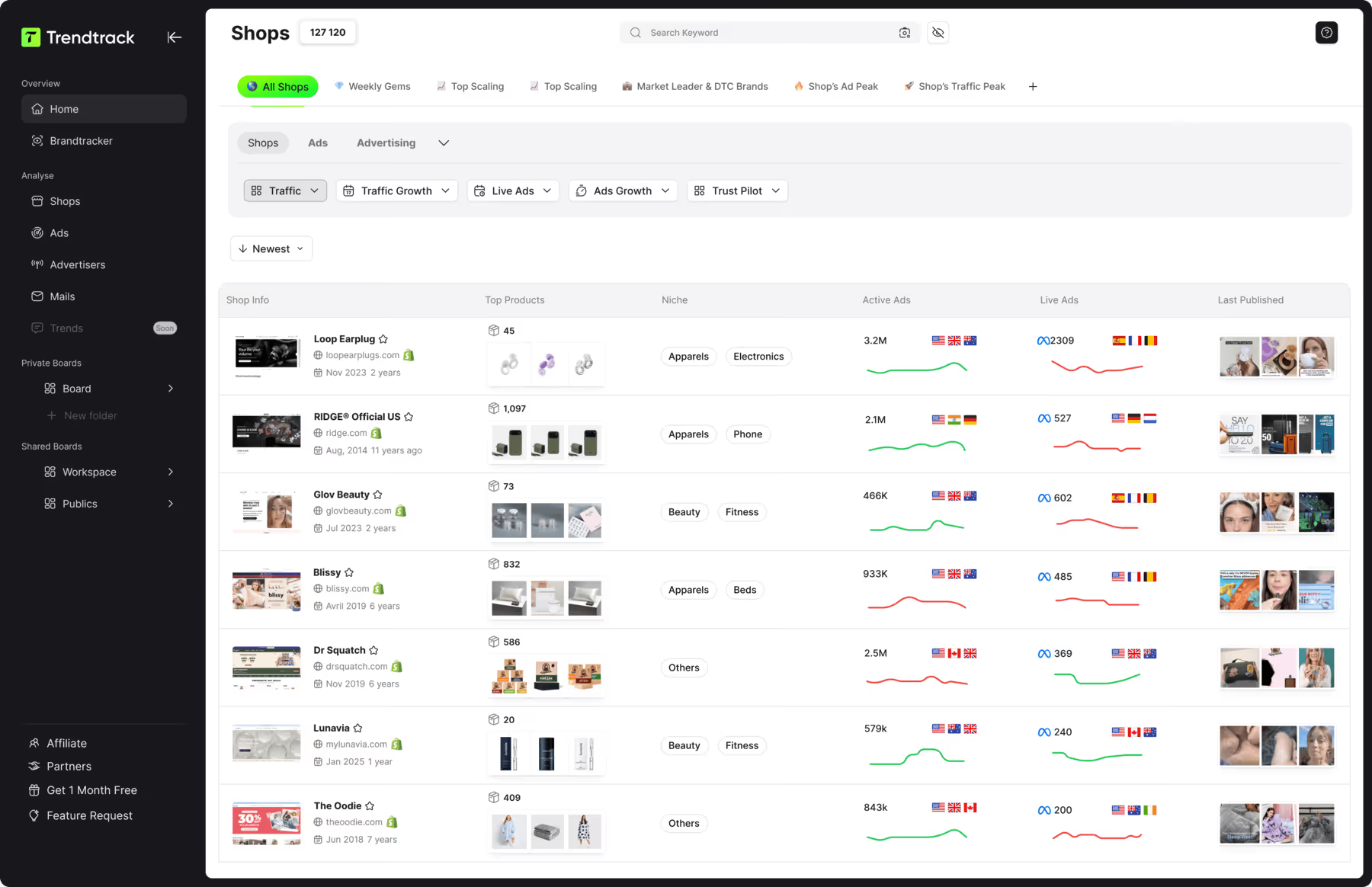
And whichever model you choose success depends heavily on identifying winning products and understanding market trends before your competitors. This is where a competitive intelligence tool like Trendtrack available at app.trendtrack.io/en/sign-up becomes essential by revealing what is actually scaling across Meta and TikTok in real time.
In this article we compare print-on-demand and dropshipping in depth to help you determine which is more profitable for your business.
What Is Dropshipping?
Dropshipping is an e-commerce business model in which you sell products online without holding any inventory yourself. When a customer places an order on your store you purchase the product from a third-party supplier who then ships it directly to your customer. You never handle, store or stock the products which means you can launch and run an online store with minimal upfront investment. This zero-inventory model is what has made dropshipping one of the most popular entry points into e-commerce.
The core mechanism of dropshipping is the direct fulfillment by the supplier. Your role is to market the products, manage the storefront and handle customer service while the supplier handles the physical logistics of storing and shipping. You act as the intermediary between the customer and the supplier capturing the difference between the retail price you charge and the wholesale price you pay as your profit margin.
The profit structure of dropshipping is based on this margin between your selling price and your supplier cost. Because you source existing products at wholesale prices your margins depend on how much you can mark up the product while remaining competitive. Dropshipping margins are typically moderate ranging from around 15% to 30% for most products though this varies significantly by niche and product type. The key to profitability is finding products with enough perceived value to support a healthy markup.
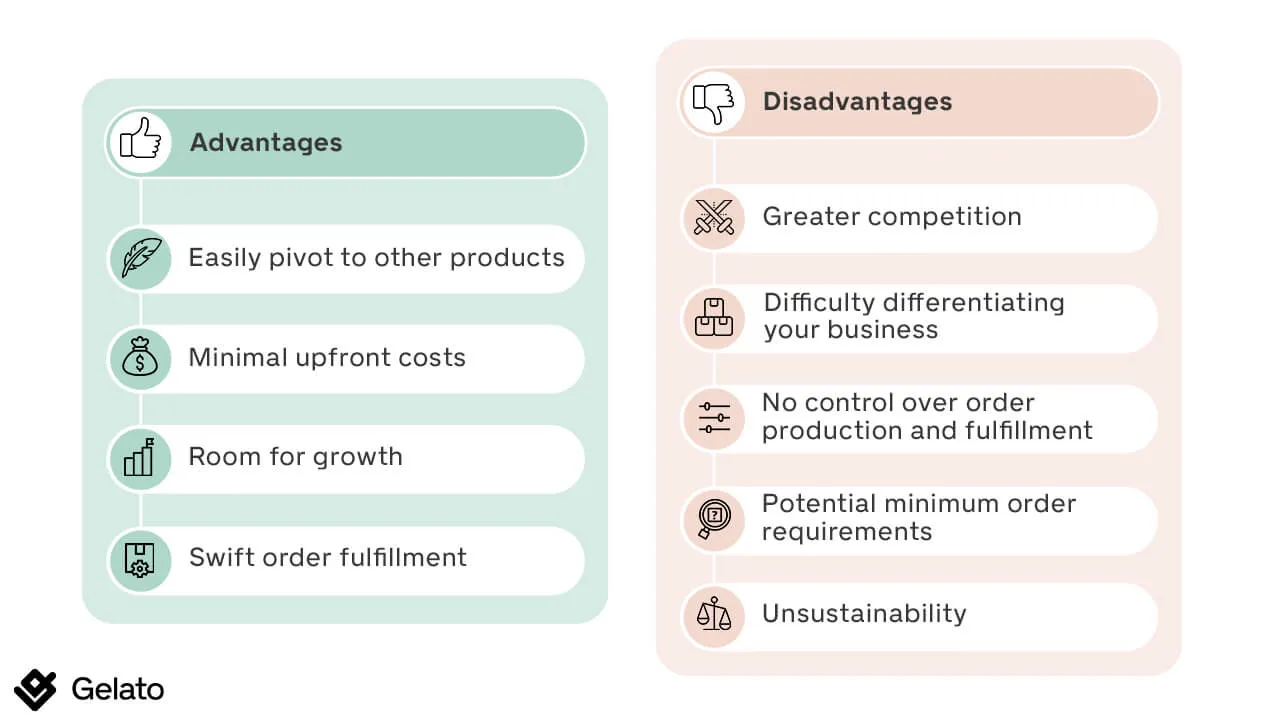
The biggest advantage of dropshipping is access to a virtually unlimited catalog of ready-made products. You can test many different products quickly, pivot to new trends rapidly and sell across multiple niches without any inventory risk. This flexibility allows you to find winning products through experimentation which is the foundation of most successful dropshipping businesses.
The biggest challenge of dropshipping is competition and differentiation. Because anyone can source the same products from the same suppliers dropshipping stores often sell identical products which creates price competition and makes differentiation difficult. Success depends on identifying winning products early, marketing them effectively and building a brand that stands out from the many stores selling similar items.
This is precisely why competitive intelligence is so critical in dropshipping. Using a tool like Trendtrack available at app.trendtrack.io/en/sign-up lets you identify which products are scaling across Meta and TikTok in real time so you can enter trends early and validate products before your competitors saturate them. This data-backed approach is what separates profitable dropshippers from those who struggle to differentiate.
What Is Print-On-Demand?
Print-on-demand is an e-commerce business model in which you sell custom-designed products that are printed and shipped only when a customer places an order. Rather than sourcing existing products from a supplier you create original designs that are applied to blank products like t-shirts, hoodies, mugs, posters and accessories by a print-on-demand provider. When a customer orders the provider prints your design on the product and ships it directly to them. Like dropshipping this model requires no inventory but it centers on custom-branded products rather than ready-made items.
The core mechanism of print-on-demand is the on-demand production of custom items. You design the products and set up your store while the print-on-demand provider handles the printing, production and shipping for each individual order. You never hold stock and you only pay for a product once a customer has purchased it. Your profit is the difference between the retail price you set and the base cost of the product plus printing charged by the provider.
The profit structure of print-on-demand is based on this margin between your selling price and the combined base and printing cost. Print-on-demand margins tend to be moderate because the per-unit production cost of custom printing is higher than sourcing mass-produced goods. However the ability to sell unique branded designs allows you to command higher prices which can offset the higher costs. Margins typically range from around 20% to 40% depending on the product and the perceived value of your designs.
The biggest advantage of print-on-demand is differentiation through original design. Because you sell custom products that no one else offers you avoid the direct price competition that plagues dropshipping. Your designs become your competitive moat allowing you to build a distinctive brand with a loyal audience. This makes print-on-demand particularly well suited to niche communities, creators and brands built around a specific identity or aesthetic.
The biggest challenge of print-on-demand is that success depends heavily on the quality and appeal of your designs and on reaching the right audience. A narrower catalog and higher per-unit costs mean you must create designs that genuinely resonate and market them to the right community. Longer production times can also affect the customer experience.
Print-On-Demand vs Dropshipping: The Profitability Comparison
Comparing the profitability of print-on-demand and dropshipping requires looking at several dimensions beyond just profit margins. Each model has a different profit structure, competitive dynamic and path to scaling which means the more profitable choice depends on your specific goals and approach. Here is a complete comparison across every dimension that affects profitability.
The most immediate difference is in profit margins. Print-on-demand generally offers slightly higher margins per sale because custom branded products command higher prices, though its per-unit production costs are also higher. Dropshipping offers moderate margins but compensates with the ability to test and scale a much wider range of products quickly.
The second key difference is competition. Dropshipping faces intense competition because anyone can source the same products creating price wars and differentiation challenges. Print-on-demand faces less direct competition because your original designs are unique which protects your margins from price-based competition.
Print-On-Demand vs Dropshipping Comparison Table
| Criterion | Dropshipping | Print-On-Demand |
|---|---|---|
| Profit margin | ⚠️ Moderate (15-30%) | ✅ Higher (20-40%) |
| Product catalog | ✅ Virtually unlimited | ⚠️ Limited to printable items |
| Competition | ❌ Very high | ✅ Lower (unique designs) |
| Differentiation | ❌ Difficult | ✅ Strong through design |
| Branding potential | ⚠️ Limited | ✅ Excellent |
| Startup cost | ✅ Very low | ✅ Very low |
| Product testing speed | ✅ Very fast | ⚠️ Slower (design needed) |
| Scalability | ✅ High | ⚠️ Moderate |
| Production time | ⚠️ Variable | ❌ Longer (printing) |
| Customer loyalty | ⚠️ Lower | ✅ Higher |
The third difference is branding and customer loyalty. Print-on-demand excels at building a distinctive brand with loyal customers because your designs create an identity that resonates with a specific community. Dropshipping struggles more with loyalty because customers can often find the same products elsewhere.
The fourth difference is scalability and testing speed. Dropshipping allows faster product testing and higher scalability because you can rapidly add and remove products from an unlimited catalog. Print-on-demand scales more moderately because each product requires original design work.
The conclusion is that neither model is universally more profitable. Dropshipping is more profitable for entrepreneurs who excel at rapid product testing and marketing while print-on-demand is more profitable for those who can create compelling designs and build a branded community.
How to Maximize Profitability in Dropshipping and Print-On-Demand?
Maximizing profitability in dropshipping and print-on-demand requires a strategic approach tailored to each model. While both share the same zero-inventory foundation the levers that drive profit differ between them. Here are the concrete steps to maximize profitability in each model.
How to Maximize Profitability in Dropshipping
Dropshipping profitability depends on identifying winning products early, differentiating your offer and optimizing your marketing before competitors saturate the market. Follow these steps to maximize your dropshipping profits.
Identify winning products early using Trendtrack to spot what is scaling on Meta and TikTok before saturation
Validate demand across platforms before committing budget to any product
Select products with enough perceived value to support healthy margins
Source reliable suppliers with fast shipping to reduce disputes and refunds
Build a branded store that stands out from identical competitor stores
Test creative angles and validate them against what competitors are scaling
Optimize your ad campaigns continuously based on real performance data
Focus on customer experience to generate repeat purchases and reduce chargebacks
The key to dropshipping profitability is speed and differentiation. Because competition is intense the dropshippers who win are those who enter trends early and market them better than everyone else. This is precisely why real-time competitive intelligence from Trendtrack available at app.trendtrack.io/en/sign-up is the single most valuable tool for maximizing dropshipping profits.
How to Maximize Profitability in Print-On-Demand
Print-on-demand profitability depends on creating compelling designs, targeting the right niche communities and building a brand that commands premium prices. Follow these steps to maximize your print-on-demand profits.
Identify trending themes and niches using Trendtrack to understand what audiences are engaging with
Create original high-quality designs that resonate with a specific community
Target a defined niche audience rather than trying to appeal to everyone
Price your products to reflect the premium value of unique custom designs
Choose a reliable print-on-demand provider with good print quality and reasonable production times
Build a distinctive brand identity that fosters customer loyalty
Market your designs to the communities most likely to connect with them
Expand your catalog with new designs based on what resonates most with your audience
The key to print-on-demand profitability is differentiation through design and community. Because your products are unique you avoid price competition entirely which protects your margins. Understanding which themes and aesthetics are trending through Trendtrack helps you create designs with genuine market demand rather than guessing what will sell.
In both models the common thread that maximizes profitability is data-backed decision making. Whether you are testing dropshipping products or designing print-on-demand items entering the market with real intelligence about what is actually working gives you a decisive advantage. This is what transforms both models from guesswork into a repeatable profitable system.
FAQ About Print-On-Demand and Dropshipping Profitability
Which is more profitable, dropshipping or print-on-demand?
Neither model is universally more profitable because it depends on your goals and approach. Print-on-demand generally offers higher margins per sale (around 20-40%) because custom branded products command premium prices and face less competition. Dropshipping offers moderate margins (around 15-30%) but compensates with a virtually unlimited catalog and faster scaling. Dropshipping tends to be more profitable for those who excel at rapid product testing and marketing while print-on-demand is more profitable for those who can create compelling designs and build a branded community. In both cases identifying winning products with Trendtrack maximizes profitability. Start at app.trendtrack.io/en/sign-up.
What are the profit margins in dropshipping?
Dropshipping profit margins typically range from around 15% to 30% depending on the niche and product type. Your margin is the difference between the retail price you charge and the wholesale price you pay your supplier. The key to healthy margins is selecting products with enough perceived value to support a meaningful markup while remaining competitive. Because dropshipping faces intense price competition maintaining strong margins requires identifying winning products early and differentiating your offer through branding and marketing rather than competing solely on price.
What are the profit margins in print-on-demand?
Print-on-demand profit margins typically range from around 20% to 40% depending on the product and the perceived value of your designs. While the per-unit production cost of custom printing is higher than sourcing mass-produced goods the ability to sell unique branded designs allows you to command higher prices that offset these costs. Because your designs are unique you avoid the direct price competition of dropshipping which helps protect your margins. Compelling designs targeted to the right niche can command premium prices that significantly increase profitability.
Which model has lower competition?
Print-on-demand generally has lower direct competition than dropshipping. Because print-on-demand products feature your original designs they are unique to your store which means you avoid the price wars that plague dropshipping where multiple stores sell identical products sourced from the same suppliers. Your designs become a competitive moat that protects your margins. Dropshipping faces much higher competition because anyone can source and sell the same products which makes differentiation through branding, marketing and early product identification essential for success.
Which model is easier to scale?
Dropshipping is generally easier and faster to scale than print-on-demand. Because you have access to a virtually unlimited catalog of ready-made products you can rapidly test new products, pivot to emerging trends and expand across multiple niches without any design work. Print-on-demand scales more moderately because each new product requires original design work which takes time and creativity. However print-on-demand scaling tends to be more sustainable because a strong brand and loyal community provide lasting competitive advantages that are harder for competitors to replicate.
How can I identify winning products for either model?
Identifying winning products is the single most important factor in profitability for both models. The most effective approach is using a competitive intelligence tool like Trendtrack which analyzes 95 million indexed TikToks and 700,000+ brand profiles updated every 24 hours. For dropshipping Trendtrack reveals which products are scaling across Meta and TikTok in real time so you can enter trends early. For print-on-demand it reveals trending themes and niches so you can create designs with genuine demand. This data-backed approach removes the guesswork from product selection.

.avif)
Ready to build a million-dollar brand?
.avif)