Niche Scraper Review: Features, Pricing, and More



Among product research tools, Niche Scraper has built a reputation on a simple proposition: one flat price, every feature unlocked, no credit systems or tiered limits. In a market where competitors gate their best tools behind premium plans, that clarity counts for something. But what does the tool actually deliver in 2026?
Niche Scraper is an all-in-one product research platform aimed at dropshippers selling on Shopify, WooCommerce, Amazon and eBay. Its core promise is identifying winning products before they saturate.
Five modules make up the offering. The Product Scraper analyzes thousands of AliExpress and Shopify products daily to surface those with dropshipping potential. Store Analysis reveals a competitor’s best sellers, traffic data and sales estimates. Hand Picked delivers a curated daily list of products with suppliers and ad examples attached. Ad Spy covers Facebook and TikTok creatives. And a Video Ad Maker generates product videos from a single link.
Pricing is refreshingly straightforward. A free plan exists with no credit card required, though it runs on a three-day delay on hand-picked products and limits your daily scrapes. Pro Membership costs 49.95 dollars monthly or 199 dollars annually, which works out roughly 60% cheaper on the yearly commitment.
Where the picture becomes more nuanced is the ad research side. Niche Scraper’s Ad Spy shows what is running now without preserving history, which means you cannot distinguish an ad that has been profitable for six months from one launched last week. That distinction is the entire value of competitive research, since nobody funds a losing campaign for half a year.
Coverage stops at Facebook and TikTok as well, leaving Google Ads entirely outside the picture.
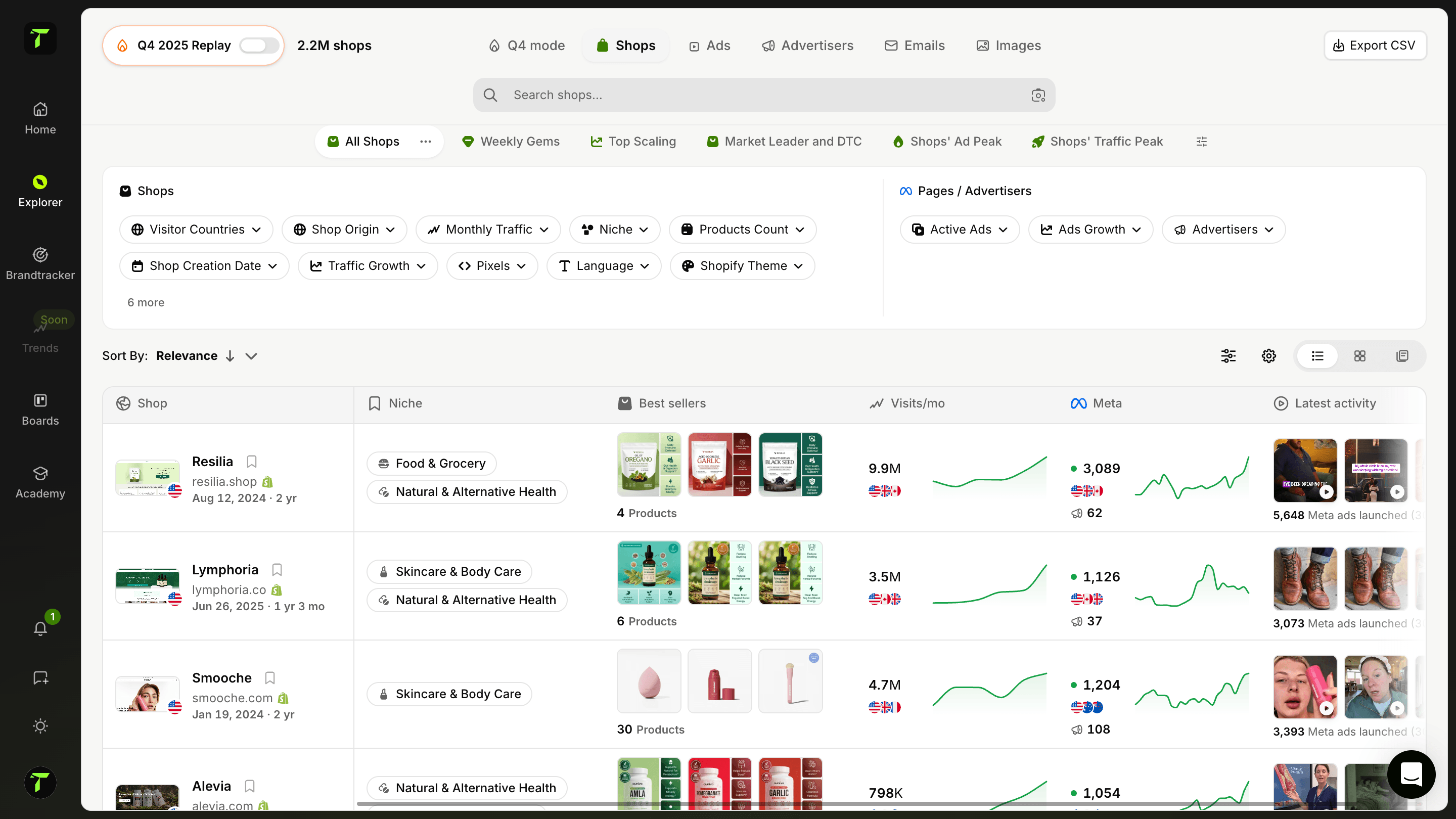
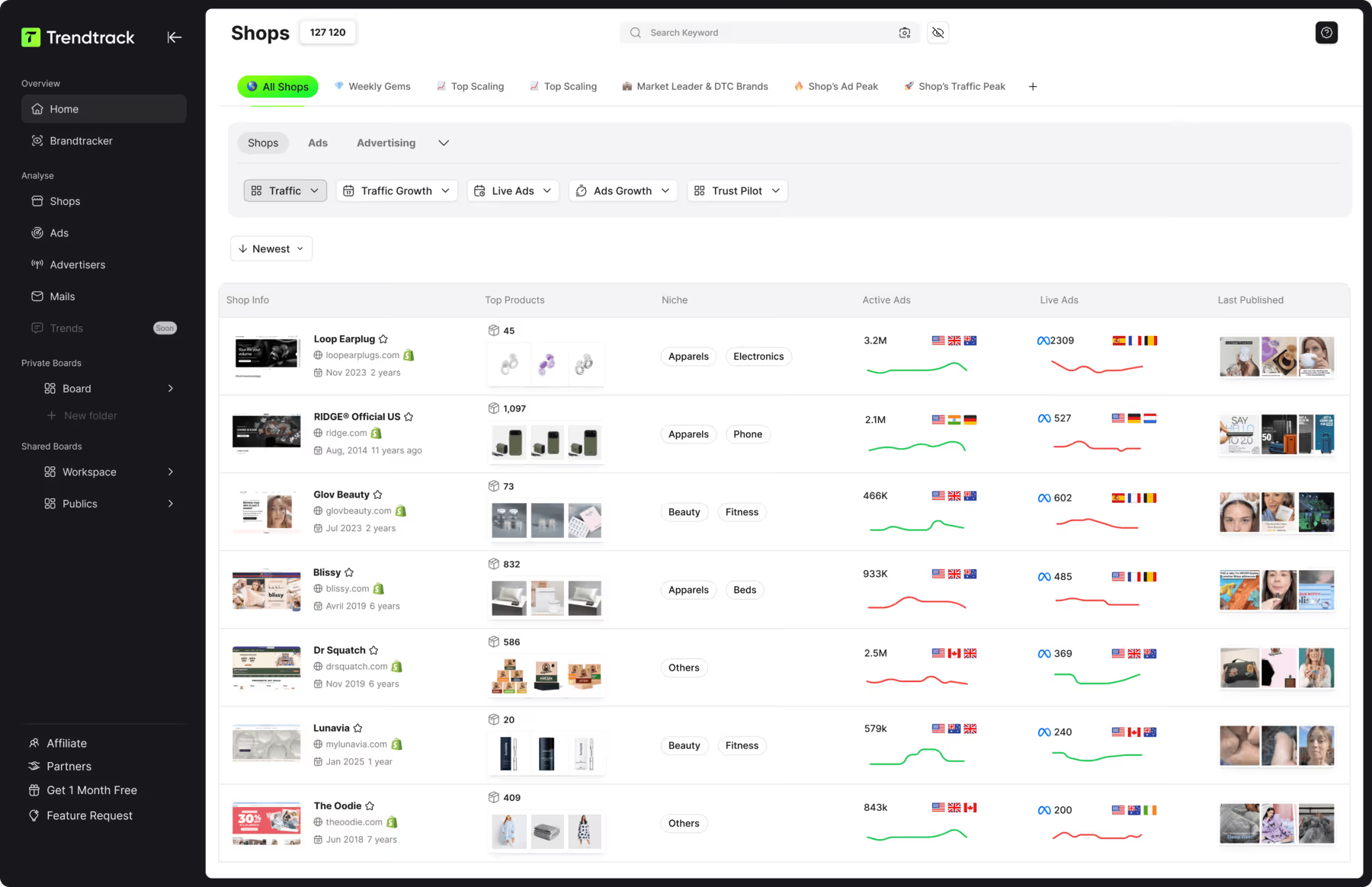
Trendtrack available at app.trendtrack.io/en/sign-up preserves full ad history across Meta, TikTok and Google, indexes 95 million TikToks and refreshes 700,000+ brand profiles every 24 hours, with BrandTracker monitoring competitors continuously.
In this article we deliver our complete Niche Scraper review for 2026.
What Is Niche Scraper?

Niche Scraper is a product research platform built for dropshippers, designed to identify products with commercial potential before they saturate the market.
Its operating principle is straightforward. The tool crawls AliExpress and Shopify continuously, analyzing thousands of products daily against indicators such as sales velocity, pricing structure and store performance. Rather than browsing marketplaces manually, you receive a filtered shortlist.
The platform positions itself explicitly as an all-in-one solution rather than a specialized tool. It covers product discovery, competitor analysis, ad research and creative production within a single subscription, which explains its appeal to beginners who would otherwise juggle several tools.
Its target users are sellers operating on Shopify, WooCommerce, Amazon and eBay, with a clear bias toward the dropshipping model given its AliExpress integration and supplier links.
The tool organizes around three functional areas. Product discovery through the Product Scraper and the Hand Picked curated list. Market research via Store Analysis, Top Niches and Ad Spy. And marketing tools through the Video Ad Maker.
One characteristic defines its commercial approach: pricing simplicity. There are no credit systems, no tiered feature access and no usage quotas on the paid plan. You either have the free account with its limitations, or Pro Membership with everything unlocked.
That model contrasts sharply with competitors gating their strongest features behind premium tiers, and it remains one of the most frequently cited reasons users choose it.
A clarification worth making: Niche Scraper is primarily a product research tool with ad features added, not an ad intelligence platform. Its Ad Spy module exists but sits well behind its core product discovery capability in depth.
Trendtrack available at app.trendtrack.io/en/sign-up covers that ad intelligence layer with full history across Meta, TikTok and Google.
What Features Does Niche Scraper Offer?
The platform organizes around five modules covering discovery, research and creative production. Here is what each delivers.
Product Scraper
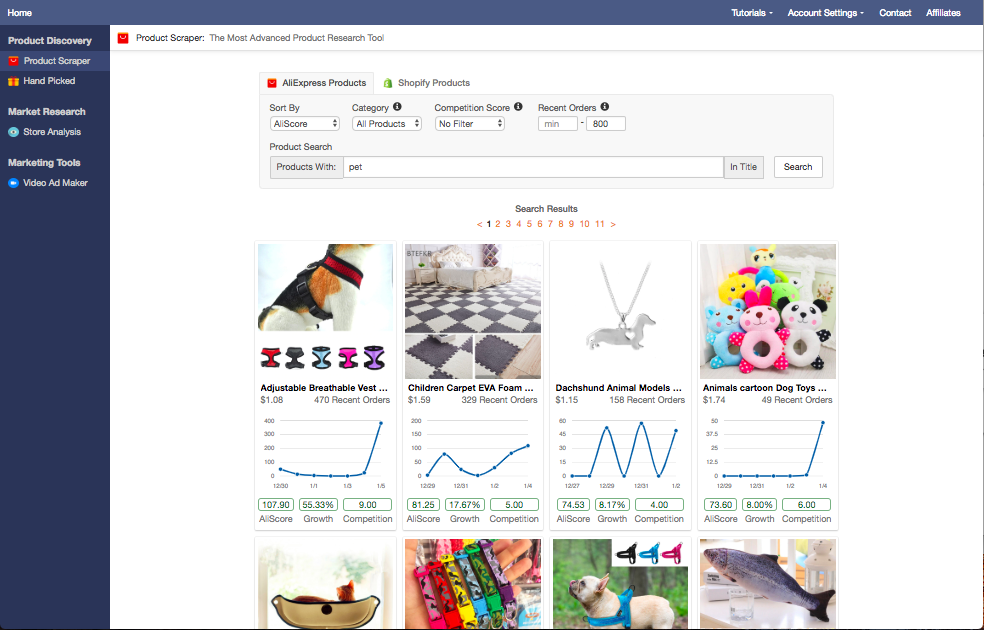
This is the core engine and the reason most users subscribe. It analyzes thousands of AliExpress and Shopify products daily, scoring them against indicators such as order velocity, pricing structure and store performance.
You filter by category, price range, order volume and competition level, then receive a shortlist rather than browsing marketplaces manually. For a beginner facing millions of products with no idea where to start, that filtering removes the most paralyzing part of the process.
The scraper also surfaces supplier links directly, which saves the separate sourcing step most tools leave to you.
Store Analysis
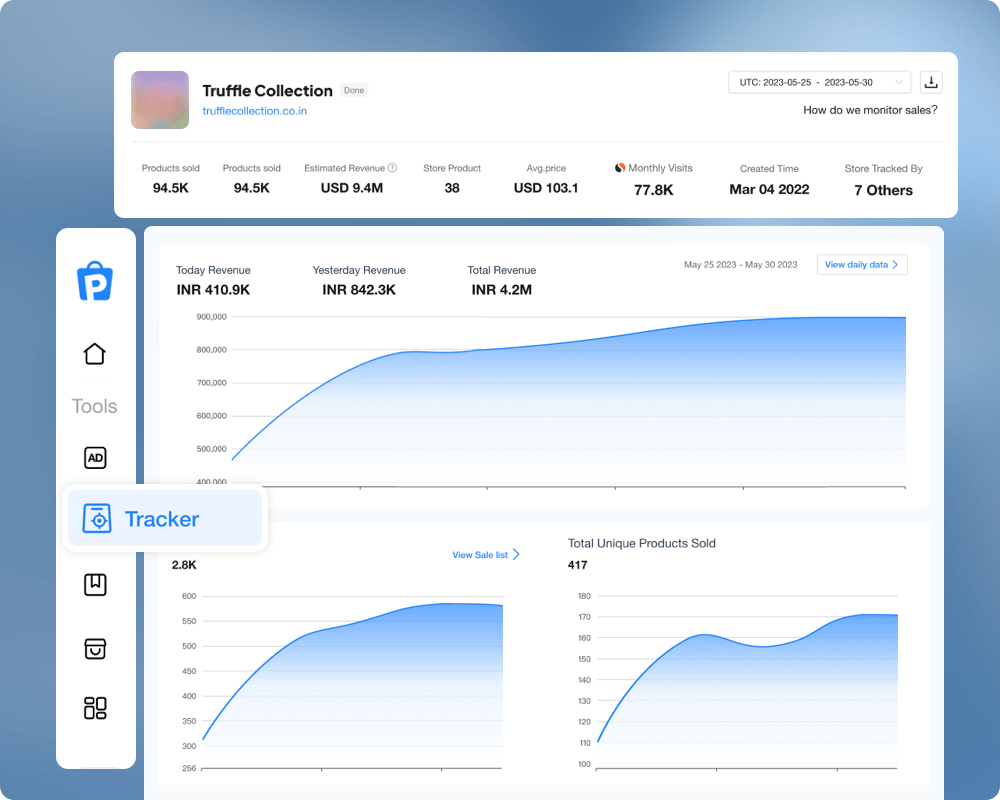
This module lets you examine any Shopify store and reveal its best-selling products, traffic estimates and sales figures.
Its practical value is validation. Finding a product in the scraper tells you it has potential, while seeing it perform across several established stores tells you the market has already confirmed it. Used together, the two modules form a reasonable research workflow.
The traffic and revenue figures are estimates rather than actual data, which is worth remembering before building a business case on them.
Hand Picked
A curated daily list of products selected manually rather than algorithmically, delivered with suppliers, pricing suggestions and ad examples attached.
This is the module beginners use most, since it removes the research step entirely. It carries an obvious drawback: every subscriber sees the same list, which means saturation arrives quickly on anything genuinely promising.
Free accounts receive this list on a three-day delay, which in practice makes it unusable for them.
Ad Spy

Covers Facebook and TikTok creatives, letting you browse ads and the products behind them to model your own campaigns.
Two limitations matter here. The module shows what is running now without preserving history, so you cannot distinguish an ad profitable for six months from one launched last week. And coverage stops at two platforms, leaving Google Ads entirely outside the picture.
Since nobody funds a losing campaign for half a year, longevity is the clearest profitability signal available, and its absence undermines the module considerably.
Video Ad Maker
Generates product video ads from a single product link, producing a usable creative in seconds.
It suits rapid testing rather than final production. The output is templated and visibly automated, which works for validating whether a product converts before investing in proper creative, and less well for scaling a campaign.
Top Niches
A lighter module surfacing categories showing momentum, useful for orientation rather than decision-making.
Taken together, the feature set covers the full research cycle competently. Its weakest link is ad intelligence, where depth matters most once you move past product selection.
How Much Does Niche Scraper Cost?
Pricing is unusually simple for this category, with no credit systems and no tiered feature access. Here is the structure.
Table: Niche Scraper pricing
| Plan | Price | What you get |
|---|---|---|
| Free | $0 | Limited scrapes, 3-day delay on Hand Picked |
| Pro Monthly | $49.95 per month | Full access, all modules unlocked |
| Pro Annual | $199 per year | Same access, roughly 60% cheaper |
As the table shows, there is no middle tier. You either run the restricted free account or you unlock everything, which removes the upgrade decisions competitors force on you.
The free plan deserves a realistic assessment. No credit card is required, which genuinely lets you test the interface and see the data structure. But the three-day delay on Hand Picked products makes that module effectively useless, since anything promising is already saturated by the time you see it. Daily scrapes are also capped.
Treat it as a demo rather than a working tier.
Pro Membership at 49.95 dollars monthly unlocks the Product Scraper, Store Analysis, Hand Picked without delay, Ad Spy and the Video Ad Maker. Nothing sits behind an additional paywall, which is the platform’s strongest commercial argument.
The annual plan at 199 dollars works out around 16.60 dollars monthly, a substantial discount for committing upfront. Note that it requires full payment at signup rather than monthly installments.
One practical point: Niche Scraper does not advertise a conventional free trial. Monthly subscriptions auto-renew and cancel through account settings.
Compared to the category, the pricing is competitive. Trendtrack starts at 49 dollars monthly with full ad history across three platforms.
What Are the Limits of Niche Scraper?
Several constraints deserve attention before subscribing.
No ad history in the Ad Spy module, showing only what is live now
Coverage limited to Facebook and TikTok, leaving Google Ads entirely outside
Saturated Hand Picked lists, since every subscriber receives the same daily selection
Estimated rather than actual data on store traffic and revenue figures
A three-day delay on the free plan, making that tier effectively a demo
Basic video output, templated and visibly automated
AliExpress dependency, which limits usefulness if you source elsewhere
Slower support and updates reported by several users
No team features, with the plan built around single-user access
Among these, the absence of ad history is the most consequential. An ad running for six months is profitable, because nobody funds a losing campaign that long. An ad launched last week tells you nothing yet. Without that distinction you cannot separate validated angles from active tests, which is the entire point of competitive research.
The saturation of Hand Picked comes next in practical impact. A curated list delivered simultaneously to every subscriber means hundreds of sellers launch the same product in the same week. By the time you build your store, the market is crowded and your acquisition costs reflect it.
Use that module for inspiration rather than selection.
The estimated figures on Store Analysis warrant caution too. Traffic and revenue numbers are modeled rather than measured, which makes them useful for ranking competitors against each other and unreliable for building a business case.
Google Ads coverage is the last structural gap. Competitors increasingly run Search and Shopping alongside social, and that activity stays invisible here.
Trendtrack available at app.trendtrack.io/en/sign-up preserves full ad history across Meta, TikTok and Google.
Why Is Trendtrack Better Than Niche Scraper?
The two tools overlap without serving the same purpose. Niche Scraper is a product research platform with ad features attached. Trendtrack is an ad intelligence platform built around competitive data. Here is how they compare where it matters.
Table: Trendtrack vs Niche Scraper
| Criterion | Trendtrack | Niche Scraper |
|---|---|---|
| Ad history | Full history preserved | Live ads only |
| Platforms covered | Meta, TikTok, Google | Facebook, TikTok |
| Data refresh | Every 24 hours | Variable |
| Brand profiles | 700,000+ | Not disclosed |
| TikTok library | 95 million | Limited |
| Competitor monitoring | BrandTracker, continuous | Manual checks |
| Google Ads | Search, Shopping, YouTube, Display | Not covered |
| Shop analytics | Included | Store Analysis, estimates |
| Chrome extension | Included | Not available |
| AI integration | MCP with Claude and ChatGPT | Not available |
| Product scraper | Not the focus | Core strength |
| Video ad maker | Not included | Included |
| Entry price | $49 per month | $49.95 per month |
As the table shows, the decisive gap is ad history. Niche Scraper shows what is running now and nothing more. Trendtrack preserves the full record, which lets you distinguish an ad profitable for six months from one launched last week.
That distinction is not a detail. Nobody funds a losing campaign for half a year, which makes longevity the clearest profitability signal available from outside. Without it, you cannot separate validated angles from active experiments, and you build strategy on noise as readily as on signal.
The second gap is platform coverage. Niche Scraper stops at Facebook and TikTok, leaving Google Ads entirely invisible. A competitor running Shopping and Search alongside social is capturing demand you never knew you were contesting, and that activity simply does not appear.
The third is data freshness and scale. Trendtrack refreshes 700,000+ brand profiles every 24 hours and indexes 95 million TikToks. Launches, scaling and pullbacks surface within a day rather than whenever the index updates.
The fourth is continuous monitoring. BrandTracker watches your chosen competitors automatically and surfaces new and scaling ads, which converts competitive research from an occasional exercise into an ongoing feed. Niche Scraper requires you to check manually.
Two points go to Niche Scraper, and they are worth stating plainly. Its Product Scraper analyzing AliExpress and Shopify listings is a genuine strength Trendtrack does not replicate. And its Video Ad Maker produces testable creatives from a product link, which has no equivalent here.
The practical split is therefore clear. If your primary need is finding products to sell and you want a creative generator bundled in, Niche Scraper covers that at a comparable price.
If your need is understanding what competitors actually run and what has proven profitable, Trendtrack available at app.trendtrack.io/en/sign-up operates at a different depth entirely.
Conclusion: Our Niche Scraper Review
Let us be clear: Niche Scraper is a legitimate tool and a reasonable entry point for product research. Its pricing is honest, its interface is approachable, and its single-tier model avoids the upgrade traps competitors build into their plans.
Its Product Scraper is the genuine strength. Analyzing thousands of AliExpress and Shopify listings daily and surfacing a filtered shortlist removes the most paralyzing part of starting out, and it does so with supplier links attached.
Store Analysis complements it usefully, letting you validate a product by seeing it perform across established stores rather than trusting a single data point.
The Video Ad Maker deserves credit too. Generating a testable creative from a product link in seconds suits rapid validation, even if the output is visibly templated.
And at 49.95 dollars monthly or 199 dollars annually with every module unlocked, the pricing is competitive for what it delivers.
Its limits matter as much, and they cluster in one area. The Ad Spy module shows only live ads with no history preserved, which means you cannot distinguish an ad profitable for six months from one launched last week. Since nobody funds a losing campaign that long, longevity is the clearest profitability signal available, and its absence undermines the module considerably.
Coverage also stops at Facebook and TikTok, leaving Google Ads entirely outside the picture while competitors increasingly run Search and Shopping alongside social.
Two practical cautions to close. The Hand Picked list reaches every subscriber simultaneously, so treat it as inspiration rather than selection. And Store Analysis figures are estimates rather than measured data, useful for ranking competitors and unreliable for building a business case.
So who should use it? Beginners looking for products to sell, who want discovery, basic competitor checks and a creative generator bundled at one price.
For competitive ad intelligence, Trendtrack available at app.trendtrack.io/en/sign-up preserves full ad history across Meta, TikTok and Google, indexes 95 million TikToks and refreshes 700,000+ brand profiles every 24 hours, with BrandTracker monitoring competitors continuously.
Is Niche Scraper worth it in 2026? For finding products, yes. For understanding what actually works in the auction, look further.
Useful Resources

.avif)
Ready to build a million-dollar brand?
.avif)