Does e-commerce make money?



At first glance, e-commerce looks like an easy way to make money online. You create a store, add products, launch ads… and sales start coming in. But in reality, the question isn’t just “does e-commerce make money?” it’s how, when, and under what conditions does it become profitable?
The truth is, e-commerce can be extremely lucrative. Some brands generate thousands even millions in revenue every month. But behind those success stories lies a more complex reality: not every store makes money, and profitability depends on several key factors.
From product selection and pricing strategy to marketing channels, customer acquisition costs, and conversion rates, every decision impacts your bottom line. Many beginners focus on revenue, but what really matters is profit and that’s where the difference is made.
In today’s competitive landscape, simply launching a store is no longer enough. You need to understand your numbers, identify profitable opportunities, and build a strategy that allows you to scale sustainably.
In this article, we’ll break down whether e-commerce really makes money, what determines profitability, and how you can position your store to generate consistent and scalable income.
How Does E-Commerce Generate Revenue?
Understanding how e-commerce generates revenue is essential if you want to build a profitable online business. At its core, the model is simple: you sell products or services online and generate income from customer purchases. But in reality, revenue in e-commerce comes from multiple levers working together, not just sales alone.
Direct Product Sales
The primary source of revenue in e-commerce is selling products directly to customers. This can include physical goods (clothing, electronics, accessories) or digital products (ebooks, courses, software).
Each time a customer places an order, your business generates revenue. However, what matters is not just the sale itself, but the margin you make on that product. This depends on factors such as:
Cost of goods
Shipping costs
Platform fees
Payment processing fees
For example, if you sell a product for $50 but it costs you $30 to produce and deliver, your gross profit is $20. Scaling revenue requires not only increasing sales but also optimizing margins.
Upsells and Cross-Sells
Another powerful way e-commerce generates more revenue is through upselling and cross-selling strategies.
Upselling encourages customers to purchase a more expensive version of a product. For example, upgrading from a basic product to a premium version.
Cross-selling involves suggesting complementary products. For example, if someone buys a phone, you might suggest a case or screen protector.
These strategies increase the Average Order Value (AOV), which means you generate more revenue from each transaction without needing additional traffic.
Repeat Purchases and Customer Retention
One of the most underestimated sources of revenue in e-commerce is customer retention.
Acquiring a new customer can be expensive, especially with paid advertising. However, once a customer has purchased from you, it becomes easier and cheaper to sell to them again.
Revenue grows significantly when customers:
Come back for repeat purchases
Subscribe to products (subscriptions or memberships)
Engage with your brand over time
This is why metrics like Customer Lifetime Value (CLV) are so important. The more you increase retention, the more revenue you generate from each customer.
Traffic and Conversion Rate
Revenue in e-commerce is also directly linked to two key variables: traffic and conversion rate.
Traffic refers to how many visitors come to your store
Conversion rate measures how many of those visitors actually make a purchase
Even with a great product, if you don’t have enough traffic, your revenue will remain limited. On the other hand, if your conversion rate is low, you may generate traffic without generating sales.
For example:
1,000 visitors with a 1% conversion rate = 10 sales
1,000 visitors with a 3% conversion rate = 30 sales
Improving either of these metrics can significantly increase revenue.
Marketing Channels and Acquisition Strategy
E-commerce revenue is heavily influenced by your marketing channels. These channels determine how you bring traffic to your store.
Common acquisition channels include:
Organic search (SEO)
Paid search (Google Ads)
Social media ads (Meta, TikTok)
Email marketing
Influencer marketing
Each channel has a different cost and performance profile. For example, paid ads can generate revenue quickly but require budget, while SEO can generate free traffic over time.
Choosing the right mix of channels is essential to maximize revenue while maintaining profitability.
Pricing Strategy and Positioning
Your pricing strategy also plays a major role in revenue generation. Pricing too low may increase sales volume but reduce margins, while pricing too high may limit conversions.
Successful e-commerce brands find a balance between:
Competitive pricing
Perceived value
Brand positioning
For example, premium brands often generate higher revenue per sale by focusing on branding and perceived value, while other stores rely on volume.
Data-Driven Optimization
Finally, e-commerce revenue grows through continuous optimization.
Successful entrepreneurs don’t rely on guesswork. They analyze data to understand:
Which products sell best
Which marketing channels perform
Which pages convert the most
Where customers drop off
By optimizing these elements, they increase revenue over time.
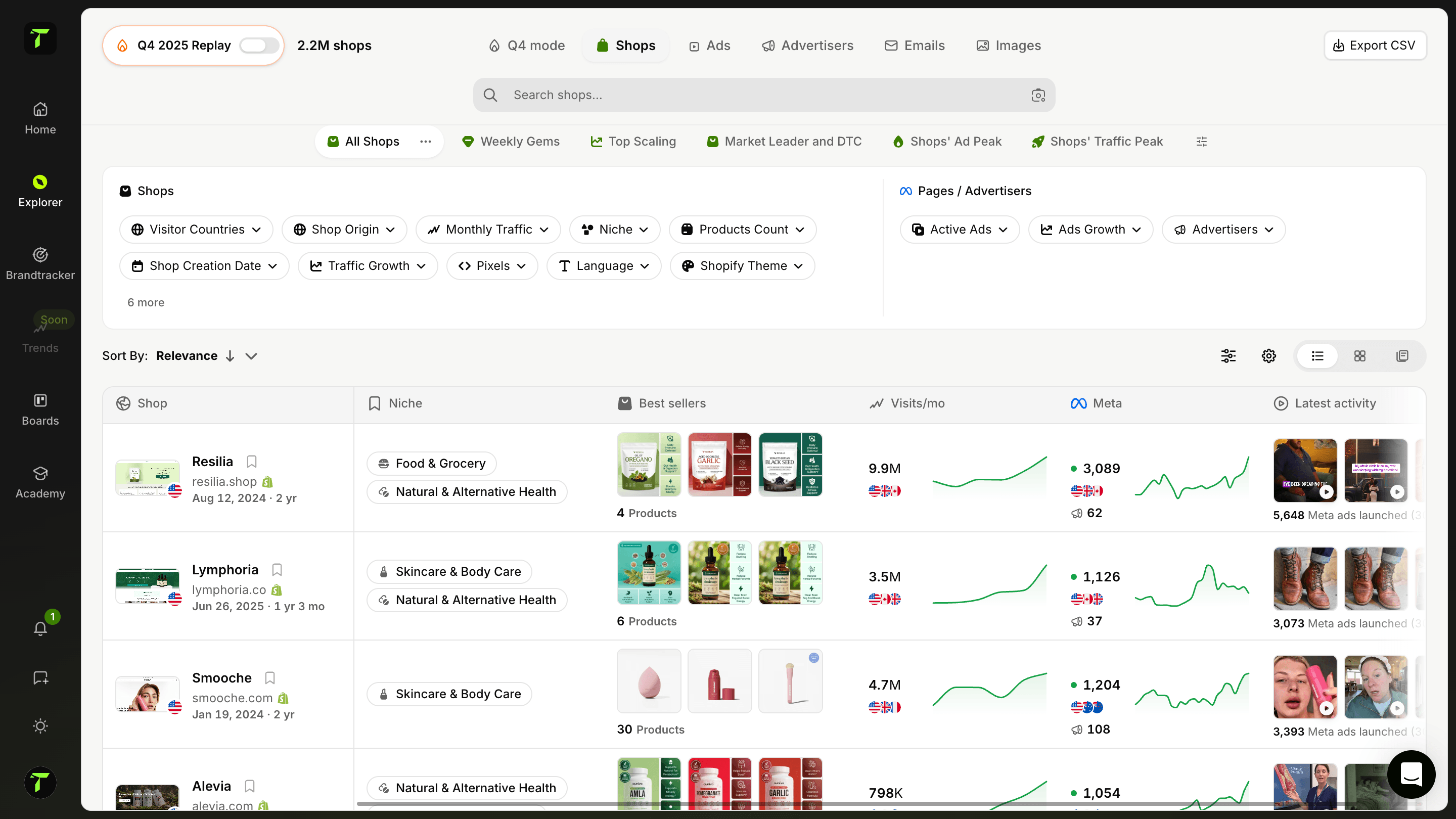
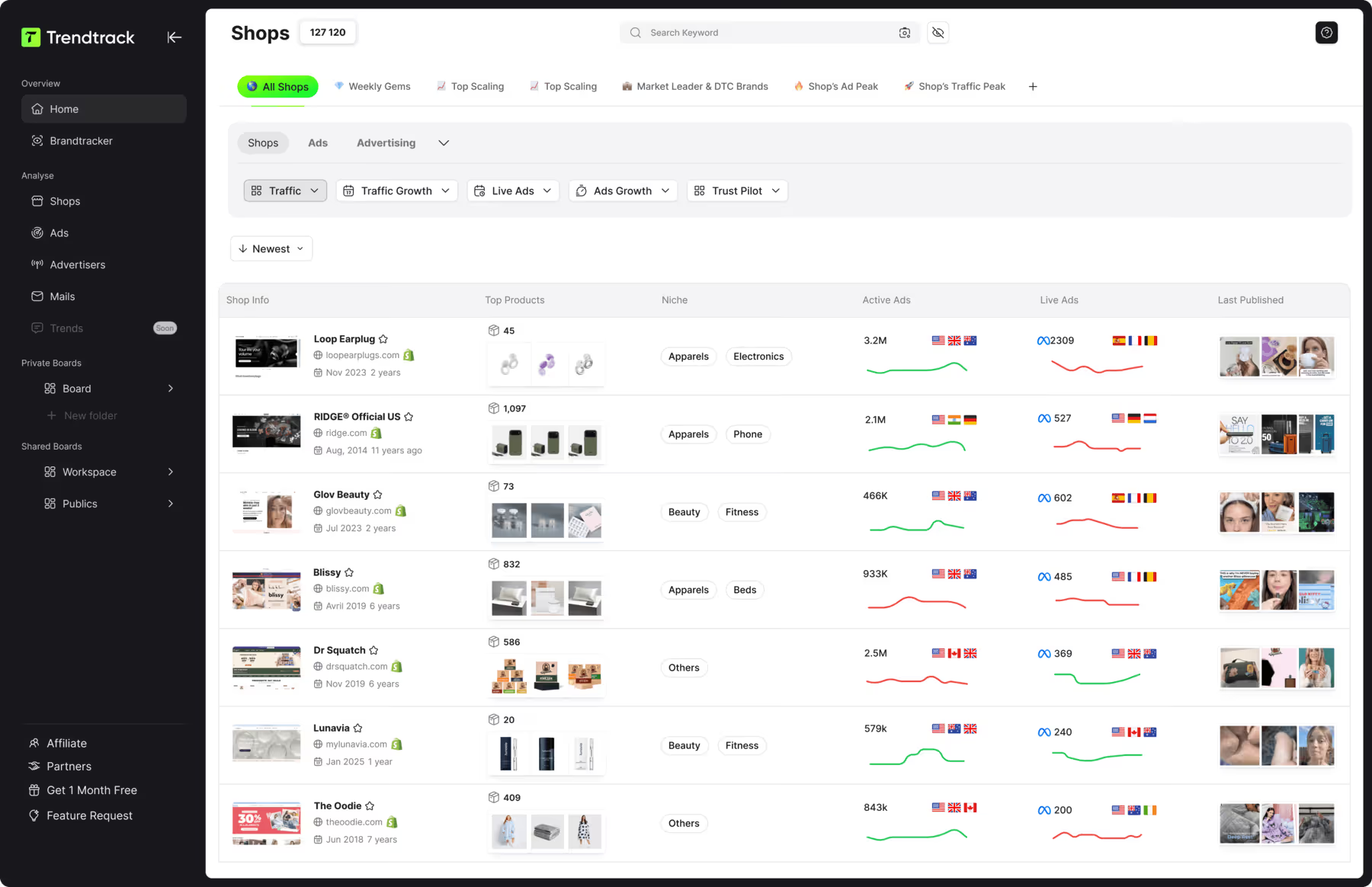
Tools like TrendTrack can help identify market opportunities, analyze competitors, and discover products with strong demand. This allows you to align your strategy with real market trends rather than assumptions.
What Are the Main Costs That Impact E-Commerce Profitability?
Making revenue in e-commerce is one thing — being profitable is another. Many online stores generate sales but still struggle to make money because they underestimate or poorly manage their costs.
To build a sustainable business, you need to understand exactly where your money goes and how each cost impacts your margins.
E-commerce profitability is influenced by several key expense categories, and ignoring even one of them can significantly reduce your earnings.
The Main Cost Categories in E-Commerce
| Cost Category | Description | Impact on Profitability |
|---|---|---|
| Product Cost (COGS) | Cost of manufacturing or purchasing your product | Directly affects your margins |
| Shipping & Fulfillment | Packaging, shipping fees, logistics, 3PL services | Can quickly reduce profit if not optimized |
| Advertising (Paid Ads) | Google Ads, Meta Ads, TikTok Ads | Often the biggest variable cost |
| Platform Fees | Shopify subscription, plugins, apps | Fixed + variable expenses |
| Payment Processing Fees | Stripe, PayPal fees per transaction | Reduces net revenue per sale |
| Returns & Refunds | Product returns, customer service costs | Impacts margins and cash flow |
| Content & SEO | Copywriting, tools, backlinks | Long-term investment for organic growth |
| Tools & Software | Email marketing, analytics tools, SaaS | Necessary but accumulative cost |
Cost of Goods Sold (COGS)
The cost of your product is the foundation of your profitability. This includes manufacturing, sourcing, or wholesale costs.
If your product costs are too high relative to your selling price, your margins will be limited from the start. This is why product selection is crucial in e-commerce. A good product is not just one that sells — it’s one that allows healthy margins after all expenses.
Shipping and Fulfillment Costs
Shipping is often underestimated, especially by beginners. Costs can include packaging materials, shipping carriers, warehousing, and even third-party logistics (3PL) services.
If not optimized, shipping can eat into your profits quickly. For example, offering free shipping can increase conversion rates, but if it’s not factored into your pricing, it can reduce your margins significantly.
Advertising Costs
For many e-commerce businesses, advertising is the largest expense.
Paid acquisition channels like Google Ads, Meta Ads, and TikTok Ads operate on a cost-per-click (CPC) model. This means every visitor has a cost, and profitability depends on your ability to convert that traffic efficiently.
This is why metrics like Customer Acquisition Cost (CAC) and Return on Ad Spend (ROAS) are critical. If your acquisition cost is too high compared to your revenue per order, your business becomes unprofitable.
Platform and Subscription Fees
Running an e-commerce store involves various tools and platforms. Shopify subscriptions, paid themes, apps, and plugins all contribute to your monthly expenses.
Individually, these costs may seem small, but combined, they can become significant over time. It’s important to regularly evaluate whether each tool provides real value.
Payment Processing Fees
Every transaction comes with a cost. Payment processors like Stripe or PayPal typically charge a percentage of each sale plus a fixed fee.
For example, a 2.9% + $0.30 fee may seem minimal, but over hundreds or thousands of orders, it can represent a substantial cost.
Returns and Refunds
Returns are a normal part of e-commerce, especially in industries like fashion or electronics. However, they come with hidden costs:
Reverse logistics
Lost inventory value
Customer support time
A high return rate can significantly impact your profitability if not managed properly.
SEO and Content Costs
While organic search traffic is “free” in terms of clicks, it still requires investment. Creating high-quality content, optimizing pages, and using SEO tools all come with costs.
However, unlike paid ads, SEO is a long-term investment that can reduce your acquisition costs over time.
Tools and Software
Modern e-commerce relies heavily on tools: email marketing platforms, analytics dashboards, competitor analysis tools, and more.
While these tools improve performance, they also add recurring costs. It’s important to ensure they contribute to revenue growth or efficiency gains.
The Real Key: Cost vs Revenue Balance
Understanding these costs individually is important, but what truly matters is how they interact.
Profitability in e-commerce is driven by a simple principle:
Profit = Revenue – Total Costs
This means increasing revenue is not enough. You must also control and optimize your costs.
For example:
Increasing your Average Order Value (AOV) can offset high acquisition costs
Improving your conversion rate reduces cost per sale
Optimizing your supply chain increases margins
Ultimately, successful e-commerce businesses are not just focused on sales they are focused on unit economics.
They know exactly how much it costs to acquire a customer, fulfill an order, and generate profit.
By mastering your costs, you move from simply generating revenue to building a profitable and scalable business.
What Determines Whether an E-Commerce Store Is Profitable?
In e-commerce, generating sales is not enough. Many stores produce revenue but still fail because they don’t understand what truly drives profitability. The difference between a store that survives and one that scales lies in a few key fundamentals that go far beyond just selling products.
At the core, profitability is determined by a simple equation:
Profit = Revenue – Costs
However, behind this equation are several critical factors that directly influence whether your e-commerce business makes money or not.
The first key element is your product margins. If your product does not leave enough room between the selling price and the cost (including production, shipping, and fees), it will be extremely difficult to generate profit. Strong e-commerce brands typically aim for margins that allow them to absorb marketing costs while still remaining profitable.
Choosing the right product is therefore one of the most important decisions. A product with strong demand but low margins can quickly become a trap, especially when advertising costs increase.
The second major factor is your customer acquisition cost (CAC). This represents how much you spend to acquire a customer through marketing channels such as Google Ads, Meta Ads, or influencer campaigns.
If your CAC is too high compared to your Average Order Value (AOV), your business becomes unsustainable. For example, if it costs you $40 to acquire a customer but your average order only generates $50 in revenue, your margin is extremely limited once other costs are included.
This is why profitable e-commerce businesses constantly monitor and optimize their acquisition costs.
Another essential factor is your conversion rate. This metric measures how many visitors actually complete a purchase. Even with strong traffic, a low conversion rate can prevent your store from being profitable.
Improving conversion rate often involves optimizing your website design, product pages, pricing, and user experience. Small improvements in conversion rate can have a massive impact on profitability.
The Average Order Value (AOV) also plays a critical role. The higher your AOV, the more revenue you generate per transaction. This gives you more flexibility to spend on marketing and still maintain healthy margins.
Strategies such as upselling, cross-selling, and bundles are commonly used to increase AOV and improve profitability without needing additional traffic.
Another important factor is customer retention and lifetime value (CLV). Many beginners focus only on acquiring new customers, but repeat customers are often the most profitable.
If a customer buys from you multiple times, your initial acquisition cost is spread across several purchases, significantly increasing your overall profit. This is why email marketing, loyalty programs, and strong brand experience are essential for long-term success.
Profitability is also influenced by your marketing strategy. Relying solely on paid advertising can make your business vulnerable to rising costs. As competition increases, cost per click (CPC) tends to go up, which reduces margins.
This is why combining paid acquisition with organic channels like SEO can create a more balanced and sustainable strategy. Organic traffic reduces dependency on ads and improves long-term profitability.
Operational efficiency is another key factor. This includes logistics, inventory management, and fulfillment processes. Poor operations can lead to delays, high return rates, and increased costs, all of which impact profitability.
Efficient businesses optimize their supply chain and continuously look for ways to reduce operational expenses without compromising customer experience.
Data and decision-making also play a major role. Profitable e-commerce stores rely on data-driven strategies rather than assumptions. They track key metrics such as:
Conversion rate
AOV
CAC
ROAS
Profit margins
By analyzing this data, they can identify what works, eliminate inefficiencies, and continuously improve performance.
Tools like TrendTrack can support this process by helping entrepreneurs identify high-demand products, analyze competitors, and uncover market opportunities. This allows businesses to make smarter decisions and avoid costly mistakes.
Finally, profitability depends on your ability to adapt and optimize continuously. E-commerce is a dynamic environment where trends, competition, and customer behavior constantly evolve.
The most successful businesses are those that test, learn, and iterate quickly. They refine their offers, optimize their funnels, and adjust their strategies based on real performance data.
In the end, an e-commerce store becomes profitable when all these elements align: strong margins, controlled acquisition costs, high conversion rates, effective retention, and efficient operations.
It’s not about one single factor it’s about building a system where every part of your business works together to generate sustainable profit.
How Long Does It Take to Make Money with E-Commerce?
One of the most common questions beginners ask is: how long does it take to make money with e-commerce?
The honest answer is simple: it depends.
There is no fixed timeline because profitability in e-commerce is influenced by several variables, including your skill level, the time you invest, your strategy, and your ability to adapt. Some entrepreneurs generate their first sales within days, while others take months before reaching profitability.
The first factor that impacts your timeline is your understanding of the fundamentals.
E-commerce is not just about launching a store. It requires mastering several skills, such as:
Product selection
Marketing (SEO, paid ads, social media)
Conversion optimization
Pricing strategy
Data analysis
If you already have experience in these areas, you can move faster. If you’re starting from scratch, there will be a learning curve. The time you spend learning and testing directly affects how quickly you can generate results.
The second key factor is the time you invest.
Someone working on their store a few hours per week will not progress at the same pace as someone dedicating several hours per day. E-commerce rewards consistency and execution. The more time you spend testing, optimizing, and improving your store, the faster you move forward.
This is why some entrepreneurs start seeing results in a few weeks, while others take several months.
Another important element is your choice of acquisition channels.
If you rely on paid search or paid ads, you can generate traffic immediately. This means you can potentially make your first sales within days of launching your campaigns. However, making sales does not automatically mean making profit. You still need to optimize your campaigns to ensure profitability.
On the other hand, if you focus on organic search (SEO), the timeline is longer. It can take several weeks or months before your pages start ranking and bringing traffic. However, once SEO gains traction, it can become a powerful and sustainable source of revenue.
Your product and market selection also play a major role.
If you choose a product with strong demand and low competition, you increase your chances of making money faster. Conversely, entering a saturated market without a clear differentiation can significantly slow down your progress.
This is where tools like TrendTrack can be valuable. By analyzing competitors, identifying trends, and discovering high-demand products, you can reduce the trial-and-error phase and move faster toward profitability.
Another critical factor is your ability to test and iterate quickly.
E-commerce is not a one-shot game. Very few stores succeed on the first attempt. Most successful entrepreneurs go through multiple iterations:
Testing different products
Adjusting pricing
Optimizing product pages
Improving ad creatives
Refining targeting
The faster you test and learn, the faster you improve your results.
It’s also important to distinguish between making your first sale and becoming profitable.
Making your first sale can happen quickly, especially with paid traffic. But reaching consistent profitability takes longer because it requires optimizing your costs, improving your margins, and refining your strategy.
For many entrepreneurs, the typical timeline looks like this:
First sales: a few days to a few weeks
Break-even point: 1 to 3 months
Consistent profitability: 3 to 6+ months
These timelines are not guarantees, but they reflect a realistic progression for most e-commerce businesses.
Another important factor is your mindset and persistence.
E-commerce can be challenging at the beginning. There are uncertainties, failed tests, and learning phases. The difference between those who succeed and those who quit often comes down to consistency and resilience.
Entrepreneurs who treat e-commerce as a skill to develop rather than a quick way to make money are much more likely to succeed in the long run.
Ultimately, the time it takes to make money with e-commerce depends on how quickly you can:
Learn the necessary skills
Apply what you learn
Analyze results
Adapt your strategy
There is no shortcut, but there is a clear path: learn, test, optimize, repeat.
In e-commerce, speed comes from understanding and the better you understand the game, the faster you can win.
Useful Sources:

.avif)
Ready to build a million-dollar brand?
.avif)