How do you conduct a competitive analysis on Google Ads?



Most advertisers launch campaigns knowing their own numbers and nothing about the auction they are entering. They set bids blind, write copy from scratch and discover what works by spending money to learn it. Meanwhile their competitors have already paid for that education. So how do you conduct a competitive analysis on Google Ads?
The objective is not to copy. It is to enter the auction informed rather than paying tuition fees for lessons someone else already learned.
A proper analysis answers five questions. Who is actually bidding on your keywords, which is rarely the list you assume. What copy they run, including the angles and offers they have tested long enough to keep. Which landing pages they send that traffic to. How long each ad has been running, since longevity is the clearest signal of profitability. And which formats they use across Search, Shopping, YouTube and Display.
That last question matters more than advertisers realize. A competitor running Shopping and YouTube alongside Search is playing a different game, and matching them on Search alone means losing ground elsewhere.
The hardest part is longevity data. An ad that has run for six months is profitable, because nobody funds a losing campaign that long. An ad launched last week tells you nothing. Google’s own Ads Transparency Center shows what is live now but offers limited history, which is precisely where most analyses fall short.
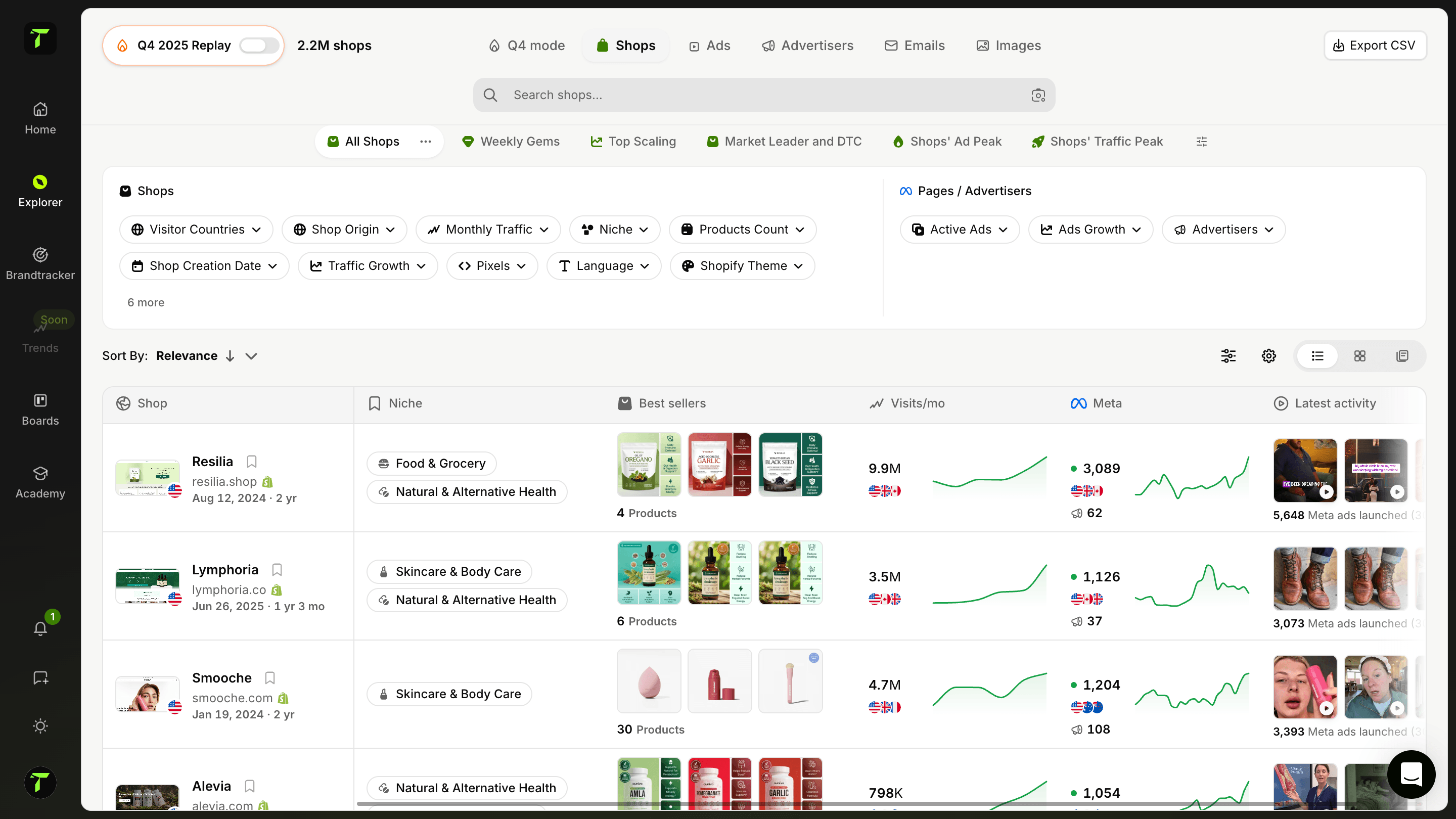
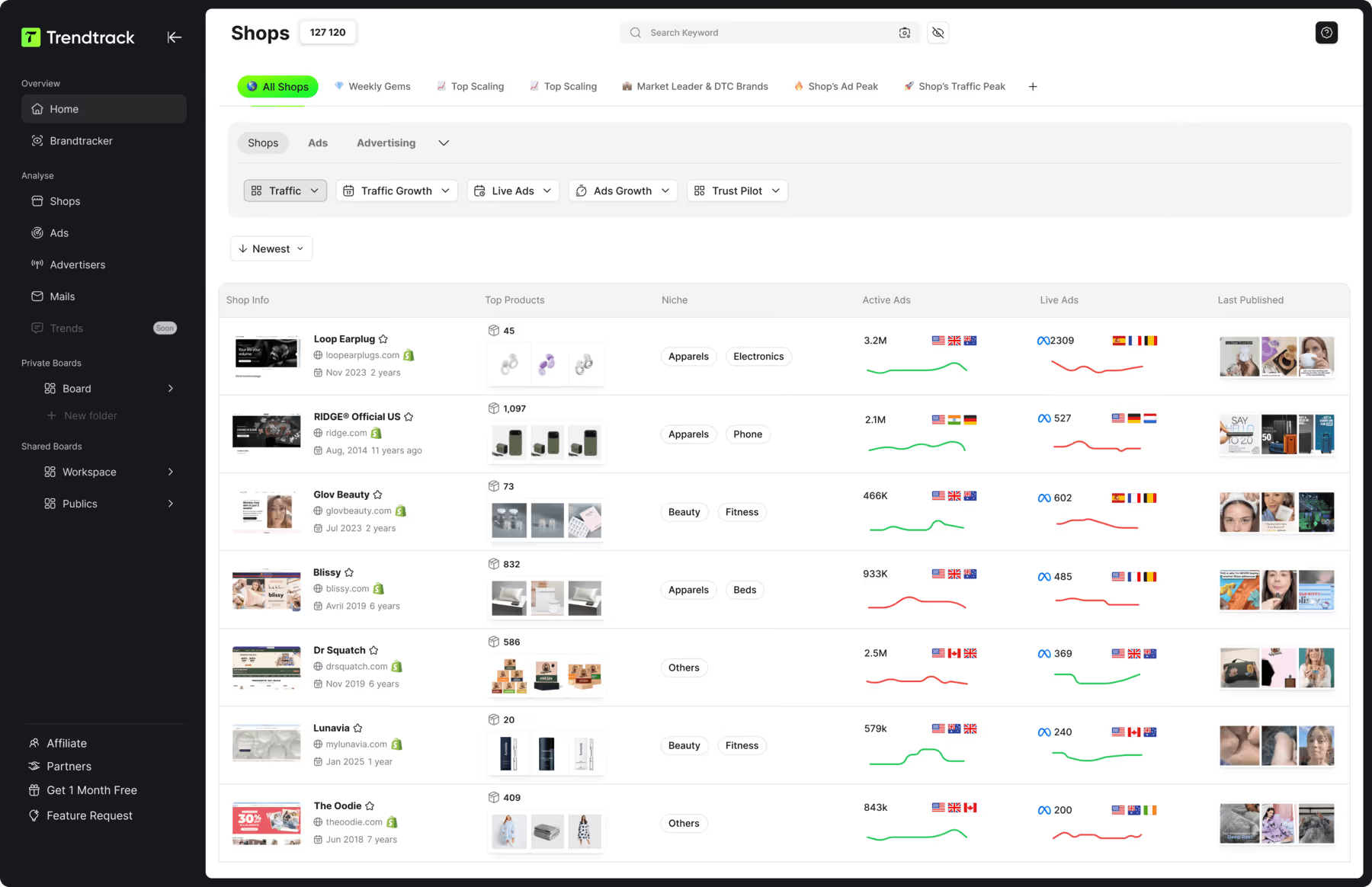
Trendtrack available at app.trendtrack.io/en/sign-up solves that gap by preserving full ad history across Google Search, Shopping, YouTube and Display, with 700,000+ brand profiles refreshed every 24 hours.
This guide walks through the complete process step by step.
Why Analyze Your Competitors on Google Ads?
Several concrete returns justify the time, and most of them show up directly in your acquisition cost.
You stop paying to learn what is already known
This is the central argument. Every competitor running ads in your category has spent real money discovering which angles convert and which do not. That knowledge is visible in what they kept running.
An ad live for six months is profitable, because no advertiser funds a losing campaign that long. Reading those ads gives you validated angles before you spend anything, which compresses your learning phase from months to days.
You see the full competitive picture
Most advertisers assume they know who they compete against. The auction regularly says otherwise.
Analysis reveals brands bidding on your keywords that never appear in your market research, including adjacent categories, affiliates and comparison sites capturing your traffic before you do.
You identify format gaps
A competitor running Shopping, YouTube and Display alongside Search is operating on channels you may be ignoring entirely. Matching them on Search while they capture demand elsewhere means losing ground you never knew you were contesting.
Conversely, a format nobody in your category uses can represent an opening with lower competition and cheaper inventory.
You write better copy faster
Ad copy is where most budget disappears. Starting from a blank page means testing angles that competitors already eliminated.
Reviewing their live creatives shows you which offers, hooks and value propositions survived testing, which gives you a credible starting point rather than guesswork.
You benchmark your landing pages
The ad is only half the funnel. Seeing where competitors send their traffic reveals their conversion logic: dedicated landing pages or product pages, which proof elements they lead with, how they structure their offer.
You time your campaigns better
Tracking ad activity over time reveals seasonal patterns. When competitors increase volume ahead of a commercial peak, you know the window is opening. When they pull back, inventory may be cheaper.
You avoid entering a losing auction
Sometimes the analysis tells you not to compete. A keyword where five well-funded brands have bid continuously for two years is expensive territory, and recognizing that early saves a budget better spent elsewhere.
What Data Should You Collect?
A competitive analysis is only as useful as the data behind it. Here is what to gather.
The advertisers actually bidding on your core keywords, including names you did not expect
Full ad copy for each competitor, headlines and descriptions
Ad longevity, meaning how long each creative has been running
Formats used across Search, Shopping, YouTube and Display
Landing pages each ad sends traffic to
Offers and promotions currently promoted
Volume of active ads per competitor as a proxy for investment level
Geographic targeting where visible
Activity over time, including seasonal increases and pullbacks
Among these, ad longevity is the single most valuable data point and the one most analyses lack. An ad running for six months is profitable, since nobody funds a losing campaign that long. An ad launched last week tells you nothing yet.
That distinction changes how you read everything else. A competitor running twelve creatives where three have survived a year and nine launched this month is showing you exactly which three angles work.
Volume of active ads functions as a reliable proxy for budget. A brand running several hundred simultaneous creatives is scaling something that converts, not testing. A brand running four is either small or cautious, and both are useful to know.
Landing pages deserve more attention than they usually get. The ad is half the funnel. Seeing whether competitors send traffic to dedicated pages or product pages, and how they structure proof and offer, often reveals more than the copy itself.
Format coverage tells you where the competition actually is. Search-only analysis misses a competitor capturing demand through Shopping and YouTube, which is increasingly common in e-commerce categories.
One practical point on collection. Google’s Ads Transparency Center shows what is live now and is free, which makes it a reasonable starting point. Its limitation is historical depth, and history is precisely where the value sits.
Set a cadence as well. A single snapshot captures a moment. Checking monthly reveals patterns: who is scaling, who is retreating, which angles get retired.
How to Analyze Your Competitors With Trendtrack?
Here is the complete process, step by step:
Create your account and open the Google Ads library
Search by competitor, domain or keyword
Filter by format and by country
Sort by ad longevity
Study the creatives that survived
Open the landing pages behind them
Add your key competitors to BrandTracker
Review the data on a monthly cadence
The first step is to create your account at app.trendtrack.io/en/sign-up and open the Google Ads library, which indexes Search, Shopping, YouTube and Display formats.
The second step is to search by competitor, domain or keyword. Searching by keyword rather than by brand is the more revealing approach, since it surfaces advertisers bidding on your terms that you never identified as competitors.
The third step is to filter by format and country. A competitor’s Shopping strategy differs entirely from their Search strategy, and targeting varies by market. Filtering keeps the analysis focused rather than overwhelming.
The fourth step is the one that makes the difference: sort by longevity. Ads running for months are profitable, because nobody funds a losing campaign that long. This single filter separates validated angles from active experiments.
The fifth step is to study the surviving creatives. Read the headlines, the offers and the value propositions across several competitors. Patterns emerge quickly, and what multiple brands have independently kept running tells you what the market responds to.
The sixth step is to open the landing pages. The ad is half the funnel. Seeing where traffic lands reveals their conversion logic, their proof elements and how they structure the offer.
The seventh step is to add your key competitors to BrandTracker, which monitors their activity continuously and surfaces new and scaling ads automatically rather than requiring you to check manually.
The eighth step is to set a monthly cadence. A single snapshot captures a moment, while repeated reviews reveal who is scaling, who is retreating and which angles get retired.
One final point. Trendtrack also offers an MCP integration with Claude and ChatGPT, which lets you query competitive data conversationally rather than through the interface.
How to Turn That Analysis Into Campaigns?
Collecting data changes nothing on its own. Here is how to convert it into performance.
Build your keyword list from what competitors actually bid on
Write copy from validated angles rather than from scratch
Identify the positioning nobody occupies
Match or deliberately skip the formats they use
Rebuild your landing pages against their conversion logic
Set realistic bid expectations
Test one variable at a time against your baseline
The first step is to build your keyword list from the terms competitors actually bid on rather than from a keyword tool alone. Commercial intent shows up in what advertisers pay for, and terms with sustained bidding activity are terms that convert for somebody.
The second step is to write copy from validated angles. If three competitors have independently run the same value proposition for months, that angle works. Use it as your starting point rather than inventing something untested, then differentiate on execution instead of on concept.
The third step is the most strategically valuable: identify the gap. Once you know what everyone says, you see what nobody says. If every competitor leads on price, leading on service or speed gives you a position in a crowded auction rather than a louder version of the same message.
The fourth step is to decide on formats deliberately. A competitor running Shopping and YouTube alongside Search is capturing demand you are not contesting. Either match them or consciously choose not to, but do not discover the gap three months in.
The fifth step is to rebuild your landing pages against what you observed. If competitors lead with reviews above the fold, offer free returns prominently or use a dedicated page per campaign, those choices survived testing on their budget.
The sixth step is to set realistic bid expectations. A keyword with five well-funded advertisers bidding continuously for two years will not be cheap. Knowing that before launch prevents you from blaming your setup for a structural reality.
The seventh step is to test one variable at a time. Changing copy, landing page and bidding simultaneously tells you nothing about what moved the needle.
Keep monitoring afterwards. Competitors adjust, and what worked this quarter gets copied next quarter.
What Mistakes Should You Avoid?
Several errors turn a useful analysis into wasted time or, worse, into bad decisions.
Copying instead of learning
The most common failure. Reproducing a competitor’s ad word for word gives you their message without their brand, their pricing or their proof, and the auction rewards relevance rather than imitation.
Use their validated angles as a starting point for differentiation, not as a template. The goal is to skip the learning phase, not to become indistinguishable.
Ignoring ad longevity
Treating all competitor ads as equally meaningful is the error that produces the worst decisions. An ad launched last week is a test, and testing means the advertiser does not yet know whether it works.
Build your conclusions on creatives that have survived months, since survival is the only reliable proof of profitability you can observe from outside.
Analyzing once and stopping
A single snapshot captures a moment. Competitors launch, scale, retire and pivot continuously, which means an analysis from six months ago describes a market that no longer exists.
Set a monthly cadence and track changes rather than states.
Looking only at Search
Search-only analysis misses competitors capturing demand through Shopping, YouTube and Display. In e-commerce categories particularly, a brand can dominate Shopping while barely appearing in Search results.
Assuming you know who your competitors are
The auction regularly contradicts market research. Affiliates, comparison sites and adjacent categories frequently bid on your terms, and they are often the advertisers actually raising your costs.
Search by keyword rather than by brand to surface them.
Reading the ad without the landing page
The creative is half the funnel. A brilliant ad sending traffic to a weak page loses, and a modest ad feeding a strong page wins. Judging competitors on copy alone misses where the conversion actually happens.
Concluding without acting
The most wasteful error. Teams build thorough competitive reports, circulate them, and change nothing in their campaigns.
Finish every analysis with two or three specific changes to implement, then measure them against your baseline.
Conclusion: Enter the Auction Informed
Competitive analysis on Google Ads is not about copying. It is about entering the auction informed rather than paying tuition fees for lessons your competitors already learned.
The process comes down to a clear sequence. Identify who actually bids on your keywords, which is rarely the list you assumed. Collect their copy, formats and landing pages. Sort by longevity to separate what works from what is merely being tested. Then convert those findings into keyword lists, validated angles and a position nobody else occupies.
Remember the data point that matters most: how long an ad has been running. An ad live for six months is profitable, because nobody funds a losing campaign that long. An ad launched last week tells you nothing. This single filter separates useful intelligence from noise, and it is precisely what most analyses lack since Google’s own transparency tools offer limited history.
Watch the errors that undo the work. Copying rather than learning gives you their message without their brand. Analyzing once describes a market that no longer exists. Looking only at Search misses competitors capturing demand through Shopping and YouTube. And concluding without acting wastes the entire exercise.
Finish every analysis with two or three specific changes, implement them, and measure against your baseline. Then set a monthly cadence, because competitors adjust and what works this quarter gets copied next.
To run this analysis with full ad history across Google Search, Shopping, YouTube and Display, Trendtrack available at app.trendtrack.io/en/sign-up indexes 700,000+ brand profiles refreshed every 24 hours, with BrandTracker monitoring your key competitors continuously.
Useful Sources:

.avif)
¿Listo para construir una marca de millones de dólares?
.avif)