How to Structure Facebook Ads Campaigns for your Shopify?


Most Shopify store owners who struggle with Facebook Ads share the same underlying problem not creative quality, not budget size, and not targeting precision. The problem is campaign structure. Running the right ad to the right audience means nothing if the campaign architecture underneath it is working against the algorithm rather than with it.
Facebook Ads in 2026 operates on a fundamentally different logic than it did three years ago. Meta's algorithm has become powerful enough to find your buyers without the exhaustive manual targeting that dominated earlier performance marketing strategies but only when your campaign structure gives it the data, the budget, and the optimization signals it needs to do that work effectively. A poorly structured campaign does not just underperform. It actively prevents the algorithm from reaching the optimization state that profitable scaling requires.
The Shopify stores generating the strongest, most consistent Facebook Ads returns in 2026 are not those with the biggest budgets or the most sophisticated creative teams. They are those that have built campaign structures that feed the algorithm correctly with the right objectives, the right ad set architecture, the right creative testing framework, and the right scaling approach for moving from validation to profitable volume.
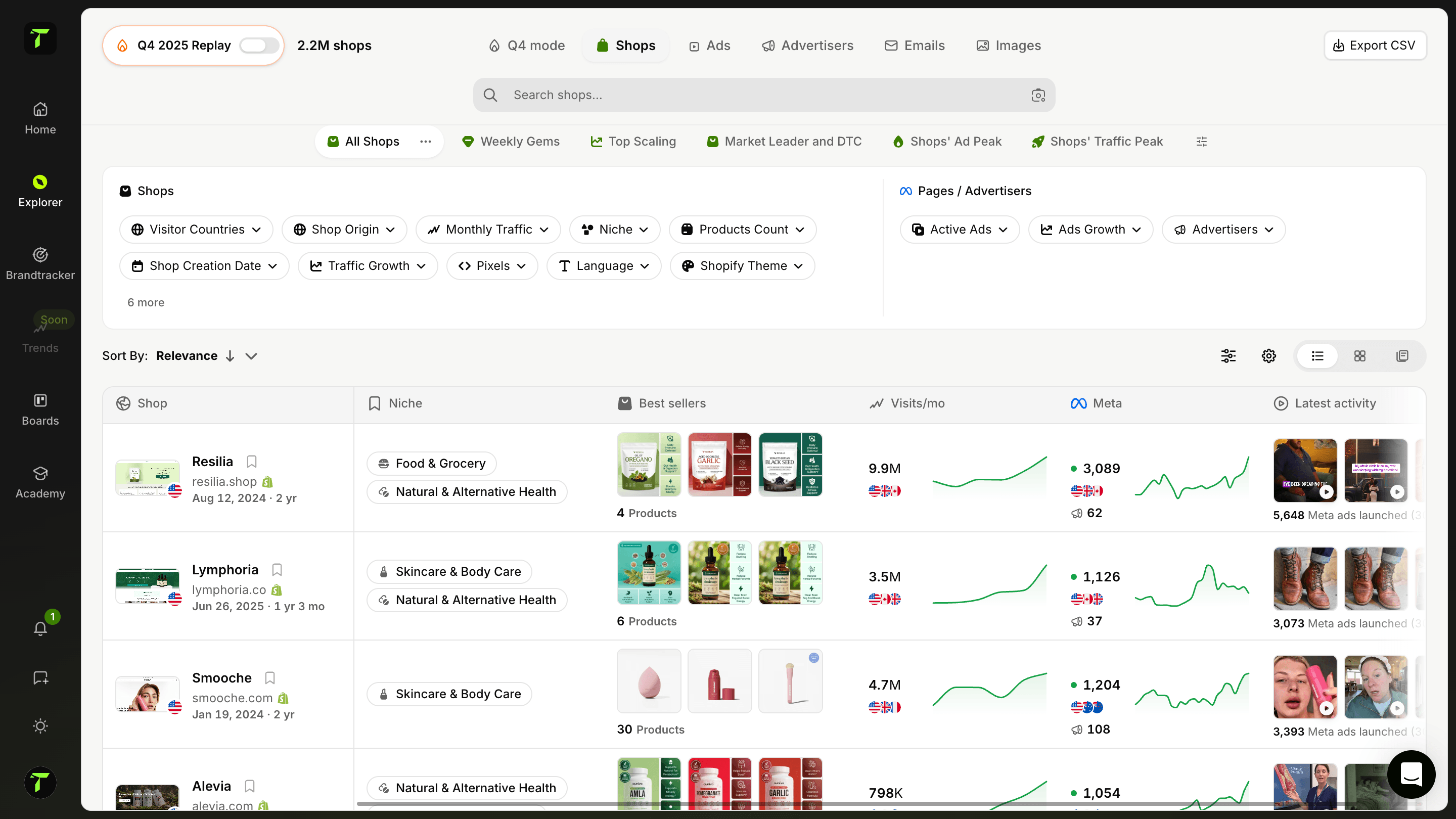
And for operators who want to know which products are worth investing Facebook Ads budget behind before they spend a single dollar testing them, TrendTrack's real-time competitive intelligence with 95 million TikToks indexed, 700,000+ brand profiles updated every 24 hours, and simultaneous Meta and TikTok intelligence gives you the product and creative validation data that removes guesswork from every campaign launch decision.
The Three Campaign Types Every Shopify Store Needs
A complete Facebook Ads structure for a Shopify store is not a single campaign it is a three-layer system that addresses cold audience acquisition, warm audience nurturing, and hot audience conversion simultaneously. Each layer serves a distinct function in the customer journey, and running all three in parallel is what produces the compounding revenue returns that single-campaign structures cannot replicate.
1. The Prospecting Campaign: Cold Audience Acquisition
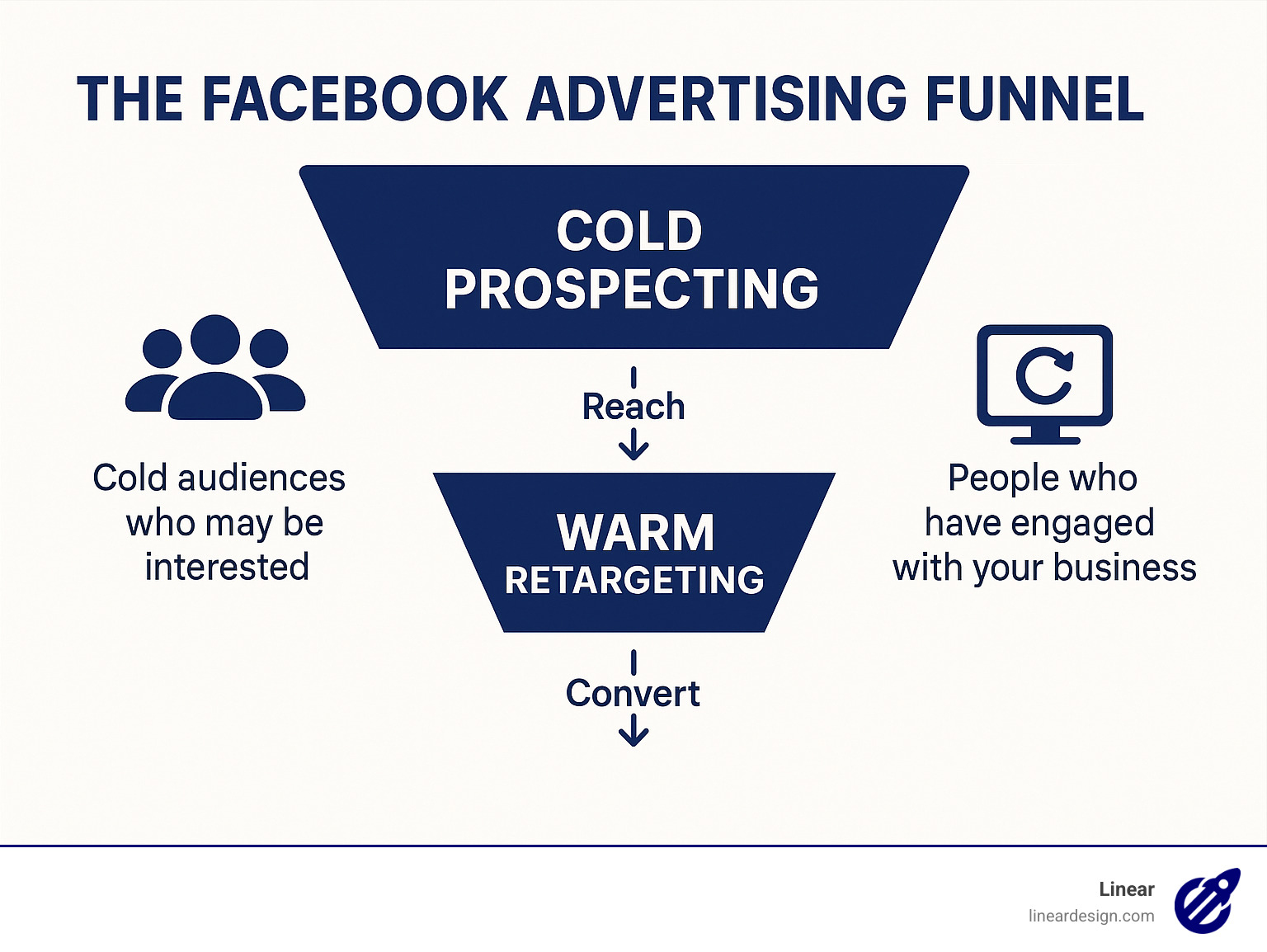
The prospecting campaign is the top of your Facebook Ads funnel responsible for introducing your products to people who have never heard of your store and converting a percentage of them into website visitors, product page viewers, and first-time buyers.
In 2026, the most effective prospecting campaigns use broad targeting with a conversion objective allowing Meta's algorithm to identify the users most likely to purchase from your store without excessive manual interest or demographic constraints that limit the algorithm's ability to find buyers the targeting logic did not anticipate. Set your geographic targeting, your age range if relevant, and let the algorithm find your audience within those broad parameters.
Creative is the targeting in prospecting. The ad itself its hook, its value proposition, its visual approach is what attracts the right audience and repels the wrong one far more effectively than interest targeting layers. Use TrendTrack's competitive intelligence to identify which creative angles are generating momentum in your niche before building your prospecting creatives so your first-impression ads are built on validated signals rather than untested assumptions.
2. The Retargeting Campaign: Warm Audience Nurturing
The retargeting campaign addresses the visitors who have already interacted with your store or your ads but have not yet purchased the most commercially valuable audience in your entire Facebook Ads ecosystem because they have already demonstrated intent.
Segment your retargeting audiences by engagement depth website visitors, product page viewers, add-to-cart abandoners, and checkout abandoners each deserve different messaging that acknowledges where they stopped in the purchase journey and addresses the specific objection that prevented conversion. A checkout abandoner needs urgency and social proof. A product page viewer needs more detailed benefit communication. Treating all warm audiences with the same generic retargeting ad leaves significant conversion revenue uncaptured.
3. The Retention Campaign: Existing Customer Reactivation
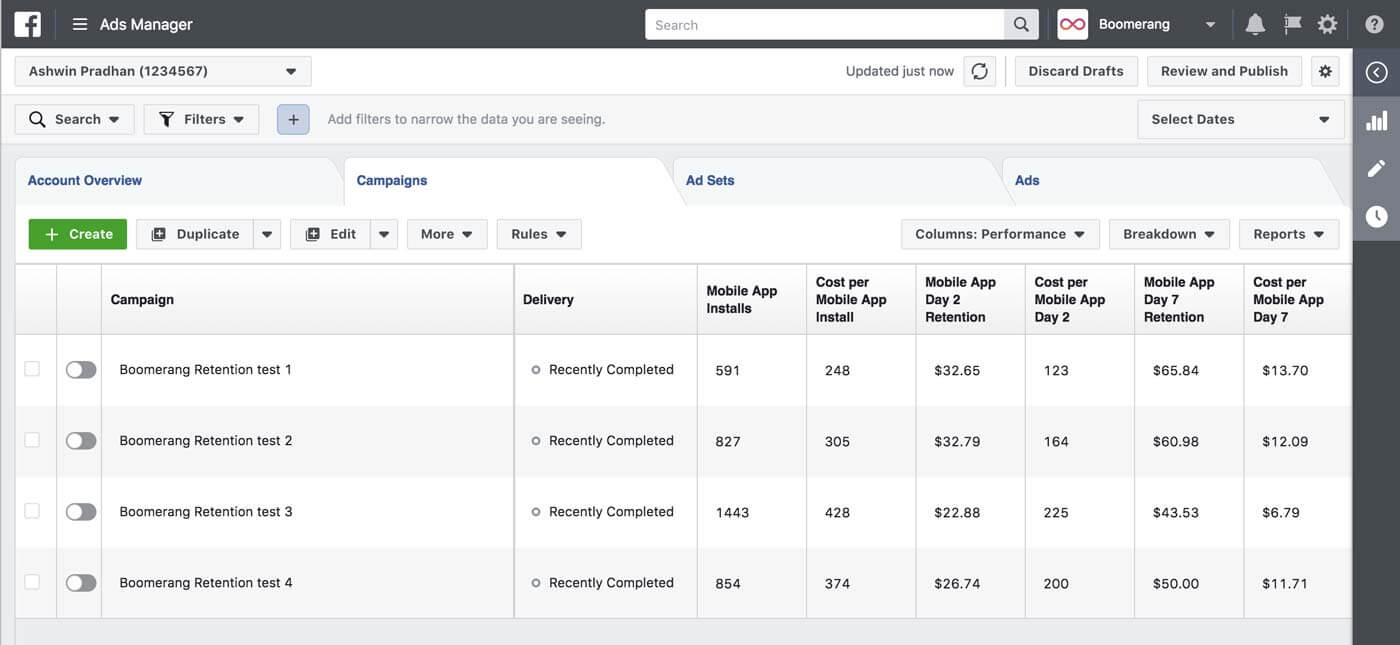
The most consistently underutilized campaign type in Shopify Facebook Ads structures is the existing customer retention campaign targeting your past buyers with new product launches, seasonal promotions, and loyalty offers that generate repeat purchase revenue from the audience that is most likely to convert at the lowest cost per acquisition available to your store.
Existing customers convert at dramatically higher rates than cold audiences at a fraction of the acquisition cost making customer retention campaigns the highest-ROI campaign type in your entire Facebook Ads structure when executed consistently. Use TrendTrack's product intelligence to identify the new winning products most likely to resonate with your existing customer base so your retention campaigns are built around validated commercial opportunities rather than inventory you need to move.
How to Structure Your Ad Sets for Maximum Algorithm Performance?
Ad set structure is where most Shopify advertisers make the mistakes that prevent their campaigns from ever reaching the optimization state that profitable scaling requires. The decisions you make at the ad set level — budget allocation, targeting architecture, and the number of ads per ad set directly determine how effectively Meta's algorithm can find your buyers and how quickly it exits the learning phase that limits early campaign performance.
One Ad Set Per Audience Segment
The most consistent ad set structure mistake is creating too many ad sets simultaneously splitting budget across five, ten, or fifteen separate targeting combinations that each receive insufficient daily spend to generate the conversion volume Meta's algorithm needs to optimize delivery effectively.
Each ad set requires a minimum of 50 conversion events per week to exit the learning phase and enter optimized delivery. An ad set spending $10 per day in a market where your cost per purchase is $30 will never generate the conversion volume needed for algorithm optimization regardless of how well the creative performs. Consolidating your budget into fewer, better-funded ad sets produces faster learning phase exits and more reliable optimization than distributing the same budget across many underfunded ones.
The practical rule is straightforward: run one ad set per distinct audience segment, with enough daily budget to generate at least 7 to 10 conversion events per week at your target cost per purchase. If your budget cannot support multiple optimized ad sets simultaneously, start with one and expand as campaign performance justifies increased investment.
Broad Targeting as Your Default Starting Point
In 2026, broad targeting consistently outperforms narrow interest-based targeting for Shopify ecommerce conversion campaigns because Meta's algorithm is powerful enough to identify buying audiences within broad parameters without the manual constraints that interest targeting imposes. Setting geographic targeting, a relevant age range, and leaving everything else to the algorithm produces better audience quality at lower cost per acquisition than exhaustive interest stacking for the vast majority of Shopify product categories.
Reserve interest targeting for ad sets where you have specific, validated reasons to believe a defined audience segment will outperform the broad population and test that hypothesis with a separate ad set rather than applying it as your default structure across all campaigns.
Three to Five Ads Per Ad Set
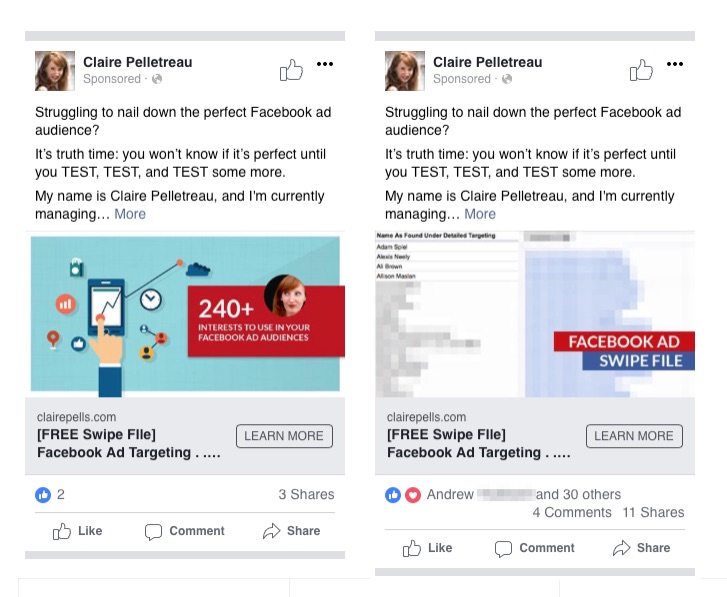
The optimal number of ads per ad set in 2026 is three to five creative variations enough variety for the algorithm to identify which creative approach resonates most strongly with the audience it is optimizing toward, without so many variations that each receives insufficient impression volume to generate statistically meaningful performance data.
Use TrendTrack's competitive intelligence to inform which creative angles to test within each ad set identifying the hooks, formats, and value proposition framings that are already generating engagement in your niche before you invest production budget in untested approaches. This intelligence-first creative testing approach compresses the timeline from first ad set launch to identified winning creative because you are validating approaches the market has already signaled interest in rather than discovering them from scratch through pure trial and error.
How to Scale Your Winning Facebook Ads Campaigns?
Identifying a winning campaign is one achievement. Scaling it profitably without destroying the performance that generated the win is a fundamentally different skill and the one that separates Shopify advertisers who build sustainable revenue engines from those who find a winning ad set, scale it aggressively, watch performance collapse, and cannot explain why.
The scaling framework that consistently produces sustainable results follows a clear set of principles — each one designed to give the algorithm the stability it needs to maintain optimization while expanding delivery volume.
| Scaling Action | When to Apply | How to Execute |
|---|---|---|
| Gradual Budget Increase | Campaign stable for 5-7 days | Increase daily budget by 20-30% maximum per adjustment |
| Duplicate Winning Ad Sets | Proven performer at current budget | Duplicate at higher budget — preserve original as benchmark |
| Expand Geographic Targeting | Domestic market saturating | Add similar markets — UK for US winners, DACH for FR winners |
| Launch New Creative Variations | Winning creative fatiguing | Test new hooks and angles informed by TrendTrack intelligence |
| Open New Audience Segments | Core audience CPAs rising | Test lookalike audiences built from purchaser lists |
| Increase Campaign Budget | Multiple ad sets performing | Move to Campaign Budget Optimization for automated allocation |
Never modify a winning ad set directly always duplicate before changing budget or creative, preserving the original's optimization history as a performance benchmark. Every direct modification risks resetting the learning phase and destroying the algorithm state that produced the winning performance.
Use TrendTrack's real-time competitive intelligence to continuously refresh your creative pipeline ensuring that new ad variations entering scaling campaigns are built on current market signals rather than assumptions about what worked months ago.
How to Use TrendTrack to Build Better Facebook Ads?
The single most commercially significant upgrade any Shopify advertiser can make to their Facebook Ads workflow is replacing assumption-based product and creative decisions with real-time competitive intelligence and TrendTrack is the platform that makes that intelligence accessible at the depth, freshness, and analytical clarity that serious campaign decisions require.
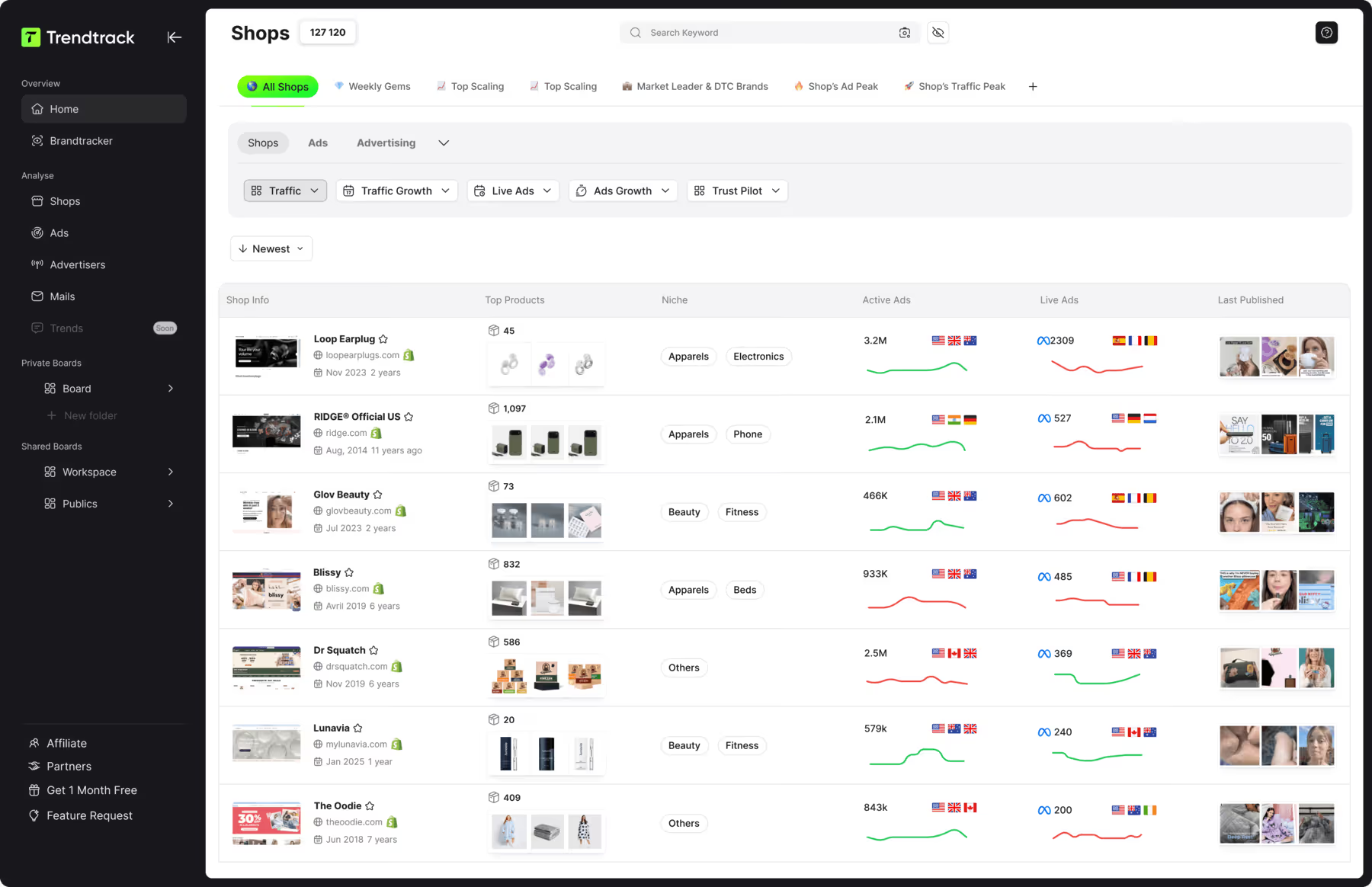
Product validation before budget commitment is where TrendTrack's intelligence delivers its most immediate commercial value. With 700,000+ brand profiles updated every 24 hours and simultaneous Meta and TikTok intelligence in a single platform, you can see exactly which products competitors are currently scaling on Facebook which ones are attracting increasing ad spend, which creative angles are generating the strongest engagement, and which niches are showing momentum signals that suggest a profitable entry window is open right now. This intelligence transforms the product selection decision from a gamble into a data-driven judgment reducing the budget wasted on products the market was never going to respond to.
Creative intelligence is the second dimension where TrendTrack directly improves Facebook Ads performance. The hooks, formats, and value proposition framings that are currently performing in your niche are visible in TrendTrack's ad database giving you a validated creative research starting point that compresses the testing timeline from weeks to days by ensuring your first ad variations are built around approaches with demonstrated market signal rather than untested creative hypotheses.
The MCP integration with Claude and ChatGPT available at docs.trendtrack.io/connect/claude makes this intelligence even more actionable, allowing you to ask which Facebook ad angles are generating the most engagement in your niche right now and receive a fully structured competitive analysis in seconds.
Useful Resources

.avif)
Ready to build a million-dollar brand?
.avif)