Spy tool
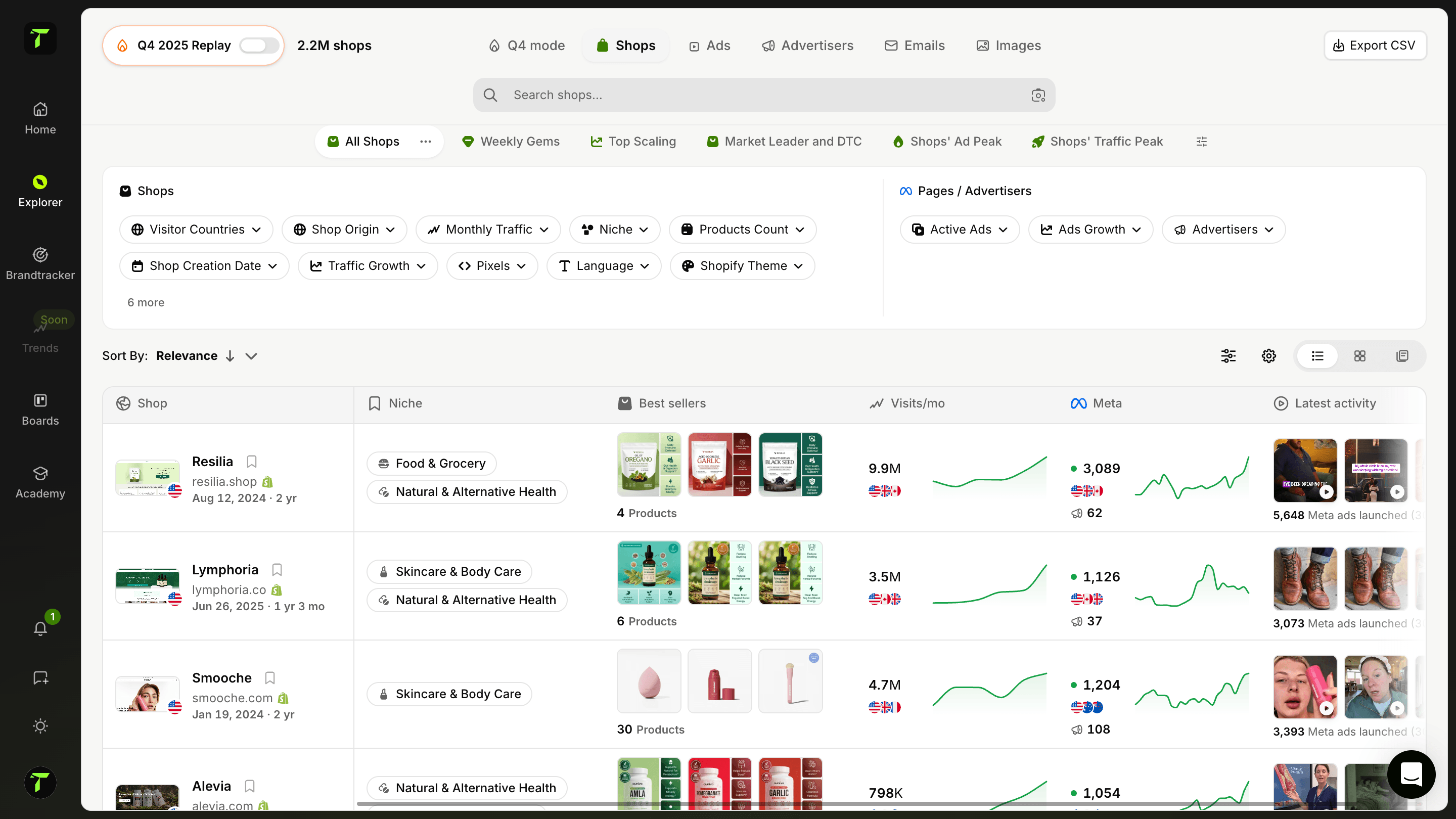
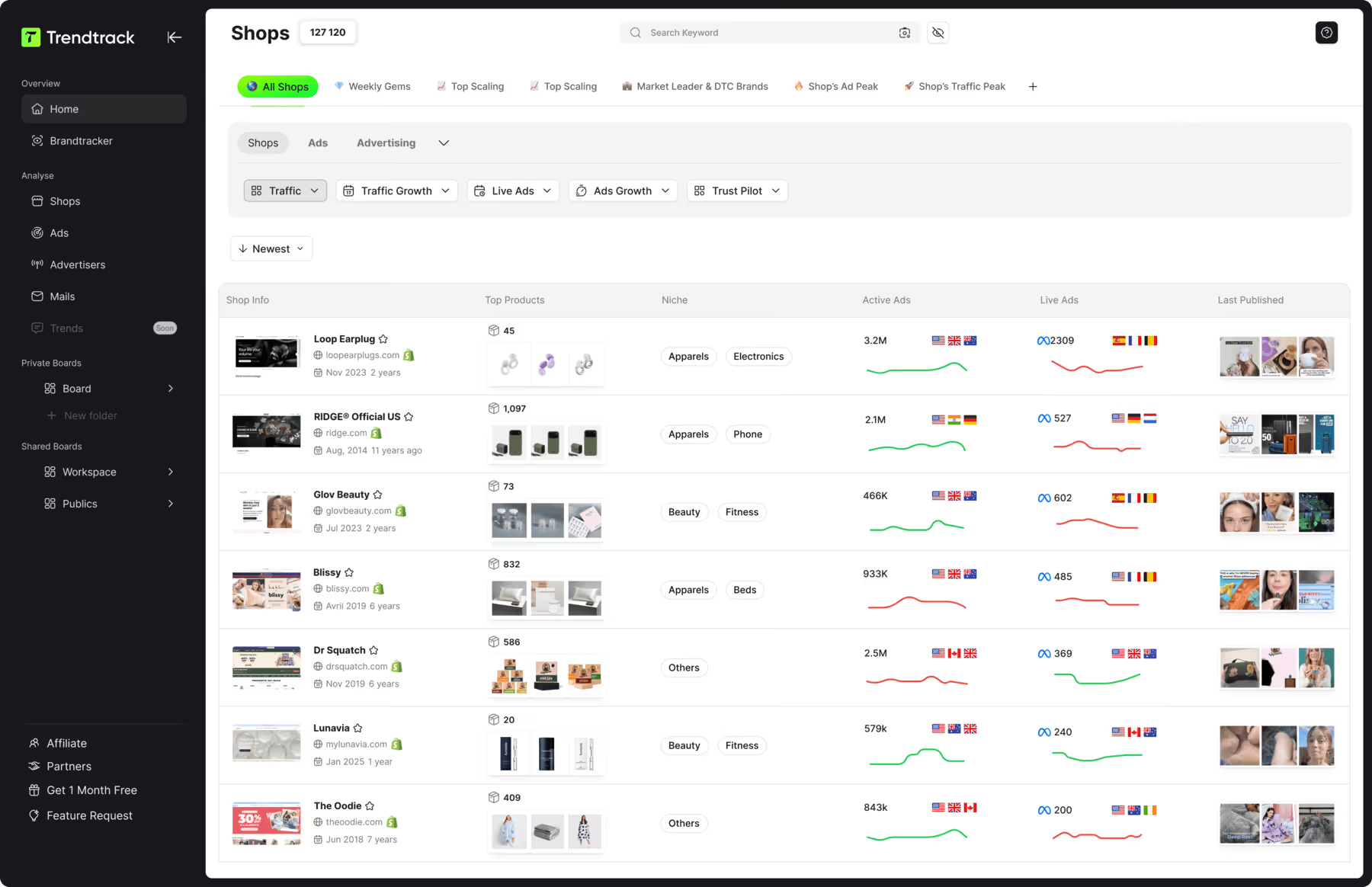
A spy tool is a competitive intelligence software that allows marketers and e-commerce operators to monitor, analyze, and reverse-engineer the strategies of their competitors including their ads, products, pricing, landing pages, and overall market positioning.
Updated on April 24, 2026
The term "spy" is straightforward: these tools give you visibility into what is working for others in your market, without having to test everything from scratch yourself. In a competitive e-commerce landscape where ad costs are rising and margins are tightening, knowing what your competitors are doing and how well it is working is a significant strategic advantage.
What Can a Spy Tool Reveal?
Depending on the tool and the platform it covers, spy tools can surface:
Ad intelligence active creatives, ad copy, formats, landing pages, and how long an ad has been running. A long-running ad is almost always a profitable one no advertiser keeps losing ads alive.
Product intelligence - trending products, best-sellers in a niche, pricing strategies, and product positioning across marketplaces and competitor stores.
Traffic intelligence - estimated traffic volumes, traffic sources, top-performing pages, and keyword strategies driving organic and paid visibility.
Store intelligence - competitor store structure, technology stack, app integrations, and conversion optimization tactics.
Social intelligence - engagement rates, content performance, influencer partnerships, and audience growth patterns across social platforms.
Types of Spy Tools
Ad spy tools focus specifically on paid advertising across Meta, TikTok, Google, and native ad networks. They index competitor ads in real time, allowing you to filter by country, platform, format, engagement, and run duration.
E-commerce product spy tools are built specifically for dropshippers and product sellers, surfacing trending products, winning niches, and competitor store performance data often integrated with AliExpress, Shopify, or Amazon data.
SEO and keyword spy tools reveal the organic search strategies of competitors which keywords they rank for, which pages drive the most traffic, their backlink profile, and content gaps you can exploit.
Social media spy tools track competitor content performance, posting frequency, engagement benchmarks, and influencer collaboration strategies across Instagram, TikTok, YouTube, and Pinterest.
Marketplace spy tools are specific to platforms like Amazon, providing data on competitor product rankings, review velocity, pricing history, and estimated sales volumes.
Most Widely Used Spy Tools in E-Commerce
Ad intelligence:
Meta Ad Library - free, direct access to all active Facebook and Instagram ads globally
Minea - one of the most popular tools for e-commerce ad spying across Meta, TikTok, and Pinterest
AdSpy - large database of Facebook and Instagram ads with advanced filtering
BigSpy - multi-platform ad intelligence covering Meta, TikTok, YouTube, and more
TikTok Creative Center - free, native TikTok tool showing top-performing ads and trends
Product and store intelligence:
Similarweb - traffic estimation, traffic sources, and audience data for any website
Koala Inspector - Shopify store spy tool revealing apps, best-sellers, and traffic estimates
Dropship Spy / Ecomhunt - trending product discovery with performance data
SEO intelligence:
SEMrush - comprehensive keyword, traffic, and competitor SEO analysis
Ahrefs - backlink analysis, keyword gap, and organic traffic intelligence
SpyFu - competitor keyword and Google Ads history
How to Use Spy Tools Effectively?
Look for patterns, not individual ads. A single ad tells you little. A competitor running the same creative across three months, in multiple countries, across multiple formats tells you that creative is generating strong ROI. Volume and duration are the real signals.
Study the full funnel, not just the ad. Click through to the landing page. Analyze the offer, the copy structure, the social proof, the checkout flow. The ad gets the click the page gets the conversion. Both matter.
Use it for inspiration, not imitation. Copying a competitor's ad verbatim is both ethically questionable and strategically weak. Use spy data to identify what angles, formats, and offers resonate in your market then build your own version that is better.
Track over time. A single snapshot is a data point. Monitoring a competitor's ad activity over weeks and months reveals their testing cadence, seasonal strategy, and scaling patterns far more valuable than any one-time audit.
Combine tools for full coverage. No single spy tool covers everything. Pair an ad spy tool with an SEO tool and a traffic estimator to build a complete picture of a competitor's strategy across paid, organic, and social channels.
Spy Tools and Ethical Boundaries
Spy tools operate on publicly available data ads served to the general public, organic search results, and marketplace listings. Using them is legal and widely accepted as standard competitive research practice.
The ethical line is drawn at imitation. Reproducing a competitor's creative, copy, or offer verbatim crosses from competitive intelligence into intellectual property infringement. Use the data to inform your strategy not to replicate someone else's.
💡 Pro tip: The most valuable signal in any spy tool is longevity. Filter for ads that have been running for 30, 60, or 90+ days. An advertiser only keeps an ad alive if it is profitable. Short-running ads are tests. Long-running ads are winners and winners are what you want to study.

.avif)
Ready to build a million-dollar brand?
.avif)