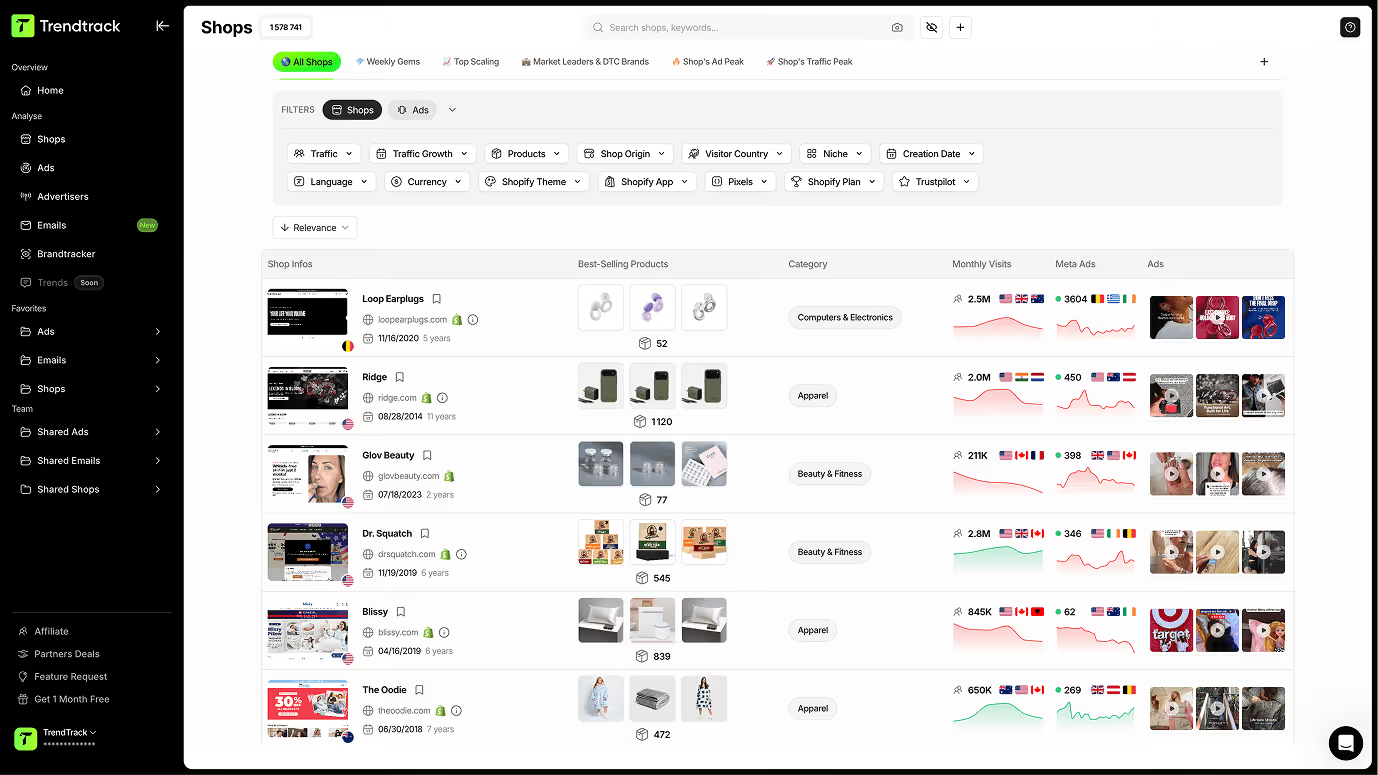
Search Bar
A search bar is the on-site tool that allows visitors to query a website's product catalog or content directly by typing keywords, product names, categories, or attributes. It is the most direct expression of purchase intent available on an e-commerce website a visitor who uses the search bar knows what they want, is actively looking for it, and has self-selected into the highest-intent segment of your entire traffic mix.
Updated on May 12, 2026
In e-commerce, the search bar is consistently one of the highest-converting touchpoints on the site. Visitors who use site search convert at two to five times the rate of those who browse without searching and they generate a disproportionate share of total revenue relative to their percentage of total traffic. Treating search as a secondary feature rather than a primary conversion lever is one of the most common and costly underinvestments in e-commerce UX.
Why Search Behavior Matters?
The act of searching is a behavioral signal of unusually high commercial intent. A visitor who navigates through categories is exploring. A visitor who types "women's waterproof trail running shoes size 8" into the search bar is shopping with specific intent and is significantly closer to a purchase decision.
This intent signal makes search visitors uniquely valuable and uniquely sensitive to the quality of search results. A browsing visitor who encounters a slightly irrelevant product page will continue navigating. A search visitor who receives zero results, irrelevant results, or poorly ranked results will leave and the departure of a high-intent visitor is one of the most expensive conversion failures in e-commerce.
Core Components of E-Commerce Search
The search input field is the visible entry point its placement, size, visibility, and design all influence how many visitors discover and use it. A search bar prominently placed in the site header, clearly labeled, and immediately visible on both desktop and mobile drives significantly higher search utilization than one buried in a secondary navigation element.
Autocomplete and search suggestions are the real-time recommendations that appear as the visitor types populating product names, categories, popular search terms, and recent searches before the query is fully submitted. Well-implemented autocomplete accelerates the path to results, surfaces relevant products the visitor might not have articulated, and reduces zero-result searches by steering queries toward terms the catalog can fulfill.
Search results ranking determines which products appear, in which order, when a query is submitted. The ranking logic whether keyword-based, popularity-weighted, margin-optimized, or AI-driven directly determines whether the most relevant and commercially valuable products are surfaced or buried. A search that returns the right products in the wrong order loses conversions as reliably as one that returns irrelevant results.
Filtering and faceted navigation allow visitors to refine search results by specific attributes size, color, price range, brand, rating, availability — without starting a new search. The quality of filtering options directly impacts how efficiently high-intent visitors can navigate from a broad result set to their specific product. Missing or poorly implemented filters on a large catalog are a silent conversion killer.
Zero-results handling determines what happens when a search query returns no matching products. A blank page or a generic "no results found" message is a dead end that drives immediate exit. Smart zero-results handling suggesting alternative search terms, surfacing related categories, recommending popular products, or capturing the failed query for catalog gap analysis can rescue a significant percentage of searches that would otherwise end in abandonment.
Search Quality and Relevance
The technical quality of search results is the foundation everything else rests on. A visually polished search experience built on poor relevance ranking will consistently underperform a simpler experience built on accurate, intent-matched results.
Keyword matching is the baseline the search engine matches words in the query to words in product titles, descriptions, and attributes. Pure keyword matching fails when customers use different terminology than the catalog searching "sneakers" when the catalog uses "trainers," or "moisturizer" when the catalog uses "hydrating cream." Synonym mapping and linguistic normalization address these gaps.
Semantic search goes beyond exact keyword matching to understand the meaning and intent behind a query. A semantic search engine understands that "comfortable shoes for standing all day" is a query for supportive footwear even if no product in the catalog contains that exact phrase and surfaces relevant results accordingly.
Behavioral ranking signals use data from past search sessions click rates, add-to-cart rates, and conversion rates from specific search results to promote products that have historically performed well for similar queries. A product that consistently converts at high rates when shown for a specific search term earns higher ranking for that term over time.
Personalized search adapts results to the individual visitor based on their browsing history, purchase history, and demonstrated preferences. A returning customer with a history of purchasing premium products sees different rankings than a first-time visitor with no behavioral data with products weighted toward their established preferences.
Search as a Data Asset
Every search query is a data point. Aggregated across thousands of sessions, search data reveals what customers want that they cannot find, what language they use to describe products, and where the catalog has gaps that are costing revenue.
High-volume zero-result searches identify products customers are actively looking for that do not exist in the catalog direct input for merchandising and product development decisions.
High-volume low-conversion searches identify queries that return results but fail to convert pointing to ranking quality issues, pricing gaps, or product page problems on the results that are being surfaced.
Search term language analysis reveals the vocabulary customers actually use versus the terminology in the catalog identifying synonym mapping opportunities that can dramatically improve result relevance for common queries.
Search-to-purchase path analysis maps which search queries consistently lead to conversion and which consistently lead to exit providing a roadmap for both search optimization and product page improvement priorities.
Mobile Search Optimization
Mobile search introduces specific UX challenges that desktop search does not:
Typing on a mobile keyboard is slower, more error-prone, and more fatiguing than desktop typing. Mobile search experiences that require precise spelling and lengthy queries lose visitors before the search is even submitted. Voice search compatibility, aggressive autocomplete, and error tolerance in query interpretation are particularly important on mobile.
The search results page on mobile must be designed for vertical scrolling, touch-friendly filter interactions, and rapid visual scanning — a desktop results page layout translated to mobile without adaptation consistently underperforms a layout designed natively for the mobile context.

.avif)
Ready to build a million-dollar brand?
.avif)