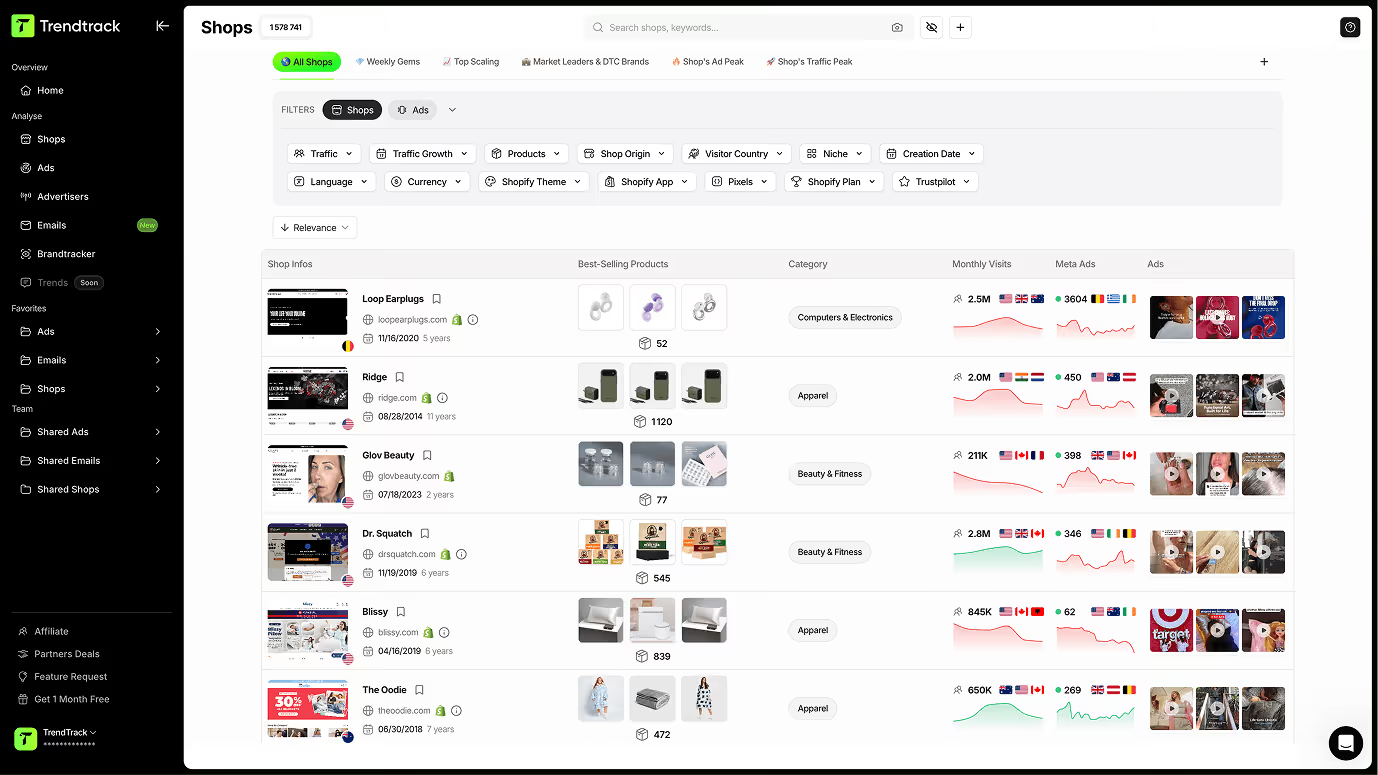
Omnichannel
Omnichannel is a customer experience strategy that integrates all sales channels, touchpoints, and communication platforms into a single, unified experience. Whether a customer interacts with your brand through your website, a physical store, a mobile app, social media, email, or a marketplace, the experience feels consistent, connected, and continuous.
Updated on May 1, 2026
The defining characteristic of omnichannel is not the number of channels a brand operates it is the degree to which those channels are integrated. A brand can be present on ten platforms and still deliver a fragmented experience. Omnichannel is about removing the seams between those platforms so the customer never has to start over.
Omnichannel vs. Multichannel
These two terms are frequently confused but represent fundamentally different approaches to channel strategy.
Multichannel means being present on multiple channels. A brand sells on its own website, on Amazon, and in physical retail. Each channel operates independently, with its own inventory, its own customer data, and its own experience. The customer exists in each channel separately.
Omnichannel means connecting those channels around the customer. The same customer profile, purchase history, and preferences are visible and actionable across every touchpoint. A customer who browses on mobile, adds to cart on desktop, and completes the purchase in-store is recognized as the same person throughout the entire journey.
The shift from multichannel to omnichannel is a shift from channel-centric thinking to customer-centric thinking.
What Omnichannel Looks Like in Practice
Omnichannel is not an abstract concept it manifests in specific, tangible experiences that customers notice and value:
A customer adds items to their online cart on their phone, then opens the website on their laptop and finds the cart exactly as they left it.
A customer buys a product online and returns it in-store without friction, because both systems share the same order data.
A customer contacts support via live chat, gets disconnected, calls back, and the agent already has full context of the previous conversation.
A customer receives a push notification about an item they viewed online when they walk past a physical store that has it in stock.
A loyalty program accumulates points and rewards regardless of whether purchases happen online, in-app, or in-store.
Each of these experiences requires deep integration between systems e-commerce platform, POS, CRM, inventory management, marketing automation, and customer support that most brands have not fully achieved.
The Technology Behind Omnichannel
Delivering a true omnichannel experience requires a connected technology stack. The core components include:
A unified customer data platform (CDP) that consolidates customer interactions, purchase history, and behavioral data from every channel into a single customer profile accessible across the organization.
Real-time inventory visibility across all fulfillment locations, whether that is a warehouse, a retail store, or a third-party logistics provider. A customer who orders online for in-store pickup needs accurate stock data to avoid a poor experience at collection.
A connected POS system that shares data with the e-commerce platform in real time, enabling in-store staff to access online order history, apply loyalty rewards, and process online returns seamlessly.
Marketing automation that recognizes customer behavior across channels and delivers relevant, timely communications based on the full customer journey rather than isolated channel interactions.
Unified customer support tooling that gives support agents complete visibility into every customer interaction regardless of channel, eliminating the frustration of customers having to repeat themselves.
Why Omnichannel Matters?
Consumer behavior does not follow channel boundaries. A customer's path to purchase might start with a TikTok ad, continue with a Google search, involve three visits to your website across different devices, and end with an in-store purchase. Treating each of those touchpoints as separate interactions produces a fragmented experience that creates friction and loses customers at every seam.
Brands that deliver a genuinely integrated omnichannel experience see measurable commercial benefits. Omnichannel customers consistently spend more, return more often, and have a higher CLV than single-channel customers. The investment in integration pays back through loyalty, not just conversion.
Omnichannel Challenges
Data silos. Most brands accumulate customer data in disconnected systems e-commerce platform, email tool, CRM, POS, support software. Integrating these into a unified view requires significant technical investment and organizational alignment.
Inventory complexity. Managing stock across multiple fulfillment locations in real time while supporting services like buy online pick up in store (BOPIS), ship from store, and cross-channel returns demands sophisticated inventory management systems that many mid-market brands have not yet implemented.
Organizational silos. Omnichannel is not just a technology problem it is an organizational one. When e-commerce, retail, marketing, and customer support operate as separate teams with separate goals and separate data, delivering a unified customer experience is structurally impossible regardless of the technology in place.
Attribution complexity. When a customer interacts with five touchpoints across three channels before purchasing, attributing that conversion accurately is genuinely difficult. Traditional last-click attribution models collapse under omnichannel complexity, requiring more sophisticated measurement approaches.
Key Omnichannel Metrics
Cross-channel customer retention rate: the percentage of customers who engage across more than one channel and continue purchasing over time
Omnichannel CLV: comparing lifetime value of single-channel versus multi-channel customers
BOPIS adoption rate: the percentage of online orders fulfilled through in-store pickup
Cross-channel return rate: measuring the friction of returns processed across channels
Channel attribution accuracy: the degree to which revenue is correctly attributed across touchpoints in a multi-touch journey

.avif)
Ready to build a million-dollar brand?
.avif)