Merchandising
The strategic practice of selecting, organizing, and presenting products to maximize discoverability, engagement, and conversion across every customer touchpoint.
Updated on May 23, 2026
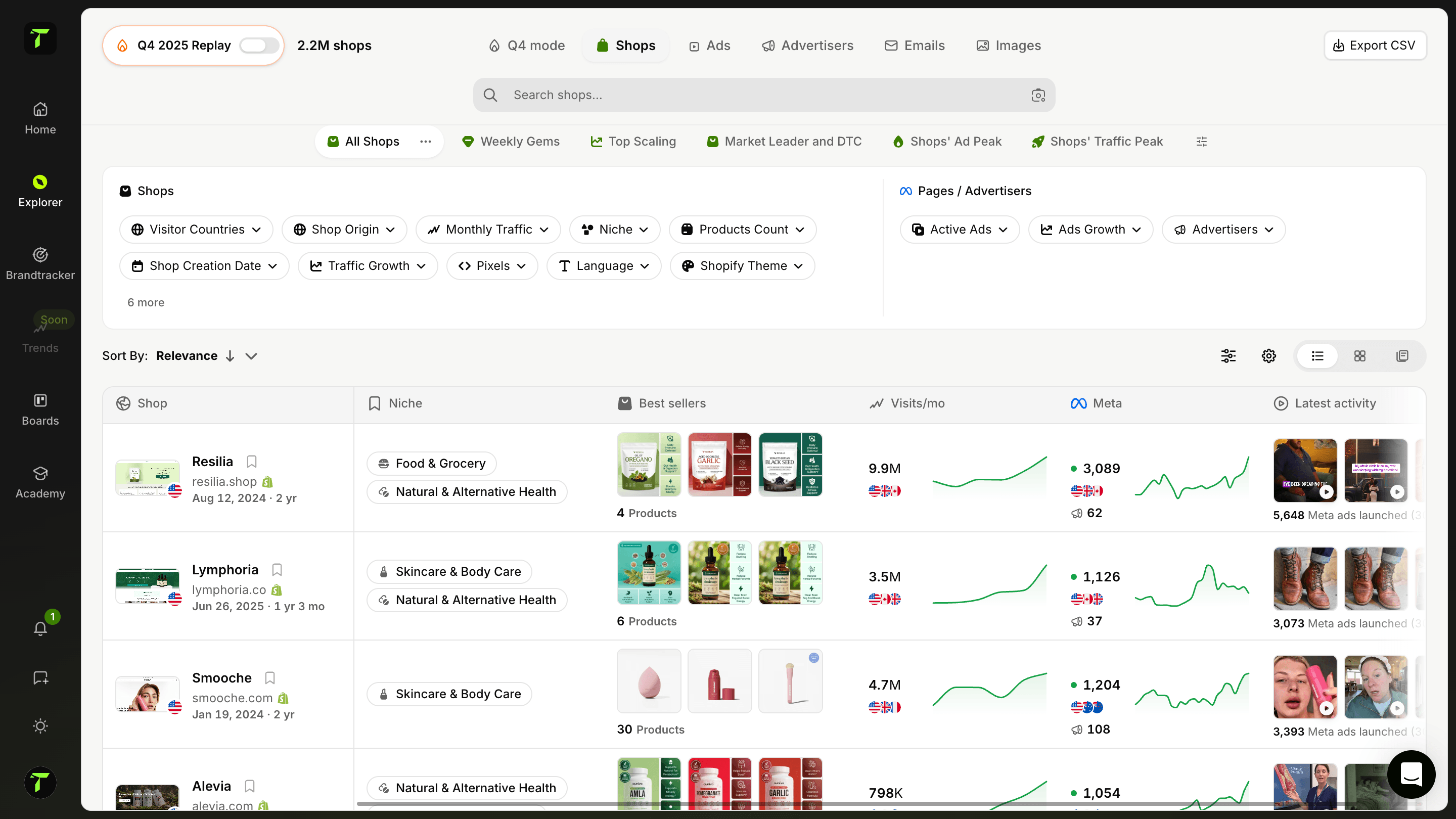
Merchandising in e-commerce is the digital equivalent of how a physical retailer arranges its store which products are placed at the entrance, which are at eye level, which are grouped together, and which are hidden in the back. The difference is that digital merchandising operates across thousands of SKUs, multiple channels, and millions of individual customer sessions simultaneously, making the decisions more complex and the data to inform them far richer.
The Core Dimensions of E-Commerce Merchandising
Product assortment is the foundation deciding which products to carry, in which categories, at which price points, and in which variants. Assortment decisions shape the commercial opportunity before any presentation decision is made. A well-curated assortment that serves the target customer's needs precisely outperforms a broad, unfocused catalog regardless of how well the latter is merchandised.
Product placement and ranking determines which products appear first in category pages, search results, and recommendation modules. Placement is one of the highest-leverage merchandising decisions in e-commerce the first position in a category page receives a disproportionate share of clicks and revenue relative to the second, and exponentially more than the tenth. Ranking logic can be driven by popularity, margin, newness, conversion rate, inventory levels, or a combination of algorithmic and manual rules.
Product grouping and categorization organizes the catalog into a taxonomy that matches how customers think about their needs rather than how the merchant thinks about their inventory. A customer looking for "gifts under $50" is navigating by use case and price, not by product type. A customer looking for "sustainable skincare" is navigating by values and category simultaneously. Merchandising that anticipates these navigation patterns and creates category structures, collections, and filters that match them reduces the friction between discovery and purchase.
Visual presentation encompasses the imagery, copy, pricing display, and layout that represents each product in the catalog. Consistent, high-quality visual presentation across the catalog signals brand credibility and makes the browsing experience cohesive. Inconsistent imagery varying backgrounds, lighting, and shot angles across products creates a fragmented experience that undermines perceived quality regardless of the actual product quality.
Promotional merchandising integrates promotional activity into the product presentation layer surfacing sale items, highlighting bestsellers, flagging new arrivals, and communicating limited-time offers through badges, banners, and featured placement. The goal is to make the promotional story visible without creating a cluttered experience that overwhelms the customer with competing signals.
Merchandising Across Key E-Commerce Touchpoints
Homepage merchandising sets the commercial agenda for the visit. The products, categories, and promotions featured on the homepage are the first commercial signal the customer receives and the decision of what to feature, for which audience, and at what moment is one of the most consequential merchandising decisions a brand makes. Homepage merchandising that reflects real-time inventory, seasonal relevance, and audience segmentation consistently outperforms static, manually updated homepages that present the same content to every visitor regardless of context.
Category page merchandising determines the order and presentation of products within a defined section of the catalog. The ranking logic applied whether products are sorted by bestseller rank, margin contribution, newness, or a manually curated sequence directly shapes which products get discovered and purchased. Category page merchandising should balance commercial objectives, such as promoting high-margin products, with customer relevance, such as surfacing the products most likely to match the intent of visitors to that category.
Search results merchandising applies ranking and promotional logic to the results returned by the site search engine. High-converting, high-margin, or strategically important products can be pinned to the top of results for specific queries ensuring that the search experience serves both the customer's intent and the merchant's commercial objectives simultaneously.
Product recommendation modules "Frequently bought together," "Customers also viewed," "Complete the look" — are among the highest-ROI real estate on any e-commerce site. Well-merchandised recommendation modules that surface genuinely relevant products based on behavioral data and product affinity consistently increase AOV and session depth. Poorly configured modules that surface irrelevant or redundant recommendations are ignored or actively annoying.
Bundle and kit merchandising groups complementary products into a single purchasable unit — a skincare starter kit, a complete home office setup, a curated gift set. Bundles serve multiple merchandising objectives simultaneously: they increase AOV, simplify the purchase decision for customers who are uncertain which individual products to select, and often improve margin by combining high-margin and lower-margin items in a single transaction.
Data-Driven Merchandising
The shift from intuition-based to data-driven merchandising is one of the most significant competitive differentiators in modern e-commerce. The data available to inform merchandising decisions is rich and actionable:
Conversion rate by product and placement reveals which products convert best in which positions and contexts and which high-traffic placements are generating impressions without generating purchases.
Revenue per category page session measures the commercial efficiency of each category, identifying which sections of the catalog are generating disproportionate value and which are underperforming relative to their traffic share.
Search-to-purchase path data shows which search queries lead to specific products and which lead to exits informing both search ranking decisions and the product content improvements needed to close the conversion gap on high-intent queries.
Inventory velocity by SKU ensures that merchandising decisions account for stock levels promoting products that have sufficient inventory to sustain increased demand while reducing the visibility of products approaching stockout or end-of-life.
Seasonal and trend data aligns product featuring with external demand signals search trend data, social media momentum, competitive activity that indicate which products are most relevant to the current moment regardless of their historical performance metrics.
Merchandising and Personalization
The most sophisticated e-commerce merchandising is not static it adapts to the individual. Personalized merchandising uses behavioral data, purchase history, and real-time session signals to present a different product ranking, different featured items, and different promotional messaging to different visitors based on what is most likely to be relevant to each individual.
A returning customer who has previously purchased running shoes sees different category page rankings, different homepage features, and different recommendation modules than a first-time visitor with no behavioral history. The personalized experience reflects what the data says about that customer's preferences not what the merchant assumes about the average visitor.
Personalization at the merchandising layer consistently improves conversion rate, AOV, and session depth across every customer segment that receives it relative to the non-personalized baseline.

.avif)
Ready to build a million-dollar brand?
.avif)