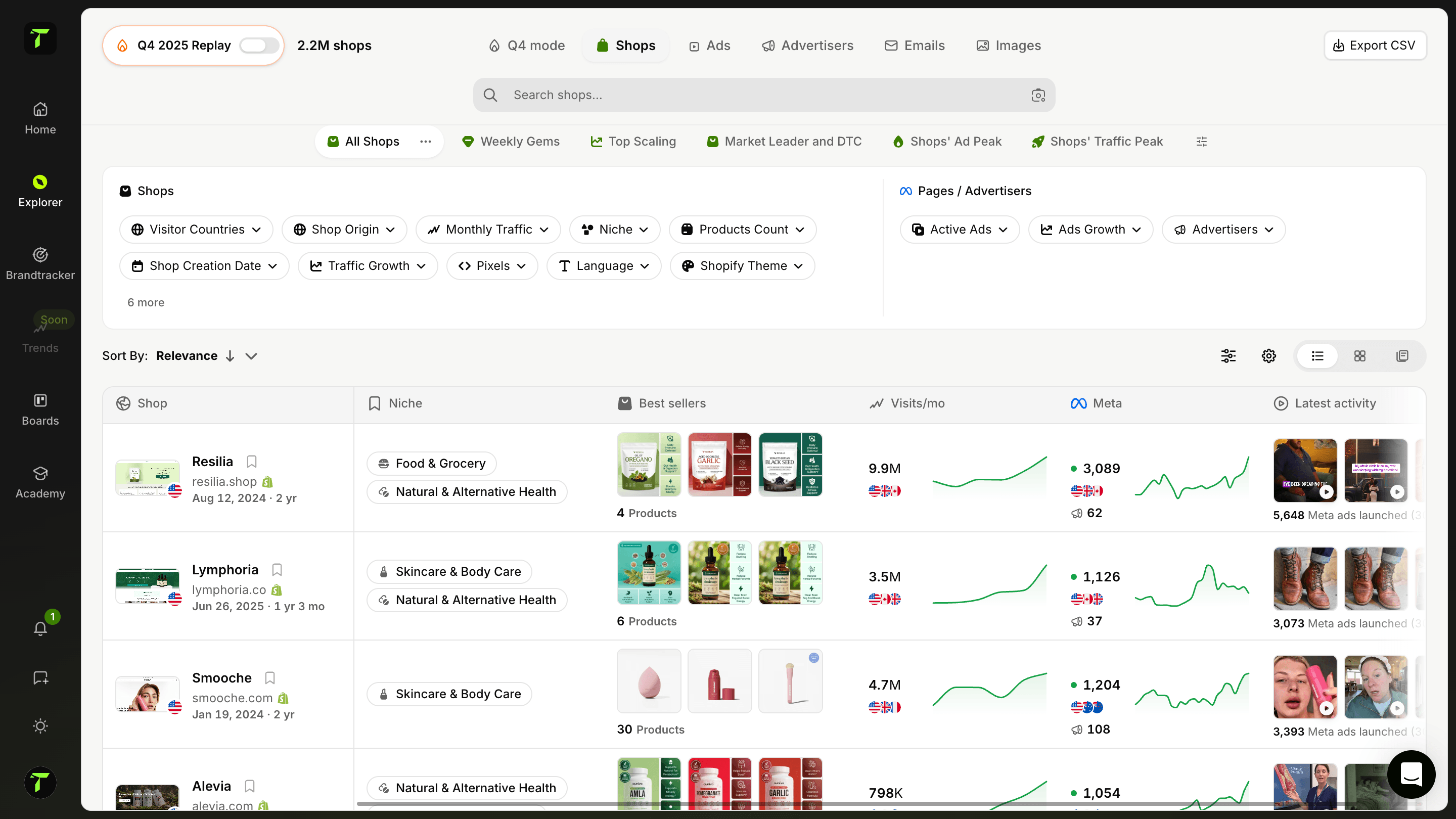
What is META ADS and How Does It Work For E-commerce: Definition, concept



In today’s digital landscape, running an eCommerce business without paid advertising is almost impossible. With rising competition and increasing customer acquisition costs, brands need powerful tools to reach the right audience at the right time. This is where Meta Ads comes into play.
Formerly known as Facebook Ads, Meta Ads has evolved into one of the most advanced advertising ecosystems in the world, allowing businesses to promote their products across platforms like Facebook, Instagram, Messenger, and Audience Network. For eCommerce brands, it represents a highly scalable acquisition channel capable of generating consistent traffic, leads, and sales.
But what exactly is Meta Ads, and how does it really work behind the scenes?
At its core, Meta Ads is a data-driven advertising platform that uses user behavior, interests, and advanced algorithms to deliver highly targeted ads. Unlike traditional marketing, where you broadcast messages to a broad audience, Meta allows you to reach specific segments of users who are most likely to convert.
Whether you're launching a new product, scaling your store, or retargeting past visitors, Meta Ads gives you the tools to build a full-funnel marketing strategy from awareness to conversion.
In this guide, we’ll break down the definition of Meta Ads, explain how it works for eCommerce, and show you why it has become a must-have lever for online growth in 2026.
How Does Meta Ads Work for E-commerce Businesses?
For eCommerce brands in 2026, advertising on Meta Ads is no longer optional it’s a core growth engine. With access to billions of users across Facebook, Instagram, Messenger, and the Audience Network, Meta provides one of the most powerful ecosystems to acquire customers, retarget visitors, and scale revenue.
But how does Meta Ads actually work for eCommerce businesses?
At its core, Meta Ads operates on a data-driven algorithm that connects your products with users most likely to engage and purchase. It leverages user behavior, interests, and interactions to deliver highly relevant ads at every stage of the customer journey.
Audience Targeting: Reaching the Right Customers
One of Meta’s biggest strengths lies in its advanced targeting capabilities. Instead of showing ads to a broad audience, Meta allows you to reach users based on:
Interests and behaviors
Demographics (age, location, gender)
Past interactions with your brand
For eCommerce, this means you can target users who are already interested in products similar to yours. Even more powerful is the ability to create custom audiences (people who visited your website or added items to their cart) and lookalike audiences (new users similar to your best customers).
This precision targeting ensures that your budget is spent on users with the highest probability of converting.
The Meta Pixel: Tracking and Optimization
To make Meta Ads truly effective, you need data and that’s where the Meta Pixel comes in.
The Meta Pixel is a tracking tool installed on your website that collects data about user actions, such as:
Page views
Add to cart events
Purchases
This data allows Meta to understand your customers and optimize your campaigns in real time. For example, if the algorithm identifies users who are more likely to purchase, it will automatically prioritize showing your ads to similar profiles.
Without proper tracking, your campaigns operate blindly. With it, you unlock machine learning optimization, which is key to improving performance and ROAS.
Campaign Structure: Full-Funnel Strategy
Meta Ads is built around a three-level structure: campaigns, ad sets, and ads.
At the campaign level, you choose your objective. For eCommerce, the most common objectives are:
Traffic (to drive visitors to your site)
Conversions (to generate sales)
Sales campaigns (optimized for purchases)
At the ad set level, you define your audience, budget, and placements. This is where targeting and strategy come into play.
Finally, at the ad level, you create your creatives images, videos, and copy that will capture attention and drive action.
This structure allows you to build a full-funnel marketing strategy, guiding users from awareness to purchase.
Creative Strategy: The Key to Performance
In 2026, creative is the most important factor in Meta Ads performance. The algorithm rewards content that captures attention and generates engagement.
For eCommerce, this means focusing on:
Short-form videos (especially for Instagram Reels and Facebook feeds)
User-generated content (UGC)
Product demonstrations and testimonials
Your ads should feel native to the platform, not like traditional advertisements. The more your content blends into the user experience, the higher your chances of success.
Strong creatives not only improve engagement but also reduce your cost per acquisition (CPA), which directly impacts profitability.
Retargeting: Converting Warm Traffic
Most users don’t buy on their first visit. This is why retargeting is a critical component of Meta Ads.
Retargeting allows you to show ads to users who have already interacted with your brand, such as:
Website visitors
Cart abandoners
Past customers
These users are much closer to making a purchase, making retargeting campaigns highly efficient and profitable.
For example, you can remind a customer about a product they viewed or offer a discount to complete their purchase. This significantly increases your conversion rate.
Budget and Bidding: Scaling Profitably
Meta Ads operates on an auction system, where advertisers compete to show their ads to users. However, the winner is not always the highest bidder it’s the ad that delivers the most value based on relevance and engagement.
This means that better ads can outperform higher budgets.
You can choose between:
Daily budgets
Lifetime budgets
Meta also offers automated bidding, where the algorithm optimizes your spend to achieve the best results. This allows you to scale your campaigns efficiently without manual adjustments.
Multi-Platform Advantage: Facebook, Instagram, and Beyond
One of Meta’s biggest advantages is its ecosystem. With a single campaign, you can reach users across:
Facebook
Instagram
Messenger
Audience Network
This multi-platform approach increases your reach and allows you to engage users across different touchpoints. For example, a customer might discover your product on Instagram, click your ad on Facebook, and complete the purchase later.
This interconnected system creates a seamless customer journey, which is essential for modern eCommerce.
What Are the Benefits of Meta Ads for E-commerce Businesses?
In 2026, eCommerce brands are constantly looking for ways to acquire customers efficiently, increase conversions, and scale profitably. Among all advertising platforms, Meta Ads stands out as one of the most powerful tools to achieve these goals.
Thanks to its ecosystem including Facebook, Instagram, Messenger, and Audience Network—Meta Ads offers a unique combination of reach, targeting precision, and conversion optimization. But what makes it truly valuable for eCommerce businesses?
Massive Reach Across Multiple Platforms
One of the biggest advantages of Meta Ads is its ability to reach billions of active users worldwide. Whether your audience spends time on Facebook scrolling through feeds or on Instagram watching Reels, Meta allows you to connect with them seamlessly.
For eCommerce brands, this means you’re not limited to a single channel. You can showcase your products across multiple platforms within the same campaign, increasing your visibility and maximizing your chances of converting users.
This multi-channel exposure is particularly powerful in 2026, where customers interact with brands across different touchpoints before making a purchase.
Advanced Targeting for High-Quality Traffic
Meta Ads is known for its precision targeting capabilities. Instead of showing your ads to a general audience, you can reach users based on their interests, behaviors, demographics, and online activity.
For example, you can target:
Users interested in specific product categories
People who have visited your website
Customers who have previously purchased from your store
Even more powerful is the ability to create lookalike audiences, which allows you to find new users who share similar characteristics with your best customers.
This level of targeting ensures that your ads are shown to people who are more likely to engage and convert, improving your return on ad spend (ROAS).
Strong Conversion Potential
Unlike many platforms focused purely on awareness, Meta Ads is built to drive real conversions. Its algorithm is designed to optimize campaigns based on your objectives, whether that’s purchases, add-to-cart events, or clicks.
By leveraging tools like the Meta Pixel, the platform tracks user behavior and continuously improves performance. Over time, your campaigns become more efficient as the algorithm learns which users are most likely to convert.
This makes Meta Ads particularly effective for eCommerce businesses that want to turn traffic into revenue, not just impressions.
Powerful Retargeting Capabilities
One of the most profitable aspects of Meta Ads is its retargeting functionality. Most customers don’t buy on their first visit, but Meta allows you to re-engage them with highly relevant ads.
You can retarget users who:
Visited your website
Viewed specific products
Added items to their cart but didn’t purchase
These campaigns are often the highest-performing because they target warm audiences who are already familiar with your brand.
By reminding users of your products or offering incentives, you significantly increase your chances of converting them into customers.
Creative Flexibility and Engagement
Meta Ads offers a wide range of ad formats, including images, videos, carousels, and dynamic product ads. This allows you to create visually engaging content that captures attention and drives action.
In 2026, short-form video content especially on Instagram Reels has become a key driver of performance. Brands that invest in authentic, engaging creatives often see higher engagement rates and lower acquisition costs.
This creative flexibility allows eCommerce businesses to test different formats, messages, and angles to find what resonates best with their audience.
Scalable Growth and Budget Control
Another major benefit of Meta Ads is its scalability. Whether you’re starting with a small budget or managing large campaigns, the platform allows you to scale your advertising efforts efficiently.
You can:
Start with a limited budget and test your campaigns
Identify what works
Gradually increase your spend to scale profitable campaigns
Meta’s automated bidding and optimization tools ensure that your budget is used effectively, helping you maximize results without constant manual adjustments.
Data-Driven Optimization
Meta Ads provides detailed analytics and insights, allowing you to track key metrics such as:
Click-through rates (CTR)
Conversion rates
Cost per acquisition (CPA)
Return on ad spend (ROAS)
This data enables you to make informed decisions and continuously improve your campaigns. By analyzing performance, you can refine your targeting, optimize your creatives, and increase your profitability over time.
Full-Funnel Marketing Capabilities
One of the most powerful aspects of Meta Ads is its ability to support a full-funnel strategy.
You can use it to:
Build brand awareness
Drive traffic to your website
Convert visitors into customers
Retain and re-engage existing buyers
This end-to-end approach allows you to manage your entire customer journey within a single platform, making your marketing more cohesive and effective.
What Is a Good ROAS for Meta Ads in E-commerce?
When running campaigns on Meta Ads, one of the most important questions every eCommerce business asks is: what is a good ROAS? While many marketers mention benchmarks like 3:1 or 4:1, the truth is that a “good” ROAS depends entirely on your profit margins, costs, and business model.
To understand this properly, you first need to calculate your break-even ROAS, which is the minimum return required to avoid losing money.
How to Calculate Your Break-Even ROAS
The formula is simple:
Break-even ROAS = 1 ÷ Profit Margin
Let’s look at a few examples:
If your profit margin is 20%, your break-even ROAS is 5:1
If your margin is 30%, your break-even ROAS is 3.3:1
If your margin is 50%, your break-even ROAS is 2:1
This means that if your ROAS is below your break-even point, you are losing money. If it’s above, you are profitable.
Example Calculation in a Real Scenario
Let’s break it down with a concrete example:
Product selling price: $50
Cost of goods (COGS): $20
Profit per product: $30 → margin = 60%
Break-even ROAS = 1 ÷ 0.6 = 1.67
Now imagine you run Meta Ads campaigns:
Ad spend: $1,000
Revenue generated: $3,000
ROAS = 3:1
Since your break-even ROAS is 1.67, you are well above it, meaning your campaign is highly profitable.
Average ROAS Benchmarks for E-commerce in 2026
While calculations are essential, benchmarks can give you a general idea of where you stand. Here’s a breakdown of typical ROAS ranges for eCommerce businesses using Meta Ads:
| Business Type | Average ROAS | Good ROAS Target | Key Insight |
|---|---|---|---|
| General eCommerce | 2:1 – 4:1 | 3:1 – 5:1 | Depends on margins and competition |
| Fashion & Apparel | 1.5:1 – 3:1 | 3:1+ | Lower margins, high return rates |
| Beauty & Skincare | 2:1 – 5:1 | 4:1+ | Strong repeat purchases |
| High-Ticket Products | 3:1 – 6:1 | 5:1+ | Higher margins, fewer conversions |
| Subscription Brands | 1.5:1 – 3:1 | 3:1+ | Profit comes from lifetime value |
| Dropshipping | 1.5:1 – 3:1 | 3:1+ | Requires strong creatives |
Why ROAS Varies on Meta Ads
Meta Ads works differently from platforms like search advertising. It is interruption-based, meaning users are not actively searching for your product. This often results in lower initial ROAS compared to high-intent channels like Google Ads.
However, Meta excels at customer acquisition and scaling, which is why many brands accept a lower ROAS at the beginning.
Another key factor is customer lifetime value (LTV). If your customers buy multiple times, you can afford a lower initial ROAS because you will generate profit over time.
For example:
First purchase ROAS: 2:1 (break-even)
Repeat purchases increase total revenue → actual ROAS becomes 4:1+ over time
The Real Definition of a “Good” ROAS
A good ROAS is not a fixed number it’s a number that aligns with your profitability and growth strategy.
If your goal is profitability → aim for a ROAS well above break-even
If your goal is scaling → accept a lower ROAS to acquire more customers
If your goal is long-term growth → focus on LTV, not just immediate returns
In 2026, the most successful eCommerce brands don’t chase the highest ROAS—they focus on profitable scaling.
Key Takeaway
A “good” ROAS on Meta Ads depends on your margins, your industry, and your strategy. While 3:1 to 4:1 is a strong benchmark, the most important metric is your break-even ROAS.
If your campaigns consistently perform above that threshold, you’re not just running ads you’re building a scalable and profitable acquisition system.
How to Improve Your ROAS on Meta Ads in 2026?
Improving your ROAS on Meta Ads in 2026 is not about cutting your budget it’s about optimizing every lever of your advertising system. From creative strategy to audience targeting and funnel optimization, every detail matters if you want to scale profitably.
The brands that succeed today are those that combine data, testing, and creative excellence to continuously improve performance. Here is a clear, actionable framework to help you increase your ROAS.
Focus on High-Performing Creatives First:
Creative is the #1 driver of performance on Meta Ads. If your ads don’t capture attention within the first few seconds, your campaign will struggle no matter how good your targeting is. In 2026, short-form videos, user-generated content (UGC), and authentic storytelling outperform traditional ads. You need to test multiple creatives every week, analyze performance, and quickly scale the winners. The goal is to find content that resonates with your audience and drives engagement, which directly lowers your cost per acquisition.Optimize Your Audience Targeting Strategy:
While Meta’s algorithm has become more powerful, targeting still plays a key role. Start with broad audiences to allow the algorithm to learn, then refine based on performance data. Use custom audiences to retarget website visitors and lookalike audiences to reach new users similar to your best customers. This combination allows you to balance prospecting and retargeting, which is essential for maintaining a strong ROAS.Leverage Retargeting to Maximize Conversions:
Most users won’t convert on their first interaction. Retargeting allows you to re-engage these potential customers with highly relevant ads. You can target users who viewed products, added items to their cart, or engaged with your content. By showing them tailored offers, testimonials, or incentives, you significantly increase your chances of conversion. Retargeting campaigns often deliver the highest ROAS because they focus on warm audiences.Improve Your Landing Page and Funnel:
Driving traffic is only half the battle. If your landing page doesn’t convert, your ROAS will suffer. Your page must be fast, mobile-friendly, and aligned with your ad message. The transition from ad to website should feel seamless. Highlight key benefits, include social proof, and simplify the checkout process. Even a small improvement in conversion rate can dramatically increase your ROAS without increasing your ad spend.Use Data Tracking and the Meta Pixel Effectively:
Accurate tracking is essential for optimization. The Meta Pixel allows you to track user behavior and feed data back into the algorithm. This helps Meta identify high-value users and optimize your campaigns accordingly. Make sure you track key events such as purchases, add-to-cart actions, and page views. Without proper tracking, you’re essentially making decisions blindly.Test and Scale Strategically:
Testing is the foundation of performance marketing. You should continuously test different creatives, audiences, and offers to identify what works best. Once you find a winning combination, scale it gradually by increasing your budget or expanding your audience. Avoid scaling too quickly, as this can disrupt performance. A structured testing and scaling process allows you to grow while maintaining efficiency.Align Your Strategy with Customer Lifetime Value (LTV):
One of the biggest mistakes advertisers make is focusing only on short-term ROAS. In reality, your profitability often comes from repeat purchases. If your customers have a high lifetime value, you can afford to accept a lower initial ROAS to acquire them. This approach allows you to scale more aggressively while remaining profitable in the long run.
In conclusion, improving your ROAS on Meta Ads in 2026 requires a combination of creative excellence, smart targeting, strong funnel optimization, and continuous testing. By applying these strategies, you can turn your campaigns into a predictable and scalable growth engine, where every dollar spent generates maximum return.
FAQ on Meta Ads in E-commerce
What is Meta Ads in eCommerce?
Meta Ads is a digital advertising platform that allows eCommerce businesses to promote their products across Facebook, Instagram, Messenger, and the Audience Network. It helps brands reach targeted audiences, drive traffic, and generate sales through data-driven campaigns.
How does Meta Ads work for online stores?
Meta Ads uses algorithms and user data to show your products to people most likely to convert. By leveraging tools like the Meta Pixel, it tracks user behavior and optimizes campaigns in real time to maximize conversions and improve performance.
What is a good ROAS for Meta Ads?
A good ROAS typically ranges between 3:1 and 4:1 for most eCommerce businesses. However, the ideal ROAS depends on your profit margins and business model. The most important metric is your break-even ROAS, which determines whether your campaigns are profitable.
Is Meta Ads better than Google Ads for eCommerce?
Meta Ads and Google Ads serve different purposes. Meta Ads is ideal for customer acquisition and discovery, while Google Ads is better for capturing high-intent users. Many successful eCommerce brands use both platforms together for a full-funnel strategy.
How much should I spend on Meta Ads?
Your budget depends on your goals and stage of growth. Beginners can start with a small daily budget (e.g., $10–$50/day) to test campaigns, while scaling brands invest significantly more. The key is to test, analyze, and scale profitable campaigns.
Why are my Meta Ads not profitable?
Low profitability can result from poor targeting, weak creatives, or low-converting landing pages. It can also be due to incorrect tracking or insufficient data. Improving these elements is essential to increase your ROAS.
What types of ads work best on Meta in 2026?
In 2026, short-form video content, user-generated content (UGC), and authentic storytelling perform best. Ads that feel native to platforms like Instagram Reels tend to generate higher engagement and better conversion rates.
Do I need the Meta Pixel for my store?
Yes, the Meta Pixel is essential. It tracks user actions on your website and helps Meta optimize your campaigns. Without it, you lose valuable data, making it harder to improve performance and scale effectively.
Useful Sources:

.avif)
Ready to build a million-dollar brand?
.avif)