E-commerce: How Can You Monitor Your Competitors'Ads?



Spying on your competitors' ads is one of the most effective and most legal competitive monitoring practices available to e-commerce operators in 2026. Because your competitors invest significant advertising budgets every day to test hooks, marketing angles, and creatives with your shared audiences. Every ad they run is the result of tests, optimizations, and performance data that you can freely analyze to draw lessons directly applicable to your own strategy.
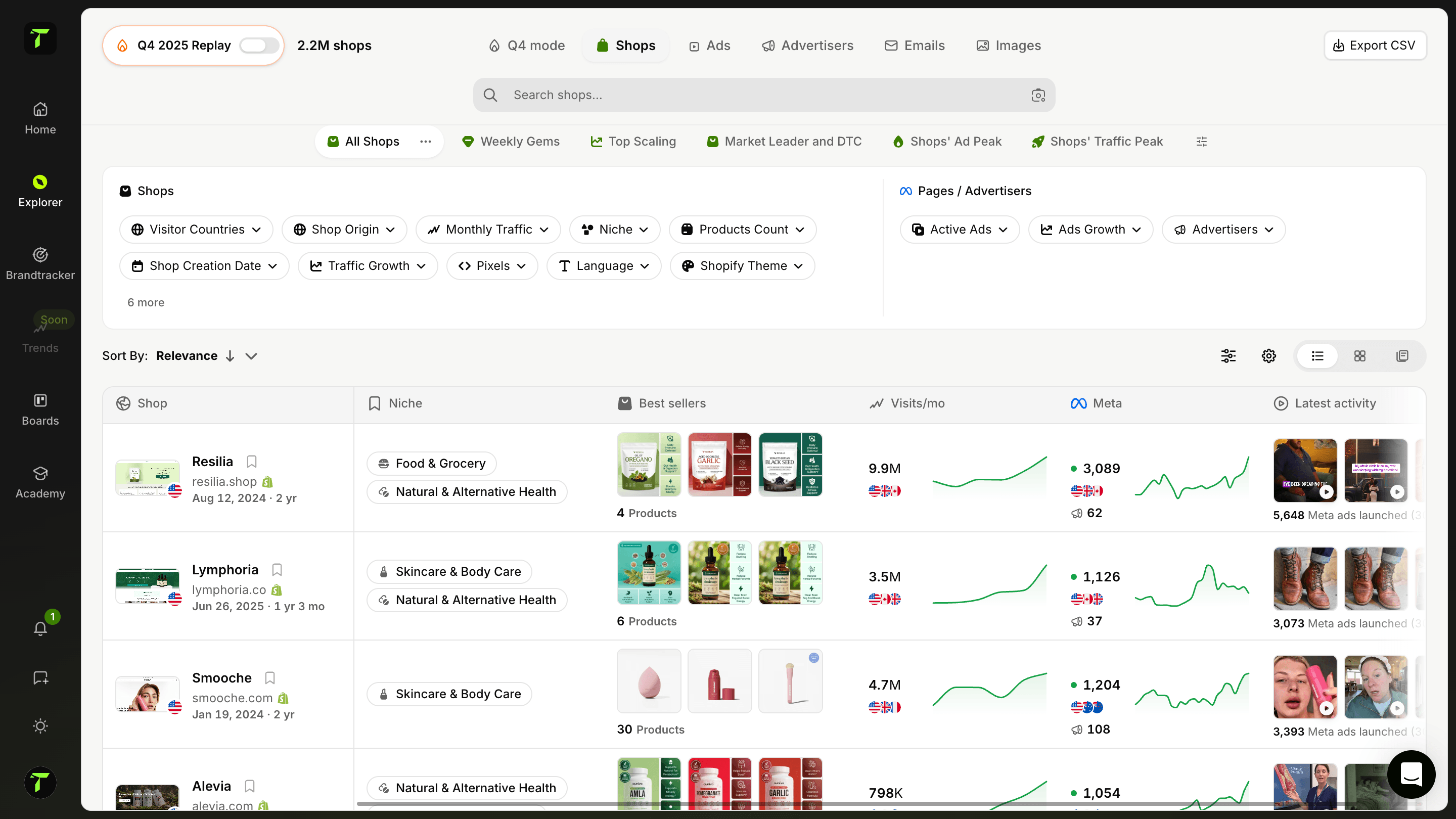
What was once a practice reserved for large marketing agencies with dedicated competitive intelligence teams is today accessible to every e-commerce operator thanks to the specialized tools that have democratized advertising intelligence. The native ad libraries of Meta and TikTok give access to all active ads on these platforms. And advanced monitoring tools like Trendtrack enrich this raw data with real-time performance metrics that transform passive ad browsing into genuine competitive intelligence analysis.
The goal of this practice is not to slavishly copy your competitors' ads. It is to understand what works in your market in order to build your own creatives based on real data rather than gut instinct. Which ad hooks best capture your target audience's attention? Which marketing angles generate the most engagement? Which video or image formats perform best in your niche? These questions find their answers in the systematic analysis of your best-performing competitors' ads.
In this article, we explain precisely how to spy on your competitors' ads legally and ethically, which tools to use, and how to transform these insights into a concrete competitive advantage for your e-commerce store.
Why Analyzing Competitors' Ads Is Essential in 2026?
Competitive ad analysis is no longer an optional practice reserved for the most advanced e-commerce operators. It is a fundamental skill whose absence exposes your store to considerable competitive disadvantages in an advertising environment that is increasingly saturated and costly.
Rising Advertising Costs That Demand Better Creative Efficiency
The first argument that makes competitive analysis indispensable in 2026 is the continuous rise in advertising costs on Meta and TikTok. CPMs and CPCs have increased significantly over recent years under the effect of growing competition between advertisers for the same audiences. In this context, the creative quality of your ads has become the single most determining lever of your advertising performance because Meta's algorithm massively favors creatives that generate the most engagement and conversions. Analyzing your best-performing competitors' ads allows you to identify the creative patterns that work best on your target audience and produce your own creatives with a significantly higher probability of success than creating from scratch with no market reference.
Instant Demand Validation for New Products
The second argument is the ability to use competitor ads as a demand validation tool. A product on which multiple competitors have been maintaining active, intensive advertising campaigns for several weeks is a product whose demand is proven by real money. This validation through advertising data is far more reliable than traditional indicators like Google Trends or search volumes because it rests on the concrete financial investments of merchants who have tested and confirmed the profitability of their campaigns. By identifying these products through competitor ad analysis, you considerably reduce the risk associated with launching new products in your catalog.
Understanding the Marketing Angles That Resonate With Your Audience
The third argument is understanding the most effective marketing angles in your niche. Every ad is a hypothesis about what motivates your target audience to buy fear of missing out, desire for social status, the search for convenience, or aspiration for transformation. By analyzing your best-performing competitors' ads, you identify the psychological angles that resonate most with your shared audience and orient your own creatives toward the most effective emotional levers in your market.
Anticipating Trends Before Saturation
The fourth argument is the ability to anticipate emerging trends before they reach saturation. New product trends and new ad formats appear on Meta and TikTok before spreading to other channels. E-commerce operators who continuously monitor their competitors' ads identify these trends in their first days of emergence and can react quickly to position themselves before competition intensifies and makes acquisition more expensive.
A Continuous Benchmark That Guides All Your Marketing Decisions
The fifth argument is the value of the continuous benchmark that systematic competitor ad analysis allows you to maintain. Without market reference, your creative decisions and marketing angle choices rest on personal intuitions that may be very far from what actually works on your audience. With systematic competitive ad monitoring, every creative decision is informed by real data on the most effective practices in your sector. This data-driven orientation is what distinguishes the most successful e-commerce operators from those who test without method hoping to find what works through costly trial and error.
Which Tool Should You Use to Spy on Your Competitors' Ads?
While the Meta ad library is an accessible and free starting point for beginning to analyze your competitors' ads, its limitations are quickly reached for professional and systematic monitoring. The absence of precise performance data, the considerable time required to manually explore thousands of ads, and the inability to automate the monitoring of your priority competitors are all constraints that make the native library insufficient for e-commerce operators looking to maintain quality competitive intelligence on a daily basis.
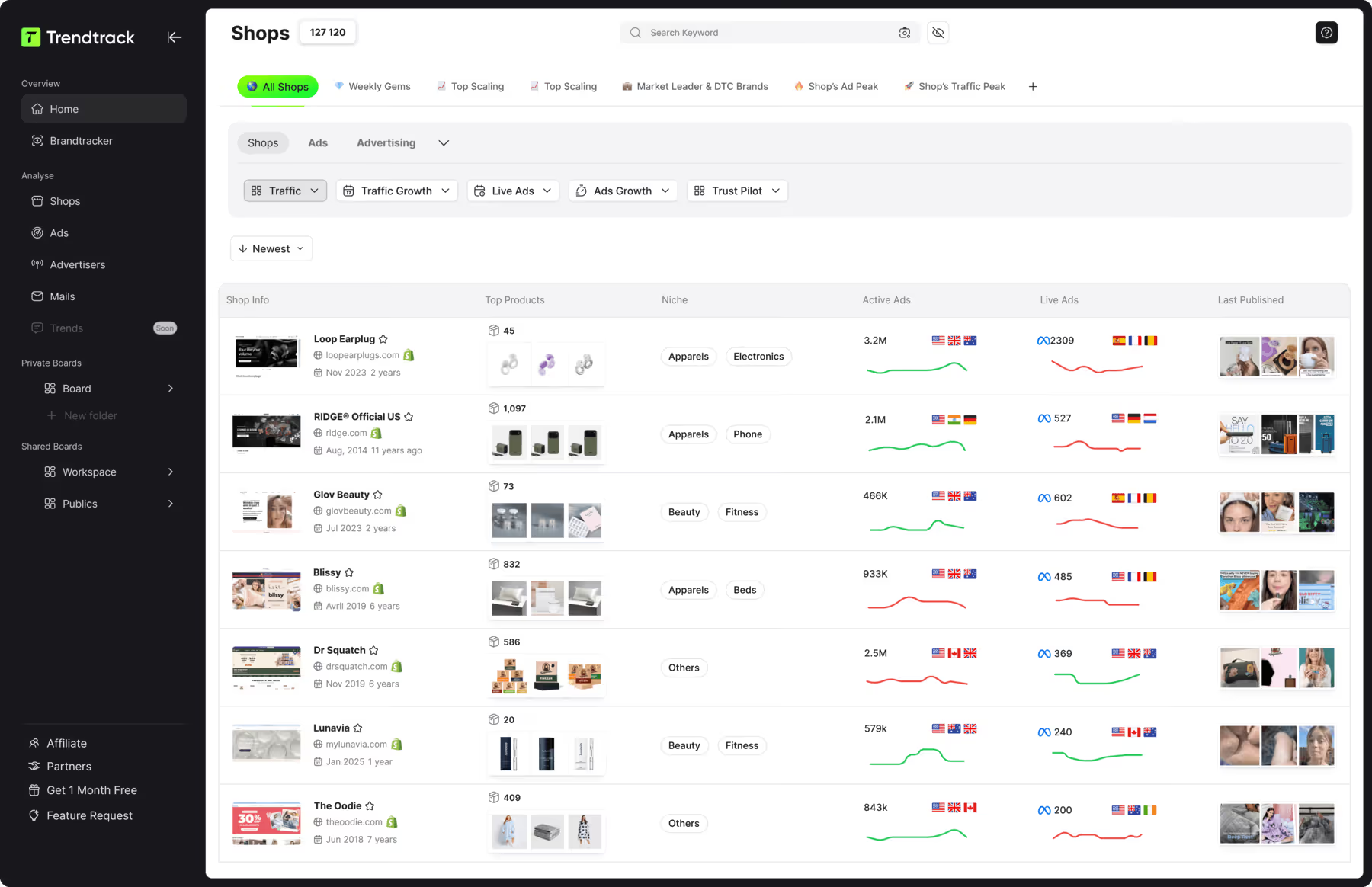
The tool we recommend without hesitation for spying on your competitors' ads in a professional and effective way is Trendtrack. Our platform was specifically designed to solve the limitations of manual ad monitoring and transform competitive intelligence from a time-consuming and incomplete activity into an automated, exhaustive process that produces actionable insights in seconds.
The first feature that sets Trendtrack apart from every other available tool is our native MCP connection with Claude and ChatGPT. This unique connection allows you to directly query our real-time advertising database from a simple natural language conversation. Ask Claude to analyze all active ads from your three main competitors over the past thirty days, identify their most frequently used hooks, and generate a comparative report of their creative strategies. Claude queries our database and returns a structured, actionable analysis in seconds. This level of automation and analytical intelligence is simply nonexistent in any other ad intelligence tool available on the market.
The second feature is our browser extension that automatically enriches every ad you view on Meta with its real-time performance metrics. Impression volume, active broadcast duration, and growth trend display instantly on every ad without you having to leave the page. This passive monitoring transforms every browsing session into a competitive intelligence opportunity with zero additional effort.
The third feature is our Brand Tracker that continuously monitors the advertising activity of your designated competitors and automatically alerts you as soon as they launch new ads, test new angles, or modify their existing creatives. This continuous surveillance allows you to detect your competitors' strategic moves in real time without consuming any of your monitoring time.
To start spying on your competitors' ads with Trendtrack, visit app.trendtrack.io/en/sign-up and connect our platform to Claude via docs.trendtrack.io/connect/claude.
How to Use Trendtrack to Spy on Your Competitors' Ads Step by Step?
Trendtrack offers a structured, progressive workflow that allows you to analyze your competitors' ads with unmatched precision and speed. Here is how to use our platform step by step to transform your competitive intelligence into an actionable competitive advantage.
Step 1: Identify and Monitor Your Priority Competitors
The first step is to identify the most active competitor stores in your niche from our Trendtrack dashboard. Use our Advertisers module to search for your competitors by store name, domain, or niche keyword. Our database instantly returns their complete advertising profile including their estimated activity level, the volume of active ads, and their presence across the different monitored platforms. Once your priority competitors are identified, add them to your Brand Tracker to activate continuous monitoring of their advertising activity. You will now receive automatic alerts as soon as they launch new ads or modify their existing creatives without having to perform repetitive manual searches.
Step 2: Analyze Their Best-Performing Ads
The second step is to in-depth analyze the best-performing ads from each monitored competitor via our Meta Ads Library module. For each competitor store, access the dedicated tab that presents all of their active ads ranked by performance level. Identify the ads that accumulate the most impressions and have been running the longest because these two combined signals indicate the creatives the competitor is investing in most heavily because they are generating the best results. Analyze their video or image formats, their text hooks, their value propositions, and their calls to action to identify recurring patterns in the best-performing ads.
Step 3: Query Claude for In-Depth Analysis
The third step is the most powerful and most distinctive feature of Trendtrack. Once your Brand Tracker is configured, connect Trendtrack to Claude via our MCP server available at docs.trendtrack.io/connect/claude and query our database directly from a natural language conversation. Ask Claude to analyze the past three months of ads from your priority competitors, identify their most frequently used ad hooks, compare their respective marketing angles, and generate a synthetic report of best practices observed in your niche. This analysis that would take you several hours manually is produced by Claude in seconds with a comprehensiveness and precision impossible to achieve manually.
Step 4: Analyze Ad Copy and Video Transcripts
The fourth step is to use our Copy and Transcript feature to directly access the text of your competitors' best-performing video ads. This feature automatically transcribes the audio content of video ads and extracts text from ad visuals giving you access to the exact content of every creative without having to watch each video individually. Analyze the narrative structures used, the phrasing of opening hooks, the sales arguments developed, and the final calls to action to build a creative reference library directly inspired by the best-performing ads in your market.
Step 5: Generate Data-Driven Creative Briefs
The fifth and final step is to transform all collected insights into actionable creative briefs for your next campaign. Use Claude connected to Trendtrack to automatically generate a complete creative brief based on the patterns identified in the best ads in your niche recommended format, narrative structure, opening hook, value proposition, and call to action. This brief is directly transmittable to your creative team or video editor to produce ads whose effectiveness is grounded in real data rather than generic intuition.
FAQ: Competitive Ad Intelligence in E-Commerce
Is it legal to spy on your competitors' ads?
Yes, perfectly legal. Ads running on Meta, TikTok, and other social platforms are by definition public content visible to all users of those platforms. Analyzing these ads as part of competitive monitoring is a perfectly legal and ethical practice that falls within the tradition of competitive intelligence practiced for decades across every industry. Meta has in fact made advertising transparency mandatory through its ad library precisely to allow users and advertisers to freely consult active ads on its platforms.
What is the difference between spying on competitors' ads and copying them?
The distinction is fundamental. Analyzing your competitors' ads to understand what works in your market, identify effective hooks, and recognize high-performing marketing angles is a legitimate and recommended strategic monitoring practice. Copying word-for-word or image-for-image your competitors' creatives is, however, a practice that violates advertising platform rules and may constitute copyright infringement depending on the elements copied. The goal of competitive ad monitoring is to draw inspiration from the best market practices to create your own original, more effective ads not to reproduce what your competitors are doing without adaptation or added value.
How long does it take to effectively spy on competitors' ads with Trendtrack?
With Trendtrack and its MCP connection with Claude, a complete competitive monitoring session that analyzes the ads of your three to five priority competitors, identifies their best creatives, and generates a synthetic report of actionable insights takes between fifteen and thirty minutes. The same work performed manually through the Meta ad library without a specialized tool would require two to four hours for a result that is structurally less comprehensive and less precise. The productivity gain generated by Trendtrack on competitive ad monitoring represents several hours per week for e-commerce operators who conduct this monitoring on a regular basis.
How do you identify which ads are actually working for competitors?
The two most reliable signals for identifying ads that are genuinely performing for your competitors are active broadcast duration and estimated impression volume. An ad that has been running for several weeks without being deactivated is one on which the competitor continues to invest because it is generating positive results. A competitor does not maintain an active campaign with a negative ROAS. Trendtrack displays these two metrics directly on each indexed ad through our browser extension and dashboard allowing you to instantly identify the best-performing creatives without having to make any guesses.
Can you spy on competitors' TikTok ads with Trendtrack?
Yes. Our Trendtrack platform indexes the best-performing ads on Meta and TikTok Ads simultaneously allowing you to monitor your competitors' advertising activity on both major e-commerce platforms from a single tool. This multi-platform coverage is particularly valuable for e-commerce operators who want to identify trends emerging on TikTok before they spread to Meta, and for those looking to validate a trend by verifying its simultaneous presence on both platforms.
How often should you spy on competitors' ads?
Daily monitoring is ideal for staying competitive in dynamic e-commerce markets in 2026. Our automated daily radar connected to Claude via our MCP monitors your competitors' advertising activity 24 hours a day and delivers every morning a summary of new movements detected in your tracked niches without consuming any of your monitoring time. For e-commerce operators who don't want to commit to daily monitoring, a weekly thirty-minute session with Trendtrack and Claude is sufficient to maintain an up-to-date view of your main competitors' advertising practices.

.avif)
Ready to build a million-dollar brand?
.avif)