3PL : What is Third Party Logistics in e-commerce?

As an e-commerce business grows, logistics quickly becomes one of the biggest operational challenges. Managing inventory, preparing orders, handling shipping, and dealing with returns can consume a significant amount of time and resources. What starts as a manageable process for a small online store can quickly become complex once order volume begins to increase.
This is where Third Party Logistics (3PL) comes into play.
A 3PL provider is a specialized company that manages logistics operations on behalf of e-commerce brands. Instead of storing products, packing orders, and shipping parcels themselves, businesses can outsource these tasks to a professional logistics partner.
By relying on a 3PL, online stores can focus on what truly drives growth: marketing, product development, and customer experience. Meanwhile, the logistics partner handles warehousing, order fulfillment, shipping coordination, and sometimes even returns management.
For many fast-growing e-commerce companies, 3PL solutions become a key component of their scalability strategy. They allow businesses to process larger order volumes, expand into new markets, and improve delivery speed without building their own logistics infrastructure.
In this guide, we’ll explain what Third Party Logistics (3PL) is, how it works in e-commerce, and why many online brands rely on it to scale their operations efficiently.
Because in modern e-commerce, success doesn’t only depend on selling products it also depends on delivering them quickly, reliably, and efficiently.
How Does a 3PL Provider Work in E-Commerce?
In e-commerce, logistics can quickly become complex as order volume increases. Managing storage, preparing orders, coordinating shipping, and handling returns requires time, infrastructure, and operational expertise. This is why many online brands rely on Third Party Logistics (3PL) providers to manage these tasks efficiently.
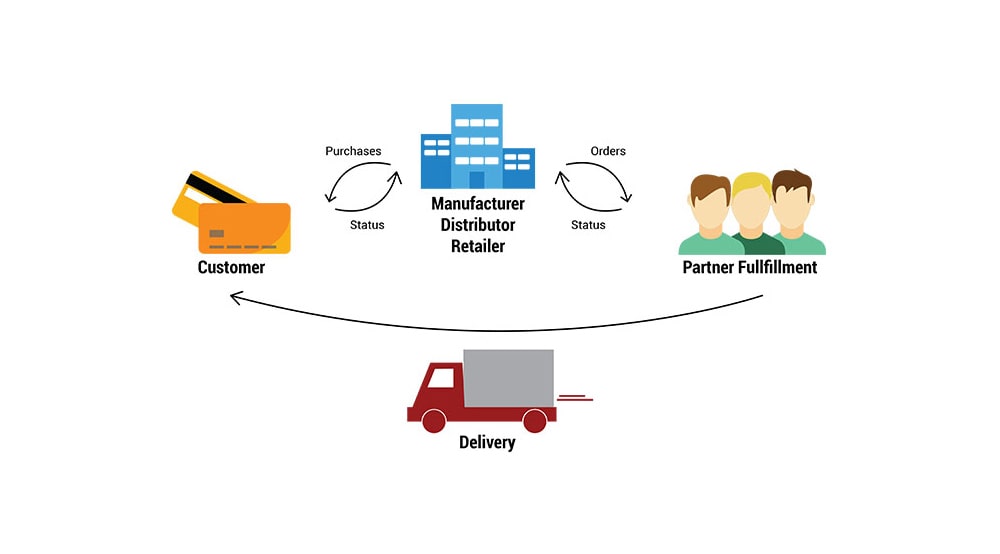
A 3PL provider essentially acts as an external logistics partner that handles the operational side of order fulfillment. Instead of managing warehouses and shipments internally, e-commerce businesses send their products to a logistics company that takes care of storage, order processing, and delivery.
The entire process is designed to be seamless for both the store owner and the customer.
Inventory Storage in Fulfillment Warehouses
The first step in the 3PL process is inventory storage. After manufacturing or sourcing products, the e-commerce brand sends its inventory directly to the warehouse operated by the 3PL provider.
These fulfillment centers are designed to store large quantities of products in an organized and optimized way. Each product is registered within the logistics system, allowing the 3PL provider to track inventory levels in real time.
Modern 3PL systems are usually integrated with popular e-commerce platforms such as Shopify, WooCommerce, or Magento. This integration ensures that the inventory data between the online store and the warehouse remains synchronized.
As a result, when stock levels change due to orders or restocking, the information is automatically updated in the store’s system.
Order Processing and Fulfillment
Once a customer places an order on an online store, the fulfillment process begins automatically.
Through the integration between the e-commerce platform and the 3PL system, the order details are instantly transmitted to the logistics provider. The warehouse team then prepares the order using a process commonly referred to as pick and pack.
First, warehouse staff locate the product within the storage facility. They pick the correct item, verify the order information, and pack the product securely for shipment. Packaging materials and protective elements are used to ensure that the product arrives safely at the customer’s address.
Many 3PL providers also offer custom packaging options, allowing brands to maintain their visual identity with branded boxes, inserts, or personalized packaging elements.
This is particularly important for e-commerce brands that want to create a strong unboxing experience for their customers.
Shipping and Delivery Management
After the order is packed, the 3PL provider manages the shipping process. This includes generating shipping labels, selecting the most efficient carrier, and coordinating delivery.
Most logistics partners work with multiple carriers such as UPS, DHL, FedEx, or national postal services. This allows them to negotiate competitive shipping rates and optimize delivery routes.
Once the order is shipped, the tracking information is automatically sent to the customer and updated in the store’s system. This ensures transparency and allows customers to follow the progress of their deliveries.
Fast and reliable shipping is one of the biggest advantages of working with a professional logistics partner.
Because 3PL warehouses are often strategically located, they can reduce delivery times and improve the overall customer experience.
Returns and Reverse Logistics
Handling product returns is another important part of e-commerce logistics.
Many 3PL providers offer reverse logistics services, meaning they also manage the return process. When customers send products back, the warehouse receives the returned items, inspects them, and determines whether they can be restocked, repaired, or discarded.
Once the return is processed, the inventory system is updated automatically, and the e-commerce store can issue refunds or exchanges to customers.
Efficient return management is critical because a smooth return process increases customer trust and satisfaction.
Why Many E-Commerce Brands Use 3PL
The main advantage of using a 3PL provider is scalability. Instead of building their own warehouses and hiring logistics teams, e-commerce brands can rely on specialized partners that already have the infrastructure in place.
This allows founders to focus on activities that drive growth, such as marketing, product development, and customer acquisition, while the logistics partner handles operational complexity.
As order volumes increase, the 3PL provider simply processes more shipments without requiring the brand to invest in new facilities.
For fast-growing e-commerce companies, outsourcing logistics through a 3PL provider often becomes one of the most efficient ways to scale operations while maintaining reliable delivery performance.
What Are the Advantages of Using a 3PL for Your E-Commerce Business?
As an e-commerce business grows, logistics becomes increasingly complex. Managing inventory, preparing orders, handling shipping, and processing returns can quickly consume a large portion of a founder’s time and resources. This is why many online brands eventually turn to Third Party Logistics (3PL) providers to support their operations.
A 3PL solution allows e-commerce companies to outsource logistics processes to specialized partners who handle warehousing, order fulfillment, shipping, and sometimes even returns. Instead of investing heavily in infrastructure and logistics teams, businesses can rely on providers that already have the systems and expertise required to manage large volumes of orders.
One of the biggest advantages of using a 3PL is scalability. When an online store begins to grow, order volume can increase rapidly. Managing hundreds or thousands of orders per day internally requires significant operational capacity. A 3PL provider is designed to handle these fluctuations efficiently. Whether a brand is shipping 50 orders per day or 5,000, the logistics partner can adapt its operations accordingly.
Another key benefit is cost optimization. Setting up your own warehouse involves renting space, hiring staff, investing in inventory management software, purchasing packaging materials, and negotiating shipping contracts with carriers. These costs can quickly add up, especially for growing businesses.
3PL providers operate at scale and often benefit from negotiated shipping rates with major carriers such as UPS, DHL, and FedEx. This allows e-commerce businesses to reduce their shipping costs while maintaining reliable delivery services.
Speed and delivery efficiency are also major advantages. Many 3PL providers operate multiple fulfillment centers in different geographic regions. By storing products closer to customers, they can significantly reduce delivery times. Faster shipping improves the overall customer experience and can increase conversion rates, especially in competitive markets where delivery speed is a key factor.
Outsourcing logistics also allows founders to focus on what truly drives growth: marketing, product development, and customer experience. Instead of spending hours managing shipments and warehouse operations, entrepreneurs can dedicate their time to optimizing acquisition channels, improving product offerings, and scaling their brand.
Another benefit is access to advanced logistics technology. Many modern 3PL providers offer sophisticated inventory management systems that integrate directly with e-commerce platforms like Shopify. These systems provide real-time inventory tracking, automated order processing, and detailed shipping analytics.
This type of technology allows businesses to manage their logistics operations with far greater visibility and efficiency than manual systems.
Returns management is another area where 3PL providers can provide significant value. Handling returns internally can be time-consuming and operationally challenging. Many logistics partners offer reverse logistics services, meaning they process returned items, inspect products, and update inventory automatically.
A smooth returns process improves customer satisfaction and strengthens trust in the brand.
The advantages of working with a 3PL provider can be summarized in the following table:
Advantage | Explanation |
|---|---|
Scalability | 3PL providers can handle increasing order volumes without requiring businesses to expand their own infrastructure. |
Cost Efficiency | Logistics providers often negotiate better shipping rates and reduce operational costs associated with warehousing and staffing. |
Faster Shipping | Multiple warehouse locations allow products to be shipped closer to customers, reducing delivery times. |
Operational Focus | Founders can focus on growth activities such as marketing, branding, and product development instead of logistics management. |
Technology Integration | Modern 3PL systems integrate with e-commerce platforms and provide real-time inventory tracking and fulfillment automation. |
Returns Management | Many providers handle reverse logistics, simplifying the process of managing customer returns and exchanges. |
For many fast-growing e-commerce brands, working with a 3PL becomes a strategic decision rather than just an operational one. Logistics is one of the most critical aspects of customer satisfaction, and having a reliable partner can significantly improve delivery performance and operational efficiency.
Ultimately, a 3PL provider allows e-commerce companies to scale faster while maintaining high-quality logistics operations. By outsourcing fulfillment and shipping to specialists, businesses can grow their brand without being limited by operational constraints.
In a competitive e-commerce landscape, efficient logistics is no longer optional. It has become a key component of sustainable growth and customer experience.
When Should an E-Commerce Business Start Using a 3PL?
For many e-commerce founders, logistics starts as a simple operation. In the early stages, it’s common to store products at home, pack orders manually, and ship parcels directly from a small workspace or garage. This approach works well when order volume is low and the business is still validating its product and market.
However, as an online store grows, logistics can quickly become a bottleneck. Packing dozens or hundreds of orders per day, managing inventory, coordinating shipments, and handling returns can consume an enormous amount of time. At this stage, many entrepreneurs begin asking the same question: when is the right moment to start working with a 3PL provider?
In reality, there isn’t a single universal threshold. The decision depends on several factors such as order volume, operational complexity, and growth ambitions. However, there are clear signals that indicate when outsourcing logistics becomes the smartest strategic move.
One of the most common signs is when order volume begins to increase significantly. If a business is shipping a handful of orders per day, managing fulfillment internally is usually manageable. But once the store begins processing dozens or hundreds of orders daily, logistics can quickly take over the founder’s schedule.
At that point, time spent packing orders is time not spent on marketing, product development, or customer acquisition. For growing brands, shifting logistics to a professional 3PL provider allows the team to refocus on activities that actually drive revenue.
Another important indicator is inventory complexity. As product catalogs expand and order volumes increase, managing stock manually becomes much more difficult. Tracking inventory across multiple products, sizes, or variations can quickly lead to errors such as overselling or stockouts.
3PL providers typically use advanced inventory management systems that synchronize directly with e-commerce platforms like Shopify. This automation reduces operational mistakes and ensures that stock levels are always updated in real time.
Shipping costs and delivery performance can also influence the decision to adopt a 3PL solution. Smaller e-commerce businesses often pay higher shipping rates because they lack the negotiating power of large logistics companies. In contrast, 3PL providers ship large volumes of parcels and can often secure better carrier rates with companies such as UPS, DHL, and FedEx.
Faster shipping is another advantage. Many 3PL providers operate multiple fulfillment centers across different regions. By storing inventory closer to customers, they can significantly reduce delivery times. In competitive markets where customers expect fast shipping, this can have a direct impact on conversion rates and customer satisfaction.
Another moment when companies often adopt 3PL services is during rapid scaling phases. If an e-commerce brand launches a product that suddenly goes viral or experiences a surge in demand due to advertising campaigns, internal logistics systems may struggle to keep up.
A professional logistics partner is designed to absorb these spikes in demand. Their infrastructure, warehouse staff, and automated systems allow them to process large volumes of orders without disrupting operations.
Many well-known entrepreneurs in the United States have highlighted the importance of outsourcing operational tasks as businesses grow. For example, Jeff Bezos, founder of Amazon, famously emphasized the importance of focusing on the activities that create the most value for a company. One of his well-known principles states:
Your margin is my opportunity.
In the context of e-commerce logistics, this idea reflects the importance of optimizing operational efficiency. If logistics becomes inefficient or costly, competitors or specialized providers can often perform that function more effectively.
This philosophy is one of the reasons why many modern e-commerce brands choose to rely on specialized partners for fulfillment.
Another signal that it may be time to switch to a 3PL is when warehouse space becomes a limitation. As inventory grows, storing products at home or in a small office becomes impractical. Renting and managing your own warehouse involves additional costs, staffing requirements, and operational management.
A 3PL provider eliminates the need for businesses to invest in their own logistics infrastructure. Instead, companies can leverage existing warehouse networks and professional fulfillment operations.
Finally, many brands choose to adopt 3PL solutions when expanding into new markets or international shipping. Handling cross-border logistics internally can be complex due to customs regulations, international shipping costs, and delivery coordination. Logistics providers already have experience managing these challenges and can simplify global expansion.
Ultimately, the best time to adopt a 3PL solution is when logistics begins to slow down the growth of the business. When operational tasks consume too much time, reduce efficiency, or limit scalability, outsourcing fulfillment can unlock the next stage of growth.
In modern e-commerce, successful brands often focus on their core strengths marketing, branding, and product development—while relying on specialized partners to manage logistics.
Because in a fast-moving online market, the companies that scale the fastest are not always the ones doing everything themselves.
They are the ones that build efficient systems and partnerships to support their growth.
What Are the Different Types of 3PL Services Available for E-Commerce?
Not all Third Party Logistics (3PL) providers offer the same services. Depending on the needs of an e-commerce business, logistics partners can provide different levels of support, ranging from simple warehousing to fully integrated supply chain management.
For online brands, understanding the different types of 3PL services available is important when choosing the right logistics partner. Some providers specialize in basic fulfillment, while others offer advanced solutions designed to support fast-growing e-commerce companies.
Here are the main types of 3PL services commonly used in the e-commerce industry.
Warehousing and Inventory Management
One of the most common services provided by 3PL companies is inventory storage and warehouse management.
Instead of storing products in a personal workspace or a rented storage facility, businesses send their inventory to a professional warehouse operated by the logistics provider. These fulfillment centers are designed to store large quantities of products efficiently while keeping inventory organized and accessible.
3PL warehouses usually rely on advanced inventory management systems that track stock levels in real time. These systems are often connected directly to e-commerce platforms such as Shopify or WooCommerce, ensuring that inventory data is automatically synchronized between the store and the warehouse.
This type of service is particularly useful for businesses that want to avoid managing their own storage infrastructure while maintaining accurate stock visibility.
Order Fulfillment and Pick-and-Pack Services
Another core service offered by most 3PL providers is order fulfillment.
When a customer places an order on an e-commerce website, the order information is automatically transmitted to the 3PL system. The warehouse team then prepares the order using a process known as pick and pack.
The product is picked from its storage location, verified against the order details, and carefully packed for shipping. Packaging materials are used to protect the item during transportation and ensure that it arrives safely at the customer’s address.
Many logistics providers also offer custom packaging solutions, allowing brands to include branded boxes, promotional inserts, or personalized packaging elements that enhance the customer experience.
For e-commerce businesses focused on building strong brand identity, this type of customization can significantly improve the unboxing experience.
Shipping and Transportation Management
Shipping management is another key component of 3PL services.
Once an order has been prepared, the logistics provider handles the entire shipping process. This includes generating shipping labels, selecting the appropriate carrier, and coordinating delivery.
Most 3PL providers partner with multiple shipping companies such as UPS, DHL, FedEx, and national postal services. Because they ship large volumes of parcels every day, they are often able to negotiate lower shipping rates than individual businesses.
This allows e-commerce brands to reduce shipping costs while maintaining reliable delivery services.
Additionally, many 3PL providers offer shipping optimization features that automatically select the most efficient carrier based on delivery location, cost, and transit time.
Returns and Reverse Logistics
Returns are a natural part of e-commerce, especially in industries such as fashion, electronics, and consumer goods.
Many logistics providers offer reverse logistics services, meaning they manage the entire return process on behalf of the brand. When a customer sends a product back, the warehouse receives the item, inspects it, and determines whether it can be restocked, repaired, or discarded.
The inventory system is then updated automatically, allowing the business to issue refunds or exchanges quickly.
Efficient return management improves customer satisfaction and helps maintain a positive brand reputation.
International Fulfillment and Global Logistics
For brands selling internationally, some 3PL providers specialize in cross-border logistics and global fulfillment.
These providers operate multiple warehouses across different countries and regions. By storing products closer to international customers, they can significantly reduce delivery times and shipping costs.
International logistics partners also help businesses navigate complex issues such as customs regulations, import duties, and international shipping documentation.
This makes it much easier for e-commerce brands to expand into new markets without having to build their own global logistics infrastructure.
Value-Added Logistics Services
Some advanced 3PL providers offer value-added services designed to support specific operational needs.
These services may include product labeling, kitting and bundling, quality control inspections, and subscription box assembly. For example, if a brand sells product bundles or seasonal kits, the logistics provider can assemble these packages directly in the warehouse before shipping them to customers.
Other providers may also offer services such as demand forecasting or advanced analytics that help businesses optimize their supply chain operations.
These additional capabilities allow e-commerce companies to streamline complex logistics tasks while maintaining operational efficiency.
Ultimately, the type of 3PL services an e-commerce brand chooses depends on its size, operational complexity, and growth ambitions. Some businesses may only need basic warehousing and fulfillment, while others may require comprehensive logistics solutions that support international expansion and high-volume order processing.
By selecting the right logistics partner, e-commerce companies can create a scalable fulfillment infrastructure that supports long-term growth while delivering a reliable customer experience.
FAQs about 3PLs
What does 3PL mean in e-commerce?
3PL stands for Third Party Logistics. In e-commerce, it refers to outsourcing logistics operations such as warehousing, order fulfillment, shipping, and returns management to a specialized logistics provider.
Instead of managing storage and shipping internally, an online store sends its products to a logistics partner who handles the operational side of the business. This allows e-commerce companies to focus on growth activities like marketing, product development, and customer acquisition.
How does a 3PL provider integrate with an online store?
Most modern 3PL providers integrate directly with e-commerce platforms such as Shopify, WooCommerce, Magento, or BigCommerce. Once connected, the systems automatically synchronize orders and inventory levels.
When a customer places an order on the store, the information is instantly transmitted to the 3PL warehouse. The logistics team then prepares, packs, and ships the order. Tracking information is automatically sent back to the store and shared with the customer.
This integration allows the entire fulfillment process to run smoothly without manual intervention.
Is using a 3PL expensive for a small e-commerce business?
The cost of a 3PL service varies depending on several factors, including order volume, storage needs, shipping destinations, and additional services.
Many logistics providers charge fees based on storage space, order fulfillment, and shipping costs. While outsourcing logistics involves expenses, it can often reduce operational costs compared to managing fulfillment internally.
Because 3PL providers operate at scale, they frequently negotiate better shipping rates and maintain optimized warehouse operations.
What are the main benefits of using a 3PL provider?
Using a 3PL provider offers several important advantages for e-commerce businesses. The most significant benefits include scalability, faster shipping, operational efficiency, and reduced logistics complexity.
By outsourcing fulfillment, brands can process larger order volumes without investing in their own warehouse infrastructure. Logistics partners also help improve delivery speed by operating fulfillment centers located closer to customers.
This allows businesses to scale faster while maintaining reliable logistics operations.
When should an e-commerce brand start using a 3PL?
Many e-commerce brands start considering a 3PL solution when order volumes become difficult to manage internally.
If founders spend too much time packing orders, managing inventory, or coordinating shipments, it may be time to outsource logistics. Businesses often adopt 3PL services when they reach consistent daily order volumes or when they begin expanding into new markets.
At that stage, working with a professional logistics partner can help streamline operations and support long-term growth.
Can a 3PL help with international shipping?
Yes, many 3PL providers specialize in international fulfillment and global logistics. They often operate multiple warehouses across different regions and have experience handling customs regulations, import duties, and cross-border shipping requirements.
By storing products closer to international customers, logistics partners can reduce delivery times and shipping costs while simplifying global expansion for e-commerce brands.
Useful Sources:


.avif)


Are you ready to get the insights?
From viral trends to million-dollar stores — unlock the insights behind what sells, scales, and converts. All in one place.