Yomi Denzel Review 2026: Price, Content, and Scam Allegations



Few names in European e-commerce training generate as much search volume, and as much suspicion, as this one. So is Yomi Denzel a scam, or a legitimate trainer with aggressive marketing?
The answer deserves stating plainly before anything else. No court has found fraud, and no regulator has concluded one.
A 2026 investigation by Swiss newspaper Le Temps did not conclude that fraud occurred, though it did identify questionable commercial practices. That distinction matters, and it is the one most articles on this subject blur. copyfy
The person is real and verifiable. Born Yomi Olaniyi, he studied at HEC Lausanne before completing additional programmes including at Harvard. His company, Mindeo, is identifiable and operating.
Mindeo holds a Trustpilot rating around 4 out of 5 across more than 1,300 reviews, though those reviews are sharply divided.
So where do the allegations come from? Three recurring criticisms explain them.
The gap between advertised and real cost. Launching a profitable store typically requires 1,500 to 3,000 euros in advertising budget beyond the course price, which the marketing does not emphasise.
Hidden subscriptions. Buyers have reported being unaware that additional subscriptions were required for the support WhatsApp group and for Shopify itself.
Overstated ease. Critics argue the marketing minimises how difficult e-commerce actually is.
In this article we examine the pricing, the content and the allegations in detail.
Who Is Yomi Denzel?

Yomi Denzel is a Swiss entrepreneur and the most visible e-commerce trainer in the French-speaking market.
The verifiable biography matters here, because the scam question frequently rests on assumptions about who he is.
Born Yomi Olaniyi, he studied at HEC Lausanne, one of Europe’s more reputable business schools, before completing additional programmes including at Harvard.
That background distinguishes him from a category of trainers with no verifiable credentials, and it is worth noting even if credentials alone prove nothing about course quality.
His origin story follows a familiar structure. A student without capital discovers dropshipping, launches from his university room, and reaches a million euros in revenue within a year.
Treat that narrative with the scepticism any founder story deserves. Revenue is not profit, and a figure stated by its subject is not an audited figure.
His current business is Mindeo, a training platform extending beyond e-commerce into investment, real estate and personal development. He also operates Minea, a product research and ad intelligence SaaS tool.
That second venture is relevant context. A trainer who also builds tools for the market he teaches has commercial interests running in both directions.
Two recent developments shape his 2026 positioning.
A pivot toward AI. His 2025 to 2026 activity centres on an AI bootcamp called Mission AAA, with events featuring figures including Tony Parker.
Increased media attention. The Le Temps investigation published in January 2026 is the most serious examination conducted to date, and it reports the entry bootcamp attracted roughly 50,000 registrations for its first YouTube live.
Those numbers explain both his reach and his scrutiny. Selling to audiences at that scale attracts regulatory attention regardless of conduct.
He is currently based in Dubai.
What Does the Yomi Denzel Course Actually Contain?
Several programmes exist under the Mindeo umbrella, and they are frequently confused in reviews. Here is the breakdown.
Table: Yomi Denzel programmes
| Programme | Focus | Format | Price range reported |
|---|---|---|---|
| Free bootcamp | Introduction to e-commerce | 3 videos, around 90 minutes | Free |
| Ecom Blueprint | Core e-commerce training | Self-paced video, lifetime access | 697 € to 1,497 € |
| FLY | Advanced e-commerce | Closer support | 2,000 € to 3,000 € |
| Ecom Accelerator | Individual coaching | Sold on a call | Not published |
| Mentorat AAA | AI agency programme | Mentorship | 3,000 € to 7,000 € |
| Mindeo Pack | Multi-domain bundle | Several programmes | Around 3,997 € |
As the table shows, the pricing varies considerably across sources, and that variation is itself informative.
One review reports Ecom Blueprint at 697 euros, with Ecom Accelerator sold on a call. Another reports 1,497 euros as a single payment or three instalments of 509 euros. A third reports a public price of 997 euros.
Those figures may reflect promotional cycles, programme restructuring or regional pricing. They may also reflect the opacity critics point to. Verify the current price directly before purchasing.
On content, the core programme covers the standard chain: store creation, product selection, customer acquisition and advertising.
One review describes 70 hours across 6 modules with 10 specialist contributors covering Shopify, Facebook Ads, Google Ads, email marketing and legal aspects.
The free bootcamp runs roughly 90 minutes across three videos covering store creation, product selection and customer acquisition.
That free entry point functions as a funnel toward the paid programme, which is standard practice and worth knowing before you invest ninety minutes.
The programme is not eligible for French CPF funding, which means the cost is entirely yours.
Why Do People Call It a Scam?
The accusation circulates widely and rests on real grievances, none of which amount to fraud in the legal sense. Understanding the distinction matters before you decide.
Five criticisms recur.
The gap between advertised and real cost
This is the most substantiated complaint and the most consequential.
Launching a profitable store typically requires 1,500 to 3,000 euros in advertising budget beyond the course price, alongside Shopify and tool subscriptions.
A buyer budgeting 1,497 euros discovers the actual entry cost is closer to 4,000. That gap is not hidden exactly, but it is not emphasised either, and the difference between those two things is where most of the anger lives.
Undisclosed subscriptions
Buyers have reported being unaware that additional subscriptions were required to access the support WhatsApp group and for Shopify itself.
Whether this constitutes a disclosure failure or a buyer assumption depends on what the sales page stated at the time of purchase, which has changed across versions.
Overstated ease
Critics argue the marketing minimises how difficult e-commerce actually is.
This is the structural criticism of the entire category rather than of one trainer. Dropshipping carries a high failure rate, and marketing that leads with success stories creates expectations the market does not deliver.
The free-to-paid funnel
One buyer described the free five-day training as a springboard toward the paid programme rather than standalone value.
This is standard marketing practice across the industry. It becomes a grievance when the free content is positioned as complete and turns out to be promotional.
Market saturation
One buyer noted that because he is well known, everyone follows the same approach and the market becomes saturated.
A trainer teaching tens of thousands of people the same products and the same angles creates the competition those students then face. That dynamic is real and rarely acknowledged.
What the evidence actually shows
The 2026 Le Temps investigation did not conclude that fraud occurred, though it identified questionable commercial practices.
A legal commentator quoted in a French investigation noted that buyers know what they are purchasing and at what price, and doubted a fraud conviction would be possible.
The honest summary: aggressive marketing, real content, and a cost structure that disappoints buyers who did not read carefully.
That is a legitimate grievance. It is not a scam.
Is the Yomi Denzel Course Worth the Price?
The honest answer depends on a calculation most buyers never run.
Start with the real number rather than the advertised one. Launching a profitable store typically requires 1,500 to 3,000 euros in advertising beyond the course price, plus Shopify and tool subscriptions.
At a course price of 1,497 euros, your genuine entry cost lands between 3,000 and 4,500 euros. That is the figure to evaluate, and it changes the question entirely.
Three conditions need to hold simultaneously for the investment to make sense.
You need the full budget available, not just the course price. Buying the training and running out of money before you can test products is the most common way this investment is wasted.
You need consistent hours. First results typically arrive between one and three months after starting, which assumes active implementation rather than passive consumption.
And you need to accept the failure rate. Dropshipping carries a failure rate commonly estimated around 90%, and no training changes that distribution meaningfully.
If your total available budget is the course price alone, you are buying knowledge you cannot apply. Free resources serve you better until you have capital to deploy.
On what you actually receive, the picture is reasonable. The content exists, Mindeo is an identifiable company, and Trustpilot shows around 4.4 out of 5 across more than 1,300 reviews. The material is updated, which matters in a field where tactics expire quickly.
Two limitations persist regardless of price. No CPF eligibility, so the cost is entirely yours. And no supplier network or logistics access, which leaves sourcing entirely to you.
One gap no programme closes, and it affects your results more than course quality does. Courses teach method. They cannot tell you what is selling today.
That is not a criticism of this trainer. Curricula update quarterly at best, while winning products saturate in weeks and creative angles fatigue faster.
The saturation problem compounds it: when a well-known trainer teaches the same approach to tens of thousands of people, the market fills with identical stores.
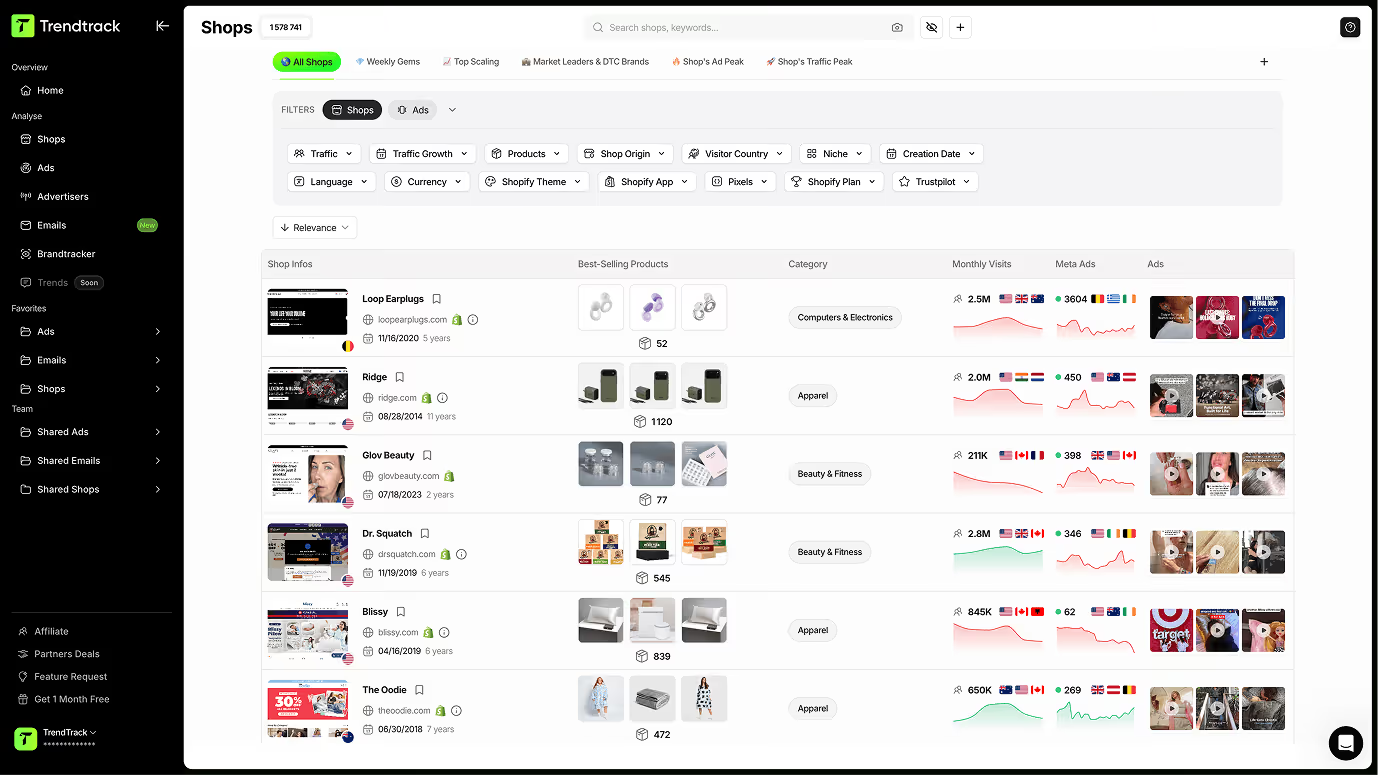
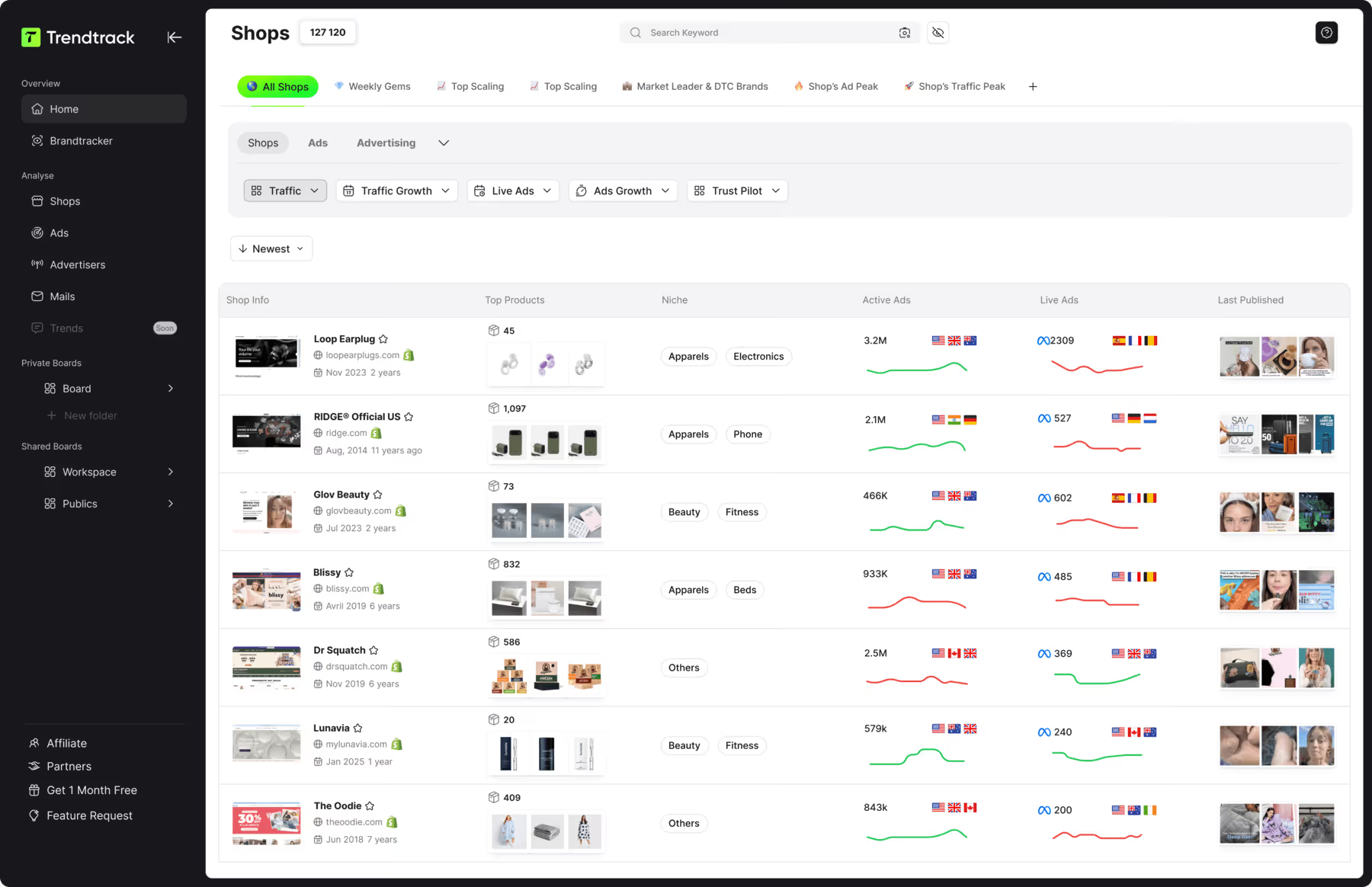
Avoiding that requires knowing what competitors run now, which is a data problem rather than an education problem.


Bereit, eine Millionen-Marke aufzubauen?