Top 10 Best E-Commerce Courses



Most rankings of e-commerce courses are out of date before you finish reading them, and one of them became wrong two days ago. So which courses are actually worth your time right now?
Start with the change nobody has updated for. Shopify Academy was sunset on October 29, 2026. All purchases were refunded, and Shopify Academy certifications are no longer a Partner Program tier requirement.
Credentials already earned stay valid until January 1, 2028, after which badges disappear from profiles.
That matters because Shopify Academy topped nearly every ranking published this year. If a list recommends it today, that list was not checked.
Four criteria guided the selection below, and all ten options are available worldwide.
Accessibility first. No geographic restriction, no national funding scheme required, no language barrier beyond English.
Credibility of the provider, meaning an organisation with something to lose if the content is wrong.
Cost transparency, since a published price allows comparison and a hidden one does not.
Practical application, because knowing what a conversion rate is differs from knowing how to improve yours.
One thing no course provides, and it is worth stating upfront. Courses teach method. They cannot tell you what is selling today, because the specifics expire faster than any curriculum updates.
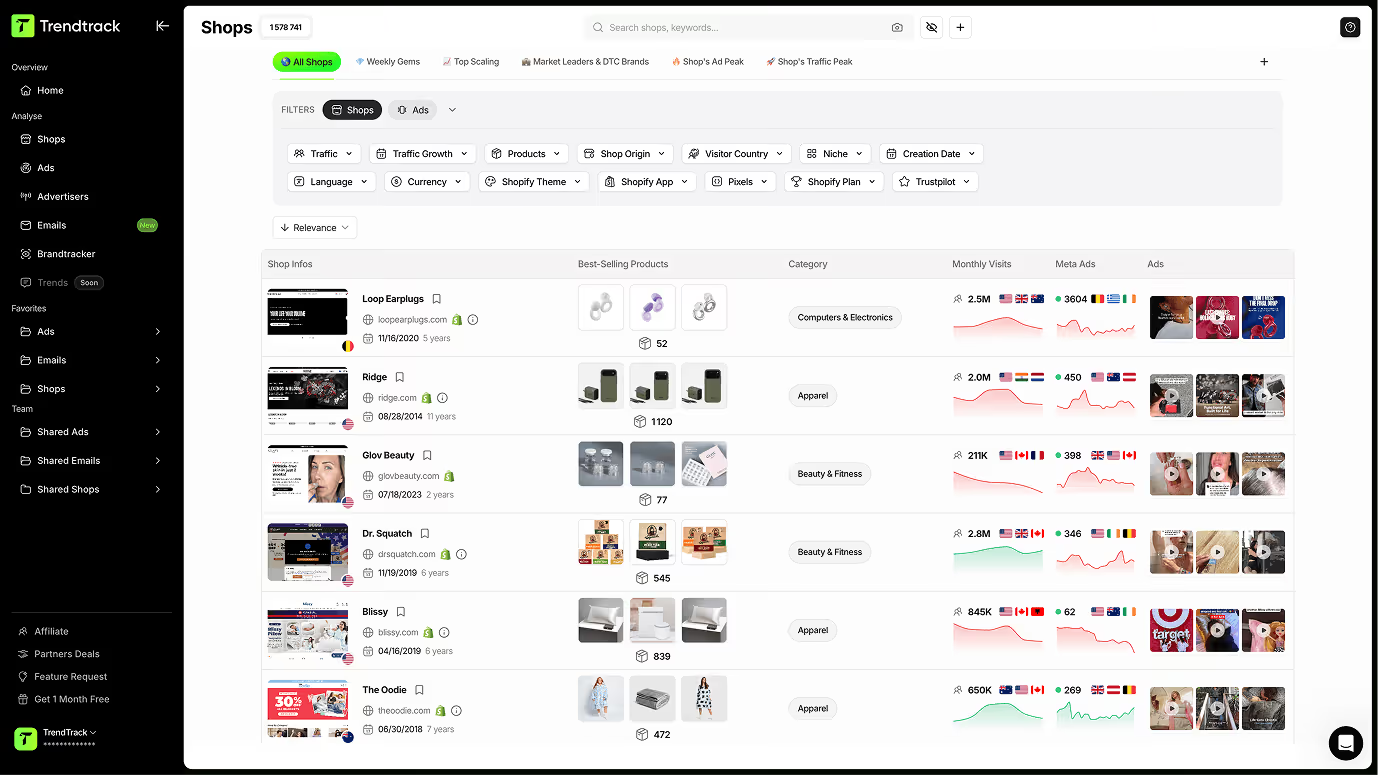
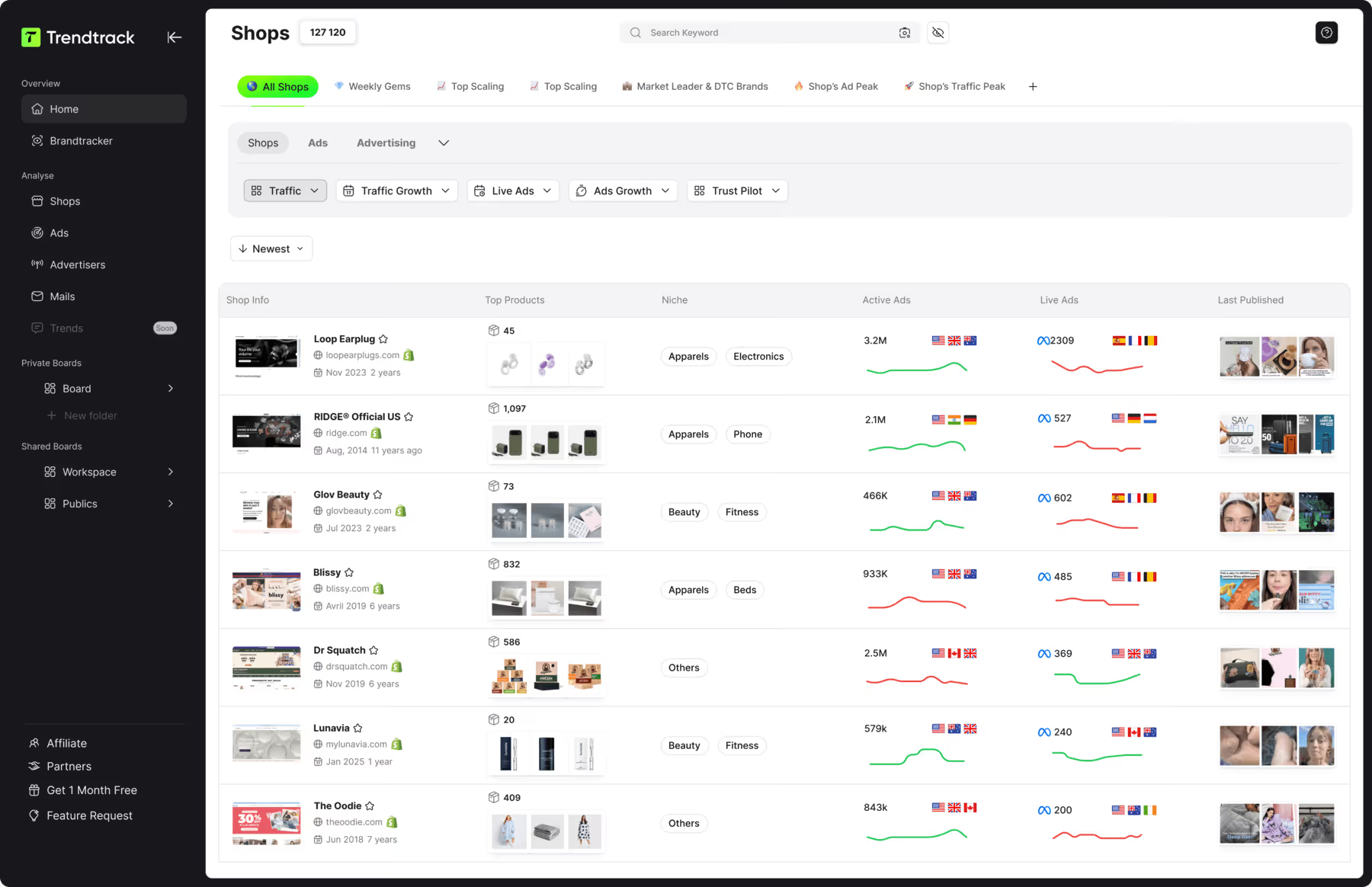
That gap is permanent. At Trendtrack available at app.trendtrack.io/en/sign-up, we index 95 million TikToks and refresh 700,000+ brand profiles every 24 hours.
In this article we cover the 10 best e-commerce courses available worldwide.
1. Google Digital Marketing & E-commerce Certificate, Coursera

Google’s certificate opens this ranking for a simple reason: it is the most complete structured programme available worldwide at a cost most people can absorb.
The scope is substantial. The programme runs approximately 190 hours, which places it closer to a curriculum than to a course.
That volume is spread across seven modules covering the digital marketing and e-commerce chain: audience understanding, content strategy, email marketing, paid media, analytics, and store management itself.
Pricing works through subscription. Access is included with a Coursera subscription at roughly $49 per month, which means your total cost depends on your pace rather than a fixed fee.
Finishing in four months costs around $200. Taking a year costs considerably more, which creates a genuine incentive to maintain momentum.
Financial aid is available, making the certificate obtainable free for applicants who qualify. That option goes unused by most people who would be eligible.
Three characteristics explain the top position.
Credibility first. A Google credential carries recognition no independent trainer can match, which matters if you are building a career rather than a store.
Comprehensiveness next. Few programmes cover analytics, paid media and store operations in one structure, and fragmenting that learning across providers costs more and connects less.
Global availability finally. No geographic restriction, no national funding requirement, and Coursera subtitles cover major languages.
Two limitations deserve stating.
The approach is generalist. You learn the discipline rather than a specific tactic, which is correct for foundations and insufficient if you need a dropshipping playbook this month.
The content is employer-oriented in places. Several modules assume you will work in marketing rather than run your own store, which makes parts of it less directly applicable to a founder.
Best for beginners wanting structured foundations, and anyone needing a recognised credential.
2. CXL Ecommerce Marketing Certification

CXL sits at the opposite end of the spectrum from the Google certificate. Where one builds foundations broadly, this one goes deep for people who already have them.
The positioning is explicit. The certification targets advanced professionals, runs 36+ hours and costs $999, with a focus on optimization, CRO and analytics.
That price demands justification, and the content provides one.
Conversion rate optimization is the central subject, and it is the discipline most e-commerce operators neglect entirely. Acquiring more traffic is visible work. Converting the traffic you already pay for is invisible and considerably more profitable.
The arithmetic makes the case. Moving a store from 1.5% to 2% conversion increases revenue by a third with no additional ad spend. Most operators spend that effort buying more traffic instead.
Three characteristics distinguish CXL from cheaper alternatives.
Instructor quality. Courses are taught by practitioners running these programmes professionally rather than by content creators who researched the topic.
Experimentation rigour. The methodology covers statistical significance, sample sizing and test design, which is what separates genuine optimisation from changing button colours and declaring victory.
Analytics depth. Measurement is treated as a skill in itself rather than as a dashboard you glance at monthly.
Two limitations matter for self-selection.
The prerequisite level is real. This is not a first course. Arriving without understanding traffic sources, funnels and basic analytics means paying $999 to be confused expensively.
The cost excludes most early-stage operators, and correctly so. A store doing 30 orders monthly has no meaningful traffic to optimise. The investment pays back at volume, not before.
One practical note on sequencing. CXL makes sense once you have consistent traffic and a measurable conversion rate. Before that, acquisition is your constraint and optimisation is premature.
Best for established operators, marketing professionals and anyone whose bottleneck is conversion rather than traffic.
3. DigitalMarketer Certified E-Commerce Marketing Master

DigitalMarketer occupies the middle ground between the two providers above, and that position is more useful than it sounds.
The Google certificate builds foundations. CXL optimises an established operation. Between them sits a gap: operators who have launched, generated some sales, and now need to make the thing work properly.
The certification targets growth marketers at intermediate level, costs $495 and runs self-paced, with a focus on product-market fit and conversion.
That first focus deserves attention, because product-market fit is treated seriously here and skipped almost everywhere else.
Most e-commerce training assumes your product works and teaches you to sell it harder. That assumption fails frequently, and no amount of creative testing rescues a product nobody wants.
Learning to diagnose whether the problem is your product or your marketing saves more money than any tactic, because it stops you scaling spend behind something broken.
Three characteristics define the programme.
Self-paced structure, which suits operators fitting study around an existing business rather than studying full-time.
Framework-driven teaching. DigitalMarketer builds its material around repeatable models rather than case studies, which transfers better across product categories.
Certification, useful if you are building a service business around these skills rather than only your own store.
Two limitations are worth knowing.
The positioning is marketing-centric. Operations, sourcing and logistics sit outside the scope entirely, which means this complements rather than replaces knowledge of how products actually reach customers.
The price sits awkwardly for some profiles. At $495 it costs more than a Coursera subscription completed quickly, and less than half of CXL. If your needs sit clearly at either end, the middle is the wrong purchase.
One practical note on fit. This programme assumes you have something running. Taking it before launch means learning frameworks you cannot apply, and frameworks decay without application.
Best for operators with early traction, growth marketers, and anyone unsure whether their product or their marketing is the problem.
4. HubSpot Academy

HubSpot Academy earns its position on a simple basis: it costs nothing and the quality does not reflect that.
The platform offers free e-commerce and marketing courses that include a certificate of completion, and its social media strategy certification is taught by HubSpot’s own senior instructors.
The business model explains the quality, which is worth understanding before assuming free means thin.
HubSpot sells marketing software. Teaching people marketing creates customers who understand why they need the software, which means the content has to be genuinely useful for the strategy to work. Bad courses would defeat the purpose.
Three areas are strongest.
Email marketing, where HubSpot’s expertise is deepest and where e-commerce operators consistently underinvest. Retention costs a fraction of acquisition, and most stores treat email as an afterthought.
Content and inbound strategy, useful for anyone building organic traffic rather than renting it from ad platforms.
Social media strategy, treated as a discipline rather than as posting tips.
Course lengths start around 52 minutes, which makes individual modules consumable in a sitting rather than requiring a block of time you will not find.
Three practical notes.
The certificates carry real recognition in marketing hiring, which is unusual for free credentials.
The content is tool-agnostic in principle but HubSpot-flavoured in practice. Examples reference their product, which is fair given the price but worth filtering.
The e-commerce specificity is partial. These are marketing courses applicable to e-commerce rather than e-commerce courses. Sourcing, logistics and store operations sit outside the scope.
One sequencing suggestion: HubSpot pairs well with a structured programme rather than replacing one. Use it to deepen email and content while a broader course covers the chain.
Best for anyone on zero budget, operators weak on retention, and marketers wanting recognised certificates at no cost.
5. Google Skillshop
Skillshop is Google’s own training platform for its advertising products, and it serves a different purpose from the certificate at number one.
It covers Google Shopping and advertising fundamentals at no cost, with certifications issued directly by Google.
The distinction with the Coursera certificate matters. That programme teaches digital marketing as a discipline. Skillshop teaches Google’s products specifically, which is narrower and considerably more actionable if you already run campaigns.
Three modules matter most for e-commerce.
Google Shopping, which is the single most consequential channel for product catalogues and the one most operators configure badly. Feed structure, product titles and campaign organisation determine your performance before bidding enters the equation.
Google Ads Search, covering keyword match types, negative keywords and bidding strategies.
Google Analytics, where the certification carries real weight. Measurement errors produce decisions built on nothing, and most stores never verify their tracking works.
Two characteristics define the platform.
Authority of source. Nobody knows Google Ads better than Google, and the documentation is updated when the product changes rather than when a course creator gets around to it.
Certification recognition, particularly for agencies and freelancers where Google credentials function as a qualification signal with clients.
Two limitations are structural rather than incidental.
The content is promotional by nature. Google teaches you to use Google products effectively, not whether Google is the right channel for your business. The answer to that question is always yes here.
The approach is tool-focused rather than strategic. You learn which buttons produce which outcomes, not how to decide your acquisition mix or when paid search is the wrong investment.
One practical note on sequencing. Skillshop works best after you understand marketing fundamentals, not instead of learning them. Technical proficiency on a platform you should not be using is an expensive skill.
Best for operators already running Google Ads, agencies needing credentials, and anyone whose Shopping feed is underperforming.
6. Meta Blueprint

Meta Blueprint is the Facebook and Instagram equivalent of Skillshop, and it belongs in this ranking for one reason: paid social remains the dominant acquisition channel for new e-commerce brands.
Most stores launching today generate their first sales through Meta rather than through search, which makes competence on this platform less optional than it appears.
The training is free, delivered by Meta directly, with certifications available for those wanting formal credentials.
Three areas carry the most value for e-commerce.
Campaign structure, which determines whether the algorithm learns efficiently or burns budget discovering what you could have told it. Operators consistently over-segment, splitting audiences until no campaign gathers enough data to optimise.
The pixel and conversions API, where measurement has become genuinely technical since privacy changes reduced browser-based tracking. A store with incomplete event tracking is bidding blind, and most do not know it.
Catalogue and dynamic ads, which matter specifically for product businesses and rarely appear in general marketing courses.
Two characteristics define the platform.
Currency with product changes. Meta’s advertising interface changes frequently, and third-party courses date within months. Official training updates when the product does.
Structured certification paths, organised by role rather than as a flat library, which helps if you are building toward a specific competence.
Two limitations are worth stating plainly.
The content is promotional, as with Skillshop. Meta teaches effective use of Meta, never whether your budget belongs elsewhere.
The creative dimension is underserved. Blueprint teaches the machinery competently and says comparatively little about what makes an ad work, which is the harder half of the problem and the one that actually separates performance.
That last point matters more than it sounds. Campaign structure is learnable from documentation. Knowing which creative angles are working in your category right now is not, because it changes continuously.
At Trendtrack available at app.trendtrack.io/en/sign-up, we preserve full ad history across Meta, TikTok and Google.
7. Amazon Seller University

Amazon Seller University is free, official, and the only training that matters if Amazon is your channel.
The reasoning is structural. Amazon operates as a closed system with its own ranking algorithm, its own advertising platform, its own compliance rules and its own penalties. Generic e-commerce knowledge transfers poorly, and learning the specifics anywhere other than the source means learning them second-hand.
Three areas carry the most weight.
Listing optimisation, which functions as SEO inside Amazon’s search. Title structure, bullet points, backend keywords and images determine your visibility before any advertising spend enters the equation.
Amazon Advertising, covering sponsored products, brands and display. These behave differently from Google or Meta because the buyer is already inside a purchase funnel rather than being interrupted.
Account health and compliance, which is the module operators skip and regret skipping. Amazon suspends accounts for policy breaches, and reinstatement is slow, uncertain and entirely in their hands.
Two characteristics define the resource.
It is authoritative by definition. Rules come from the party that enforces them, which removes the interpretation layer that third-party courses add.
It is updated with policy changes, which matters on a platform where requirements shift without consultation.
One change makes this timely. Amazon discontinued its prep service on January 1, 2026, which means sellers now need a third party for labelling, polybagging and bundling before inventory reaches FBA. The inbound requirements are unchanged and non-negotiable, so understanding them is now your responsibility rather than Amazon’s. rushorder
Two limitations are inherent.
The content is Amazon-only, with no transferable value if you sell elsewhere.
The perspective is Amazon’s. You learn to succeed within their system, never whether building a business dependent on a single platform is wise.
That second point deserves weight. Sellers concentrated entirely on Amazon carry platform risk that no course mentions.
Best for Amazon sellers at any stage, and anyone considering the channel.
8. Launch Your Online Business, SUNY on Coursera

Launch Your Online Business comes from the State University of New York, and that origin is the point rather than a detail.
The course runs approximately 16 hours on Coursera, which makes it the most compact structured option in this ranking.
The academic source matters for a specific reason. Almost every e-commerce course is sold by someone with a commercial stake in the outcome: a platform selling subscriptions, an ad network selling inventory, or an operator selling a method.
A university programme carries none of that. The material covers business fundamentals rather than steering you toward a tool, which produces a notably different perspective on the same subject.
Three areas are covered with that neutrality.
Business model validation, meaning whether the thing you intend to sell can sustain a business before you build one around it.
Market and competitive analysis, approached analytically rather than as a product research tactic.
Financial planning, including unit economics and break-even. This is the module most practitioner courses skip entirely, and the one that determines whether a store survives its first year.
Two characteristics define the fit.
Its brevity is genuine. Sixteen hours fits into a fortnight of evenings, which makes it realistic for someone employed full-time and considering a launch.
Its sequencing is upstream. This belongs before you choose a platform, a product or a channel, not after.
Two limitations follow from the same source.
The approach is academic rather than operational. You will not learn how to configure a Shopify theme or structure a Meta campaign, and expecting that produces disappointment.
The content is slower to update than platform-run training, which matters less here since business fundamentals change rarely and tactics change constantly.
One practical note on sequencing. This pairs naturally with a tactical resource. Use it to decide whether and what, then use Skillshop or Blueprint for how.
Best for anyone at the deciding stage, employees considering a launch, and operators who have never run the numbers.
9. Semrush Academy

Semrush Academy covers the channel most e-commerce operators postpone and later wish they had started sooner.
The platform offers free courses covering SEO alongside broader marketing topics, with certifications included.
The reason this belongs in a top ten is arithmetic rather than preference. Paid acquisition costs rise with competition, and every order costs roughly what the last one did. Organic traffic compounds, which means your acquisition cost falls as your content stock grows.
Most operators understand this and start anyway at the wrong moment: once ad costs have already become unsustainable, when the four to six month lag makes the situation worse before better.
Three areas matter most for product businesses.
Keyword research, which in e-commerce means understanding commercial intent rather than search volume. A query with 500 monthly searches and buying intent outperforms one with 50,000 and none.
On-page and technical fundamentals, covering the issues that keep product pages invisible regardless of content quality.
Content strategy, specifically the distinction between pages that capture purchase intent and pages that build authority.
That last distinction deserves emphasis, because it is the error that wastes the most effort. E-commerce SEO happens on category and product pages, not on the blog. Operators invest in articles while their commercial pages sit empty, which is building a floor on incomplete foundations.
Two characteristics define the resource.
The certifications are recognised in marketing hiring, which adds value beyond the learning itself.
The content is tool-adjacent. Semrush sells SEO software, so examples use their platform. The principles transfer, the workflows assume their interface.
Two limitations.
The content is marketing-wide rather than e-commerce-specific, so you filter for relevance.
SEO itself rewards patience most people lack. Four to six months minimum before meaningful positions, which makes it a poor answer to an urgent traffic problem and an excellent answer to a structural one.
Best for operators planning beyond the next quarter, and anyone overdependent on paid acquisition.
10. Acadium E-Commerce Business Basics

Acadium closes this ranking as the answer to a question that became urgent two days ago.
With Shopify Academy closing on 29 October 2026, Acadium’s free E-Commerce Business Basics is the recommended replacement for anyone starting a store from zero.
That recommendation carries weight because of what it replaces. Shopify Academy’s First Day to First Sale was the default entry point for complete beginners, free and structured around actually launching rather than around theory.
Its disappearance leaves a gap that this course fills.
The scope matches the name. Business basics rather than tactics, covering what e-commerce involves before you commit money to it.
Three characteristics define the fit.
It costs nothing, which matters at the stage where most people are deciding whether to proceed at all. Paying several hundred dollars to find out whether you want to do something is a poor sequence.
It assumes no prior knowledge, including the vocabulary. Terms like fulfillment, conversion rate and unit economics are explained rather than assumed, which is rarer than it should be.
It is genuinely introductory. Nobody pretends this is a complete education, and that honesty makes it useful. You finish knowing what you do not yet know, which is the correct outcome for a first course.
Two limitations are inherent to the category.
The depth is limited by design. This orients you. It does not make you competent.
The platform specificity is absent. You will not learn Shopify, Meta Ads or Amazon here, which means a second resource follows necessarily.
One practical note on sequencing, since it determines whether this is useful or redundant.
Take this first, before Google’s certificate and well before Skillshop or Blueprint. It costs a few hours and tells you whether the broader investment makes sense.
Operators who skip the orientation stage frequently buy a $999 optimisation course before they have anything to optimise.
Best for complete beginners, anyone replacing Shopify Academy, and people still deciding whether to start.


Bereit, eine Millionen-Marke aufzubauen?