8 High-Converting Facebook Ad Copy Examples Analyzed



Every active Facebook ad you see is a market test funded by someone else. If an ad runs for 30, 60, or even 90 days, it has passed a profitability test. Successful ecommerce teams don’t guess what will work.
They reverse-engineer patterns from live ads and build testing systems around those patterns. This approach lets you validate ideas using real data and launch campaigns with confidence.
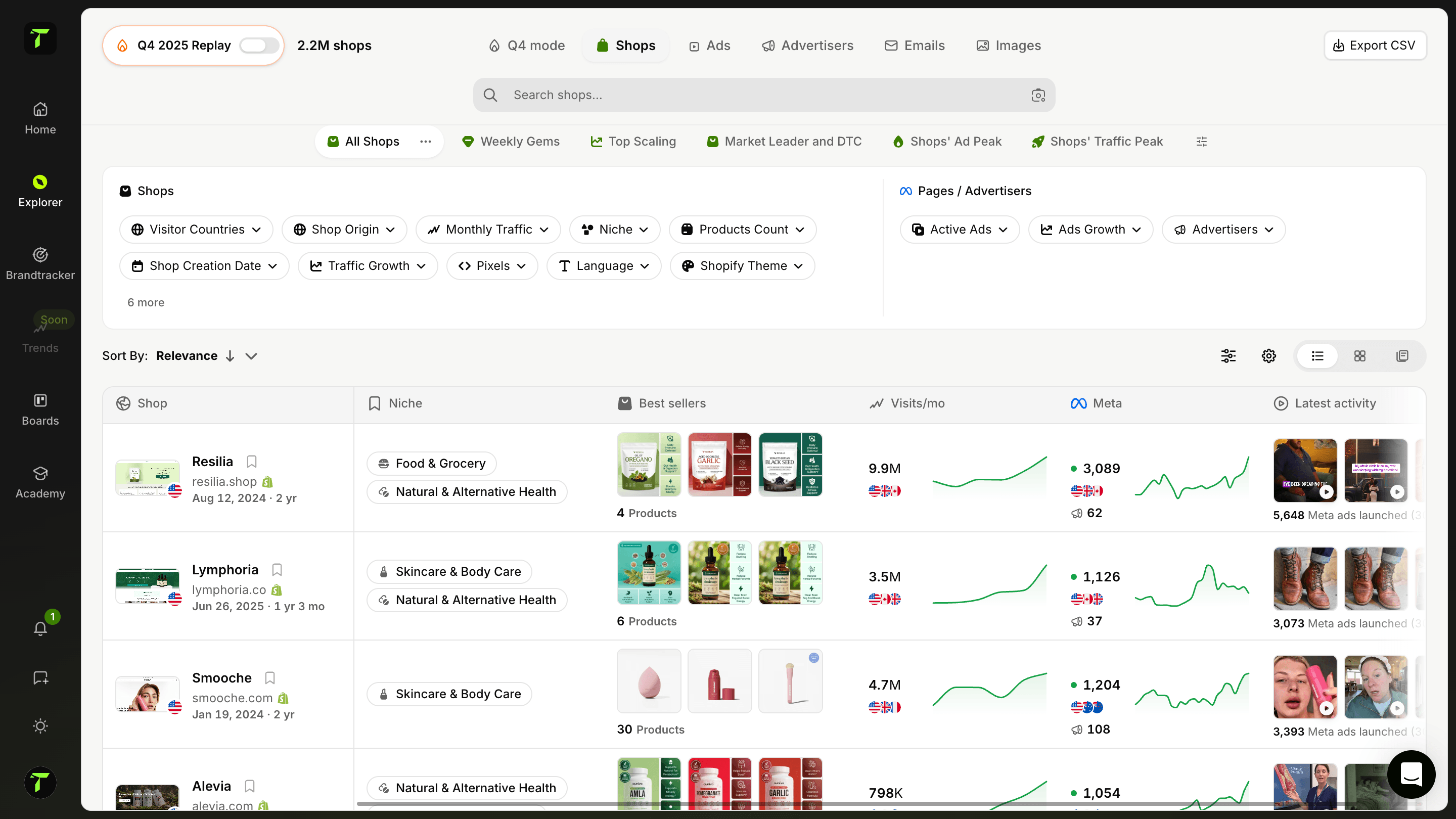
This is where a tool like Trendtrack fits in. It helps you stop endlessly scrolling through ad libraries and spreadsheets. Instead, it helps you build a reliable pipeline of proven hooks, offers, and CTAs to test right away.
Facebook ad copy examples for ecommerce
If you run paid ecommerce ads, the fastest way to improve isn't brainstorming new angles. It's studying ads that already proved effective.
Every active Facebook ad is a market test funded by someone else. When an ad runs 30, 60, or 90 days later, it has passed Facebook's profitability filter. Losing ads get cut quickly.
What we analyze so you can steal structure, not vibes
High-performing Facebook ads share consistent components:
Component
What to look for
Why it matters
Hook
First line and visual moment that grabs attention
You have about 1.7 seconds to stop the scroll.
Value proposition
The bridge from problem to solution to outcome
People buy the after state, not features.
Creative format
Static, video, or carousel matched to the story
Format can amplify or weaken the message.
CTA
A clear, specific next step
Specific CTAs reduce friction and create momentum.
Winner signals and format choices
Don't model the wrong ads. Two data points filter winners:
- Ad longevity: Ads active 30+ days pass the first filter. 90+ days = proven winners.
- CTR: Over 1.5% signals the hook works. Low CTR = attention problem. High CTR + low conversions = landing page problem.
Match format to task:
- Static images for simple, impulse-friendly offers
- Video for demos and transformations (can produce 270% more leads when the first 3 seconds engage).
- Carousels for stories needing sequencing or multiple benefits
How to use these examples
Extract patterns, don't clone lines:
- Identify the hook type (contrarian statement, direct question, pattern interrupt)
- Translate the value proposition into your product's before/after transformation
- Keep the CTA specific—tell people exactly what happens next
- Use longevity as your "truth filter" and CTR as your "hook filter"
Your edge isn't pure creativity. It's selection, choosing patterns proven to survive in real market tests.
1. Hairo (hair loss): the "age tax" hook that stops the scroll
Most hair-loss ads try to be polite. Hairo does the opposite: it turns thinning hair into an identity problem ("you're not old, but your hair makes you look like it").
- Format: Facebook video ad showing a close-up of a thinning crown—a built-in "before" shot.
- Hook: "Hair loss adds years you don't deserve. Hairo takes them off instantly." This reframes hair loss as an unfair "age penalty" and promises a fast fix.
- Value proposition: "You're not old, but your hair makes you look like it" → Hairo fixes it → you look like yourself again.
- Proof: Visual demonstration of the thinning spot. For this product, showing beats telling.
- CTA: "Try Hairo 40% OFF today" + Shop now button. Clear and time-sensitive.
Why it works
The ad sells age control, not hair filler. Key factors:
- Identity over features: Focuses on perception, not product specs
- Social pain: Thinning hair framed as adding years to your appearance
- One enemy, one outcome: Looking older → looking younger fast
2. Bloomie Blankets Valentine's Facebook ad
Seasonal ads often fail because they only push a holiday promo. Bloomie Blankets sells a feeling, being remembered, and uses the holiday as a deadline, not the main message.

- Format: Square image ad with crochet-flower bouquet against deep red background. Labels highlight "Hand-Crocheted Blooms" and "Gift Ready."
- Hook: Give her something she'll actually remember. Creates an emotional interruption, shifts attention from shopping to imagining her reaction.
- Value proposition: "A thoughtful gift to treasure, not throw away."
- Clear transformation: temporary flowers → keepsake gift.
- Proof: On-image labels (Hand-Crocheted, Gift Ready) confirm the product is real and packaged.
Why it works
Addresses a personal fear: "What if my gift is forgettable?"
- "Treasure vs throw away" creates an easy choice without lengthy explanations
- Running 20 days shows it survived early budget cuts
- Emotional hook + permanence appeal + gift readiness proof
3. Claréa Paris winter sale
Winter sale ads often fall into easy patterns: big "-X%" text, generic "shop now." Claréa takes a different approach. The offer is bold, the style feels native, and the discount feels like a valuable discovery.
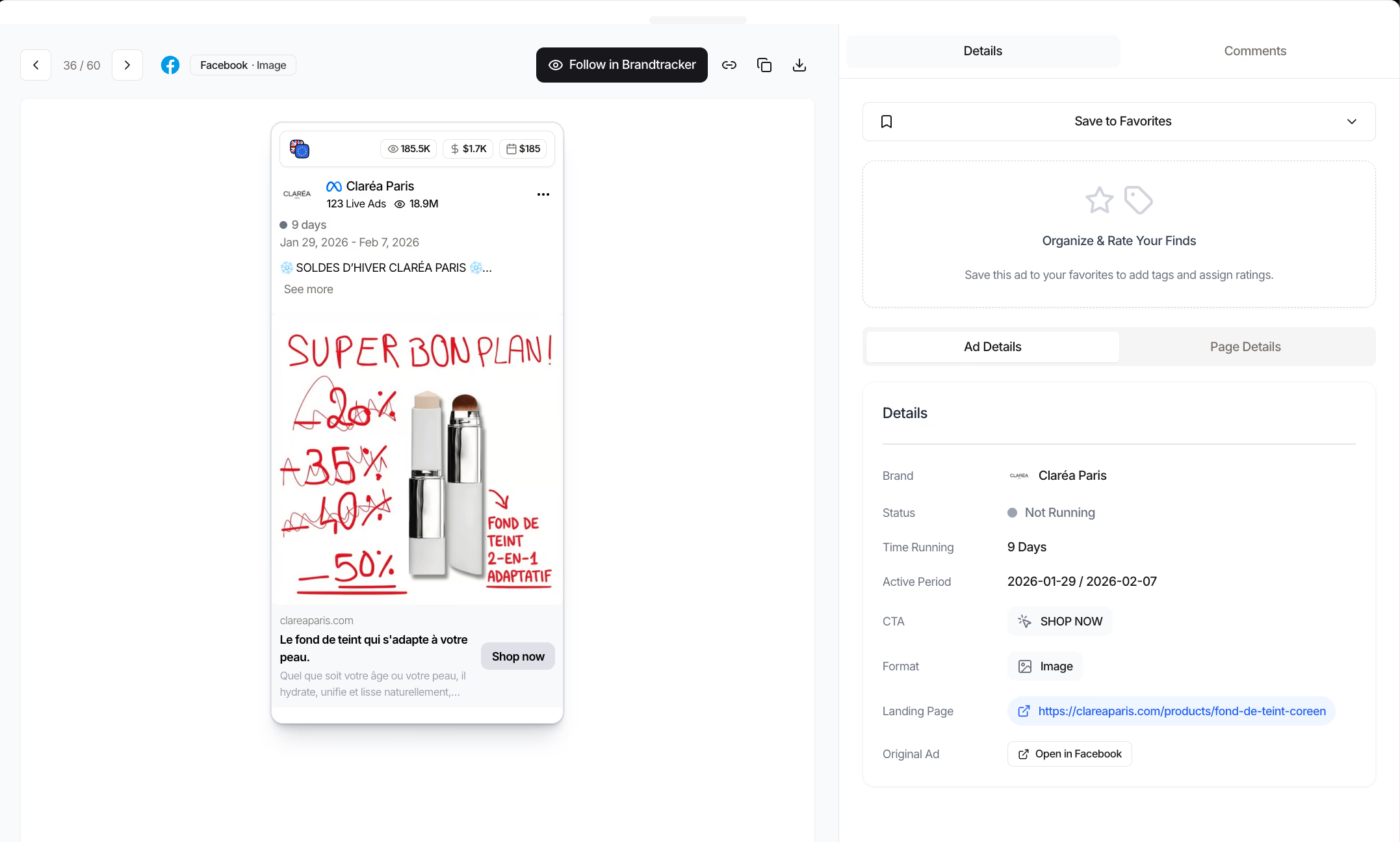
- Format: Static image with foundation stick and hand-drawn red marker overlay. The design mimics a social post rather than a polished ad.
- Hook: "SOLDES D'HIVER" + "SUPER BON PLAN! (WINTER SALE” + “SUPER GREAT DEAL!) " + red marker effect creates a pattern interrupt.
- Value proposition: Discount ladder showing -20%, -35%, -40% crossed out, ending at -50%. Easy to understand: same product, less money.
- Proof: Crossed-out discounts act like a mini-argument showing the price dropped multiple times.
- Caption: Le fond de teint qui s'adapte à votre peau (The foundation that adapts to your skin). Shifts focus from cheap makeup to personalized fit.
Why it works
- Anchoring: Seeing crossed-out discounts makes -50% feel earned
- Low friction: One product, one offer, one sentence
- Native design: The "messy red marker" feels authentic, not polished marketing
4. Clover & Cove shower head
Most ecommerce ads try to explain a product. Clover & Cove sells a better five minutes in your day and supports this with strong proof until skepticism fades.

- Format: Static, product-focused ad with clean shower head cutout on white background.
- Hook: "5-STAR SHOWERS start with a 5-minute fix." Promises a shower upgrade you feel immediately, fast results with low effort.
- Value proposition: Transform lame showers into 5-star showers with a 5-minute fix that requires no tools.
- Proof: These examples use a testimonial. "My skin looks noticeably better right after I use it". Combined with social proof "OVER 5,460 SHOWER HEADS SOLD!" to build credibility and urgency.
- CTA: "Shop now" + "Buy 1 Get 1 Free"
Why it works
Sells an instant upgrade to quality of life, not "premium plumbing."
- Respects attention: Promise is clear in 1.7 seconds
- Sells ease: "No tools required" removes installation objection
- Builds trust fast: Specific sales figure (5,460) feels real
5. Love Letters necklace
Some products succeed not because they're better, but because their copy carries emotional weight. This ad doesn't list features. It puts words in the buyer's mouth and turns a purchase into a meaningful moment.
- Format: Facebook video ad with sentimental narration. Reached 1.3M people in 9 days.
- Hook: "The perfect gift for your Wife. She's seen you at your best and your worst..." Blunt, identity-based, calls out the buyer and occasion immediately.
- Value proposition: Say what you find hard to say out loud. The product benefit is emotional certainty, packaged in words.
- Proof: Believability through specificity. The letter's raw, imperfect tone feels authentic.
Why it works
It sells relief, not jewelry. Men buying gifts think: "I want to get this right."
- Removes decision fatigue: The copy says "this is the gift"
- Gives buyer a script: Narration reads like a vow, not an ad
- Thumb-stopping contrast: Letter-in-a-box style with high-contrast text
6. RapidTest health screening
Most ecommerce ads focus on selling the product. RapidTest sells the frictionless outcome. Health checks without the admin, awkwardness, or waiting room.
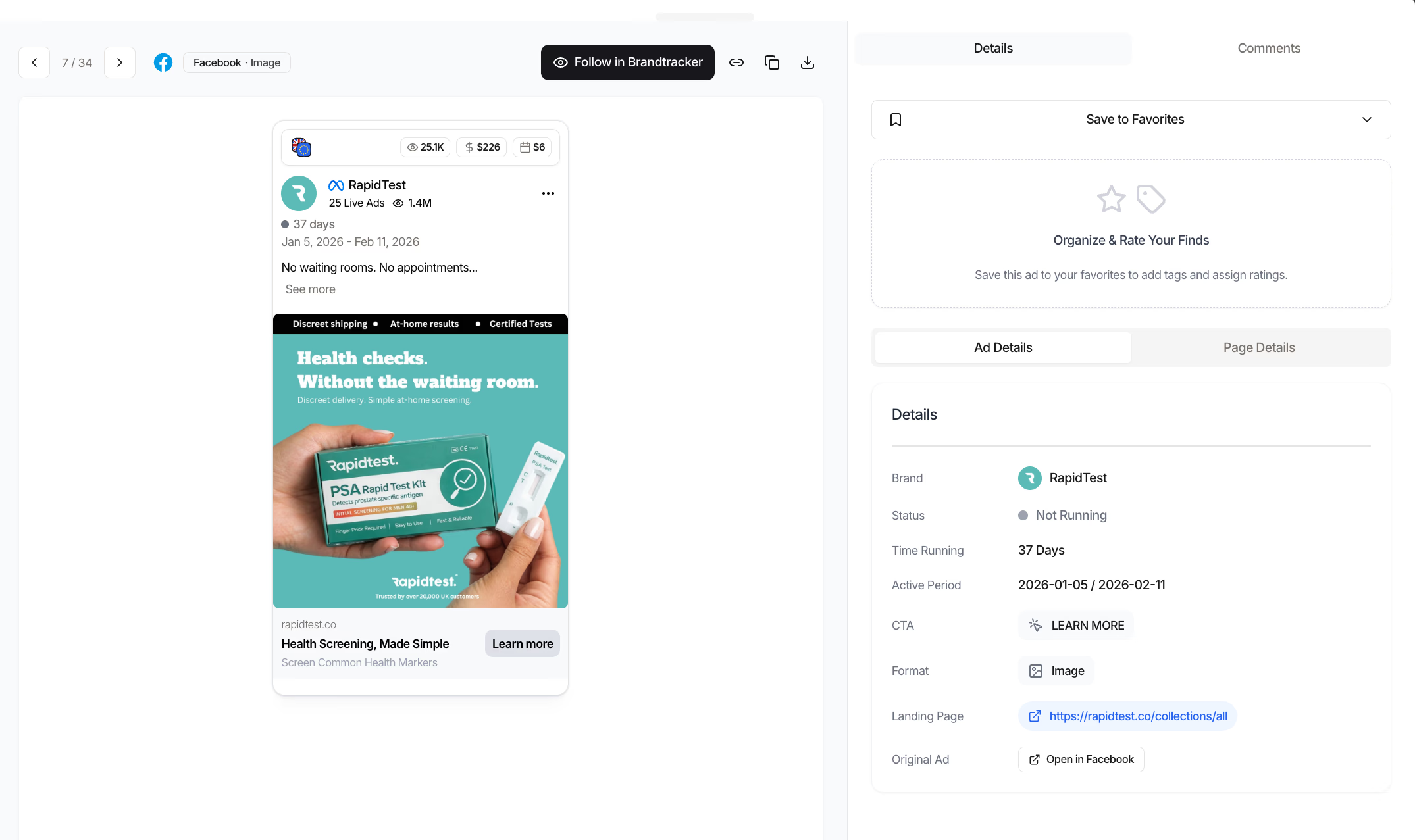
- Format: Clean, medical-style static image. Running 30 days, ads past 30 days usually indicate profitability.
- Hook: "No waiting rooms. No appointments." Two-sentence opening hits a familiar pain point. Focuses on what people want to avoid.
- Value proposition: From scheduling delays and waiting rooms to screening at home on your schedule.
- Proof (trust bullets): Enjoy discreet shipping, at-home results, and certified tests all in one convenient solution.
- CTA: "Learn more", low-commitment next step for a trust-sensitive category.
Why it works
Trust-first ad that doesn't try too hard to seem trustworthy.
- Starts with what customers want to avoid (the real competitor is procrastination)
- Designed for quick scanning: headline, subhead, proof bullets
- "Certified Tests" carries strong weight without overwhelming text
The RapidTest approach of selling outcomes rather than products is a hallmark of successful DTC ecommerce. If you want to understand how this strategy scales across categories, explore DTC ecommerce trends to see how top brands are shifting their messaging.
7. Amariel
Amariel is the kind of brand teams assume they study when it comes to search facebook ads. But usually don't extract anything reusable. The goal, capture signals. Longevity, duplication, format and reverse-engineer the copy like a controlled experiment.

- Hook: A bold medical document claiming spine surgery no longer necessary. Instantly interrupts the scroll with high-stakes transformation.
- Value proposition: The ad transforms chronic back pain and fear of surgery into a compelling solution. A medical traction device that delivers pain relief without surgery and restores normal life.
- Proof: Multiple credibility signals work together here. Doctor-style framing, an official-looking document with a red stamp, medical terminology. Direct personal address such as "Herr Wagner."
- CTA: The ad uses a "forbidden truth" angle combined with urgency. It emphasizes what "actually heals" discs. This approach drives action far beyond a generic "Learn more" button.
Why it works
Ads running 30, 60, or 90 days prove the message meets profitability standards. Use the best ad spy tool to find these winners faster.
- Trust-building: EU transparency rules increase skepticism, be clearer, more human, more specific
- Clarity over cleverness: Native visuals and straightforward messaging communicate mid-scroll
- Use CTR as sanity check: Over 1.5% for cold traffic signals hook resonance
8. Primal Viking
This ad targets a specific group and speaks their language, letting the wrong people scroll past. Targeting a clear audience boosts conversions, not brand risk.

- Format: Static image, moody portrait of muscular man with Norse runes and Viking compass symbols. 712 live ads running since September 2025 signals active testing and scaling.
- Hook: "As men, our bodies go through changes we don't always notice, until energy, strength, and drive start to fade." Acts as a mirror, triggering a quiet that's me response.
- Value proposition: "Primal Viking combines Arctic reindeer organs with powerful Arctic herbs to help maintain optimal testosterone…"
- Outcome focus: Maintaining optimal testosterone
- Unique mechanism: Arctic reindeer organs creates a memorable, distinct selling point
- Proof: Specificity as credibility. Naming unusual ingredients makes claims feel authentic.
- CTA: "Take back your energy with two capsules a day." Simplifies the offer—feels achievable.
Why it works
- Identity-focused: Viking symbols filter for specific male audience
- Aging framed positively: Natural change, no blame—readers feel understood
- Memorable mechanism: "Arctic reindeer organs" sticks in crowded feeds
- Low-friction CTA: "Two capsules a day" removes complexity
How to find winning Facebook ad copy examples with Trendtrack
Most teams have a signal problem, not a copy problem. Building ad copy based on trends rather than data creates angles that sound good but fail in the auction. Trendtrack changes the workflow. Instead of guessing, you start with ads already proven to work. Then steal their structure, not the words.
Here's exactly how to do it.
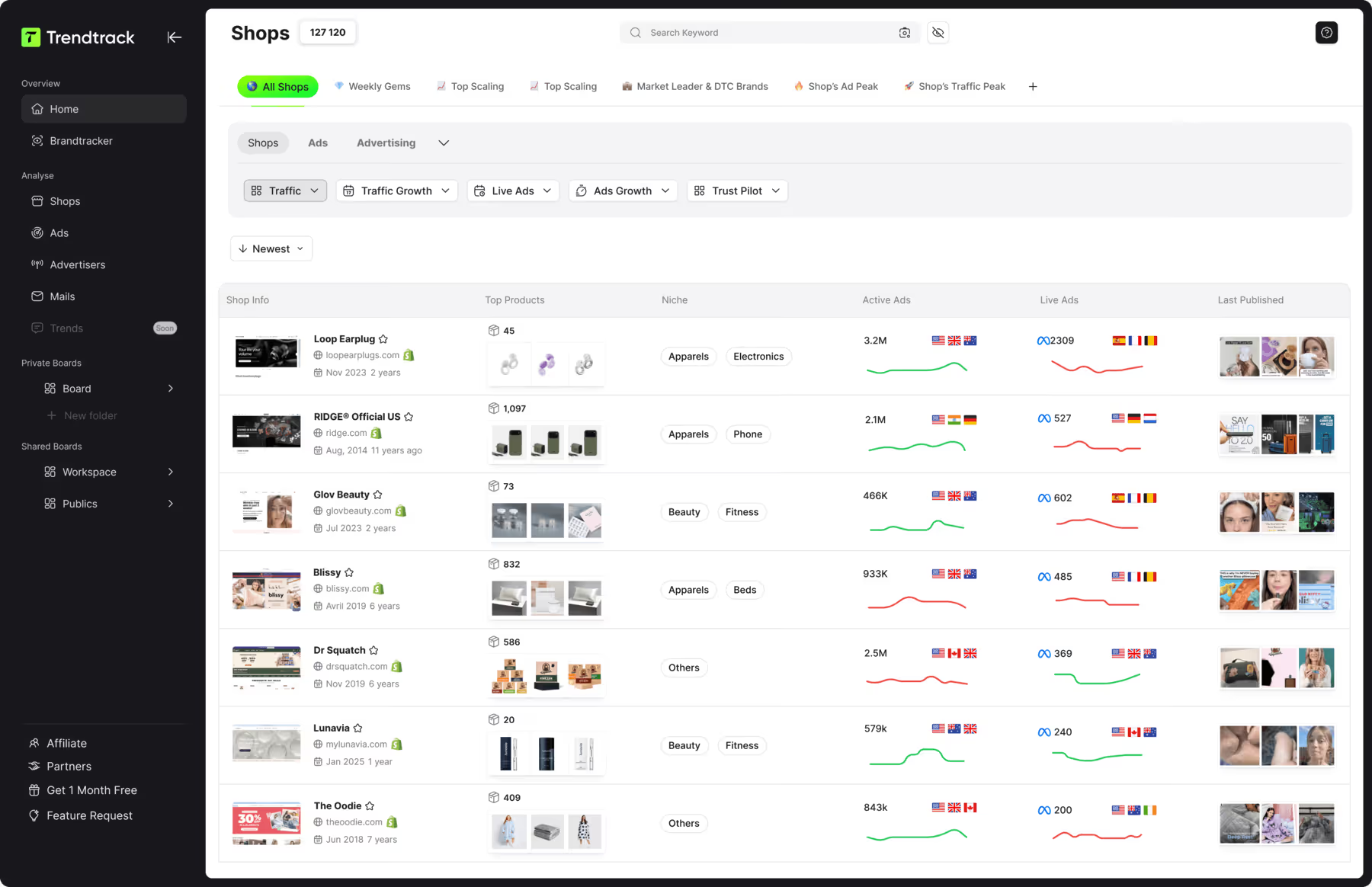
Step 1: Find competitors who are actively scaling
Open Trendtrack and go to Shops. This is where you identify brands worth studying.

Filter setup:
- Set Ads Growth to greater than 20% over the last 30 days
- Filter by your product category or niche
- Sort by highest ad growth
Brands scaling aggressively are running ads that work. If they're increasing spend, they've found winning copy worth modeling. For more inspiration, check out these Facebook ad examples that convert.
Step 2: Filter for ads with proven durability
Once you've identified brands, go to Ads or add them to your Brandtracker.

Filter setup for proven winners:
- Status: Active
- Days Running: Minimum 30 days
This is your first quality filter. Ads running 30+ days have passed Facebook's profitability test. Ads that lose money get cut quickly. Anything past 90 days is a proven winner worth studying closely.
Pro tip: Look for duplication signals. Multiple versions of the same ad concept rarely happen by accident. It means the brand is scaling what works.
Step 3: Spot hidden winners before competitors do
Want to find winning copy before everyone else copies it? Use the early-signal filter.

Filter setup:
- Ad creation date: Last 6 months
- Followers: Under 10,000
New brands spending aggressively on fresh pages have likely found a winning angle. You can adapt their copy structure before the market catches on.
Step 4: Extract copy patterns from Brandtracker
After you've added brands to track, open Brandtracker and navigate to:

- Ad Copies — See all primary text variations
- Headlines — Compare headline structures
- Creatives — View the visual formats driving results
Sort by:
- Longest running — Proves durability
- Most duplicated — Proves scalability

Use the One-Click Download feature to save everything to your swipe file without manual screenshots.
{{cta-3}}
Step 5: Check the metrics that matter
For EU and UK markets, Trendtrack shows real spend ranges, impression counts, and demographics pulled from the Ad Library.

Key metrics to check:
- Spend over $1,000+ in 7 days — Filters out small tests. Need help planning? Learn how to calculate Facebook ads budget based on your goals.
- Impressions and reach — Shows actual scale
- Runtime — Confirms profitability over time
Step 6: Use the Chrome extension for quick competitive intel
Install the free Trendtrack Chrome extension. When you visit any Shopify store, you'll instantly see:
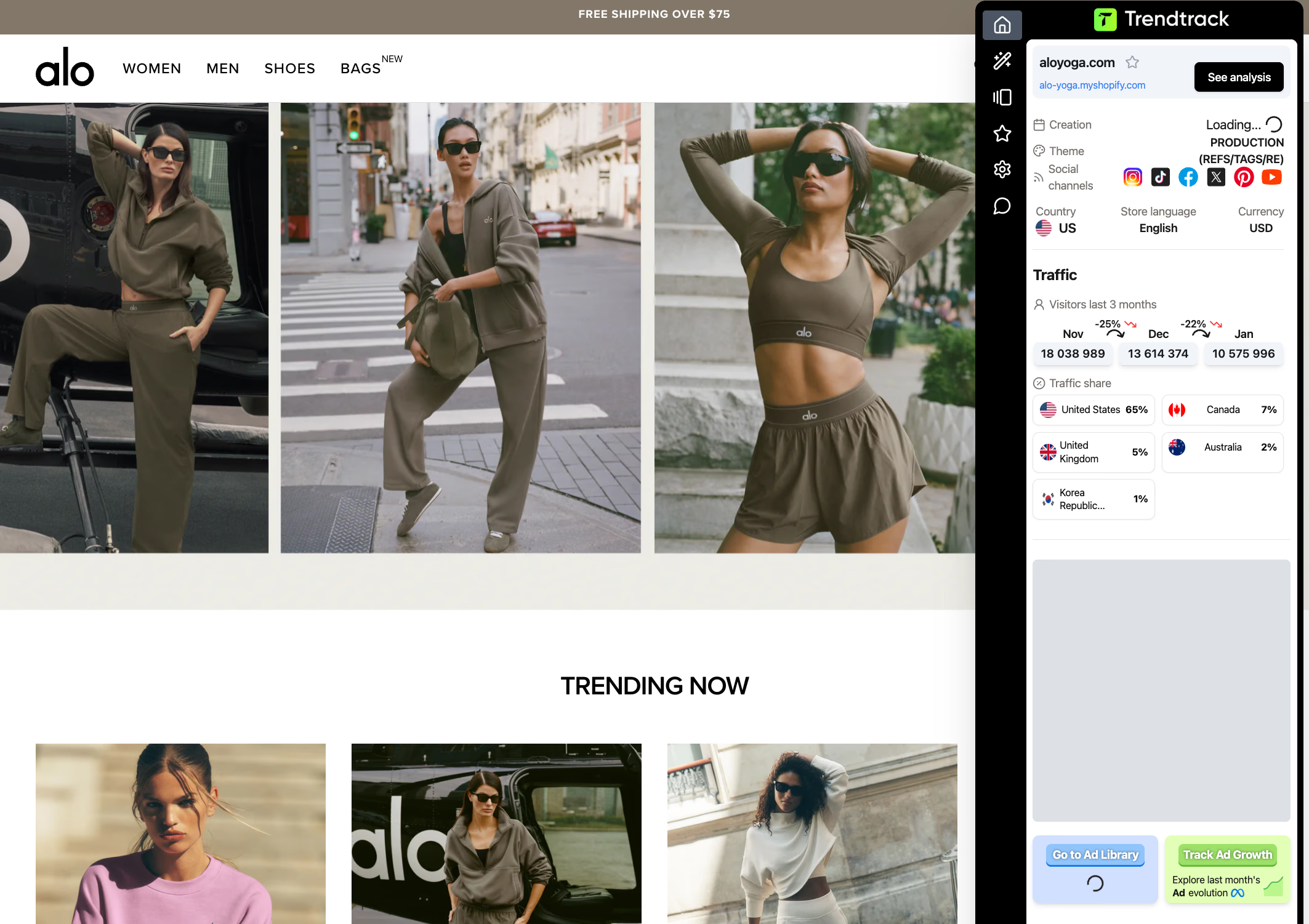
- Their active Meta ads
- Traffic sources and visitor volume
- Themes and apps they're using
This is perfect for quick answers when a new competitor shows up in your feed.
Step 7: Build a useful swipe file
A folder of random screenshots becomes useless clutter. Instead, index the decision triggers when you save an ad:
What to save
Examples
Hook type
Question, authority, discount ladder, contrarian statement
Proof type
Units sold, user count, testimonial voice, guarantee window
Friction removed
"No tools," "5 minutes," "risk-free"
Offer mechanic
BOGO, percentage off, seasonal sale
This turns your swipe file into a briefing tool you can actually use.
Step 8: Write 3-5 variations using proven structures
Now that you've extracted winning patterns, adapt them to your product. Don't copy competitor lines, copy their logic flow.
Reusable framework:
- Hook: "Stop/Still/Why are you…" + pain point or wasted effort
- Payoff: "In [time/steps], you get [outcome] without [common frustration]"
- Proof: "[Number] sold / [Number] customers / quote / risk-free window"
- Offer/CTA: "Get [deal] today" or "Try it risk-free for [X days]"
Write 3-5 variations that keep the same persuasion flow but customize with your product's actual mechanism. Then test.
The goal isn't to invent new strategies. It's to adapt what already succeeds, turning your competitors' expensive tests into your affordable shortcuts.
{{cta-2}}
Final words
Great Facebook ad copy isn't about creativity. It's about pattern recognition. The eight examples above prove what works: identity-driven hooks, clear transformations, specific proof, and low-friction CTAs.
Your competitors are funding market research every day. Stop guessing. Start with ads that already passed the profitability test. Use Trendtrack to find winning patterns, extract what makes them work, and adapt the structure to your product.

.avif)
Ready to build a million-dollar brand?
.avif)