Cyber Monday: Definition, Dates for 2026



Most merchants treat Cyber Monday as the leftover day after Black Friday, which is precisely why it underperforms for them. The two events reward different products, different offers and different acquisition strategies. So what is Cyber Monday and when does it fall in 2026?
Cyber Monday 2026 lands on Monday, November 30, following Thanksgiving on November 26 and Black Friday on November 27.
The date is never fixed. It always falls on the Monday after Thanksgiving, which itself sits on the fourth Thursday of November, meaning the event shifts year to year between November 26 and December 2.
Its origin explains what it still rewards today. The term was coined in 2005, when retailers noticed online sales spiking on the Monday after the holiday weekend as shoppers returned to work and to faster office connections. It began as an online-only counterpart to Black Friday’s in-store crowds.
That distinction has blurred but not disappeared. Black Friday still skews toward physical goods and electronics with deep discounts, while Cyber Monday performs better on digital products, software, subscriptions and services.
Three practical consequences follow. Your offer should differ between the two days rather than repeating. Your traffic peaks later in the day than on Black Friday, following office hours. And your acquisition costs remain elevated, since every advertiser is still bidding.
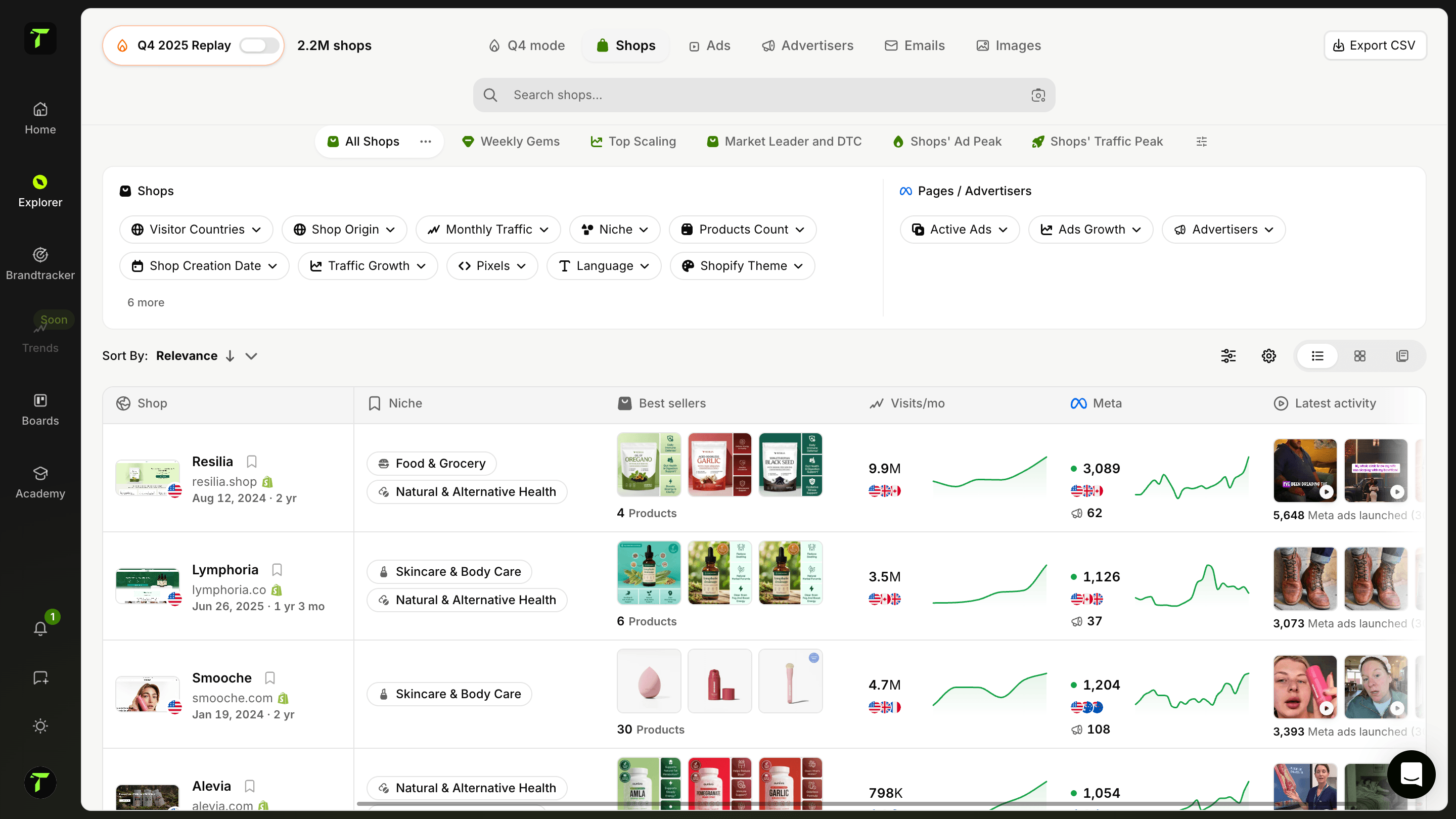
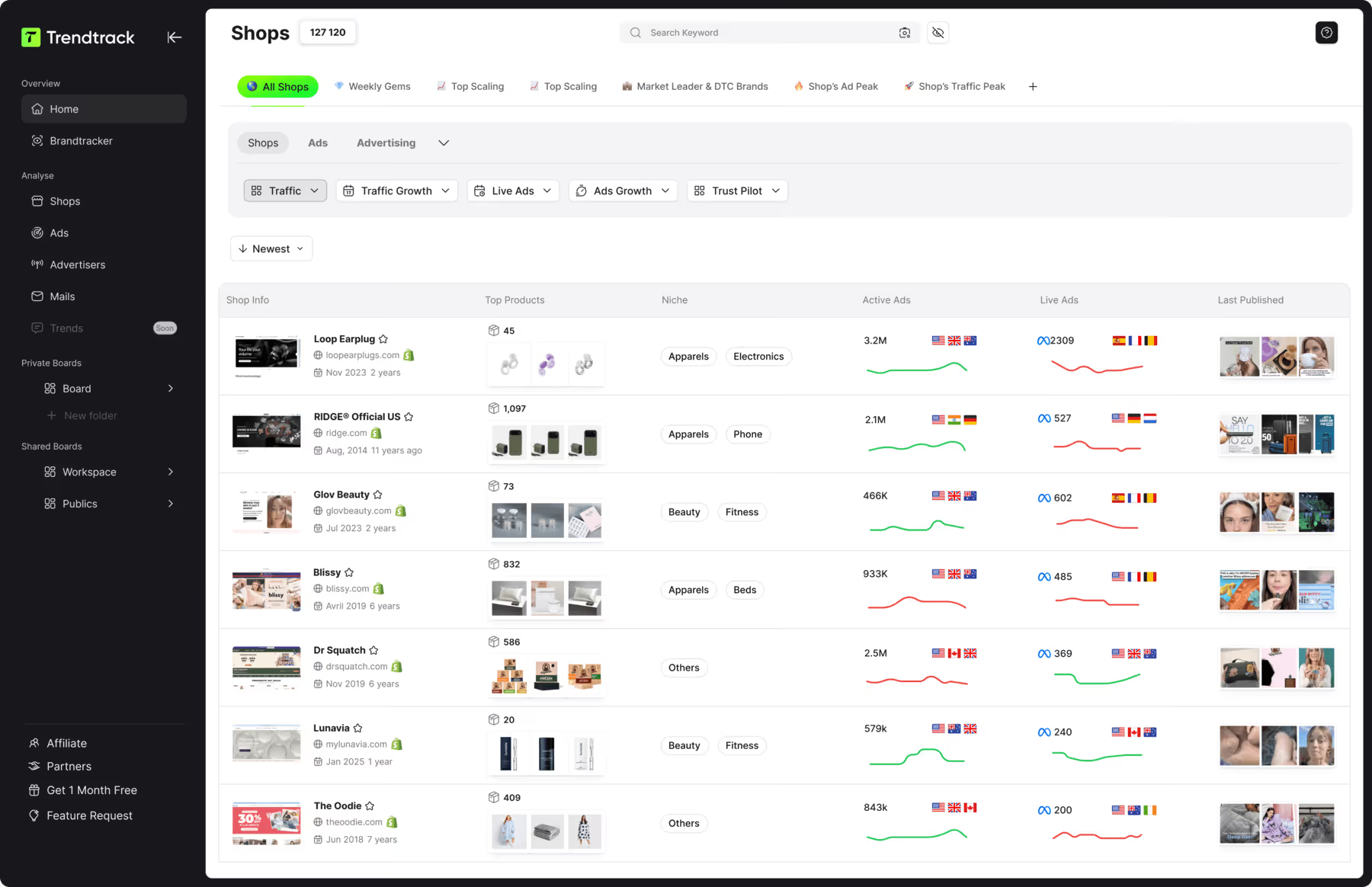
To see what competitors run across both days before committing budget, Trendtrack available at app.trendtrack.io/en/sign-up preserves full ad history across Meta, TikTok and Google, with 700,000+ brand profiles refreshed every 24 hours.
In this article we cover everything about Cyber Monday 2026.
What Is Cyber Monday Exactly?

Cyber Monday is the online shopping event falling on the Monday after Thanksgiving, marking the close of the extended holiday weekend that begins with Black Friday.
Its origin is more recent than most people assume. The term was coined in 2005 by the National Retail Federation, after retailers observed a consistent pattern: online sales spiked on the Monday following Thanksgiving.
The explanation at the time was practical. Shoppers returned to work with faster internet connections than they had at home, and they used that access to buy what they had browsed over the weekend. The event was genuinely born out of a connectivity gap.
That gap has long since closed, yet the date has survived and grown. It now ranks among the largest online shopping days of the year in the United States, with the pattern spreading to Europe and beyond.
Its positioning against Black Friday is what matters commercially.
Black Friday began as an in-store event, built on doorbusters and physical crowds. Cyber Monday was conceived as its online counterpart, which shaped what sells on each day.
That distinction persists even though both now run online. Black Friday skews toward physical goods, electronics and large-ticket items with deep percentage discounts. Cyber Monday performs comparatively better on digital products, software, subscriptions, services and smaller items.
Three operational characteristics differentiate the day.
Its traffic curve follows office hours rather than early morning, with activity building through the working day and peaking in the afternoon and evening.
Its average order value tends to sit lower than Black Friday, with more transactions of smaller size.
Its mobile share is generally lower, since a meaningful portion of purchases happen on desktop during work hours.
One point about the broader calendar deserves stating. The boundary between the two events has eroded considerably. Many retailers now run a continuous Cyber Week, with offers spanning from the Monday before Thanksgiving through to Cyber Monday itself.
That extension changes your planning. Treating Cyber Monday as a single day means arriving after competitors who started a week earlier.
When Is Cyber Monday in 2026 and the Following Years?
Cyber Monday 2026 falls on Monday, November 30.
The date moves every year because it depends on Thanksgiving, which sits on the fourth Thursday of November in the United States. Cyber Monday always lands on the Monday following that Thursday, which places it somewhere between November 26 and December 2.
Here are the dates for the coming years.
Table: Cyber Monday dates
| Year | Thanksgiving | Black Friday | Cyber Monday |
|---|---|---|---|
| 2026 | Thursday 26 November | Friday 27 November | Monday 30 November |
| 2027 | Thursday 25 November | Friday 26 November | Monday 29 November |
| 2028 | Thursday 23 November | Friday 24 November | Monday 27 November |
| 2029 | Thursday 22 November | Friday 23 November | Monday 26 November |
| 2030 | Thursday 28 November | Friday 29 November | Monday 2 December |
As the table shows, 2026 falls late in the window, which carries a practical consequence worth noting.
A late Cyber Monday compresses the gap between the holiday weekend and Christmas delivery deadlines. Shoppers know it, which tends to increase urgency, but it also tightens your own shipping margins considerably.
Check your carrier cutoff dates before promising delivery, particularly on international orders.
Two further points deserve attention for your planning.
The date is US-anchored even in markets that do not celebrate Thanksgiving. European and other retailers simply adopt the American calendar, which means your campaign timing follows a holiday your customers may not observe.
And the event has extended well beyond one day. Many retailers now run a continuous Cyber Week spanning from the Monday before Thanksgiving through Cyber Monday itself, with some pushing offers into the first week of December.
Treating it as a single day means arriving after competitors who started earlier.
Plan your calendar backward from November 30 rather than forward from your current date.
What Is the Difference Between Black Friday and Cyber Monday?
The two events share a weekend but reward different approaches. Here is the comparison.
Table: Black Friday vs Cyber Monday
| Criterion | Black Friday | Cyber Monday |
|---|---|---|
| Origin | In-store doorbusters | Online-only counterpart |
| Best-performing products | Electronics, physical goods, large-ticket | Digital products, software, subscriptions |
| Discount depth | Deep percentage cuts | Moderate, often bundled |
| Average order value | Higher | Lower |
| Traffic curve | Early morning peak | Builds through office hours |
| Device split | Mobile-heavy | Higher desktop share |
| Shopper mindset | Planned purchases, wishlists | Impulse and leftover items |
| Competition on ads | Peak intensity | Still elevated |
As the table shows, the product fit is the most actionable difference. Black Friday rewards items people researched in advance and waited to buy. Cyber Monday captures what they did not get, plus categories that never needed a store visit.
Digital products perform noticeably better on Monday, which makes it the stronger day for software, courses, subscriptions and services.
The traffic curve has a direct operational consequence. Black Friday peaks early, frequently before dawn, as shoppers act on alerts and planned purchases. Cyber Monday builds through the working day, with activity concentrating in the afternoon and evening.
Schedule your email sends and ad budget accordingly rather than replicating Friday’s timing.
The device split follows the same logic. A meaningful share of Cyber Monday purchases happen on desktop during work hours, where Black Friday skews heavily mobile.
The discount structure deserves its own note. Black Friday is a percentage game, with shoppers comparing headline cuts across retailers. Cyber Monday responds better to bundles, extended trials and added value, which protects your margin while still converting.
One practical recommendation follows from all of this: do not repeat your Friday offer on Monday. Shoppers who already bought feel nothing, and those who did not were not convinced the first time.
Change the mechanic rather than the date.
Note finally that the boundary has blurred considerably, with many retailers running a continuous Cyber Week across both.
Trendtrack available at app.trendtrack.io/en/sign-up shows what competitors run on each day.
How Should You Prepare for Cyber Monday 2026?
Preparation decides your results far more than execution on the day itself. Here is the sequence that works.
Plan backward from November 30
Design a distinct offer from Black Friday
Validate your products in September and October
Secure your stock and check carrier deadlines
Prepare and test your creatives in advance
Recalculate your margin against current ad costs
Build your email and retargeting audiences early
Schedule your sends for office hours
The first step is to plan backward from November 30. Working forward from today produces a calendar that runs out of time, where working backward reveals immediately which decisions are already late.
The second step is the one most merchants skip: design a distinct offer. Repeating Friday’s discount on Monday converts nobody. Those who bought feel nothing, and those who did not were already unconvinced. Change the mechanic rather than the date, favoring bundles, extended access or added value over deeper percentage cuts.
The third step is product validation, which belongs to September and October rather than November. Testing a new product during peak season means paying premium acquisition costs to learn something you could have learned cheaply.
The fourth step concerns logistics. Secure stock early, and check your carrier cutoff dates carefully. A late Cyber Monday in 2026 compresses the window before Christmas deadlines, which tightens your shipping margins more than usual.
The fifth step is creative preparation. The ads that perform are rarely the first version, and iteration requires time your competitors will not have if they start in late November.
The sixth step is to recalculate your margin. Acquisition costs climb sharply across the period, which means a discount that worked in September can run at a loss during Cyber Week. Use current CPMs, not historical averages.
The seventh step is to build your audiences early. Retargeting pools and email segments assembled in October cost far less than those built during peak competition.
The eighth step is operational: schedule for office hours. Cyber Monday traffic builds through the working day rather than peaking at dawn, so replicating Black Friday timing wastes your best sends.
Conclusion: A Different Day, Not a Second Black Friday
Cyber Monday 2026 falls on Monday, November 30, closing the extended weekend that begins with Thanksgiving on November 26 and Black Friday on November 27.
Remember what the date actually depends on. It always lands on the Monday after Thanksgiving, which sits on the fourth Thursday of November, placing it somewhere between November 26 and December 2 depending on the year.
The 2026 date falls late in that window, which compresses the gap before Christmas delivery deadlines. Check your carrier cutoffs carefully, particularly on international orders.
Retain the distinction that drives everything else. Black Friday began in stores and still rewards physical goods, electronics and deep percentage discounts. Cyber Monday was built online and performs better on digital products, software, subscriptions and services.
That difference has three operational consequences. Your offer should differ rather than repeat. Your traffic builds through office hours rather than peaking at dawn. And your desktop share runs higher than on Friday.
The mistake most merchants make is treating Monday as a leftover day. Repeating Friday’s discount converts nobody: those who bought feel nothing, and those who did not were already unconvinced. Change the mechanic instead, favoring bundles, extended access and added value over deeper cuts.
On preparation, plan backward from November 30 rather than forward from today. Validate your products in September and October, secure your stock early, and prepare your creatives before the period rather than during it.
Recalculate your margin against current acquisition costs too. CPMs climb sharply across Cyber Week, which means a discount that worked in September can run at a loss on the day.
One final point worth stating. The boundary between the two events has largely dissolved, with many retailers now running a continuous Cyber Week spanning both. Treating Cyber Monday as a single isolated day means arriving after competitors who started a week earlier.


Klaar om een brand van miljoenen te bouwen?