How Can You Best Prepare for Cyber Monday in Your Online Store?



Cyber Monday 2026 falls on Monday, November 30, and the stores that perform that day made their decisions weeks earlier. Preparation beats execution on this one, because the levers that matter most cannot be pulled in the final days. So how do you best prepare your online store for Cyber Monday?
Start with the mistake that costs the most. Most merchants treat Monday as a repeat of Black Friday, running the same offer on the same products to the same audience. Those who bought already feel nothing, and those who did not were already unconvinced.
The two days reward different products and different mechanics.
Black Friday skews toward physical goods and deep percentage cuts. Cyber Monday performs better on digital products, bundles, extended access and smaller items, with a traffic curve that builds through office hours rather than peaking at dawn.
Four areas determine your result.
Your offer design first, where the mechanic matters more than the discount depth.
Your store readiness next, covering site speed under load, mobile checkout, stock accuracy and shipping cutoffs. A store that crashes at peak loses more than a store that discounts less.
Your margin arithmetic, recalculated against current acquisition costs rather than last quarter’s averages, since CPMs climb sharply across the period.
Your audience preparation finally. Retargeting pools and email segments built in October cost far less than those assembled during peak competition.
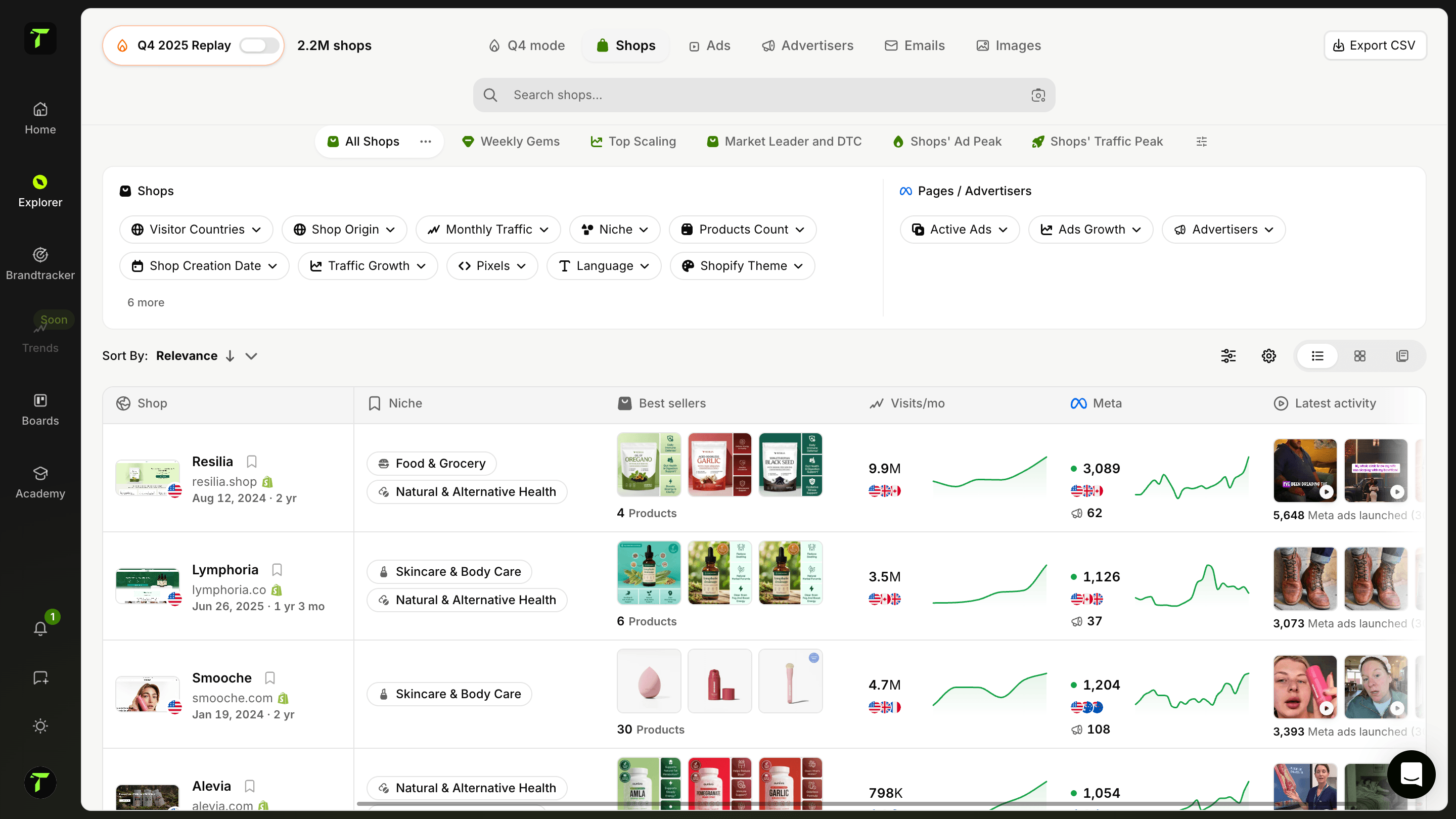
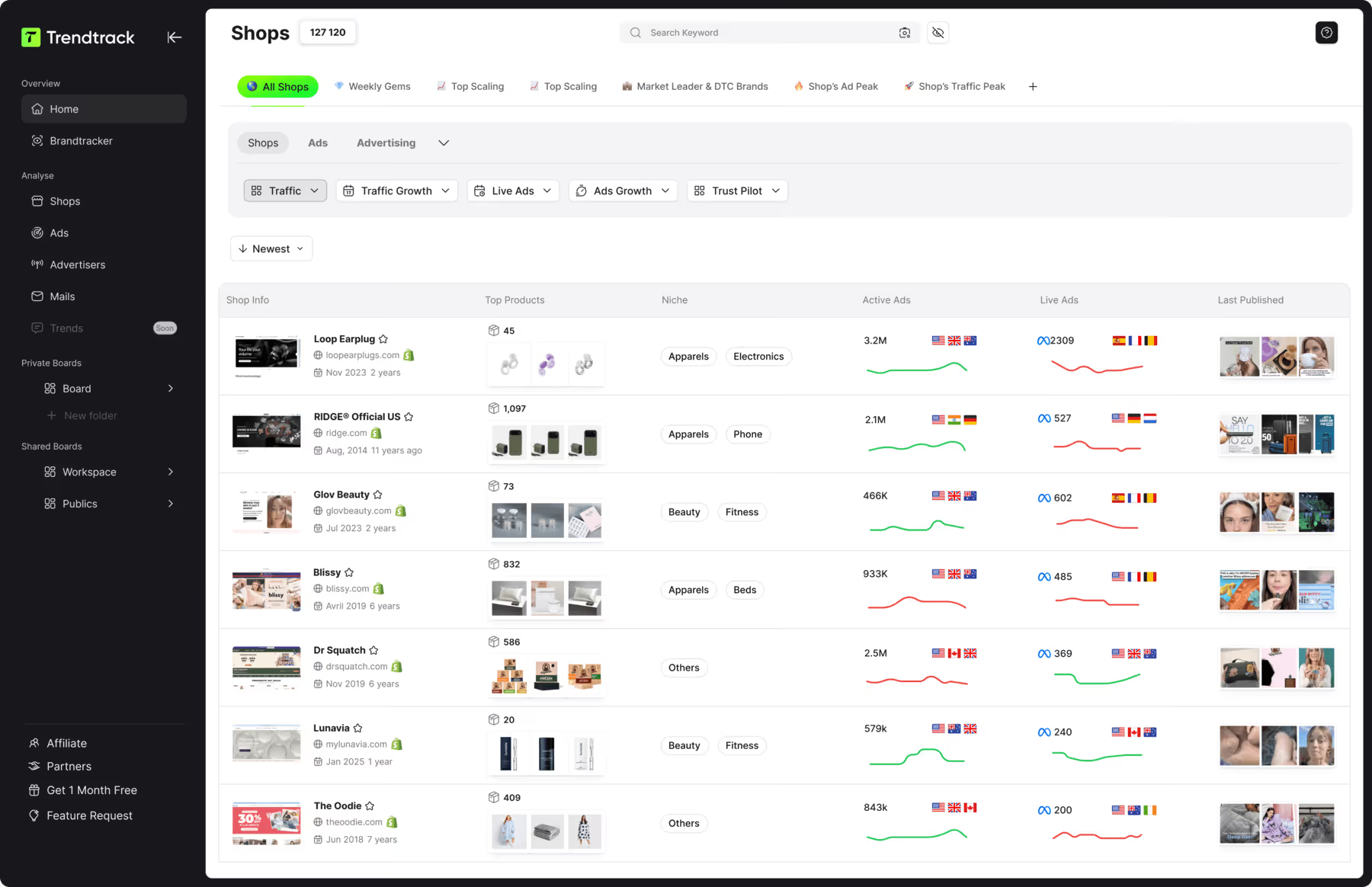
To see what competitors run and when they launch before committing budget, Trendtrack available at app.trendtrack.io/en/sign-up preserves full ad history across Meta, TikTok and Google, with 700,000+ brand profiles refreshed every 24 hours.
In this article we cover how to prepare your store step by step.
When Should You Start Preparing for Cyber Monday?
Working backward from November 30 reveals immediately which decisions are already late. Here is the realistic timeline.
Table: Cyber Monday preparation timeline
| Period | What you do | Why it matters |
|---|---|---|
| September | Product research and selection | Finding winners before competitors |
| Early October | Order stock, test suppliers | Lead times close in November |
| Mid October | Run small-budget ad tests | Validating conversion cheaply |
| Late October | Build retargeting and email audiences | Cheaper than during peak |
| Early November | Design your offer and creatives | Iteration needs time |
| Mid November | Technical checks and load testing | Fixing issues before traffic |
| Week of November 23 | Warm up your audience | Teasing beats cold launching |
| November 30 | Execute and monitor | Capturing demand at peak |
As the table shows, the research phase belongs to September, well before the selling season. That gap is arithmetic rather than caution.
Supplier lead times drive most of it. Ordering stock in November means competing with every other merchant for production and shipping capacity. Products ordered late arrive after the window closes.
Ad testing takes longer than people allow. A genuine validation needs enough conversion data to exit the learning phase, which means seven to fourteen days per product minimum.
Audience building deserves specific attention because it is the cheapest lever and the most overlooked. Retargeting pools and email segments assembled in October cost a fraction of what the same audiences cost during peak competition, when every advertiser bids simultaneously.
Build them before the auction heats up.
If you are reading this in mid-November, your approach must change rather than compress. Skip new product sourcing entirely and work with what you already stock. Focus your remaining effort on your offer design, your technical readiness and your existing audience, which are the three things you can still influence.
One point specific to 2026 deserves noting. The late date compresses the gap before Christmas delivery deadlines, which tightens your shipping margins. Check your carrier cutoffs now rather than discovering them after taking orders.
How Should You Design Your Cyber Monday Offer?
The mechanic matters more than the discount depth. Here are the structures that work.
Bundles, grouping complementary products at a combined price
Tiered discounts, increasing with basket value
Free gift above a threshold, which protects margin better than a percentage
Extended access or warranty on digital and service products
Early access for subscribers, rewarding your list
Limited quantities, creating genuine rather than artificial urgency
Free shipping thresholds, pushing average order value upward
Among these, bundles perform particularly well on Cyber Monday. They raise your average order value, move slower inventory alongside your best sellers, and make direct price comparison harder for shoppers checking competitors.
A 30 percent discount is instantly comparable. A bundle is not.
Tiered discounts follow the same logic. Offering 10 percent above 50 dollars, 15 above 100 and 20 above 150 pushes basket value upward while protecting your margin on small orders.
The free gift above a threshold deserves attention because it costs you wholesale rather than retail. A 15 dollar gift feels worth 15 dollars to the customer while costing you perhaps 5, which preserves considerably more margin than an equivalent discount.
One rule governs everything else: do not repeat your Black Friday offer. Shoppers who already bought feel nothing, and those who did not were already unconvinced. Change the mechanic rather than extending the date.
Run your arithmetic against current acquisition costs before committing. CPMs climb sharply across the period, which means a discount that worked in September can run at a loss on the day.
How Do You Prepare Your Store Technically?
A store that fails under load loses more than a store that discounts less. Here is what to check.
Test your site speed under realistic traffic
Verify your mobile checkout end to end
Audit your stock accuracy across channels
Confirm your shipping cutoff dates
Check your payment methods and gateway limits
Prepare your customer service responses
Set up your tracking and conversion events
Create a fallback plan for peak hours
The first step is load testing. Your store handles your normal traffic fine, which tells you nothing about how it behaves at five or ten times that volume. Compress your images, audit your apps and disable anything non-essential before the period.
Every additional second of load time costs conversions, and that cost multiplies when you are paying premium acquisition rates.
The second step is to walk your mobile checkout yourself, from product page to payment confirmation. Do it on an actual phone rather than a browser preview. Friction invisible on desktop becomes a drop-off on mobile.
The third step is stock accuracy. Overselling during peak generates refunds, support tickets and negative reviews at the worst possible moment. Verify your sync across every channel you sell on.
The fourth step is to confirm carrier cutoffs. The late 2026 date compresses the window before Christmas, which makes delivery promises risky. Display your actual deadlines rather than optimistic ones.
The fifth step covers payment. Verify your gateway handles your expected volume and that your methods work, since a declined transaction at peak is a customer you paid to acquire and lost.
The seventh step is tracking. Broken conversion events mean flying blind on the day that matters most.
What Mistakes Should You Avoid on Cyber Monday?
Several errors cost merchants money on the day itself, and most trace back to decisions made weeks earlier.
Repeating your Black Friday offer instead of changing the mechanic
Discounting without recalculating against current acquisition costs
Launching cold without warming your audience first
Scheduling sends for early morning rather than office hours
Testing new products during peak season
Promising delivery dates you cannot hold
Ignoring your existing customers in favor of cold acquisition
Cutting campaigns too early before they stabilize
Overselling on inaccurate stock data
Among these, discounting without recalculating is the most expensive and the least visible. CPMs climb sharply across Cyber Week as every advertiser bids simultaneously, which means a 30 percent discount that was profitable in September can run at a loss on the day.
Many merchants discover afterward that their highest-revenue week was also their least profitable. Run the arithmetic with realistic acquisition costs before committing to a discount level.
Launching cold comes second in impact. Arriving on Monday morning with an offer nobody anticipated wastes the most expensive traffic of the year. Warm your audience the week before with teasers, early access for subscribers or a waitlist.
The timing error deserves specific attention because it is easy to fix. Cyber Monday traffic builds through the working day rather than peaking at dawn, unlike Black Friday. Replicating Friday’s send schedule wastes your best window.
Ignoring existing customers is the most overlooked opportunity. Your past buyers convert at a fraction of the acquisition cost of cold traffic, and they are the audience most likely to respond to early access.
Segment them and give them something before you open to everyone.
Useful Resources


Pronto a costruire un brand da un milione di dollari?