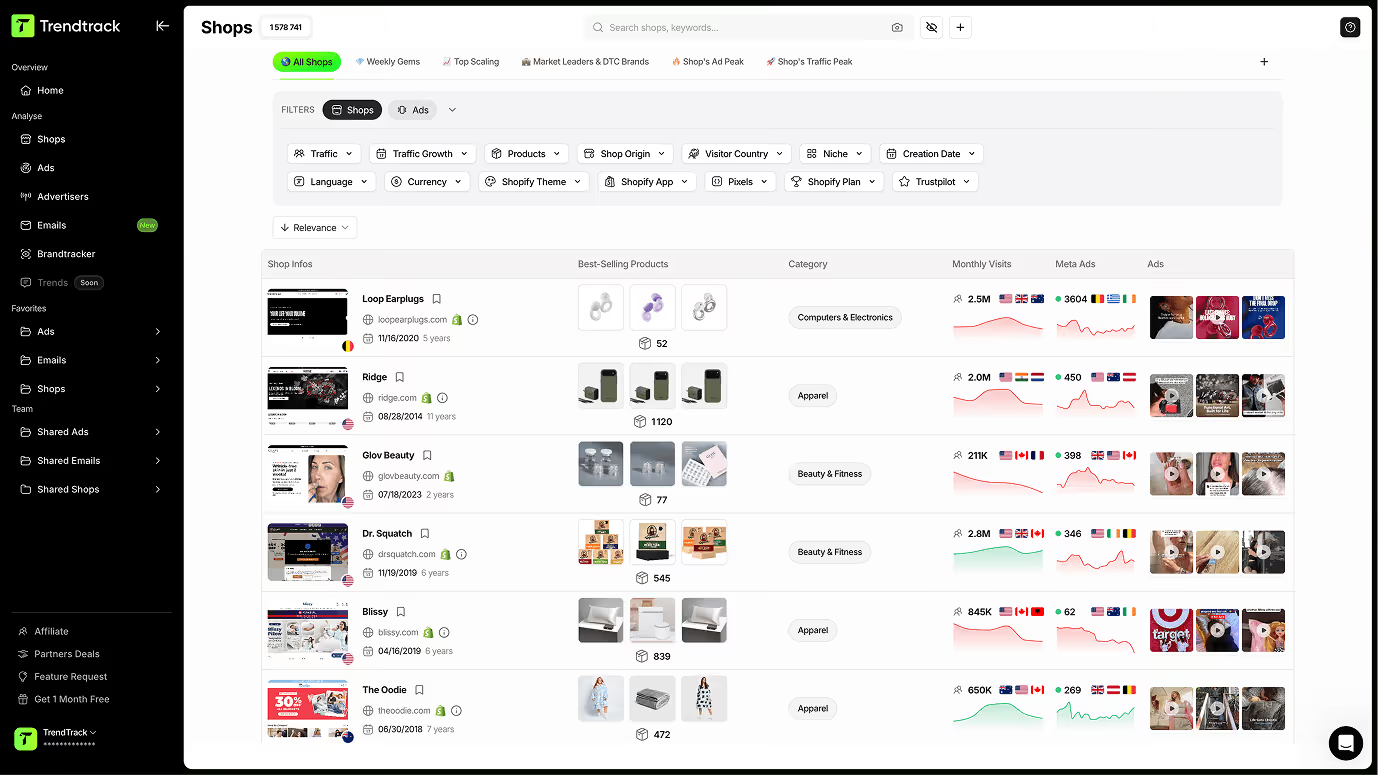
Conversion Funnel In E-commerce
A conversion funnel is the step-by-step journey a shopper takes from their first interaction with your brand to completing a purchase and beyond. It maps every stage of the customer experience, highlighting where users engage, hesitate, or drop off entirely. In e-commerce, the conversion funnel is one of the most critical frameworks for understanding and improving performance. It's not just about driving traffic it's about what happens to that traffic once it lands on your store.
Updated on April 15, 2026
The Stages of an E-Commerce Conversion Funnel
While funnel structures can vary by business model, most e-commerce funnels follow these core stages:
1. Awareness: The shopper discovers your brand through a paid ad, organic search result, social media post, or word of mouth. This is the top of the funnel (TOFU), where volume is highest and intent is lowest.
2. Interest: The visitor explores your store, browses categories, reads product descriptions, or checks reviews. They're evaluating whether your offer matches their need.
3. Consideration: The shopper adds items to their cart, compares products, or saves items to a wishlist. Purchase intent is rising, but the decision isn't made yet.
4. Intent: The user initiates checkout. This is a high-intent moment — and also where friction is most damaging. Unexpected costs, complex forms, or trust issues can kill the conversion here.
5. Purchase: The order is completed. The conversion happens. But the funnel doesn't stop here.
6. Retention & Loyalty: Post-purchase experience matters. A customer who buys once and never returns has a low CLV. The bottom of the funnel is about turning one-time buyers into repeat customers and brand advocates.
Why Do Users Drop Off?
Every stage of the funnel has its own drop-off patterns. Understanding them is the key to optimization:
Awareness → Interest: Poor ad targeting, irrelevant landing pages, slow load times
Interest → Consideration: Weak product pages, lack of social proof, confusing navigation
Consideration → Intent: Hesitation around price, no urgency, distraction
Intent → Purchase: Unexpected shipping costs, forced account creation, limited payment options
Purchase → Retention: No follow-up, poor delivery experience, lack of loyalty incentives
Identifying where your funnel leaks and why is more valuable than simply driving more traffic into the top.
How to Measure Funnel Performance?
Each stage of the funnel can be tracked with specific metrics:
Impressions & CTR: top of funnel reach and relevance
Bounce rate & session duration: early engagement quality
Add-to-cart rate: product page effectiveness
Checkout initiation rate: consideration to intent transition
Cart abandonment rate: friction at checkout
Conversion rate (CVR): overall funnel efficiency
Repeat purchase rate: retention performance
Tools like Google Analytics 4, Hotjar, and your e-commerce platform's native dashboard give you visibility across the entire funnel.
How to Optimize Your Conversion Funnel?
Funnel optimization isn't a one-time fix it's an ongoing process of testing, analyzing, and iterating:
A/B test landing pages, CTAs, and product page layouts
Simplify checkout: fewer steps, guest checkout, multiple payment options
Add social proof: reviews, ratings, UGC at key decision points
Use retargeting to bring back users who dropped off mid-funnel
Personalize the experience based on traffic source, behavior, or purchase history
Reduce page load time: every extra second costs conversions
Full-Funnel Thinking
The biggest mistake in e-commerce is optimizing only the bottom of the funnel focusing entirely on checkout while ignoring awareness and consideration. A well-optimized funnel works at every stage, ensuring that the right message reaches the right user at the right moment.
A leaky funnel doesn't need more traffic. It needs fewer holes.
💡 Pro tip: Map your funnel against your actual analytics data before making changes. Most stores lose the majority of potential revenue between the product page and checkout not at the top of the funnel where most ad spend goes.

.avif)
Prêt à construire une marque à plusieurs millions ?
.avif)